Payments shouldn’t hold you back. Discover why Gr4vy is the go-to platform for enterprises that want to unlock new revenue and get empowered by their payment strategy.
From global merchants to fast-growing platforms, Gr4vy has the tools to run payments your way. See how we simplify payments for enterprises, power branded experiences for their sub-merchants, and help them start with Agentic Commerce.
Explore the network behind Gr4vy. With over 400 payment methods and anti-fraud providers, plus strategic partnerships, our ecosystem helps you expand globally with local options and innovate faster.
Gift cards are stepping out of the shadows of being just another present option and are now becoming a formidable force in the payment ecosystem. This transition broadens the horizon for consumers looking for flexible spending solutions and businesses aiming to capture more market share and enhance consumer satisfaction. By incorporating gift cards into their payment arsenal, companies can cater to a more diverse clientele, offering them the gift of choice and convenience regarding how they wish to pay.
The move towards gift cards as a mainstream payment method is not just about following a trend but acknowledging and adapting to consumer preferences. As people look for safer, more convenient ways to pay without compromising their shopping experience, gift cards emerge as a perfect solution. For businesses, this means tapping into an avenue that promises increased sales and a stronger connection with their customer base through personalized shopping experiences.
How can my business accept gift cards?
The first step in accepting gift cards is ensuring your POS system is equipped to handle such transactions. This might mean upgrading your current system or partnering with a comprehensive gift card support provider. Compatibility with your sales system ensures that accepting gift cards is seamless, enhancing the customer experience and operational efficiency.
Training your staff on the nuances of gift card transactions is crucial. Employees should be well-versed in activating, reloading, and redeeming gift cards and troubleshooting common issues that may arise. This improves service delivery and ensures customers leave with a positive impression of your business’s efficiency and readiness to embrace modern payment solutions.
What method of payment is a gift card?
A gift card acts as a prepaid debit card with a pre-determined value that can be used for purchases at specified merchants or service providers. This payment method offers a unique blend of flexibility and control, allowing users to spend what is preloaded on the card without the risks of overspending or incurring debt.
From a business perspective, accepting gift cards as payment can streamline checkout and offer additional security. Since the transaction amounts are predefined, the payment process is quicker and reduces the risk of fraud associated with other payment methods. Moreover, gift cards can drive consistent foot traffic and foster a deeper connection between your brand and its customers.
Different types of gift cards available for businesses
There are primarily two types of gift cards: open-loop and closed-loop. Open-loop gift cards offer unparalleled flexibility and are usable anywhere that accepts major credit cards. This universality makes them an excellent gift choice, albeit with less potential for driving loyalty to a specific retailer. On the other hand, closed-loop gift cards are redeemable only at particular locations, making them a powerful tool for encouraging repeat business and fostering brand loyalty.
Each type serves a distinct purpose. While open-loop cards offer broad usability, closed-loop cards allow businesses to retain more control over where the funds are spent, potentially increasing repeat visits and customer engagement with the brand. Deciding which type to offer depends on your business model, customer base, and strategic goals.
Reasons to offer and accept gift cards in your business
Gift cards are more than just a convenient gift option; they are a strategic business tool that can drive sales and enhance customer loyalty. By offering gift cards, businesses can attract new customers who may have yet to visit. Gift card recipients are introduced to your brand, and if they enjoy their experience, they are likely to return, potentially converting into regular customers.
Moreover, gift cards often result in additional spending beyond their initial value. Customers using a gift card are more inclined to treat themselves, leading to sales that surpass the card’s worth. This increased spending can significantly boost your business’s revenue and profitability, making gift cards an attractive option for customers and companies.
Is creating your gift card program necessary to accept them?
Whether to create a proprietary gift card program involves evaluating your business’s specific needs and capabilities. A custom program allows for tailored experiences that can reinforce your brand identity and cater specifically to your customer base. This personalization can enhance customer loyalty and differentiate your offerings in a competitive market.
However, the decision to develop an in-house program should be weighed against the costs and logistics involved, for many small—to medium-sized enterprises, third-party solutions balance customization and convenience with less upfront investment and complexity. Ultimately, the choice depends on your business goals, resources, and how you wish to engage with your customers through your gift card offerings.
Guidelines for accepting and processing gift cards
Setting up clear guidelines for accepting and processing gift cards is crucial for a smooth operation. This includes having a solid system for tracking gift card sales and redemptions and training staff on handling various gift card-related transactions. Ensuring every team member knows the process can prevent transaction errors and enhance the customer experience.
Additionally, businesses should establish straightforward policies for customers, clearly outlining how gift cards can be used, any restrictions, and what happens to unused balances. Transparency in these policies can help avoid confusion and build trust between your business and its customers, contributing to a positive overall customer experience.
Steps to create gift cards for your business
Creating gift cards for your business begins with choosing the right type of card and design that aligns with your brand image. Whether opting for physical cards, digital versions, or both, the design should be eye-catching and identifiable with your brand. Following this, selecting a reliable vendor or platform to support your needs is essential, considering security, usability, and integration with your existing systems.
Next, developing a strategic marketing plan to promote your gift card program is key. This can include in-store promotions, online advertising, and leveraging social media to reach potential customers. A well-executed launch can significantly impact the program’s success, driving initial sales and adoption among your customer base.
Understanding gift card regulations and preventing fraud
Navigating the legal landscape of gift card regulations ensures your program complies with federal and state laws, which can vary widely. Staying informed about these regulations, including any restrictions on expiration dates and fees, is essential to operate ethically and maintain customer trust. Regularly updating your policies and practices in line with these laws can help mitigate legal risks and protect your customers.
To combat fraud, implement robust security measures for your gift card program. This includes monitoring for suspicious transaction patterns and educating customers on protecting their gift cards. Vigilance and proactive measures can significantly reduce the risk of fraud, safeguarding your customers and your business.
Does PayPal accept gift cards as payment?
PayPal’s acceptance of gift cards as a form of payment provides businesses and customers with additional flexibility. By allowing the use of Visa, MasterCard, American Express, and Discover branded gift cards, PayPal extends the usability of these cards beyond traditional retail settings. This compatibility enhances the appeal of gift cards, offering a secure and versatile payment option through a widely used digital platform.
This feature demonstrates the evolving role of gift cards in the digital payment ecosystem, where traditional and online payment methods converge. For businesses, understanding and utilizing these capabilities can enhance the customer experience, offering more ways for customers to engage with your brand and make purchases.
Why do people take gift cards as payment?
Gift cards are popular as payment for several reasons. They offer a convenient, cash-free way of shopping, which is particularly appealing for those prioritizing ease and security in their transactions. For the recipient, gift cards provide the freedom to choose their gifts, ensuring they get exactly what they want. This level of autonomy and flexibility makes gift cards a favored choice among consumers.
Furthermore, gift cards can help manage personal finances by setting a pre-defined spending limit. This aspect especially appeals to budget-conscious consumers who want to control their spending. Additionally, using gift cards across various platforms, including online shops, adds a layer of versatility that cash and traditional debit or credit cards may not offer.
Elevate your checkout experience with seamless payment integration
Looking to expand your payment options quickly and smoothly? Consider a solution like Gr4vy. This platform lets your business integrate new payment methods, including the gift card option, directly into your checkout. The beauty of it? There’s no need for complex coding, and you can say goodbye to downtime concerns. Gr4vy allows for the easy addition, testing, and deployment of over 100 different payment methods, ensuring your checkout process meets your customers’ needs without overwhelming your team.
With Gr4vy, updating your payment workflows to stay ahead of consumer trends becomes hassle-free. Whether you’re looking to offer more flexibility at checkout or streamline how customers pay, Gr4vy provides the tools you need with an intuitive, no-code approach. Ready to take your payment system to the next level? Reach out to explore how Gr4vy can make enhancing your checkout experience a seamless reality.
The digital economy is revolutionizing transactions, moving us further from cash and checks towards a more digital form of money management. For businesses, keeping pace with these changes isn’t just about staying relevant; it’s about enhancing customer experience and streamlining payment processes. Digital wallet payments stand at the forefront of this transformation, offering a blend of convenience, security, and speed that traditional payment methods struggle to match.
How to pay with digital wallets?
Paying with a digital wallet is akin to having a futuristic wallet that stores not just money but cards, coupons, and even loyalty points—all accessible with a tap or a click. The process begins with the customer loading their digital wallet by entering their payment information, such as credit card or bank details, into a secure application on their smartphone. This information is encrypted for security. When it’s time to make a purchase, the customer selects their digital wallet as the payment method, authenticates their identity through a secure method like a PIN, fingerprint, or facial recognition, and the payment is processed instantaneously. This seamless integration of technology into the payment process not only simplifies transactions but also enhances the shopping experience for customers.
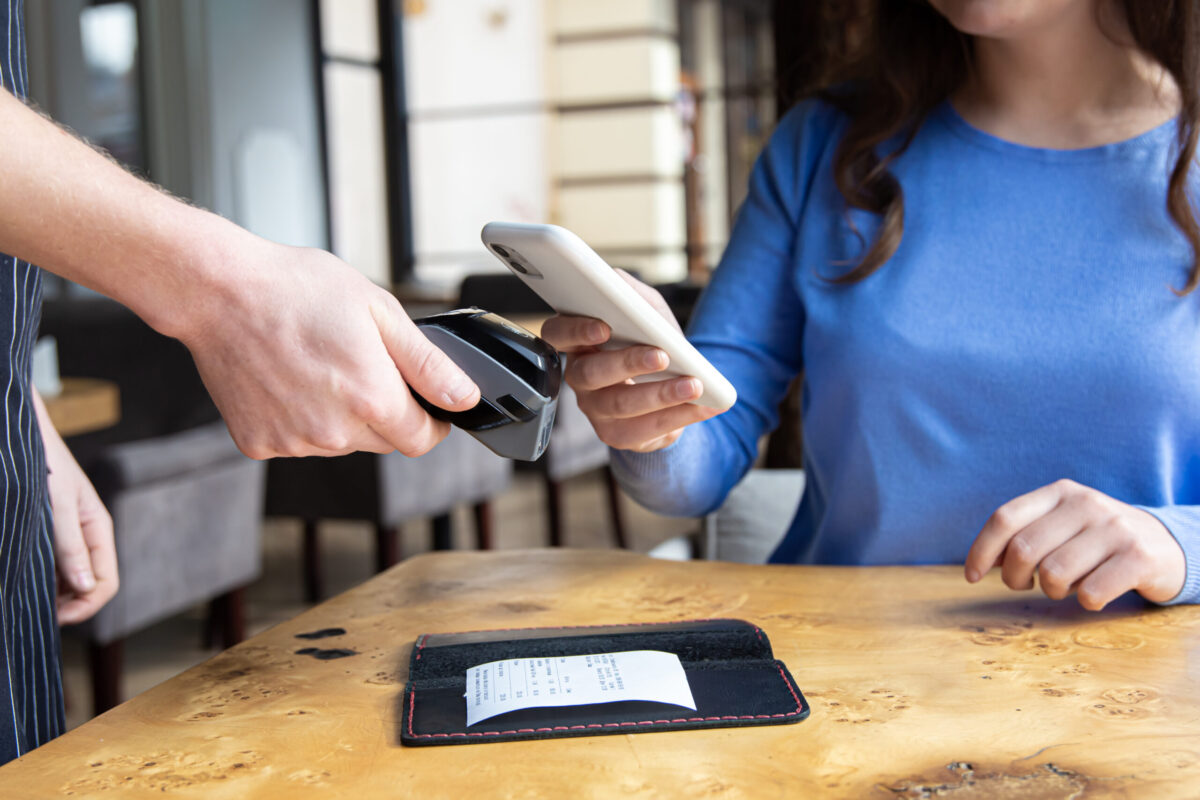
This might mean tapping a smartphone against a payment terminal equipped with NFC technology in the physical store. Online purchases involve selecting a digital wallet option at checkout, entering a password, or using biometric authentication to confirm the transaction. The ease with which these payments are made encourages customers to return, knowing they can expect a hassle-free checkout experience.
How does digital wallets work?
At its core, the operation of digital wallets is based on advanced technology that securely stores users’ payment details and personal information. These wallets leverage encryption and tokenization to ensure each transaction is seamless and secure from potential threats. When a transaction is initiated, the digital wallet communicates with the payment terminal through technologies like NFC or QR codes in physical stores or secure internet protocols for online payments. This initiates a complex authentication and authorization process, with the payment information being sent to the merchant in an encrypted form, significantly reducing the risk of fraud.
Integrating digital wallets into the payment ecosystem allows for various payment sources—bank accounts, credit cards, or even loyalty points—providing a versatile and user-friendly experience. For merchants, this means accommodating a more comprehensive range of customer preferences, making it easier to keep up with the evolving digital commerce landscape.
Do digital wallets require a bank account?
The beauty of digital wallets lies in their flexibility. While many users link their wallets to bank accounts or credit cards for convenience, it’s optional for all digital wallets. Some digital wallets allow users to load funds directly into the wallet, bypassing traditional banking channels. This feature is particularly beneficial for individuals who prefer not to use banks or do not have access to banking services. For merchants, this means catering to a broader audience, including those who are unbanked or underbanked, thus opening up new markets and customer segments.
This flexibility enhances digital commerce’s inclusivity, enabling transactions with a wider range of consumers. By offering payment options that do not strictly require a bank account, businesses can ensure that their services are accessible to everyone, promoting a more inclusive digital economy.
What is the difference between mobile payment and digital wallet?
Clarifying the difference between mobile payment and digital wallet is crucial for understanding the digital payment landscape. A digital wallet is an umbrella term encompassing various electronic storage forms for payment methods and other documents like IDs and loyalty cards. It can exist on multiple platforms, including smartphones, tablets, and wearable devices. Mobile payment, however, refers specifically to payments made using mobile devices. Every mobile payment uses a digital wallet, but digital wallets are not limited to just mobile payments. They can facilitate online transactions on computers and in-app purchases, among others.
This distinction is important for businesses as it highlights the versatility of digital wallets beyond just mobile payments. By integrating digital wallet solutions, merchants can offer customers various payment options across different channels, enhancing the customer experience and increasing sales across both online and offline platforms.
Types of digital wallets
Exploring the types of digital wallets reveals a diverse ecosystem designed to meet various needs and preferences. Closed wallets that specific retailers offer confine purchases to the issuing company’s products and services. These wallets foster loyalty but are limited in scope. Semi-closed wallets expand the horizon by allowing transactions with a select list of merchants and service providers. This flexibility makes them more appealing to users who frequent certain businesses.
Perhaps the most versatile, open wallets function almost like a virtual bank account. They can be used for various transactions, from paying at almost any merchant to transferring money and withdrawing cash from ATMs. For businesses, offering compatibility with open and semi-closed wallets can significantly broaden their customer base, enabling transactions with a minimal fuss and making it easier for customers to spend their money where they see fit.
How to accept digital wallet payments
For businesses, accepting digital wallet payments signifies adapting to consumer preferences for convenience and speed. The first step is selecting a payment processor that supports digital wallet transactions. Integration with your current point-of-sale (POS) system is typically straightforward, with many providers offering plug-and-play solutions that minimize downtime and training requirements. Online merchants can similarly integrate digital wallet options into their checkout processes, often with the support of their e-commerce platform or payment gateway.
Training staff to handle digital wallet transactions and informing customers about this payment option are critical steps. This ensures smooth operation and promotes the adoption of digital wallet payments among your customer base. By embracing these payments, businesses can streamline operations, reduce transaction times, and offer an enhanced shopping experience that meets modern consumer expectations.
Benefits of digital wallet payments for businesses
The benefits of digital wallet payments for businesses extend far beyond convenience. They represent a secure and efficient way to process transactions, reducing the risk of fraud and chargebacks through advanced encryption and authentication technologies. For customers, the ease of use and speed of digital wallet payments can significantly enhance the shopping experience, potentially increasing customer satisfaction and loyalty. This, in turn, can lead to higher transaction volumes and more significant revenue.
Additionally, digital wallets can offer valuable insights into consumer behavior, allowing businesses to tailor their offerings and marketing strategies more effectively. This data-driven approach can help enterprises better understand their customers, personalize their services, and foster a stronger connection with their audience.
Costs associated with digital wallet payments
While adopting digital wallet payments has numerous advantages, it’s also essential to consider the costs associated with them. These can range from transaction fees imposed by payment processors to initial setup costs for integrating digital wallet technology into existing systems. Additionally, maintaining compliance with security standards and ensuring the protection of customer data can incur ongoing costs.
However, it is important to view these costs as an investment in your business’s future. The efficiencies gained, the broadening of your customer base, and the potential increase in sales can often offset the initial and ongoing expenses associated with digital wallet payments. For many businesses, adopting digital wallet payments is not just a question of cost but a strategic move toward embracing the future of commerce.
Ready to transform your payment process?
Gr4vy revolutionizes this space by enabling data residency across multiple locations, ensuring unparalleled security and strict adherence to local sales and privacy regulations. This unique approach minimizes the risk of single points of failure. It guarantees that your transactions are processed within a secure, local Edge—paving the way for seamless expansion beyond traditional boundaries with fewer abandoned carts and lost payments.
Ready to elevate your digital payment capabilities and scale your business confidently? Contact Gr4vy today. Our innovative solutions are designed to keep your transactions secure and compliant, allowing you to meet your customers’ evolving demands anywhere in the world. Discover how Gr4vy can transform your payment processes and help you easily navigate the complexities of global digital commerce.
As online commerce continues to expand, the demand for payment solutions that combine ease of use with robust security has never been higher. Click to Pay addresses this need head-on, offering a payment process that eliminates the hassle of repeatedly entering card details for each transaction. This not only accelerates the checkout experience but also significantly enhances security, a critical aspect in today’s digital transaction environment. By simplifying purchases to a mere click, Click to Pay aligns perfectly with the contemporary consumer’s preference for quick and effortless shopping experiences.
For businesses, the decision to incorporate this method into their array of payment options signifies a commitment to customer satisfaction and operational efficiency. This integration not only meets the growing expectation for seamless transactions but also fortifies the trust between consumers and merchants by ensuring a secure payment gateway. In adopting Click to Pay, merchants are not just streamlining transactions; they’re also paving the way for a more dynamic, accessible, and secure online marketplace.
How does Click to Pay work?
At its core, Click to Pay aims to eliminate the cumbersome steps typically associated with online payments. By securely storing payment information, it allows consumers to complete their purchases with a mere click. Initially, users sign up and save their payment details on the platform. When making subsequent purchases, a single click suffices to process the payment, sidestepping the repetitive entry of payment and shipping details.
This system not only enhances the shopping experience but also incorporates advanced security measures to protect user data. The adoption of encryption and tokenization ensures that customer information is safeguarded, fostering a secure and trustful payment environment.
How do you use Click and Pay?
Getting started with Click and Pay is remarkably straightforward. Customers register for the service via their bank, credit card issuer, or directly through a merchant offering Click to Pay. This setup involves entering payment information and possibly setting up additional security measures, such as a PIN. When it’s time to checkout online, users simply select Click to Pay as their payment option, approve the purchase, and enjoy a streamlined transaction process.
For merchants, integrating this method into their checkout process can significantly enhance customer satisfaction. By offering a quick and easy payment solution, businesses can reduce checkout abandonment and foster a positive shopping experience.
Is there a charge to use Click to Pay?
One of the common inquiries regarding Click to Pay revolves around the cost of usage. Consumers can rest assured, as there are typically no fees charged to them for utilizing Click to Pay services. On the merchant side, standard processing fees apply, similar to other payment methods. These fees are usually a combination of a percentage of the transaction amount and a fixed charge, varying by payment processor.
Understanding these fees is crucial for merchants considering Click to Pay. While there are costs involved, the benefits of increased sales and customer satisfaction often outweigh them, making Click to Pay a valuable addition to your payment options.
Is it safe to use Click to Pay?
In the digital transaction space, security is paramount. Click to Pay addresses this concern head-on with state-of-the-art security protocols. By leveraging encryption and tokenization, it ensures that all payment information is securely processed, significantly reducing the risk of data breaches and fraud.
Moreover, Click to Pay often requires user authentication for transactions, adding an extra layer of security. This multifaceted approach to safeguarding user data makes Click to Pay one of the safest payment options available today.
Is the same as PayPal?
Although Click to Pay and PayPal both serve to facilitate online payments, they are distinct in their operations and offerings. PayPal is a comprehensive online payment system that allows for sending and receiving money, as well as making purchases through a secure account. Click to Pay, in contrast, is specifically designed to streamline the checkout process, enabling payments with just one click.
Choosing between it and PayPal depends on the specific needs and preferences of both merchants and consumers. Each offers unique advantages, and understanding these can help in selecting the most suitable payment solution.
What are the benefits of accepting Click to Pay?
For businesses, the advantages of integrating Click to Pay are manifold. This payment method simplifies the checkout process, which can reduce cart abandonment and increase completed transactions. Click to Pay’s ease and efficiency enhance the customer experience and contribute to building trust and loyalty.
Additionally, the security features associated with this payment method can further reassure customers, making them more likely to shop without concerns over data safety. In a competitive online marketplace, offering a secure and convenient payment option like Click to Pay can be a significant differentiator.
Are there Click to Pay security features?
Click to Pay stands out for its robust security features designed to protect both consumer and merchant data. Encryption and tokenization are the backbone of its security, ensuring that sensitive information is converted into a format that is extremely difficult to decrypt. User authentication measures, such as biometrics or PINs, provide an additional security layer, mitigating the risk of unauthorized transactions.
These security protocols are integral to maintaining the integrity of the Click to Pay system, making it a trusted choice for online payments. By prioritizing security, Click to Pay addresses one of the foremost concerns of online consumers and merchants alike.
Click to Pay best practices
To maximize the benefits of Click to Pay, it’s essential for merchants to adhere to a set of best practices. Firstly, ensure that your online platform is fully compatible with Click to Pay, offering a seamless integration that allows customers to easily choose this payment option at checkout. This involves working closely with your payment processor to implement Click to Pay efficiently and testing the system comprehensively to ensure a smooth operation.
Furthermore, educating your customers about the advantages and security measures of Click to Pay can encourage its adoption. Highlight the convenience, speed, and safety of using Click to Pay on your website and through marketing materials. Providing clear instructions on how to use Click to Pay can also help to demystify the process for first-time users, promoting a more user-friendly experience.
How to accept Click to Pay as a payment method
For merchants interested in accepting Click to Pay, the process begins with selecting a payment processor that supports this feature. Integration usually requires some technical setup to enable Click to Pay on your online checkout system. This might involve configuring your payment gateway to recognize Click to Pay transactions and ensuring that your website’s checkout page is optimized for a smooth user experience.
After integrating Click to Pay, it’s crucial to monitor and evaluate its performance regularly. Analyzing transaction data can help identify trends, understand customer preferences, and pinpoint any areas for improvement. Promoting Click to Pay as a preferred payment method can also boost its usage, leveraging its benefits to enhance customer satisfaction and potentially increase sales.
Simplify your payment process with Gr4vy
Updating your payment workflows should be straightforward and without any disruption to your business operations. Gr4vy offers a streamlined solution that enables you to modify your live payment workflows effortlessly, ensuring there’s no downtime. With the ability to instantly add, test, and deploy new payment methods, and to craft dynamic workflows that integrate directly into your checkout experience, all without the need for coding, Gr4vy stands out as a practical choice for businesses seeking efficiency and adaptability. Our library, boasting over 100+ unique payment methods, provides the versatility to cater to the diverse preferences of your customer base.
For businesses looking to refine their payment strategies andenhance the checkout experience, Gr4vy is ready to assist. By simplifying the integration of new payment methods and allowing for the easy customization of payment workflows, we help ensure your checkout process remains smooth and secure. If you’re interested in leveraging Gr4vy’s capabilities to improve your payment system, we invite you to reach out. Discover how Gr4vy can support your business in offering a more streamlined and reliable payment experience to your customers.
Every online purchase reaches a pivotal moment: the transaction’s approval or denial, a process at the heart of which lies the approval rate for payments. This metric might not make headlines, but it plays a starring role in the digital shopping saga, influencing everything from a customer’s happiness to a retailer’s bottom line. It’s a crucial piece of the puzzle in understanding how smoothly transactions are processed, acting as a bridge between customer intention and successful purchase completion. This exploration aims to peel back the layers on approval rates, highlighting their importance in the digital commerce ecosystem.
In the digital economy, where every second counts, the approval rate is more than just a number—it reflects the health and efficiency of a business’s payment processing system. A high approval rate signifies a smooth, frictionless payment process, encouraging repeat business and fostering consumer loyalty. Conversely, a low approval rate can signal issues that need addressing, such as outdated payment systems or stringent fraud prevention measures that may be too aggressive. Understanding and optimizing these rates is crucial for businesses aiming to maintain a competitive edge, ensuring that customers can complete their purchases with ease and confidence.
What are authorization rates in payments?
Authorization rates in paymentssignify the percentage of transactions that get the green light from banks or card issuers. This metric is a key performance indicator, reflecting how effectively your payment system facilitates transactions. A robust authorization rate means that most transactions are processed successfully, ensuring a smooth customer experience and consistent revenue flow.
Understanding and optimizing your authorization rates is essential. High rates indicate a well-functioning payment system that successfully navigates the complexities of financial networks to secure transaction approvals efficiently. Monitoring these rates and working to improve them can significantly enhance your customers’ payment experience.
What is the meaning of payment approval?
Payment approval confirms that a transaction has passed all necessary checks and is ready to be processed. It marks the successful end of a series of evaluations, including fraud checks and fund verification, signaling that the purchase process can successfully conclude.
Securing payment approval involves multiple steps designed to protect all parties involved. This ensures not just the security of the transaction but also builds a foundation of trust and reliability, which is crucial in today’s digital transaction ecosystem. Understanding this process is key to improving the customer experience and operational efficiency.
What is a good payment acceptance rate?
A good payment acceptance rate indicates how well your transaction system operates. Rates above 95% are generally considered excellent. Such high rates demonstrate that most transactions are processed without issues, leading to a seamless checkout experience and high customer satisfaction.
Maintaining a high acceptance rate is an ongoing process that requires vigilance and adaptation to changing trends and technologies. Factors like evolving security measures, consumer behavior, and new payment methods all influence this rate. Businesses committed to optimizing their payment processes can achieve higher acceptance rates, leading to improved customer loyalty and business growth.
What is an authorization in payments?
Authorization in payments is a critical step in which a transaction is reviewed and approved by the card issuer. This involves checking the transaction details against various criteria, including card validity, fund availability, and fraud risk. Successful authorization is crucial as it paves the way for the transaction’s completion.
This process serves multiple purposes, including fraud prevention and ensuring the security of the transaction. It reassures all parties—the customer, merchant, and payment processor—that the transaction is legitimate. Efficiently managing this step is vital for maintaining transaction success rates and building customer trust.
What is the meaning of authorizing payments?
Authorizing payments involves securing approval for a transaction from the financial institutions involved. This step is critical for confirming that a transaction meets all necessary security and compliance standards. It’s a fundamental part of the payment process that ensures legitimate and secure transactions.
The authorization process is crucial for maintaining the integrity of the payment system and protecting against financial fraud. By thoroughly vetting each transaction, businesses can safeguard their operations and provide customers with a secure shopping experience. Understanding and streamlining this process can significantly enhance operational efficiency and customer satisfaction.
What is the payment approval rate?
The payment approval rate is a crucial indicator of how effectively a business processes transactions. It reflects the percentage of transactions that are successfully authorized and approved by payment gateways and banks. A high approval rate is essential because it means that most customers can complete their purchases without interruptions or declines, leading to a smoother shopping experience and higher customer satisfaction. It measures the efficiency of a business’s payment processing setup, highlighting the importance of a robust and reliable payment system.
Moreover, maintaining a high payment approval rate is not just about providing a hassle-free customer experience; it also significantly impacts a business’s bottom line. Every declined transaction represents a potential sale that didn’t happen, which can add up to substantial revenue losses over time. Therefore, businesses strive to understand the factors that affect their approval rates, such as payment method compatibility, fraud prevention tools, and transaction security measures. By addressing these areas, they can work towards optimizing their payment processes, thereby maximizing approval rates and, consequently, sales.
What is the authorization rate for credit cards?
The authorization rate for credit cards zeroes in on transactions made with credit cards and measures the success rate of these transactions, getting the green light from the card issuers. This rate is significant for businesses because credit card transactions form a significant portion of online payments. A high authorization rate in this context indicates that the business has effectively minimized issues such as incorrect card details, exceeded credit limits, and fraud alerts, which can lead to declined transactions. It’s a key performance indicator that reflects how smoothly credit card payments are processed, directly influencing customer satisfaction and trust in the business.
Improving the authorization rate for credit card transactions requires attention to detail and a proactive approach to payment processing. Businesses must ensure that their payment gateways are up-to-date and fully compatible with various credit card companies and banks. This involves implementing effective fraud detection measures that distinguish between legitimate and suspicious transactions without unnecessarily declining valid purchases. Additionally, clear communication with customers about payment issues and how to resolve them can help reduce the number of declined transactions. By focusing on these aspects, businesses can enhance their credit card authorization rates, ensuring a seamless payment experience for their customers.
What is the average authorization rate for e-commerce?
For e-commerce platforms, the average authorization rate typically ranges between 85% and 95%. This figure is a benchmark for businesses to gauge their performance in online transaction processing. Factors influencing this rate include the nature of the products sold, customers’ geographical location, and security measures in place to prevent fraud. A rate on the higher end indicates a streamlined checkout process where most transactions are approved without issues, contributing to a positive user experience and encouraging repeat business.
E-commerce businesses must invest in reliable and secure payment processing solutions that can handle various payment methods and currencies. Furthermore, analyzing declined transactions to understand their reasons is crucial for identifying areas for improvement. E-commerce businesses can aim to exceed the average authorization rate by optimizing their payment processes, setting themselves apart in a competitive market and driving growth through increased sales and customer loyalty.
Payment optimization unlocked
Achieving cost efficiency in payment processing while ensuring platform reliability is essential for businesses today. Least-cost routing emerges as a strategic solution, reducing expenses by identifying the most cost-effective processing paths for transactions. Gr4vy revolutionizes this approach, guaranteeing optimal pricing and enhanced approval rates for each transaction. This integration of cost savings with dependable performance ensures your business doesn’t have to compromise on quality or efficiency.
With Gr4vy, businesses can confidently navigate the payment processing landscape, benefiting from a solution that marries cost-effectiveness with reliability. By choosing Gr4vy, you’re opting for a platform that prioritizes your bottom line without sacrificing the seamless transaction experience your customers expect. We invite you to get in touch to explore how Gr4vy can transform your payment processing strategy. Discover the path to improved payment efficiency and cost savings today.
When a customer hits the “pay” button, a critical process that’s all about speed and accuracy kicks off. A transaction’s path can significantly influence whether it’s successful or not. Here, intelligent payment routing plays a key role, ensuring every payment is processed smoothly. This technology smartly adjusts to the varied landscape of online payments, helping businesses efficiently manage their transactions. It’s a practical solution that improves the reliability of the payment process, benefiting both the business and its customers.
At its core, intelligent payment routing is about making smarter decisions. Unlike traditional payment processes that follow a one-track path, this approach evaluates multiple factors—transaction cost, processing speed, and the likelihood of success—to find the best route for each transaction. It’s akin to having an expert navigator for every payment, ensuring each takes the most efficient path from customer to merchant. This technology is reshaping how businesses handle transactions, offering a smarter, more adaptable approach to managing the complex web of digital payments.
How does intelligent routing work?
Intelligent routing leverages complex algorithms to analyze and select the optimal path for each transaction. This decision-making process is akin to navigating a city using real-time traffic updates. Just as a driver uses this information to avoid congestion and reach their destination efficiently, intelligent routing uses data on transaction success rates, processing fees, and network availability to choose the most effective route for a payment. This technology ensures that each transaction is processed in the manner most likely to succeed, at the lowest possible cost, and in the shortest amount of time.
Intelligent routing is not a one-size-fits-all solution; it adapts to each transaction’s unique characteristics. Whether a small payment in a local currency or a large international transfer, the system assesses all available information to make the best decision. This flexibility is crucial in a global market, where businesses must navigate many payment networks and regulations. By intelligently routing transactions, companies can significantly reduce the risk of failed payments, improving customer experience and trust in their payment systems.
How does payment routing work?
The journey of a payment from customer to merchant is complex, involving multiple steps and parties, from payment gateways to banks. Traditionally, payment routing has been straightforward, with transactions following a predetermined path to their destination. However, this approach needs to account for variability in success rates, costs, and processing times across different routes. Intelligent payment routing revolutionizes this process by introducing dynamic decision-making into the equation, ensuring each transaction is routed through the path most likely to ensure its successful completion.
This dynamic approach to payment routingmeans that transactions are no longer at the mercy of a single pathway’s performance. If one route is experiencing delays or a higher-than-average failure rate, the system can instantly reroute transactions through a more reliable channel. This adaptability is particularly beneficial when time is of the essence, such as during high-volume sales periods. By ensuring transactions are processed efficiently and reliably, businesses can avoid the pitfalls of payment delays and failures, maintaining a smooth and positive checkout experience for their customers.
What is intelligent transaction?
An intelligent transaction represents a significant leap forward in payment processing, incorporating real-time data analysis and decision-making to enhance the transaction experience. This approach goes beyond simply moving funds from one account to another; it involves analyzing each transaction to determine the best course of action. Whether selecting the optimal payment route, identifying potential fraud, or even recommending an alternative payment method, intelligent transactions use a wealth of data to ensure each payment is processed most efficiently and securely.
Beyond the immediate benefits of increased success rates and reduced costs, intelligent transactions offer a more personalized and responsive payment experience. They can adapt to individual customers’ preferences and behaviors, offering payment options that best suit their needs and circumstances. This level of personalization and adaptability is key to building trust and loyalty in a competitive market. As payment technologies evolve, the ability to process transactions intelligently will become increasingly critical for businesses looking to stay ahead.
What is the difference between payment authorization and payment capture?
Payment authorization and payment capture are two fundamental components of this process, each playing a distinct role. Payment authorization is the first step, where the payment processor verifies the transaction details against the customer’s account. This includes checking for sufficient funds and validating the transaction against potential fraud. It confirms that the customer has the means to pay, and the transaction is legitimate. However, no funds are moved at this stage; the amount is simply earmarked for transfer, ensuring it’s available once the transaction proceeds to the next step.
Payment capture is where the transaction is finalized, and the funds are officially transferred from the customer’s account to the merchant’s account. Depending on the merchant’s setup and preferences, this step can occur immediately after authorization or be delayed. For example, a business might authorize payments at the time of order but only capture the funds upon shipping the product. Understanding and managing the timing between these steps is crucial for cash flow management and customer satisfaction. Mismanagement here can lead to delayed shipments or, in worst-case scenarios, the inability to capture funds due to expired authorizations.
How does smart routing work?
Smart routing, much like its cousin intelligent routing, is a sophisticated technology aimed at optimizing the transaction path based on various factors. It scrutinizes the current state of network traffic, processing fees, and even the historical success rates of transactions across different pathways to determine the most efficient route. This level of analysis ensures that transactions are successful and processed in the most cost-effective and timely manner. It’s an ongoing, dynamic process that responds to real-time conditions, ensuring optimal performance at all times.
Furthermore, intelligent routing is not limited to a single transaction or payment method type. Whether dealing with credit card payments, bank transfers, or emerging digital currencies, smart routing technologies can adapt and apply their logic to ensure the best possible outcome. This adaptability makes it an invaluable tool for businesses operating in the diverse and ever-changing global commerce landscape. As transactions become more complex and varied, the ability to intelligently route each one according to its specific needs and conditions becomes increasingly essential for maintaining efficiency and customer satisfaction.
What is a smart payment method?
A smart payment method represents the convergence of convenience, security, and technology, offering users a seamless transaction experience. These methods, which include mobile payments, digital wallets, and contactless cards, are designed to simplify the payment process while enhancing security. They often incorporate elements of intelligent routing to ensure that each transaction is processed most efficiently. For consumers, this means faster, more reliable payments without the hassle of traditional methods. It translates to increased transaction success rates and, consequently, higher business customer satisfaction.
Moreover, smart payment methods are continually evolving, integrating advanced features such as biometric authentication and real-time fraud detection to streamline the payment process further and protect against security threats. This ongoing innovation reflects the shifting landscape of consumer preferences and the growing demand for payment solutions that are not only convenient but also secure and intelligent. As these technologies advance, they will play an increasingly pivotal role in shaping the future of commerce, making transactions more efficient and accessible for businesses and consumers alike.
What is the intelligent routing protocol?
At the heart of intelligent payment routing lies the intelligent routing protocol, a sophisticated set of rules and algorithms that guide the decision-making process. This protocol analyzes many factors, from transaction specifics to network conditions, to dynamically select the most efficient and reliable path for each payment. It’s a complex, adaptive system that learns from each transaction, constantly improving its ability to predict and select the best routing options. This protocol is what enables intelligent routing systems to offer such significant improvements in transaction success rates and processing efficiency.
The beauty of the intelligent routing protocol is in its flexibility and adaptability. It can be customized to fit the unique needs of different businesses, considering their specific transaction volumes, types, and patterns. This customization ensures that the routing decisions are always aligned with the business’s objectives, whether minimizing costs, maximizing speed, or balancing the two. As payment technologies and networks evolve, the intelligent routing protocol will remain a critical component, enabling businesses to navigate the complexities of the payment landscape with confidence and agility.
Intelligent payment routing represents a significant leap forward in digital transactions, offering businesses a way to enhance efficiency, reduce costs, and improve customer satisfaction. By understanding and leveraging technologies like intelligent routing, smart payments, and the intelligent routing protocol, businesses can not only navigate the complexities of the modern payment landscape but thrive within it. As we look to the future, the continued evolution of these technologies will undoubtedly open new avenues for innovation and growth in the digital economy.
Elevate your payment routing with Gr4vy
Gr4vy introduces a straightforward yet powerful solution to these challenges. Our platform empowers businesses to route anywhere you choose, offering unprecedented flexibility to direct card payments to the most suitable payment processor based on various criteria—card type, bin ranges, amount, or any other custom metadata you define. With Gr4vy, customization is at your fingertips, enabling a tailored checkout experience that meets your specific business needs with limitless combination possibilities.
By allowing the creation of dynamic retry rules and timeout controls for each payment provider, our platform effortlessly maximizes the success rate of your transactions. This capability, achieved without manual coding, streamlines the integration process into your existing operations. Gr4vy’s approach to intelligent payment routing simplifies your payment processes and enhances reliability and efficiency, freeing you to concentrate on expanding your business.
To discover how Gr4vy can transform your payment routing and unlock new levels of efficiency and reliability, contact us today. Our team is ready to tailor a solution that aligns with your unique business requirements, setting a new standard for what you can expect from your payment infrastructure.
With online retail sales expected to hit $9.4 trillion by 2026, businesses are facing an unprecedented opportunity for growth. However, capturing a share of this market isn’t just about offering fantastic products or services; it’s also about how efficiently you can handle digital payments. This is where payment orchestrationis critical for any business looking to streamline their payment processes and enhance customer satisfaction at checkout.
This guide introduces you to payment orchestration, explaining how it differs from traditional payment gateways and why it’s essential for managing transactions more effectively. We’ll dive into the practical benefits of adopting a payment orchestration platform, from simplifying integrations to expanding your global reach and providing a seamless payment experience for your customers.
How does payment orchestration work?
Payment orchestration integrates and manages the entire end-to-end payment process to streamline and optimize transactions for e-commerce businesses. This process involves several key steps and components that enhance online payments’ efficiency, security, and versatility. Here’s a detailed breakdown of how payment orchestration works:
Customer checkout experience
A customer adds a product or service to their shopping cart on an e-commerce website and proceeds to checkout.
The customer selects a payment method and inputs their payment details into the payment gateway provided on the website.
Payment gateway encryption
The payment gateway encrypts the customer’s payment card information to ensure secure data transmission over the Internet.
This encrypted information is sent to the acquiring bank through the payment processor.
Transaction authorization
Upon receiving the payment details, the acquiring bank communicates with the customer’s issuing bank to verify the transaction details and ensure sufficient funds or credit is available.
The issuing bank then sends an authorization (approval) or a decline response to the acquiring bank.
Automated transaction touting (Smart Routing)
In traditional payment setups, if a payment fails, it typically ends the transaction attempt. However, payment orchestration platforms use smart routing to redirect failed payments to an alternative payment processor, minimizing the chances of false declines.
This rerouting is based on predefined criteria to select the best alternative processor, optimizing for success rate, cost efficiency, or other factors important to the merchant.
Transaction approval and settlement
The transaction is approved if the alternate payment processor successfully authorizes the rerouted payment.
The acquiring bank returns the authorization response to the payment gateway, which then communicates it to the merchant and the customer, completing the transaction.
The funds are later settled between the banks, and the transaction amount is transferred to the merchant’s account.
Key Components of Payment Orchestration:
Payment gateway: Interfaces with the customer for payment data entry and initiates transactions.
Payment processor: Facilitates the transaction by transmitting data between the merchant, acquiring bank, and issuing bank.
Acquiring bank: The merchant’s bank that receives payment authorizations and settlements.
Issuing bank: The customer’s bank that issues the credit or debit card and authorizes transactions.
By effectively managing these components and processes, payment orchestration platforms enable e-commerce businesses to offer a seamless payment experience to customers, support multiple payment methods and currencies, and improve overall transaction success rates. This leads to enhanced customer satisfaction, increased revenue, and the ability to scale and enter new markets more easily.
Payment orchestration examples
Payment orchestration can be implemented in various ways, depending on the specific needs and objectives of an e-commerce business. Below are examples that illustrate how payment orchestration can be applied in different scenarios, showcasing its flexibility and wide range of benefits:
Global e-commerce expansion
An online retailer in the United States wants to expand its market to Europe and Asia. Using a payment orchestration platform, the retailer integrates multiple popular payment service providers (PSPs) in these regions, such as Alipay in China, Giropay in Germany, and others, without needing separate integrations with each PSP. This simplifies the payment process and ensures customers in these new markets can pay using their preferred payment methods, significantly boosting conversion rates and customer satisfaction.
Subscription-based services
A subscription-based video streaming service operates worldwide and faces challenges with recurring payments, such as high decline rates and customer churn. The service can automatically route regular payments through different PSPs based on success rates by implementing a payment orchestration platform, minimizing declines. Additionally, the platform can handle payment method updates and retries failed transactions, reducing churn and improving revenue retention.
High-volume online marketplaces
An online marketplace connecting thousands of sellers and buyers globally must manage a complex payment ecosystem. Payment orchestration allows for the seamless distribution of payments to sellers, handling of refunds, and support for multiple currencies and payment methods. Smart routing ensures transactions are processed through the most cost-effective and reliable channels, enhancing efficiency and user satisfaction.
Cross-Border online retail
An ecommerce company selling luxury goods wants to reduce the costs associated with cross-border payments and improve acceptance rates for international customers. By leveraging a payment orchestration platform, the company routes transactions through local payment processors in the customer’s country, reducing transaction fees and improving success rates due to local compliance and currency matching. This approach also enables offering localized payment options, such as BNPL (Buy Now, Pay Later) services, enhancing the customer’s checkout experience.
Mobile and in-app purchases
A mobile gaming company seeks to optimize in-app purchases across various platforms and countries. Through payment orchestration, the company integrates several PSPs and mobile wallet options within the app, offering players the flexibility to choose their preferred payment method. Dynamic routing and automatic retries for failed transactions reduce disruptions and abandonment, improving conversion rates and overall revenue from in-app purchases.
Event ticketing platform
An event ticketing platform operating in multiple countries uses payment orchestration to handle peak sales periods efficiently, such as during major event launches or promotions. The platform uses automated transaction routing to manage the high volume of transactions, distributing the load across multiple PSPs to avoid system overloads and ensure high availability and fast processing times, resulting in a smooth customer purchasing experience.
These examples illustrate the versatility of payment orchestration in addressing diverse ecommerce challenges, from global expansion and currency conversion to improving transaction success rates and customer experience. Businesses can significantly enhance their operational efficiency and competitiveness in the global market by leveraging a single, integrated platform to manage multiple payment processors and methods.
The benefits of a payment orchestration platform
A Payments Orchestration Platform offers a comprehensive solution for businesses looking to optimize their online payment processes. By integrating various payment services and methods into a unified system, these platforms deliver several critical benefits that can significantly enhance operational efficiency, customer experience, and financial performance. Here are the key benefits of implementing a Payments Orchestration Platform:
1. Increased revenue
Simplifies the payment process, improving the customer experience and reducing cart abandonment.
Expands global reach by enabling businesses to accept a wide variety of payment types, including local and alternative payment methods, which can lead to higher conversion rates and more sales.
Supports advanced payment options like Buy Now, Pay Later (BNPL) and subscription models, further boosting customer conversion and retention.
2. Reduced processing costs
Automates the payment process, reducing manual efforts and operational costs.
Routes transactions through the most cost-effective channels, minimizing transaction fees and processing costs.
Integrating multiple options enables better negotiation leverage with payment service providers, potentially lowering fees.
3. Enhanced customer experience
Offers customers a broad selection of payment options, increasing convenience and satisfaction.
Reduces payment failures and improves transaction success rates through smart routing and automatic retries, leading to a smoother checkout process.
Ensures a seamless payment experience across all channels and platforms, catering to the preferences of diverse customer bases.
4. Improved security and compliance
Centralizes the management of payment services, ensuring consistent application of security measures across all payment methods and providers.
Facilitates compliance with international payment standards and regulations, such as PCI DSS, GDPR, and others, reducing the risk of data breaches and non-compliance penalties.
5. Real-Time analytics and reporting
Provides comprehensive insights into payment transactions, trends, and customer behaviors, enabling data-driven decision-making.
Simplifies reconciliation and reporting processes by aggregating data across multiple payment providers in a single platform.
Helps identify and address inefficiencies, optimize payment strategies, and uncover new growth opportunities.
6. Scalability and flexibility
Easily adapts to changing business needs, allowing for quick addition or removal of payment providers and methods.
Supports scalability by efficiently handling increasing volumes of transactions without significant changes to the existing infrastructure.
Enables businesses to easily enter new markets by integrating local payment solutions and accommodating various currencies.
7. Simplified integration and maintenance
Reduces the complexity of integrating multiple payment services by providing a single API that connects to numerous payment processors and gateways.
Minimizes maintenance efforts as the orchestration platform manages updates and enhancements to payment services, ensuring that businesses always have access to the latest features and capabilities.
8. Dynamic payment routing
Increases transaction approval rates by intelligently routing transactions to the best-suited payment provider based on predefined rules and criteria.
Reduces the impact of service downtimes and declines by automatically rerouting transactions to alternative providers, ensuring uninterrupted payment processing.
In summary, a Payments Orchestration Platform is a powerful tool for businesses aiming to optimize their payment processes. It enhances operational efficiency and customer satisfaction, increases revenue, and strengthens the company’s competitive edge in the global market.
What are the advantages of payment orchestration?
Payment orchestration offers many advantages for businesses navigating the complexities of modern e-commerce and digital transactions. By streamlining and optimizing the payment process through a centralized platform, companies can achieve operational efficiency, improved customer experiences, and financial growth. Here are the key advantages of payment orchestration:
1. Enhanced customer experience
Provides a seamless, frictionless payment process for customers by offering a variety of payment methods and currencies, catering to global preferences, and increasing the likelihood of purchase completion.
Minimizes transaction failures and enhances success rates through intelligent routing and automatic retries, reducing customer frustration and abandoned transactions.
2. Increased conversion rates
Reduces cart abandonment by simplifying the checkout process and offering preferred local payment options, leading to higher conversion rates and increased sales.
3. Global market expansion
Facilitates entry into new markets by enabling businesses to easily integrate local payment methods and comply with regional regulations, thus reaching a wider customer base.
Supports multiple currencies and languages, making it easier for international customers to shop and complete transactions in their local context.
4. Operational efficiency
Consolidates multiple payment gateways and processors into a single platform, simplifying the management of payment infrastructure and reducing administrative overhead.
Automates the payment process, from transaction routing to error handling, reducing the need for manual intervention and increasing operational efficiency.
5. Cost savings
Optimizes transaction costs by intelligently routing payments to the most cost-effective service providers, reducing processing fees and operational costs.
Enables better negotiation of rates with payment service providers due to the aggregate volume of transactions routed through the orchestration platform.
6. Improved security and compliance
Centralizes security and compliance efforts, ensuring that all transactions meet the highest data protection standards and adhere to international regulations such as PCI DSS, GDPR, etc.
Reduces the risk of fraud through enhanced security measures and monitoring capabilities provided by the orchestration platform.
7. Data insights and analytics
Offers valuable insights into payment data, customer behavior, and market trends through comprehensive analytics and reporting tools, enabling data-driven decision-making.
Facilitates the optimization of payment strategies based on real-time performance data, helping businesses continuously improve their payment processes.
8. Scalability and flexibility
It easily scales with the business’s growth, supporting an increasing number of transactions, payment methods, and markets without requiring significant changes to the existing infrastructure.
Provides the flexibility to quickly adapt to changing market conditions, customer preferences, or business strategies by adding or removing payment services as needed.
9. Reduction in failed transactions
Decreases the number of declined transactions by using intelligent routing to select the best payment processor based on success rates, enhancing customer satisfaction and retention.
10. Simplified integration and maintenance
Streamlines the integration of new payment methods and services through a single interface, reducing development time and resources required to expand payment capabilities.
Centralizes maintenance and updates, ensuring the payment system remains up-to-date with the latest features and security measures without extensive IT involvement.
By leveraging payment orchestration, businesses can significantly improve their payment operations, enhance customer experiences, and position themselves for growth in the ever-evolving digital marketplace.
The payment orchestration process
The payment orchestration process involves a series of integrated steps and components designed to streamline and enhance the efficiency of online payment transactions. This process simplifies the handling of payments for merchants and optimizes the customer’s checkout experience. Here’s an overview of how the payment orchestration process typically unfolds:
1. Customer checkout
The process begins when a customer selects products or services and proceeds to the checkout page on an e-commerce platform. At checkout, the customer chooses their preferred payment method from a range of options provided by the payment orchestration platform.
2. Payment method selection
Upon selecting a payment method, the customer enters their payment details. These details are securely captured by the payment gateway integrated into the orchestration platform.
3. Data encryption and transmission
The payment gateway encrypts the payment information to ensure secure transmission. It then forwards this encrypted data to the payment orchestration platform.
4. Payment orchestration
The orchestration platform receives the transaction details and performs several critical functions:
Routing: It dynamically routes the transaction to the most suitable payment processor based on predefined criteria such as success rates, transaction costs, or the customer’s geographical location.
Fraud Detection: Concurrently, the transaction undergoes fraud analysis using integrated tools within the orchestration platform to assess the risk level.
5. Transaction processing
The chosen payment processor submits the transaction to the acquiring bank, which then forwards it to the card networks (Visa, Mastercard, etc.) and ultimately to the issuing bank (the customer’s bank) for authorization.
6. Authorization and response
The issuing bank approves or declines the transaction based on the customer’s account status and notifies the acquiring bank and payment processor of its decision.
If the transaction is declined, the payment orchestration platform can automatically attempt to reroute the transaction through another payment processor, enhancing the likelihood of approval.
7. Confirmation and settlement
Once approved, the transaction is confirmed to the merchant and customer. The funds are then settled between the acquiring bank and the merchant’s bank account, completing the financial transaction.
8. Reporting and analytics
Throughout this process, the payment orchestration platform collects data on every transaction. Merchants can access this data for real-time analytics, reporting, and insights, enabling them to make informed decisions about their payment strategies.
9. Optimization and adjustment
Based on the insights gained from analytics, merchants can adjust their payment processing strategies, add or remove payment methods, and optimize transaction routing criteria to improve success rates and reduce costs.
This orchestrated process not only automates and optimizes each payment transaction but also provides a framework for continuous improvement and adaptation to changing market conditions, customer preferences, and technological advancements. By centralizing and managing the complexities of the payment ecosystem, payment orchestration platforms offer a scalable, secure, and efficient solution for ecommerce businesses aiming to enhance their payment operations and customer experience.
FAQ
What is the difference between a payment gateway and a payment orchestration platform?
Payment Gateway is a service that authorizes and processes payments for online and offline businesses. It acts as an intermediary between a merchant’s website and payment processor, securely transmitting payment information from the customer to the merchant’s bank. A payment gateway enables businesses to accept credit card or direct payments.
On the other hand, a payment Orchestration Platform (POP) is a more comprehensive solution that manages the entire payment process across multiple payment gateways and systems. It integrates various payment services, streamlines the transaction process, and optimizes payment operations through intelligent routing, fraud management, and compliance checks. A POP provides a unified interface for handling various payment methods, currencies, and regions, making it easier for businesses to manage their global payment infrastructure.
What is orchestration in finance?
Orchestration in finance refers to coordinating financial transactions and processes across different platforms and systems. It involves automating and optimizing the flow of financial operations to improve efficiency, reduce costs, and enhance the effectiveness of financial services. In payments, this means dynamically selecting the best execution path for transactions, ensuring compliance with regulatory requirements, and providing a seamless payment experience for customers.
What is transaction orchestration?
Transaction orchestration is managing and optimizing a payment transaction’s journey from initiation to completion. This involves coordinating between various payment services, gateways, and processors to ensure the transaction is processed efficiently and successfully. Transaction orchestration looks at factors such as transaction cost, success rate, and customer preference to route payments in a way that enhances the likelihood of approval, minimizes fees, and improves the customer’s checkout experience.
What is the overview of the payments orchestration market?
The payments orchestration market encompasses solutions and platforms that provide centralized management of multiple payment processes and services. This market has seen significant growth due to the increasing complexity of the global payments landscape, the surge in e-commerce, and the need for businesses to offer customers a wide range of payment options across different regions and channels. Key drivers include the demand for improved payment success rates, reduced transaction costs, enhanced security and fraud prevention, and compliance with varying international regulations. The market is characterized by innovation, with providers offering advanced features such as intelligent routing, real-time analytics, and seamless integration of various payment methods and currencies to meet the evolving needs of online merchants and consumers.
Gr4vy’s approach to Payment Orchestration
Gr4vy is a beacon for businesses aiming to increase conversion rates and drive profitability through a tailored payment experience for every customer. By enabling the routing of transactions to your PSP of choice, Gr4vy elevates your strategy beyond the norm. This approach mitigates fraud and chargebacks, fine-tunes processing fees, and slashes transaction costs, laying a solid foundation for financial health and customer satisfaction.
Moreover, Gr4vy’s capabilities extend to ensuring compliance and ethical business practices, notably through its feature to restrict the sale of prohibited goods. This comprehensive suite of features demonstrates Gr4vy’s commitment to providing a robust, adaptable payment orchestration platform. Ready to leverage these benefits for your business? Contact Gr4vy today. Together, we can craft a payment experience that’s efficient, secure, and highly personalized.
In the world of e-commerce and retail, chargebacks can often feel like a thorn in the side of many businesses. In 2025, understanding how to avoid and control chargebacks is more crucial than ever. This comprehensive guide is designed to equip you with the knowledge and tools needed to minimize the impact of chargebacks on your business. So, let’s dive into the specifics and tackle this challenge head-on.
How do merchants protect themselves from chargebacks?
Protecting your business from chargebacks begins with a proactive approach. Implementing clear and concise policies regarding returns and disputes, providing excellent customer service, and using fraud prevention tools are your first defense. Maintaining detailed records of transactions and customer communications is vital, as these can be invaluable in disputing this process.
Countering a chargeback involves presenting evidence to dispute the claim. This evidence may include transaction receipts, proof of delivery, customer communication, and any other documentation supporting the transaction’s legitimacy. It’s essential to respond promptly and adhere to the guidelines set by your payment processor or bank.
How do you solve chargeback?
Solving chargebacks effectively requires a combination of dispute management and preventative measures. Dispute management involves engaging with the process, providing compelling evidence, and understanding the rules of different card networks. Preventive measures include using verification methods like AVS (Address Verification Service) and CVV (Card Verification Value) checks, as well as implementing secure payment gateways.
How do companies handle them?
Companies handle chargebacks by setting up dedicated teams or individuals responsible for monitoring transactions, identifying fraud patterns, and disputing unjustified chargebacks. It’s also common for businesses to work closely with payment processors to understand chargeback reasons and reduce their occurrence through improved practices.
Can chargeback be refused?
Yes, they can be refused or contested by presenting compelling evidence that the transaction was valid and met all the necessary criteria. This process requires understanding the specific requirements of your bank or payment processor and may involve several rounds of communication.
Why do companies hate chargebacks?
Companies despise them for several reasons. They not only result in lost revenue but also involve additional fees, consume valuable time, and can damage the reputation of a business. Moreover, high chargeback ratios can lead to higher processing fees or even the termination of the ability to accept credit cards.
Chargebacks are particularly detrimental because they directly affect a company’s bottom line. The financial implications extend beyond the transaction value, including fees, administrative costs, and potential penalties. Additionally, they can signify underlying issues with fraud, customer service, or product satisfaction.
Who decides who wins a chargeback?
The decision on who wins this dispute lies with the issuing bank or card network (such as Visa or Mastercard), based on the evidence provided by both the merchant and the cardholder. Rules set by these networks govern the process, and the final verdict aims to be fair, based on the case’s merits.
Do merchants usually fight chargebacks?
Whether merchants choose to fight chargebacks often depends on the value of the transaction, the likelihood of winning, and the cost of disputing the claim. While not all of them are contested, many businesses will engage in disputes if they believe the chargeback is unjustified and have solid evidence to support their case.
Step-by-step strategy to avoid and control chargebacks
1. Clear communication: Clearly state your returns, shipping, and disputes policies. Make sure these policies are easy to find and understand.
2. Use fraud prevention tools: Implement tools like AVS and CVV checks to verify the authenticity of transactions.
3. Detailed record-keeping: Keep detailed records of transactions, including communications with customers, receipts, and shipping information.
4. Fast customer service: Respond promptly to customer inquiries and complaints. A quick resolution can prevent a dispute from escalating to a chargeback.
5. Regular training: Train your staff regularly on the latest fraud prevention techniques and how to handle disputes effectively.
6. Secure payment gateways: Utilize secure payment gateways and encryption to protect customer data and reduce the risk of fraudulent transactions.
7. Monitor transactions: Regularly review transactions for suspicious activity and verify large or unusual orders.
8. Dispute management: Develop a process for managing and disputing chargebacks effectively, including timely response and evidence collection.
9. Follow processor guidelines: Familiarize yourself with the guidelines of your payment processor and adhere to their dispute resolution processes.
10. Educate your customers: Educate your customers about the implications of chargebacks and encourage them to contact you directly with any issues.
11. Analyze chargeback trends: Analyze trends in your chargebacks to identify potential areas for improvement in your business practices.
12. Partner with experts: Consider partnering with chargeback management firms or using specialized software to help manage and reduce the incidence of chargebacks.
By embracing these strategies, businesses can significantly reduce the risk and impact of chargebacks. Remember, the key is a combination of prevention, education, and effective management. Chargebacks may never be eliminated, but with the right approach, their frequency and severity can be greatly minimized. Stay vigilant, stay informed, and here’s to a successful 2025 with fewer chargebacks!
More Successful Payments with Gr4vy
In the quest for minimizing chargebacks, every transaction’s success rate is paramount. Gr4vy’s innovative approach to payment processing is a game-changer. With intelligent routing capabilities, Gr4vy ensures that each transaction is sent to its optimal endpoint. With Flow, you can effortlessly build workflows and establish rules tailored to route each transaction for the best possible outcome. This means no more one-size-fits-all approach to payment processing. Instead, you get a customized solution that adapts to your business needs.
Take action today
If chargebacks have been a thorn in your side, it’s time to take action. Enhancing your payment processing with Gr4vy’s intelligent routing and Flow can pave the way for more successful payments and a robust defense against chargebacks. Don’t let chargebacks dictate the success of your business. Instead, empower your business with Gr4vy and turn the tide in your favor.
Contact us today to learn more about how Gr4vy can transform your payment processing and help you achieve better approval rates and lower transaction costs. Together, we can make chargebacks a thing of the past and pave the way for a more prosperous and secure future for your business.
Contact Gr4vy now and take the first step towards more successful payments and a comprehensive strategy against chargebacks. Your business deserves the best defense; with Gr4vy, you’re well on your way to achieving it.
Offering various payment options significantly enhances customer satisfaction and boosts sales. instalment payments, mainly, have gained popularity, enabling customers to distribute the expense of their purchases over time. This approach facilitates better budget management for consumers and allows them to make necessary or desired purchases without immediate financial pressure.
By offering instalment payment options, businesses show they care about making things easier for their customers. This approach helps everyone by making it possible for customers to spread out their payments over time, which can cause more significant purchases feel less daunting. This part of the article will look into how instalment payments work and why they’re good for both shoppers and stores. It’s all about making shopping work better for everyone. As the way we buy things keeps changing, having options like this can make a store stand out and attract more customers by making it easier for them to buy what they want or need.
What happens when you pay in instalments?
When customers opt to pay in instalments, they agree to divide the total cost of a purchase into smaller, more manageable payments over a set period. This approach not only makes higher-priced items more accessible to a broader audience but also allows customers to budget their expenses more efficiently. From a merchant’s perspective, offering instalment payments can increase average order values and customer loyalty.
What is the instalment payment method?
The instalment payment method is a financial agreement where the total purchase price of a good or service is divided into smaller parts, typically paid over a predefined schedule. These payments often include interest or fees, depending on the terms set by the merchant or the financial institution facilitating the transaction. This method particularly appeals to high-ticket items, allowing consumers to spread the cost over time.
How do I accept payments in instalments?
For merchants interested in accepting payments in instalments, the process involves selecting a payment provider that offers instalment payment solutions. These providers can integrate with your sales platforms, allowing customers to select instalment payments at checkout. Choosing a provider that ensures a seamless, secure transaction process is crucial, offering clear terms and conditions to your customers.
Are instalments always monthly?
While instalments are often monthly, the frequency can vary based on the agreement between the consumer and the merchant or financier. Some plans may offer weekly, bi-weekly, or even yearly payments. Flexibility in payment scheduling is a key advantage of instalment payments, catering to the diverse financial situations of customers.
What do 12 monthly instalments mean?
A plan consisting of 12 monthly instalments means that the total purchase cost will be divided into 12 equal payments spread out over a year. This method is commonly used for moderately expensive items, allowing consumers to easily incorporate the payments into their monthly budgeting.
What are the disadvantages of instalments?
Despite their appeal, there are disadvantages of instalments to consider. For consumers, the added interest or fees can increase the total cost of the purchase. There’s also the risk of overcommitting financially, leading to potential debt. For merchants, offering instalment payments can involve additional administrative work and fees from third-party providers.
Why do people prefer to pay in instalments?
Many people prefer to pay in instalments because it offers financial flexibility and immediate access to goods or services that might otherwise be out of reach. This method aligns with modern consumers’ desire for manageable payment solutions that fit their budgets and spending habits.
Who pays instalments?
Who pays instalments primarily refers to the consumers who choose this payment option. However, merchants also manage the instalment process, either directly or through third-party providers, ensuring that the system works smoothly for both parties involved.
Why do people prefer instalments?
The preference for instalments is mainly due to the financial breathing room it provides. By breaking down a large payment into smaller, more manageable parts, consumers can maintain their cash flow and budget more effectively. Additionally, paying over time can make more expensive purchases feel more achievable.
In conclusion, instalment payments offer a win-win for both consumers and businesses. They enable customers to manage their finances better and afford items they need or want, while companies can boost sales and customer loyalty by providing flexible payment options. As this payment method continues to evolve, staying informed and choosing the right partners will be key for merchants aiming to maximize its benefits. Remember, the goal is to make the buying process as smooth and accessible as possible, fostering a positive shopping experience that encourages customers to return.
By allowing customers to choose their preferred payment method, you meet their needs and elevate their shopping experience to new heights. Gr4vy Flow stands at the forefront of this innovation, offering a robust platform that empowers your business to adapt to each customer’s preferences seamlessly.
With Gr4vy Flow, the power to customize is in your hands. Create dynamic rules and filters that cater to every customer’s unique needs, whether they’re based on geographical location, shopping cart contents, currency, transaction value, or even specific metadata you’ve gathered. This level of customization ensures that every customer interaction is personalized, making their shopping journey as smooth and satisfying as possible.
Why settle for a one-size-fits-all approach when you can give your customers the flexibility they crave? Contact Gr4vy today to discover how we can help you revolutionize your payment options. Let’s make your checkout process a gateway to increased customer satisfaction and sales. Don’t miss out on the opportunity to transform your business with Gr4vy Flow. Reach out now and let us help you let your customers pay their way.
As businesses delve deeper into the evolving digital marketplace, the ability to seamlessly manage and process payments becomes a cornerstone of success. In an era where online shopping and digital services are becoming the norm, understanding the detailed mechanics behind payment transactions is not just beneficial—it’s imperative for any entity seeking to thrive and expand.
Among the various metrics and terms that surface in discussions about payment processing, the payment acceptance rate stands out as a critical indicator of operational efficiency and customer satisfaction.
This guide is designed to unpack the complexities surrounding this vital metric, shedding light on its importance, the factors that influence it, and practical steps businesses can take to enhance their payment acceptance rates as we move forward into 2025. By equipping yourself with this knowledge, you position your business at the forefront of payment processing efficiency, ready to navigate the challenges and opportunities of the digital commerce landscape with confidence.
What is the meaning of payment acceptance?
Payment acceptance is a term that encapsulates the ability of a business to receive payments through various channels and methods from its customers. This concept goes beyond merely having the technical setup to process payments. It involves a complex ecosystem that ensures these payments are processed efficiently, securely, and reliably. High payment acceptance means that a business can offer a wide range of payment options — from traditional credit and debit cards to e-wallets and bank transfers — and handle each transaction smoothly, without hitches.
This capability is crucial in today’s market, where consumer preferences for payment methods vary widely, and the expectation for a seamless shopping experience is higher than ever. A robust payment acceptance strategy ensures that customers can pay how they want, when they want, enhancing their overall satisfaction and loyalty to your brand.
What is the acceptance rate of a transaction?
The acceptance rate of a transaction dives deeper into the analytics of payment processing, serving as a critical measure of a business’s payment system efficiency. It specifically looks at the proportion of attempted transactions that are successfully authorized and completed. This metric shines a light on the operational health of your payment processes, pinpointing how often customers face no issues like transaction declines or errors during checkout. A high transaction acceptance rate indicates a frictionless payment process, suggesting that most customers can purchase without encountering preventable obstacles. It’s a direct reflection of the effectiveness of your payment strategy, including selecting payment gateways, integrating fraud detection measures, and compatibility with preferred customer payment methods.
What is a payment acceptance fee?
When we talk about a payment acceptance fee, we refer to the costs businesses incur to process customer payments. These fees can vary significantly based on several factors, including the type of payment method, the payment gateway or processor used, and the specific terms of service agreed upon with financial institutions. Typically, these fees include a per-transaction charge, a percentage of the transaction value, and sometimes additional fixed costs for gateway or merchant account services.
For businesses, understanding and managing these fees is crucial to maintaining profitability. It requires a careful balance between offering various payment options to meet customer needs and managing the costs associated with each option. Effective management of payment acceptance fees involves negotiating better rates, choosing the right mix of payment services, and continuously monitoring fee structures for any changes that could impact your bottom line.
What is payment success rate?
Closely intertwined with the concept of payment approval rate, the payment success rate zeroes in on the effectiveness of your payment process from start to finish. It reflects the percentage of transactions that are approved and successfully processed to completion without any failures. This rate is pivotal for businesses because it directly impacts the customer experience and, by extension, customer retention and revenue.
A high payment success rate means that your payment infrastructure is not only robust but also capable of handling transactions smoothly, thereby minimizing disruptions in cash flow and building trust with your customers. Achieving a high payment success rate requires a multifaceted approach, including ensuring your payment systems are up to date, integrating advanced fraud protection measures, and providing clear communication with customers about payment processes and expectations.
Why is a payment acceptance rate important?
A high payment acceptance rate is crucial for several reasons. It ensures customers can complete their purchases without frustration, leading to higher satisfaction and loyalty. Furthermore, it directly impacts a business’s bottom line, as higher acceptance rates mean more successful transactions and revenue.
What can influence payment acceptance rates?
Several factors can influence payment acceptance rates, including the type of payment method used, the customer’s bank policies, the security measures in place, and even the geographic location of the transaction. Understanding these factors can help businesses identify areas for improvement in their payment processes.
Enhancing your payment experience
Improving the payment experience for your customers involves a multifaceted approach that simplifies transactions and secures them. Here’s how:
Diversify payment options: Customers appreciate flexibility. Including a variety of payment methods, from credit and debit cards to digital wallets and even cryptocurrencies, can cater to a broader audience.
Reliable payment gateway: The backbone of your online transactions, a reliable payment gateway, ensures smooth and secure transactions. Look for providers known for uptime and robust security measures.
Checkout process optimization: Simplify the checkout process to reduce cart abandonment. This includes minimizing the number of steps to complete a purchase, offering guest checkout options, and clearly displaying all costs upfront.
Mobile optimization: With the increasing prevalence of smartphones, ensure your payment system is optimized for mobile devices. A mobile-friendly payment process can significantly enhance the customer experience.
Security and compliance: Adhering to security standards like PCI DSS ensures that your transactions are secure, building trust with your customers. Implementing SSL certificates and using encryption for data protection are also crucial.
Personalization: Tailoring the payment experience to individual preferences can increase satisfaction. Using data analytics to understand customer behavior and preferences can help in offering personalized payment solutions.
Increasing payment acceptance rate
A higher payment acceptance rate translates to fewer lost sales and happier customers. Here’s how you can work towards increasing this rate:
Analyze payment data: Regularly review your transaction data to identify patterns or recurring issues that lead to declines. This could be specific to payment methods, regions, or even times of day.
Fraud detection tools: Implement advanced fraud detection and prevention tools that can intelligently assess the risk of transactions without unnecessarily declining legitimate purchases.
Optimize for mobile payments: Given the shift towards mobile commerce, ensure your payment system is fully optimized for mobile transactions. This includes responsive design and support for mobile payment methods.
Work with reliable payment processors: Partner with payment processors that have a track record of high acceptance rates. They can offer valuable insights and technology to improve your acceptance rates.
Address technical issues: Regularly update your payment systems and fix any bugs or technical issues that could interfere with payment processing. Ensure that your site’s loading time is optimized, as delays can lead to abandoned transactions.
Educate your customers: Sometimes, payments fail due to customer errors. Clear instructions and support can help mitigate these issues. Consider implementing real-time feedback for incorrect field entries during payment.
Negotiate with banks and processors: Building strong relationships with your banks and payment processors can be beneficial. They can provide insights into why certain transactions are declined and work with you to improve acceptance rates.
Focusing on these areas can significantly improve your payment experience and increase your acceptance rate. Remember, the goal is to make transactions as seamless and secure as possible for your customers, encouraging repeat business and fostering a positive reputation for your brand in the competitive digital marketplace.
What is the average failure rate of payments?
The average failure rate of payments can vary widely depending on the industry, market, and types of payment methods used. However, understanding this metric can help businesses benchmark their performance and identify areas for improvement.
What is the average payment value?
The average payment value refers to the average amount of money processed per transaction. This metric can provide insights into consumer spending habits and help businesses tailor their offerings and payment processes to better suit their customer base.
Ready to transform your payment experience?
Optimizing your payment strategy in today’s competitive marketplace is not just an option; it’s a necessity. Gr4vy offers a transformative approach to payment processing, enabling businesses to secure better pricing through least-cost routing and ensuring platform reliability. This innovative platform empowers you to not only optimize pricing on a transaction level but also significantly increase approval rates. By choosing Gr4vy, you’re not just selecting a payment processor; you’re embracing a partner dedicated to enhancing your payment efficiency and cost-effectiveness.
Gr4vy stands out by offering unparalleled flexibility in payment processing. Accepting multiple payment methods and working with a variety of payment providers becomes seamless, allowing you to design your own workflows tailored to your business’s unique needs. This capability ensures that each transaction is optimized for success and aligned with your strategic goals. With Gr4vy, the power to revolutionize your payment processes is at your fingertips, offering an unmatched level of control and customization.
Leap redefining your payment strategy with Gr4vy. Whether you aim to improve your payment acceptance rates, reduce processing costs, or enhance the overall payment experience, Gr4vy is here to guide you every step. Contact Gr4vy today to explore how we can support your journey towards a more efficient, reliable, and cost-effective payment process. Your opportunity to transform your payment strategy starts now.
Navigating the waters of credit card decline codes can be daunting for anyone involved in handling transactions, whether you’re a seasoned business owner or new to the game. Understanding these codes is crucial to ensuring smooth payment processes and minimizing customer disruptions. This comprehensive guide aims to demystify the topic, providing a detailed list of common decline codes and practical advice on addressing them.
What are the card decline codes?
Card decline codes are short messages or numbers credit card processors use to indicate why a transaction was not approved. These codes are communicated to the merchant at the point of sale and can range from insufficient funds to suspected fraud. Each code has a specific meaning, helping the merchant understand what went wrong and how to rectify the situation possibly.
Are credit card decline codes universal?
While many credit card decline codes are standardized across the industry, there needs to be more than one-size-fits-all answer. Different banks and card networks might use unique codes or variations. However, there’s a significant overlap in the most common codes used, making it easier for merchants to recognize and address the most frequent issues.
What is credit card failure?
Credit card failureoccurs when a transaction cannot be completed as requested. This could be due to various reasons, including technical problems, incorrect card details, or the bank’s refusal to authorize the payment. Understanding the specific decline code can help identify the cause of failure and guide the next steps.
What is a credit card processor error?
A credit card processor error happens when there’s a technical problem in the payment processing chain. This could be due to issues with the merchant’s payment gateway, the processing network, or bank systems. These errors are usually temporary and can often be resolved by retrying the transaction after a short wait.
What is card validation error?
A card validation error indicates that the information entered does not match the card issuer’s records. This could be a simple typo in the card number, expiry date, or CVV, but it requires correction before the transaction can proceed. Ensuring accurate data entry is a straightforward fix for these errors.
Complete list of credit card decline codes and how to fix them
Addressing credit card decline codes often involves understanding the reason behind the decline and taking appropriate action. Here’s an overview of common credit card decline codes, including potential fixes:
01 Refer to card issuer: Contact the card issuer for further information. The cardholder may need to verify personal information or update their account status.
02 Refer to issuer’s special conditions: Similar to code 01, the cardholder needs to contact their bank for specific instructions.
03 Invalid merchant or service provider: The merchant should ensure they are authorized to accept payments from this card type or issuer.
04 Pick up card (no fraud): The merchant should ask the cardholder for an alternative form of payment. The cardholder needs to contact their bank.
05 Do not honor: The cardholder should check the account for issues and contact the bank for details.
07 Pick up card, special conditions (lost card, suspected fraud): The cardholder should contact their bank immediately as the card may have been reported lost or stolen.
08 Honor with identification: Verify the cardholder’s identity. If identity cannot be verified, use an alternative payment method.
12 Invalid transaction: Ensure the transaction details are correct and retry. If the problem persists, use another payment method.
13 Invalid amount: Verify the transaction amount is correct and within permitted limits.
14 Invalid card number: Check the card number and re-enter it. If incorrect, try a different card.
15 No such issuer: Verify the card details are correct. If the issue persists, the cardholder should contact their bank.
33 Expired card: The cardholder should use an alternative card or payment method.
34 Suspected fraud: The cardholder should contact their bank to clarify any misunderstanding and verify recent transactions.
36 Restricted card: The cardholder needs to contact their bank to lift restrictions or use a different card.
38 Allowable PIN tries exceeded: Wait a designated period or contact the bank to reset the PIN attempts.
41 Lost card: The cardholder needs to report the card lost to their bank and use an alternative payment method.
43 Stolen card: Similar to code 41; report the card stolen and use a different payment method.
51 Not sufficient funds: The cardholder should verify their account balance and make a deposit or use an alternative payment method.
54 Expired card: Use an updated card or alternative payment method.
55 Incorrect PIN: Retry with the correct PIN or use a different payment method.
57 Transaction not permitted to cardholder: The cardholder must contact their bank for transaction permissions or use a different card.
61 Exceeds withdrawal limit: Reduce the transaction amount, wait until the limit resets, or contact the bank to adjust the limit.
65 Exceeds withdrawal frequency: Wait until the allowed number of transactions or time resets, or contact the bank for adjustment.
75 PIN tries exceeded: The cardholder must contact their bank to reset their PIN or use a different payment method.
91 Issuer or switch inoperative: Retry the transaction later or use an alternative payment method.
96 System malfunction: Retry the transaction. If the issue persists, contact the payment processor for assistance.
These solutions provide a starting point for addressing decline codes. However, the specific steps might vary based on the card issuer’s policies and the transaction context. Always advise the cardholder to contact their bank for personal account issues and guidance.
What does credit card validation error mean?
When you encounter a credit card validation error, the payment information provided doesn’t align with what’s on file with the card issuer. This error safeguards against potential fraud and incorrect charge attempts, ensuring that payments are made with accurate and verified information.
What is an example of a validation error?
An example of a validation error could be entering an incorrect expiration date. If the card is set to expire on 12/24, but 12/23 is entered, the transaction will be declined. Double-checking the entered details against the card can easily resolve this error.
How do I check for validation errors?
Review the information entered during the transaction process to check for validation errors. Look for mistakes like transposed numbers, incorrect expiration dates, or mismatched billing addresses. Some payment platforms provide real-time feedback, highlighting errors as they occur to streamline corrections.
What is the difference between validation error and warning?
The difference between a validation error and a warning is critical. A validation error indicates a problem that must be resolved before a transaction can proceed, such as incorrect card details. A warning, however, might alert you to potential issues that don’t necessarily block the transaction, like an address mismatch, but could suggest a need for further verification.
With the power to route anywhere you choose, businesses can now tailor their payment processing workflow like never before. Whether you’re looking to route card payments based on card type, BIN ranges, transaction amount, or other custom metadata, the possibilities are unlimited. This level of customization ensures that each transaction is handled in the most efficient manner possible, enhancing the checkout experience for your customers while optimizing your operational efficiency.
By dynamically creating retry rules and timeout controls for each payment provider, you can eliminate the headache of failed payments without writing a single line of code. This innovative approach allows for a seamless payment process, ensuring that transactions are processed smoothly and efficiently, regardless of the payment provider. The ability to customize your checkout with unlimited combination choices opens up new avenues for enhancing approval rates and managing transaction costs effectively.
If you want to take control of your payment workflows and optimize your transaction processes, contact gr4vy today.Our team of experts is ready to help you harness the full potential of flexible payment routing, custom retry rules, and comprehensive timeout controls. Make sure to let complex payment processes slow down your business. Let gr4vy help you streamline your operations, improve approval rates, and reduce transaction costs. Reach out now and take the first step towards a more efficient, customized payment solution.