GR4VY

Payment methods in the UK: a complete guide for 2027

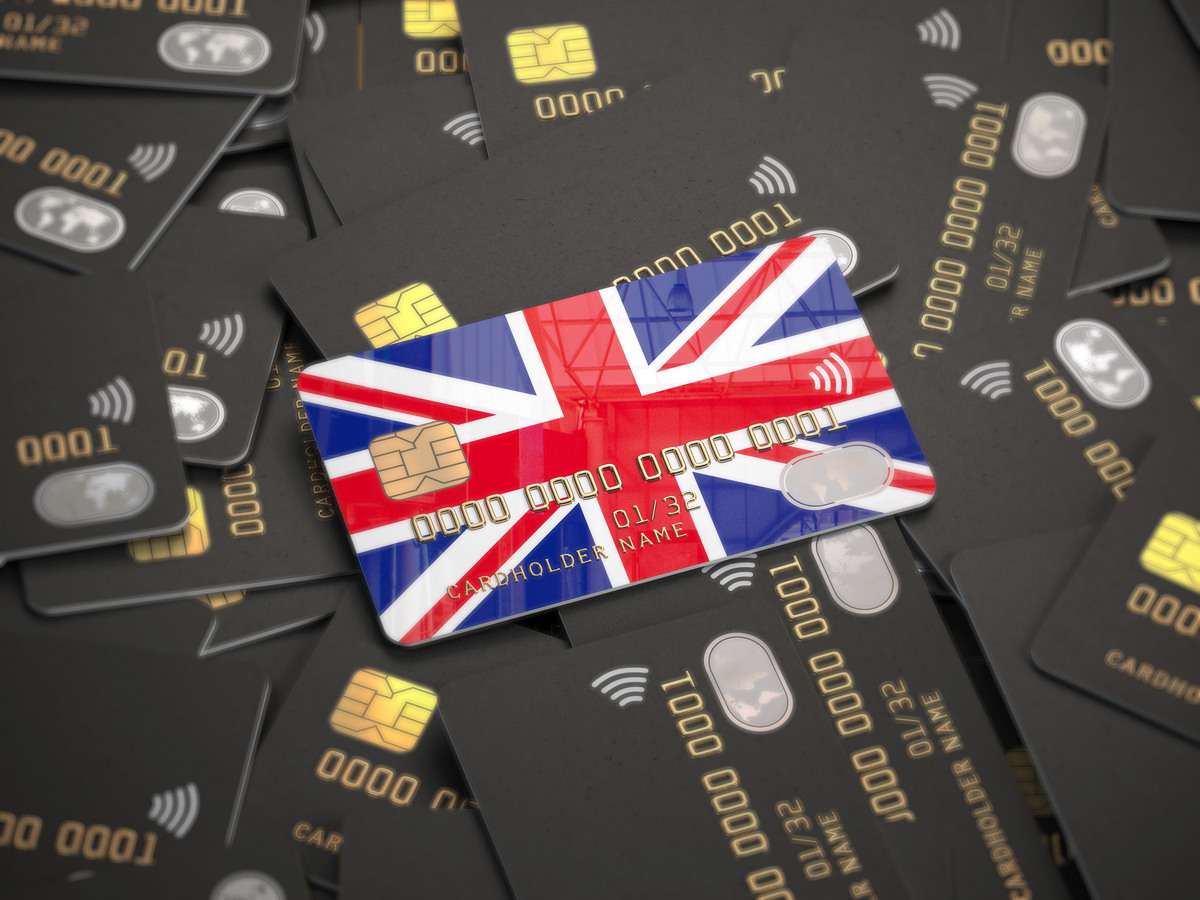
Debit cards dominate UK payments, with contactless at 39% and Faster Payments second overall. The UK is unusual among large markets in being debit-led rather than credit-led, overwhelmingly contactless, and home to the most mature open banking framework in the world.

For merchants, that combination produces a specific set of expectations. British consumers expect contactless everywhere, expect their debit card to work as the default, and increasingly expect a pay-by-bank option at checkout. The figures below come from UK Finance and Open Banking Limited rather than vendor estimates.

UK payment methods by the numbers: what UK Finance data shows

UK Finance, the trade body that publishes the authoritative UK Payment Markets report, recorded 49.7 billion payments in 2025, up 2% year on year. The breakdown matters more than the total.

  • Card payments accounted for 64% of all payments, covering debit, credit and charge cards, both physical and mobile
  • Debit cards alone made up more than half of all payments, remaining the UK’s most-used method
  • Contactless payments reached 19.2 billion, or 39% of all payments, rising 2% on the year
  • Faster Payments and other remote banking reached 6.2 billion, making it the second most-used payment method in the UK
  • Cash fell below 10% of all payments for the first time

There are now more than 100 million contactless debit cards in circulation in the UK, and 90% of mobile wallet users have a debit card set as their default. That last figure explains a lot about UK payment behaviour: the mobile wallet growth story in Britain is largely a debit card story wearing a different interface.

Debit and credit card payment methods in the UK

The debit-led character of the UK market is the first thing international merchants should internalise. In markets like the United States, credit and debit run close to even. In Britain, debit dominates, and credit is a secondary instrument used more deliberately.

Visa and Mastercard are effectively universal. American Express has meaningful presence but noticeably lower acceptance than in the US, particularly among smaller merchants, because of its cost. Gr4vy’s guide to the four credit card networks covers the differences, though Discover has minimal UK relevance.

For merchants, the practical consequence of debit dominance is interchange. UK and EU interchange caps mean card acceptance costs considerably less in Britain than in the United States, and the heavy debit skew pushes the blended rate lower still. Merchants arriving from the US market often find UK card economics comparatively favourable.

Contactless and mobile wallet payment methods in the UK

Contactless is not a feature of UK payments so much as the default behaviour. At 39% of all payments and roughly 60% of card transactions, tapping is what most British consumers do most of the time.

The contactless limit has been a live regulatory question. The single-transaction cap has sat at £100, and the Financial Conduct Authority published a policy statement in March 2026 revisiting the framework, giving firms more flexibility over limits. Merchants operating physical locations should keep an eye on how their acquirer implements any change.

Mobile wallets, principally Apple Pay and Google Pay, have grown to the point where over half of UK adults use them. As noted above, the overwhelming majority have a debit card loaded as default, so wallet transactions mostly resolve to debit economics. Gr4vy’s comparison of Apple Pay and Google Pay for merchants covers acceptance for both.

PayPal remains a significant online checkout option in the UK, particularly for consumers reluctant to enter card details on unfamiliar sites.

Open banking and Pay by Bank payment methods in the UK

This is where the UK genuinely differs from almost every other market, and where international merchants most often fail to plan.

Britain has the most mature open banking framework in the world, built on regulatory mandate rather than voluntary adoption. Open Banking Limited reported more than 19 million active user connections and over 40 million open banking payments per month by June 2026, up from roughly 16.5 million connections at the start of the year.

For merchants this surfaces as Pay by Bank: the customer authorises a payment directly from their bank account, authenticated in their banking app, settling over Faster Payments. The appeal is cost and finality. Pay by Bank avoids card interchange entirely, settles quickly, and carries no chargeback mechanism.

The newest development is commercial variable recurring payments, which began rolling out in 2026. VRPs allow a customer to authorise recurring bank payments within defined limits, which is effectively a direct debit with better control and instant settlement. For subscription businesses this is the first genuine UK alternative to card-on-file billing, and it is worth watching closely.

Gr4vy supports Pay by Bank through providers including Plaid and Trustly, alongside direct debit via GoCardless and Bacs.

Faster Payments and bank transfer methods in the UK

Faster Payments is the infrastructure underneath most UK real-time bank transfers, and at 6.2 billion payments it is the country’s second most-used payment method. In the fourth quarter of 2025 alone it processed roughly 1.5 billion payments worth close to £1.3 trillion, growing almost 9% year on year.

Merchants rarely integrate Faster Payments directly. It sits beneath open banking and Pay by Bank products, which is the practical route to accepting it.

Bacs Direct Debit remains the backbone of UK recurring billing, particularly for utilities, subscriptions, memberships and insurance. It is slow by modern standards, with a multi-day cycle, but it is deeply embedded in British consumer habit and significantly cheaper than card-on-file for regular billing. CHAPS handles high-value same-day transfers and is largely irrelevant to retail commerce.

BNPL payment methods in the UK

Buy now, pay later is well established in British e-commerce. Klarna is the most prominent, with Clearpay, the UK brand of Afterpay, also widely used. PayPal offers its own instalment product.

The regulatory position has changed materially. The Financial Conduct Authority brought BNPL under formal regulation from July 2026, introducing affordability checks and consumer protections that previously did not apply. Merchants selling into the UK should confirm how their BNPL provider has adapted, as the commercial terms and the checkout experience may both shift.

Gr4vy’s comparison of BNPL providers covers how the major providers differ on cost and coverage.

Is cash still used in the UK?

Less than almost anywhere comparable. Cash fell below 10% of all UK payments for the first time, continuing a decline that accelerated sharply after 2020. For online merchants this is irrelevant. For those with physical premises, cash acceptance is increasingly a service decision rather than a commercial necessity, though refusing it entirely remains contentious with some customer groups and has attracted parliamentary attention.

Cheques continue their long decline and are now marginal outside specific business and charitable contexts.

How UK merchants handle payment methods in practice

The method list matters less than how a business applies it, and two UK examples show different shapes of the same problem.

Donations. JustGiving, one of the largest online fundraising platforms in Britain, handles donation payments where every point of processing cost is money that does not reach the cause, and where donors give across many countries and methods. It worked with Gr4vy to optimise global donations, as set out in its case study. For UK charities and fundraising platforms, cost per donation and acceptance breadth do more work than they do in most retail categories.

Marketplaces and travel. Much Better Adventures, the UK adventure travel marketplace, selected Gr4vy to orchestrate payments and support global marketplace growth. Marketplace models add complexity that a single-provider setup handles poorly, particularly when customers are British but suppliers and currencies are not.

The pattern in both cases is that the UK method set is relatively settled, and the value sits in how payments are routed, what they cost, and how quickly a new method can be added when something like commercial VRPs arrives.

The best payment methods for UK merchants to accept

For most merchants selling into Britain, the working set is clear: Visa and Mastercard debit and credit, Apple Pay and Google Pay, PayPal, and a Pay by Bank option. Add Bacs Direct Debit for recurring billing, BNPL where basket sizes justify the cost, and American Express if your margins and customer base support it.

The more interesting question is what to do beyond acceptance. UK card economics are already favourable by international standards, which means the marginal gains sit in open banking adoption, routing across acquirers, and recovering failed payments. The open banking opportunity in particular is larger in Britain than anywhere else, and merchants who treat Pay by Bank as optional are leaving a genuine cost advantage unclaimed.

Managing that mix, and adding methods such as commercial VRPs as they mature, is the function payment orchestration performs. For how the UK compares with its neighbours, see Gr4vy’s guide to payment methods by country, and for the European picture, real-time payments across Europe.

Frequently asked questions

What are the most popular payment methods in the UK?

Debit cards are the most used, accounting for more than half of all UK payments. Card payments overall made up 64% of the 49.7 billion payments recorded by UK Finance in 2025. Faster Payments and other remote banking came second at 6.2 billion payments, contactless accounted for 39% of all payments, and cash fell below 10% for the first time.

Why do debit cards dominate in the UK?

British consumers have historically favoured debit over credit for everyday spending, and the pattern is reinforced by mobile wallets: 90% of UK mobile wallet users have a debit card set as their default. Credit cards are used more deliberately for larger or deferred purchases rather than as a default payment instrument.

What is Pay by Bank and should UK merchants accept it?

Pay by Bank lets a customer authorise a payment directly from their bank account, authenticated in their banking app and settled over Faster Payments. It avoids card interchange, settles quickly and has no chargeback mechanism. Given the UK has the world’s most mature open banking framework, with over 40 million open banking payments monthly by June 2026, it is worth accepting for most merchants, particularly on higher-value baskets.

How common is contactless in the UK?

It is the default. Contactless accounted for 19.2 billion payments in 2025, around 39% of all UK payments and roughly 60% of card transactions, and there are more than 100 million contactless debit cards in circulation. Any UK merchant with a physical presence needs contactless acceptance.

Is BNPL regulated in the UK?

Yes, since July 2026. The Financial Conduct Authority brought buy now, pay later under formal regulation, introducing affordability checks and consumer protections that did not previously apply. Merchants should confirm how their BNPL provider has adapted, as both commercial terms and the checkout experience may change.

What are variable recurring payments?

Commercial variable recurring payments, which began rolling out in 2026, let a customer authorise recurring bank payments within agreed limits. They function as a more controllable direct debit with instant settlement, and represent the first serious UK alternative to card-on-file for subscription billing. Adoption is early but worth monitoring.

Do UK merchants still need to accept cash?

Commercially, less and less. Cash dropped below 10% of all UK payments for the first time, and for online merchants it is irrelevant. Physical retailers increasingly treat cash as a service decision rather than a necessity, though declining it entirely remains contentious with some customer groups.

Is card acceptance cheaper in the UK than the US?

Generally yes. UK and EU interchange caps limit what card schemes can charge, and the UK’s heavy skew towards debit pushes blended rates lower still. Merchants expanding from the United States typically find UK card economics more favourable, which changes where optimisation effort is best spent.

Choosing the right payment methods for the UK market

Britain is a straightforward market to enter and an easy one to underoptimise. Cards work, contactless is universal, and a merchant can launch with a conventional setup and function perfectly well. The gap between adequate and good lies elsewhere.

That gap is mostly open banking. The UK built the deepest open banking framework in the world, Pay by Bank costs materially less than card acceptance, and commercial VRPs are about to make bank-based recurring billing viable. Merchants who treat these as experimental are passing up an advantage that exists in few other markets. The ones who adopt early will also be positioned when VRPs mature into a genuine alternative to card-on-file.

Gr4vy connects merchants to more than 400 payment providers and methods through a single integration, including cards, wallets, Pay by Bank, Bacs and UK BNPL providers. To talk through UK acceptance and where the cost savings sit, get in touch with our team.

Payment methods in the USA in 2027: a complete guide

Cards dominate US payments, with wallets, ACH, and BNPL filling the rest and cash at 1 in 7. For merchants used to markets where local methods decide whether a checkout converts, the United States is the unusual case: the card networks genuinely do carry the majority of volume, and a card-first checkout is a reasonable starting point rather than a mistake.

The places merchants get caught out are narrower and more specific. Which card networks are actually accepted, how debit behaves differently from credit, where ACH matters, which wallets are worth enabling, and the persistent one-in-seven payments still made in cash. The figures below come from the Federal Reserve’s own annual study rather than vendor estimates.

US payment methods by the numbers: what the Federal Reserve data shows

The authoritative source on US consumer payment behavior is the Federal Reserve’s Diary of Consumer Payment Choice, which has tracked payment habits every October since 2016. Its 2026 edition, published in May 2026 and covering 2025, found that US consumers made an average of 47 payments per month, split as follows:

  • 16 payments by credit card
  • 15 payments by debit card
  • 6 payments by cash
  • 6 payments by ACH
  • The remainder across checks, prepaid cards, and other instruments

Expressed as shares, that puts credit cards at roughly 34% of consumer payments and debit at 31%, together accounting for about two-thirds of all payments. That is the single most important fact for a merchant planning US acceptance.

Preference data shows a shift worth noting. Debit remains the most preferred in-person method at 40%, but credit has climbed to 38%, up from 24% in 2016. Cash sits third at 16%.

Cash has also proved more durable than the digital-payments narrative suggests. It accounted for 14% of payments, about one in seven, and was the third-most-used instrument for the sixth consecutive year. Four out of five consumers used cash in the previous 30 days, a higher share than used credit cards (71%) or debit cards (67%), and 90% said they plan to keep using it.

Credit card payment methods in the USA (and how debit differs)

Cards are the foundation of US acceptance, and four networks matter: Visa, Mastercard, American Express, and Discover. Visa and Mastercard are effectively universal. Amex carries higher interchange and historically lower acceptance, though that gap has narrowed. Discover has smaller share but meaningful reach, and is widely confused by consumers with the other networks.

A merchant selling in the US should accept all four unless there is a specific commercial reason not to. Declining Amex or Discover is a visible checkout loss for the customers who carry them. Gr4vy’s guide to the four credit card networks covers the differences in cost and acceptance.

The debit-credit distinction matters more in the US than in most markets. US debit transactions are subject to routing regulation that gives merchants choice over which network processes a debit transaction, which has direct cost consequences. Debit also carries different interchange treatment from credit, so a merchant’s effective processing cost depends heavily on its credit-to-debit mix.

Digital wallet payment methods in the USA

Wallet adoption in the US is substantial and still growing, though it sits on top of cards rather than replacing them. Most US wallet payments are a card presented through a wallet, which means the underlying economics follow the card.

Apple Pay and Google Pay are the main device wallets, reaching iPhone and Android users respectively. Both carry no merchant fee of their own and improve authorization rates through tokenization. Gr4vy’s comparison of Apple Pay and Google Pay for merchants covers why accepting both is the default.

PayPal remains one of the most widely used online checkout options in the US, with particular strength among consumers who prefer not to enter card details directly. Venmo, owned by PayPal, has moved from pure peer-to-peer into merchant checkout and skews younger. Cash App Pay has followed a similar path from P2P into merchant acceptance.

Click to Pay and Paze are the network and bank-led entries. Click to Pay is the card networks’ standardized online checkout, and Paze is a wallet backed by major US banks, launched to give issuers a position in online checkout. Both are newer and worth evaluating against a merchant’s specific customer base rather than enabling reflexively.

ACH and bank transfer payment methods in the USA

ACH is the backbone of US bank-to-bank payments, and its scale is easy to underestimate. Nacha, which governs the network, reported that the ACH Network processed 35.2 billion payments worth $93 trillion in 2025, up 4.9% in volume and 7.9% in value on the previous year. Within that, 8.1 billion were business-to-business payments, growing almost 10%, and Same Day ACH reached 1.4 billion payments worth $3.9 trillion, up 16.7%.

On the consumer side, Federal Reserve data puts ACH at an average of six payments per person per month, the same as cash.

For merchants, ACH matters most in recurring billing, high-value transactions, and B2B, where the cost advantage over cards is material and where the B2B growth figures show an ongoing migration away from checks. The tradeoffs are speed and failure handling: ACH settles more slowly than a card authorization, and returns behave differently from card declines. It is a poor fit for impulse e-commerce and a strong fit for subscriptions, invoices, and large baskets.

FedNow, the Federal Reserve’s instant payment rail launched in 2023, is often mentioned alongside ACH. For consumer-to-merchant payments it remains early, with volume concentrated in high-value business use. The scale gap is stark: the ACH Network’s record December 2025 month alone handled 3.22 billion payments, against real-time rails still measured in the hundreds of millions per quarter. Gr4vy’s comparison of real-time payment schemes covers where FedNow actually sits today.

Is Zelle a US payment method merchants can accept?

Zelle appears on almost every list of US payment methods, including AI-generated summaries, and this is misleading for merchants.

Zelle is a peer-to-peer transfer service built into most US banking apps, designed for sending money between individuals. It is not a standard merchant acceptance method, it offers no purchase protection, and transfers are effectively irrevocable. Zelle itself advises against using it to pay people or businesses you do not know and trust.

A merchant evaluating US payment methods should treat Zelle as useful consumer-side context rather than as a checkout option to enable. Listing it alongside card and wallet acceptance confuses two different things.

BNPL payment methods in the USA

BNPL has established itself in US e-commerce, particularly for mid and higher-ticket retail. Affirm is the most US-centric of the major providers and focuses on larger baskets with longer terms. Klarna and Afterpay are also widely used, with Afterpay strongest in fashion and beauty and Klarna broadest internationally.

BNPL costs merchants meaningfully more than card acceptance, typically running several percentage points higher, and the case for it rests on basket size uplift and reduced abandonment. Gr4vy’s comparison of BNPL providers covers the cost and coverage differences.

Cash and checks: how much do Americans still use them?

Neither is a digital acceptance decision, but both affect how merchants think about US commerce. Cash remains at roughly one in seven payments and is the backup instrument most consumers keep available, with 76% carrying cash and an average of $69 on hand. Checks persist mainly in B2B and certain bill payment contexts, well outside typical e-commerce.

For an online merchant neither is actionable. For anyone with a physical presence, the Fed data argues against assuming cash can be refused without cost.

How US merchants handle payment method coverage in practice

Industry averages only go so far. What the method mix looks like in a working US payment stack varies sharply by business model, and a few published examples make the differences concrete.

Donations and nonprofit. The Wikimedia Foundation, the San Francisco nonprofit behind Wikipedia, runs global donation payments where every point of cost is money that does not reach the cause, and where donors span many countries and methods. Its payments team described the problem as being stuck on a “payments treadmill,” with donor-focused initiatives taking years to ship. After moving to orchestration it reported $3 million in measurable ROI in its first year, as documented in its case study. For US nonprofits, the lesson is that donation payments reward cost and coverage work more than most categories.

Omnichannel retail. Trek, the Wisconsin bicycle manufacturer and retailer, sells both online and through physical stores, which in the US typically means two disconnected payment setups, fragmented reporting, and inconsistent customer experience. Trek unified payments across digital and physical retail instead of maintaining separate stacks. Any US merchant with both channels faces the same split.

Subscription and telehealth. FuturHealth, a US telehealth business, is in the category where failed recurring payments translate directly into lost patients. It implemented dynamic routing across multiple PSPs with retry logic to recover transactions that would otherwise have failed, completing the full integration in 27 days, as its case study reports. For US subscription businesses, decline recovery is usually worth more than adding another payment method.

The pattern across these is that the US method decision is rarely the hard part. Cards, wallets, and ACH cover most of it. The harder work is what happens after acceptance: routing for approval rates, recovering failed payments, and getting one view of performance across providers. Gr4vy reports recovering up to 14% of revenue from failed payments through routing and retries, which in a card-dominated market like the US is usually a larger lever than method coverage.

The best payment methods for US merchants to accept

For most merchants selling into the United States, the working set is narrower than the full list suggests: all four card networks, Apple Pay and Google Pay, PayPal, and ACH where recurring or high-value billing is involved. BNPL is worth adding in categories where basket size justifies the cost, and Venmo or Cash App Pay where the customer base skews younger.

The complication is less about which methods to accept and more about cost and performance across them. The US has a complex interchange environment, debit routing choices that affect cost directly, and meaningful approval-rate variation between acquirers. A merchant processing significant US volume will usually find more value in routing and cost optimization than in adding another method.

That optimization work, routing across acquirers and managing which methods appear where, is the function payment orchestration performs. For comparison with markets where the method mix matters far more than it does in the US, see Gr4vy’s guides to payment methods in Mexico and payment methods by country.

Frequently asked questions

What are the most popular payment methods in the USA?

Credit and debit cards dominate, together accounting for roughly two-thirds of all consumer payments according to the Federal Reserve’s 2026 Diary of Consumer Payment Choice. US consumers average 47 payments monthly: 16 by credit card, 15 by debit card, six by cash, and six by ACH. Digital wallets, BNPL, and checks make up the remainder.

What is the most used online payment method in the US?

Cards remain the most used method for online purchases, either entered directly or presented through a digital wallet. PayPal is the most widely used alternative online checkout option, with Apple Pay and Google Pay strong on mobile. Most wallet payments still resolve to an underlying card, so card acceptance remains the foundation.

Which payment methods should a US online store accept?

For most merchants: all four card networks (Visa, Mastercard, American Express, Discover), Apple Pay and Google Pay, and PayPal. Add ACH if you bill recurring or high-value transactions, BNPL in categories where basket sizes justify the higher cost, and Venmo or Cash App Pay if your customers skew younger.

Do Americans still use cash?

Yes, more than the digital-payments narrative suggests. Federal Reserve data puts cash at 14% of payments, about one in seven, and the third-most-used instrument for the sixth consecutive year. Four out of five consumers used cash in the previous 30 days, a higher share than used credit or debit cards, and 90% plan to continue using it.

Can merchants accept Zelle?

Not as a standard checkout method. Zelle is a peer-to-peer transfer service built into US banking apps for sending money between individuals. It offers no purchase protection, transfers are effectively irrevocable, and Zelle advises against using it with parties you do not know. It frequently appears on lists of US payment methods, but it is not a merchant acceptance option in the way cards, wallets, or ACH are.

What is the difference between debit and credit for US merchants?

Beyond consumer preference, the two carry different interchange treatment, so a merchant’s processing cost depends on its credit-to-debit mix. US debit is also subject to routing regulation giving merchants choice over which network processes a debit transaction, which has direct cost implications. Debit remains the most preferred in-person method at 40%, with credit close behind at 38%.

Is ACH worth accepting?

It depends on what you sell. ACH costs significantly less than cards and suits recurring billing, invoices, B2B, and high-value transactions. It settles more slowly than a card authorization and handles failures differently, which makes it a poor fit for impulse e-commerce. Federal Reserve data shows consumers averaging six ACH payments monthly, the same as cash.

How big is ACH in the US?

Very large. Nacha reported the ACH Network processing 35.2 billion payments worth $93 trillion in 2025, up 4.9% in volume year on year, including 8.1 billion business-to-business payments and 1.4 billion Same Day ACH payments worth $3.9 trillion. On the consumer side, Federal Reserve data shows an average of six ACH payments per person per month, matching cash.

Is BNPL popular in the US?

Yes, particularly for mid and higher-ticket retail, with Affirm, Klarna, and Afterpay the most prominent providers. Affirm is the most US-focused and handles larger baskets with longer terms. BNPL costs merchants several percentage points more than card acceptance, so the case for it depends on whether basket-size uplift offsets the fee in your category.

Choosing the right payment methods for the US market

The United States is the market where card-first instincts are mostly correct, which makes it the opposite problem from Brazil, Mexico, or Southeast Asia. The risk lies less in missing a dominant local method and more in accepting a reasonable set of methods, then leaving money on the table through interchange, debit routing, and acquirer performance that nobody is actively managing.

The Federal Reserve data also pushes back on a common assumption. US payment behavior has been remarkably stable for three years, cash has not disappeared, and credit has gained on debit rather than wallets displacing both. Merchants planning for a radically different US payment mix are planning for something the data does not yet show.

Gr4vy connects merchants to more than 400 payment providers and methods through a single integration, including the card networks, wallets, ACH, and BNPL providers that make up a US payment stack. To talk through US acceptance and cost optimization, get in touch with our team.
Payment orchestration meaning: benefits and how it works

(Updated – September 2026)

Payment orchestration is a technology layer that connects a merchant to multiple payment service providers (PSPs), acquirers and payment methods through a single integration, and routes each transaction to the option most likely to serve it best. Instead of building and maintaining a separate integration for every provider, a merchant connects once to the orchestration layer and controls how payments are routed, retried and reconciled across all of them from one place.

That single idea, a control layer sitting between the merchant and its payment providers, is what the rest of this guide works through: what orchestration is, how it works step by step, what it is good for, where its limits are, and how to tell whether a business needs it.

In short

  • Payment orchestration is a technology layer between a merchant’s checkout and its payment providers. One integration replaces a separate build for every PSP, payment method and fraud tool.
  • It raises authorization rates by sending each transaction to the provider most likely to approve it, and by retrying recoverable declines through a different route.
  • The gains are real but bounded. It does not remove provider fees, replace acquiring relationships, or approve a transaction every provider would decline.
  • It suits businesses running multiple markets, multiple providers, high volume, or recurring billing. A single-market business on one provider that performs well does not need it yet.
  • The main costs are implementation effort, platform fees on top of provider fees, and the ongoing work of owning routing logic.

What is payment orchestration?

Payment orchestration is the practice of managing multiple payment providers through one platform that decides how each transaction is processed. The orchestration layer connects to a merchant’s PSPs, acquirers, gateways, payment methods and fraud tools and coordinates them, so the merchant operates one integration and one set of rules rather than a tangle of separate connections.

The distinction that matters most is that orchestration is a layer, not a processor. It does not replace a merchant’s PSPs or acquirers. It sits above them and decides which one handles each transaction. That is why it is described as a control layer or a payment orchestration layer, and it is why a business can adopt orchestration without giving up the payment relationships it already has.

The category has grown as payments have become more complex. Independent research from Grand View Research valued the global payment orchestration platform market at USD 1,386.9 million in 2023 and projects USD 6,520.4 million by 2030, a compound annual growth rate of 24.7%.

The pressure behind that growth is concrete. The Wikimedia Foundation, which processes donations across 145 countries and more than 60 currencies, found that adding a single new PSP took an average of 18 months of engineering work, and adding one new payment method took three to six months. Its teams logged into six to eight separate provider consoles to pull transaction data. Annual donation processing cost had passed $8 million. That is what managing providers one by one looks like at scale.

Core insight: Orchestration does not replace your payment providers. It sits above them and decides which one handles each transaction, which is why adopting it does not mean tearing out existing relationships.

How does payment orchestration work?

Payment orchestration works by inserting a coordinating layer between the checkout and the payment providers, then applying rules and live data to route each transaction. Following one payment through the layer shows what happens at each step.

  1. Transaction initiation. A customer chooses a payment method at checkout and confirms. The transaction enters the orchestration layer instead of going directly to a single hard-wired provider.
  2. Routing decision. The layer evaluates the transaction against the merchant’s rules and live data, then selects the provider most likely to approve it at the best cost.
  3. Authentication and fraud checks. Where required, the layer applies authentication such as 3D Secure (3DS) and passes the transaction through the merchant’s chosen fraud tools before authorization.
  4. Authorization. The selected provider sends the transaction to the customer’s issuing bank, and the approve-or-decline response returns through the layer.
  5. Retry and fallback. If the decline is one another provider might approve, the layer retries through an alternative route or applies fallback logic, recovering payments a single-provider setup would have lost.
  6. Reconciliation and reporting. The layer records the transaction and consolidates data across every provider into one view, so reconciliation happens in one place rather than provider by provider.

The authorization sequence happens in the moment the customer waits. The routing intelligence and the unified data operate continuously behind it.

The signals routing rules can use

Routing quality depends on what the layer can see. Common signals include:

  • BIN range and issuing bank
  • Issuing country and billing location
  • Card scheme and card type (debit, credit, commercial)
  • Currency and transaction value
  • Payment method
  • Fraud score from a connected risk provider
  • Live provider performance: approval rate, latency, error rate
  • Issuer response code on a previous attempt
  • Custom metadata the merchant defines, such as customer tier or product category

Static routing, dynamic routing and failover

Three distinct behaviours get grouped under routing and are worth separating.

Static routing sends transactions according to fixed rules the merchant sets: this card type to that provider, this country to that acquirer. Predictable, and it requires someone to keep the rules current.

Dynamic routing selects a provider using live performance data rather than a fixed order, so volume moves toward whichever provider is approving at the highest rate. Gr4vy’s guide on intelligent payment routing covers how this is built and tuned.

Failover redirects transactions when the primary provider is unavailable, returning errors, or degrading. It is the mechanism that removes the single point of failure of a single-provider setup.

How dynamic retries recover declines

Not every decline is final. Soft declines, issuer-side timeouts and provider errors can often be recovered by reattempting through a different route. A retry strategy is configured against the issuer response code, with timing, attempt limits, and whether to trigger 3DS on the second attempt.

Between 60 and 70 percent of card declines are recoverable. The recovery rate depends on the decline mix, not on the platform. Gr4vy’s guide on how to increase payment approval rates covers the mechanisms in more depth.

Core insight: Static routing follows your rules, dynamic routing follows live performance, and failover handles provider outages. A platform that only does the first is not doing what most of this category promises.

What is a payment orchestration layer?

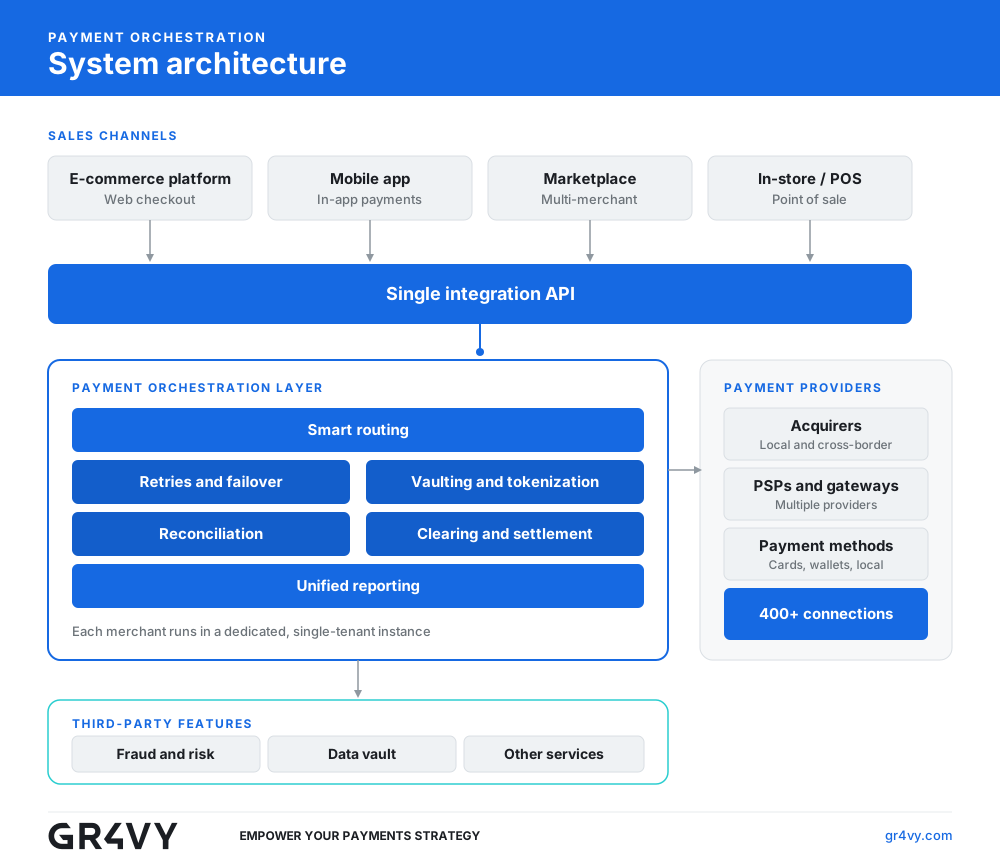
A payment orchestration layer is the technical framework performing the coordination above. It connects to every provider, holds the routing rules, applies retries and fallback, stores payment credentials in a provider-agnostic way, and unifies reporting. When people say payment orchestration platform, the layer is the engine inside it. The layer is what lets a merchant add or change a provider through configuration rather than a new engineering integration.

payment orchestration meaning

Benefits of payment orchestration

Each of these follows from the same capability: routing across many providers instead of depending on one.

Higher authorization and approval rates

Sending each transaction to the provider most likely to approve it, and retrying recoverable declines through an alternative, recovers revenue a single-provider setup loses.

Australian retailer Baby Bunting recorded a 2.8% uplift in authorization rates within four months of moving to a dual-acquirer setup with failover routing. Sports management platform PlayHQ saw a 6.9% improvement in approvals after adding Mastercard Click to Pay through an orchestration layer.

Lower processing costs

Routing introduces competition between providers and lets a merchant send each transaction along the lowest-cost path that will still get it approved, using local acquiring to avoid cross-border fees. Payment cost stops being a fixed expense and becomes something the business manages.

Mattilda, which handles tuition collection for private schools across Latin America, cut payment costs by 60% by routing across providers rather than standardising on one.

Faster access to methods and markets

The orchestration layer gives access to payment methods, currencies and local acquirers through one integration. Adding a method becomes a configuration change rather than an engineering project.

Ding, the international mobile top-up service, went from three to six weeks down to three days to add a new gateway and local payment method when launching Venmo for its US customers. Gr4vy connects merchants to more than 400 payment providers, methods and anti-fraud services through its connections library.

Resilience and no single point of failure

One provider means one point of failure. Connecting several and rerouting around any that fail keeps payments moving when a provider degrades. For a business where downtime is lost revenue, this alone can justify orchestration.

Unified data and operational control

Running providers separately fragments reporting and forces every change through engineering. Orchestration consolidates data across all providers into one view and lets payments teams build and adjust routing rules from a no-code dashboard.

Core insight: The benefits compound. Better routing lifts approvals, unified data shows where to route next, and configuration instead of code means the team can act on what it sees.

payment orchestration architecture

What a payment orchestration platform includes

A platform bundles the orchestration layer with the tools needed to run it. Expect:

  • A single integration to many providers and methods
  • A routing engine configurable without code
  • Retry, failover and fallback logic
  • Provider-agnostic vaulting and tokenization of payment credentials
  • Support for authentication such as 3DS
  • Fraud tool integration
  • Unified reporting and reconciliation across every connected provider

Architecture differs between platforms and the difference has consequences. Some run all merchants together in a shared, multi-tenant environment. Others, including Gr4vy, deploy a dedicated single-tenant instance for each merchant, which isolates that merchant’s data and payment traffic and gives control over data residency. This matters most for larger merchants and regulated markets, where data isolation is a requirement rather than a preference. Gr4vy’s Infrastructure as a Service model covers how this is deployed.

What payment orchestration does not solve

Orchestration is sometimes described as though it fixes everything. It does not. These limits are worth stating plainly, because they set realistic expectations for what adopting it changes.

  1. It does not remove provider fees. Every PSP’s pricing still applies. Orchestration manages how those providers are used; it does not negotiate them away.
  2. It does not replace acquiring relationships. You still contract with acquirers and PSPs, and their pricing and approval behaviour set the ceiling on what routing can recover.
  3. It does not approve a transaction every provider would decline. A payment declined for genuinely insufficient funds stays declined. Dynamic retries and alternative routing recover soft declines and provider-side failures, not every failed payment.
  4. It does not eliminate PCI scope. Vaulting card data outside your own systems reduces the burden significantly, but obligations remain wherever card data touches your environment.
  5. It does not fix checkout abandonment caused by product, pricing or delivery. Only the share driven by payment friction, a missing local method or a preventable decline is addressable at this layer.
  6. It does not run itself. Routing rules need configuring thoughtfully and maintaining as provider performance changes. Value tracks the attention given to them.
  7. It adds a dependency. Putting a layer at the centre of the payment stack means that layer’s own reliability matters. Its uptime, redundancy and whether it profits from routing decisions are all worth scrutinising.
  8. It carries its own cost. Setup, subscription or per-transaction fees sit on top of provider costs, so the case rests on routing and resilience gains outweighing that added layer.

None of these is a reason to avoid orchestration. Each is a reason to adopt it deliberately.

Core insight: The honest test is whether orchestration solves a specific, quantifiable problem for your business, not whether it sounds like a natural next step.

Who needs payment orchestration, and who does not

Orchestration is not necessary for every business.

You need orchestration if:

  • You sell across multiple countries, where local acquiring and local payment methods materially change approval rates and reach
  • You use, or plan to use, more than one PSP or acquirer
  • Payment downtime is costly enough that resilience justifies the investment on its own
  • You run high volume, where routing on cost and recovering declines produces meaningful savings
  • You run subscriptions or recurring billing, where recovering failed payments directly reduces involuntary churn
  • Your approval rates vary noticeably between markets or corridors

The case is weak if:

  • You operate in a single market with modest volume
  • One provider already meets your needs and performs well
  • You have no near-term plan to add providers or markets
  • Nobody on your team would own routing logic and provider performance
  • Your payment problems are really product, pricing or delivery problems

If you want to put numbers against your own situation, Gr4vy’s ROI calculator models the expected gain against your current volume and approval rates.

Core insight: Match the decision to your actual payment complexity. Multiple providers, multiple markets, meaningful volume or recurring billing are the conditions that make orchestration pay.

payment orchestration meaning

Payment orchestration vs a single PSP

The usual alternative to orchestration is one payment service provider bundling gateway, processing and acquiring together.

Single PSPOrchestration layer
Integrations to maintainOneOne, covering many providers
Adding a providerNot applicableConfiguration change
Adding a local methodNew integration, often monthsConfiguration change
Approval ratesOne provider’s performanceRouted to the best performer per transaction
Provider outagePayments stopFailover to an alternative
Negotiating positionOne relationshipComparative performance data across providers
ReportingOne dashboardOne dashboard across all providers
Card dataHeld by that PSPHeld in a provider-agnostic Vault
Operational overheadLowerRouting logic to own and maintain
Platform costNone beyond provider feesPlatform fee on top of provider fees

A single PSP is simpler and can be the right answer. The tradeoff is one set of approval rates, one pricing relationship and one point of failure. For the detailed comparisons, see Gr4vy’s guides on payment orchestration vs a payment processor and payment orchestration vs payment aggregators.

How to choose a payment orchestration platform

Eight criteria, roughly in order of how often they turn out to matter.

1. Coverage depth in your priority markets

Connector counts are a weak signal. What matters is whether the platform supports the providers, methods and local acquirers in the markets you actually sell in, and whether it has a track record in your sector.

2. Whether the platform is genuinely neutral

Some orchestration providers are also payment processors. When a platform earns more from routing transactions one way than another, its routing recommendations carry a conflict. Ask directly how the platform makes money and whether its economics change based on where transactions go.

3. Sophistication of routing and recovery logic

Does routing respond to live performance or only to fixed rules? How many signals can a single rule evaluate? Can you run controlled tests between providers, version rule sets, and configure retries against issuer response codes rather than a blanket delay?

4. Data ownership and portability

Card data held inside one provider is what makes switching expensive. Ask what happens to your tokens if you leave: whether you can export as PSP token, Network Token or card push, and whether the platform has actually done it for a customer. Gr4vy covers this under data portability.

5. Security and compliance

PCI DSS Level 1 certification, data residency options, and clarity about which obligations transfer to the platform and which stay with you. Gr4vy’s guide on PCI DSS compliance and payment orchestration covers the security dimension.

6. Reliability and redundancy

The layer sits at the centre of the stack, so its own uptime matters as much as your providers’. Ask about uptime history, incident communication, and whether true resilience requires running direct provider integrations as a fallback alongside it.

7. How much your team can do without engineering

The gap between platforms is largest here. Can a payments manager add a provider, change a routing rule, or enable a new method without a release? If not, the operational independence orchestration promises does not arrive.

8. Implementation and support

Ask for a realistic timeline with references at comparable scale. FuturHealth completed its integration in 27 days. The Wikimedia Foundation moved 90% of its payment volume within a year. Both had dedicated support through the process.

Core insight: Two questions separate platforms more than any feature list: how does it make money from your routing, and what happens to your card data if you leave.

Payment orchestration and agentic commerce

AI agents that shop, compare and transact on a consumer’s behalf are a new traffic type, and existing payment stacks were not built for them. Merchants need a way to identify agent-initiated transactions, route them separately, and hold them to their own limits.

Because orchestration already sits at the control layer, it is positioned to do this. Agent transactions can be marked, routed through their own rules, sent to different providers or fraud tools, and capped, without rebuilding the payment stack. That is the broader point in miniature: an orchestration layer lets a business adopt new payment developments through configuration rather than re-engineering. Gr4vy has built an early version of exactly this, described in its guide on payment orchestration for agentic commerce.

Frequently asked questions

What is payment orchestration in simple terms?

Payment orchestration is a technology layer that connects a merchant to many payment providers through one integration and automatically routes each transaction to the provider most likely to approve it at the best cost. Instead of managing separate connections to each provider, the merchant manages one platform and one set of rules. It coordinates payments instead of replacing the providers themselves.

How does payment orchestration work?

It inserts a coordinating layer between the checkout and the payment providers. When a customer pays, the layer evaluates the transaction against the merchant’s rules and live data, routes it to the best-suited provider, applies authentication and fraud checks, and if the transaction is declined can retry it through another provider. It then consolidates the data from every provider into one unified view for reporting and reconciliation.

What is a payment orchestration layer?

A payment orchestration layer is the technical framework that connects to all of a merchant’s payment providers, holds the routing rules, applies retries and fallback, stores payment credentials in a provider-agnostic way, and unifies reporting. It is the engine inside a payment orchestration platform that does the coordination, and it is what allows a merchant to add or change a provider through configuration instead of a new engineering integration.

Is payment orchestration a single point of failure?

Used correctly, orchestration reduces single points of failure rather than creating one, because it connects multiple providers and reroutes around any that fail. The consideration is the orchestration platform’s own reliability, since it sits at the center of the payment stack. This is why the platform’s uptime and redundancy architecture are worth evaluating, and why platforms are designed so the layer itself is resilient.

How much does payment orchestration cost?

An orchestration platform carries its own fees, which may be setup, subscription, or per-transaction, and these sit on top of the underlying costs of the payment providers themselves. The case for orchestration rests on the gains (higher approval rates, lower routing costs, reduced downtime, less engineering overhead) outweighing that added layer of cost, which is why the honest way to evaluate it is to model the specific expected gain against the specific cost for the business.

Do all businesses need payment orchestration?

No. Orchestration is most valuable for businesses selling across multiple markets, using more than one provider, running high volume, or depending on recurring payments. A small, single-market business with one provider that meets its needs may find a single PSP entirely sufficient, and the added cost and complexity of orchestration would not yet pay for itself. The decision should match the business’s actual payment complexity.

What is the difference between payment orchestration and a PSP?

A payment service provider (PSP) processes payments, often bundling a gateway, processing, and acquiring. Payment orchestration is a layer that sits above multiple providers, including PSPs, and routes between them. A single PSP is simpler but means one set of approval rates and one point of failure; orchestration adds control, redundancy, and the ability to optimize across many providers. Some businesses use a PSP directly; others use orchestration to coordinate several.

Does payment orchestration replace my payment providers?

No. Orchestration is a coordinating layer rather than a processor. It sits above a merchant’s existing PSPs, acquirers, and gateways and decides which handles each transaction, so a business can adopt orchestration while keeping the payment relationships it already has. It manages how providers are used rather than replacing them.

How does payment orchestration help with international expansion?

Entering a new market requires supporting local payment methods and, ideally, local acquiring for higher approval rates. Orchestration provides access to those methods and acquirers through one integration, so adding a market becomes a configuration step instead of a separate engineering project for each country. This is one of the most common reasons cross-border businesses adopt orchestration.

Where payment orchestration is heading

Payment orchestration began as a way to manage the growing complexity of digital payments, and it has become the control layer through which many merchants run their entire payment operation. The core value has stayed constant: connect many providers through one integration, route each transaction intelligently, add resilience, and keep ownership of the data and the decisions. What changes is the range of things that control layer can do, from lifting approval rates and cutting costs today to coordinating agent-initiated transactions as commerce shifts toward AI.

For a business, the practical question is not whether orchestration is impressive in the abstract but whether its own payments are complex enough to benefit: multiple providers or markets, meaningful volume, costly downtime, or recurring billing to protect. Where those conditions hold, orchestration turns a fragmented, engineering-bound payment operation into one a team can control and optimize directly.

Gr4vy is a cloud-native payment orchestration platform that connects merchants to more than 400 payment providers and methods through a single integration, with each merchant running in its own dedicated instance for control over data and configuration. To talk through whether orchestration fits your payment operation, get in touch with our team.
What is an account funding transaction (AFT)?

An account funding transaction (AFT) is a card payment that loads money into an account. With no goods or services changing hands, the cardholder is simply moving their own money from a card onto a wallet balance, a prepaid card, a trading account, or into a transfer they intend to send to someone else.

That distinction used to be a technicality. It is now a card scheme requirement. Visa has required forex and crypto deposits to be processed as AFTs since January 2025, and Mastercard’s equivalent rules took effect in August 2025. Merchants in the affected categories who still process deposits as ordinary purchases are non-compliant, and the consequences show up as declines before they show up as fines.

AFT, purchase, and OCT: three different things

Card payments that look similar at checkout behave differently in the scheme rules, and the three transaction types here are easy to confuse.

A purchase exchanges money for goods or services. The cardholder pays a merchant and receives something in return.

An account funding transaction pulls money from a card to fund an account. Nothing is bought. The money lands in a balance the cardholder or a recipient controls, and the card networks classify it as funding instead of spending.

An original credit transaction (OCT) pushes money in the other direction, from a merchant out to a card. This is the payout leg: winnings, withdrawals, refunds of balance, disbursements.

AFTs and OCTs frequently pair in the same business, since a deposit-and-payout platform pulls funds in with an AFT and pays them out with an OCT. Visa is explicit that the two are independent transactions even when an AFT precedes a corresponding OCT, so they are authorised, priced, and settled separately.

For the related distinction between who initiates a transaction, Gr4vy’s guide to merchant-initiated and customer-initiated transactions covers a different axis of the same classification problem.

Which merchants have to use AFTs

The requirement follows merchant category code. Acquirers generally require AFT origination for merchants operating under codes covering money transfer, stored value and prepaid top-up, quasi-cash and cryptocurrency, gambling, and securities or trading accounts. Two of the most commonly cited are MCC 4829 for money transfer and MCC 6540 for stored value account funding, where all authorisation requests must be processed as AFTs.

In practice this captures a recognisable set of businesses: forex and CFD brokers taking client deposits, crypto exchanges funding customer balances, online gambling operators accepting stake deposits, remittance and money transfer services, prepaid card issuers handling reloads, and digital wallet providers whose customers top up by card.

There are exceptions worth knowing. Single merchant wallets, where the balance can only be spent with that one merchant, are topped up as purchase transactions instead of AFTs. Certain staged digital wallet transfers carrying the relevant business application identifier are also treated as genuine purchases. The exact rules vary by network and jurisdiction, so the acquirer is the authority on any specific case.

What an AFT requires that a purchase does not

The processing difference is mostly about data. Visa and Mastercard require sender and recipient information on account funding transactions, which a standard purchase does not carry.

The transaction must be flagged with the appropriate identifier, the Business Application Identifier for Visa or the Transaction Type Identifier for Mastercard, so the networks can apply AFT rules rather than purchase rules. Alongside that flag, the request carries details of the party sending the funds and the account being funded. For money transfer use cases this extends to recipient name and account details, which exists to support anti-money-laundering obligations instead of payment mechanics.

Two downstream consequences follow. AFTs are priced from a separate interchange schedule, so the cost of an AFT differs from the cost of an equivalent purchase. And issuers commonly apply different risk treatment to AFTs, including their own velocity limits and spending caps, which means approval behaviour is not the same as it would be for a purchase of identical value.

How an AFT is processed

The flow resembles a normal authorisation with additional payload and different rules applied along the way.

The cardholder enters card details to fund a deposit, top-up, or transfer, and provides any sender information the merchant is required to collect. The merchant’s payment system sends an authorisation request to its acquirer, flagged as an AFT and carrying the sender and recipient data. The acquirer routes it through Visa or Mastercard, which recognises the AFT indicator and applies AFT processing rules, interchange, and risk parameters instead of the purchase equivalents.

The issuer then evaluates the request under its own AFT risk thresholds, which may differ materially from how it would treat a purchase. If approved, settlement proceeds on standard timelines but prices from the AFT interchange schedule. Once settled, the merchant credits the funded account, and if a payout follows it is originated separately as an OCT.

What happens if you classify deposits wrongly

This is the part that turns a technical detail into an operational problem. Processing a deposit as a purchase in a category where AFT is mandated is a compliance failure, and it surfaces in several ways.

Issuers increasingly decline transactions that appear to be funding but arrive classified as purchases, particularly in higher-risk categories, so the first symptom is usually an unexplained rise in declines. Beyond that sit scheme fines and, in sustained cases, restrictions on processing. Merchants in affected verticals also risk acquirer intervention, since the acquirer carries responsibility for AFT origination being enabled correctly.

The reverse error matters too. Flagging ordinary purchases as AFTs applies the wrong interchange and the wrong risk treatment, which costs money and can distort approval rates. Correct classification, in both directions, is the requirement.

Setting up AFT processing

Three things need to be true before a merchant in an affected category can process deposits compliantly.

The acquirer has to have AFT origination enabled for the merchant, under the correct MCC. This is the gating step and is handled with the acquirer instead of in the merchant’s own systems.

The payment provider or payment stack has to support sending the AFT flag and the required sender and recipient fields. A provider that cannot populate the identifier and the compliance data cannot process compliant AFTs, regardless of what the acquirer has enabled. Gr4vy supports account funding transactions, including the data fields the schemes require.

The merchant’s own checkout and back office have to collect and retain the required information, which for money transfer cases includes recipient details that a normal checkout would never ask for.

Merchants operating across several acquirers or markets face this setup repeatedly, because AFT enablement and the exact rules vary by acquirer and jurisdiction. Keeping transaction classification consistent across providers is one of the practical arguments for managing acceptance through a single coordinating layer, which is what payment orchestration provides.

Frequently asked questions

What is an account funding transaction?

An account funding transaction (AFT) is a card transaction that pulls money from a cardholder’s card to fund an account instead of buying goods or services. The funded account might be the cardholder’s own wallet, prepaid card, or trading balance, or an account belonging to someone else in the case of money transfer. Card networks classify it as funding instead of spending, which carries different rules, data requirements, and interchange.

What is the difference between an AFT and a purchase?

A purchase exchanges money for goods or services; an AFT moves money into an account with nothing bought. The practical differences are that AFTs must be flagged with a specific identifier, must carry sender and recipient data that purchases do not, are priced from a separate interchange schedule, and are assessed by issuers under different risk rules.

What is the difference between an AFT and an OCT?

An AFT is a pull transaction that takes money from a cardholder’s card into an account. An original credit transaction (OCT) is a push transaction that sends money from a merchant out to a card, used for payouts and withdrawals. Deposit-and-payout businesses use both, and Visa treats them as independent transactions even when an AFT precedes a related OCT.

Which merchants must process AFTs?

Requirements follow merchant category code, and typically capture money transfer services, stored value and prepaid top-up, quasi-cash and crypto, gambling, and securities or trading accounts. MCC 4829 and MCC 6540 are commonly cited as codes where all authorisation requests must be processed as AFTs. Acquirers confirm the requirement for a specific merchant.

When did AFT become mandatory?

Visa required forex and crypto deposit transactions to be processed as AFTs from January 2025, and Mastercard’s corresponding rules took effect in August 2025. Merchants in these categories processing deposits as ordinary purchases after those dates are not compliant with scheme rules.

What data does an AFT require?

Beyond a normal authorisation, an AFT carries a flag identifying it as account funding, the Business Application Identifier for Visa or Transaction Type Identifier for Mastercard, and sender and recipient information covering the party funding the transaction and the account being funded. Money transfer use cases require fuller recipient detail, reflecting anti-money-laundering obligations.

Does an AFT cost more than a purchase?

It is priced differently. AFTs draw on a separate interchange schedule from purchases, so the cost of an AFT is not the same as the cost of an equivalent purchase, and whether it is higher depends on the category, region, and card type. Merchants should confirm AFT pricing with their acquirer rather than assuming purchase rates carry over.

Are AFTs declined more often?

They can be. Issuers frequently apply different risk treatment to account funding transactions, including separate velocity limits and caps, so approval behaviour differs from purchases of the same value. A sudden rise in declines is also a common first symptom of deposits being misclassified as purchases in a category where AFT is mandated.

Getting classification right

Account funding transactions are a good example of a payment detail that looks like paperwork until it starts costing money. The classification carries real consequences: different data, different interchange, different issuer risk treatment, and, in mandated categories, a compliance obligation with deadlines that have already passed.

For merchants in forex, crypto, gambling, remittance, prepaid, or wallet businesses, the practical questions are whether the acquirer has AFT origination enabled under the right MCC, whether the payment stack can send the required identifiers and compliance data, and whether the checkout collects what the schemes ask for. Getting any of the three wrong produces the same symptom, which is transactions failing for reasons that look unrelated to the actual cause.

Gr4vy supports account funding transactions alongside more than 400 payment providers and methods through a single integration, so classification stays consistent as acquirers and markets are added. To talk through AFT setup for your category, get in touch with our team.

Payment methods in Southeast Asia: a market-by-market guide

Cards reach under 15% of shoppers in most Southeast Asian markets; wallets and QR rails dominate. A merchant entering the region with a Visa and Mastercard checkout is addressing a small fraction of customers, well short of even a minority.

The harder truth is that there is no single Southeast Asian payment setup to build. The region’s digital payments market has passed a trillion dollars in transaction value, but it splits into six markets with different dominant rails, different wallets, and different consumer habits. What they share is the structure underneath: government-built real-time payment systems and national QR standards, with locally entrenched wallets riding on top. Global wallets barely feature.

The regional pattern, and why it matters

Across Southeast Asia, three layers stack in the same order.

At the base sit state-built instant payment rails: BI-FAST in Indonesia, PromptPay in Thailand, DuitNow in Malaysia, PayNow in Singapore. These were built by central banks to reduce cash dependency, and they succeeded.

Above them sit national QR standards: QRIS in Indonesia, PromptPay QR in Thailand, DuitNow QR in Malaysia, QR Ph in the Philippines, VietQR in Vietnam, SGQR in Singapore. These made acceptance nearly free for small merchants, which is why street vendors and hawker stalls take digital payments across the region.

At the top sit local wallets, which do not operate their own rails but add stored value, loyalty, and lending on top of the national infrastructure. This is the layer merchants integrate with, and it is almost entirely local: GCash, GrabPay, GoPay, OVO, DANA, ShopeePay, Touch ‘n Go, TrueMoney, Boost, Maya, MoMo.

Cross-border QR interoperability now links Indonesia, Thailand, Singapore, Malaysia, and the Philippines, letting a consumer from one market pay in another. The region is integrating faster than most merchants realise.

MarketDominant railLeading walletsCards’ position
IndonesiaQRIS, BI-FASTGoPay, OVO, DANA, ShopeePayMarginal
PhilippinesQR Ph, InstaPayGCash, Maya, ShopeePayMarginal, cash still heavy
ThailandPromptPayTrueMoney, Rabbit LINE PaySecondary
MalaysiaDuitNow, FPXTouch ‘n Go, Boost, GrabPayMeaningful
SingaporePayNow, SGQRGrabPay, ShopeePayStrong
VietnamVietQRMoMo, ZaloPay, ShopeePayMarginal

Indonesia

Indonesia is the region’s largest digital payments market and has moved away from cash faster than almost anywhere. Cash fell from 77% of point-of-sale value in 2019 to 36% in 2025, driven by two Bank Indonesia initiatives: BI-FAST, the instant transfer rail, and QRIS, the national QR standard. By August 2025, QRIS connected around 40 million merchants and 57 million users.

The wallet layer is genuinely competitive, with GoPay (anchored to the Gojek super-app), OVO, and DANA all holding meaningful share, alongside ShopeePay for Shopee-anchored commerce. Most Indonesian consumers hold several wallets and move between them based on promotions, which means no single wallet integration wins the market. Reports put regular mobile wallet use among Indonesian consumers above 90%.

For a merchant, Indonesia requires wallet coverage in depth rather than one flagship integration.

Philippines

The Philippines runs the region’s most interesting split. Digital wallets took 41% of e-commerce value and 29% of point-of-sale value in 2025, while cash still accounted for around 42% of in-store value. Digital adoption and cash dependence coexist rather than replacing one another, largely because a substantial share of the population remains unbanked.

GCash is the dominant force, with around 94 million users connected to more than 6 million merchants, moving roughly PHP 500 billion each month. It functions as the primary financial interface for many Filipinos, delivering welfare payments and remittances alongside commerce. Maya is the main challenger, positioned toward younger users with integrated savings and credit.

Merchants selling into the Philippines should treat GCash as close to mandatory and plan for cash-on-delivery to remain relevant in parallel.

Thailand

Thailand has the most dominant state rail in the region. PromptPay, launched by the Bank of Thailand in 2017, became the country’s most common payment method, and account-to-account payments reached 44% of e-commerce value and 43% of point-of-sale value in 2025, the highest A2A share in Southeast Asia.

The wallet layer is correspondingly thinner, though TrueMoney holds a majority of mobile wallet traffic and Rabbit LINE Pay has presence through the LINE messaging app. A merchant in Thailand needs PromptPay-linked acceptance and Thai QR support more than it needs a broad wallet portfolio.

Malaysia

Malaysia has the region’s highest overall digital payment adoption, above 80%, and a more balanced mix than its neighbours. Digital wallets took 26% of e-commerce and 32% of point-of-sale value in 2025, led by Touch ‘n Go and Boost, with GrabPay and ShopeePay also present. DuitNow provides the instant rail and QR standard, and FPX remains important for higher-value online bank transfers.

Cards retain more relevance here than in Indonesia or the Philippines, so a card-plus-wallet setup covers Malaysia better than it covers most of the region.

Singapore

Singapore is the most card-friendly market in Southeast Asia and the least representative of it. Cards and global wallets work here in a way they fail to elsewhere, though local methods still matter: PayNow for transfers, SGQR as the unified QR standard, and GrabPay as the leading local wallet with roughly a third of wallet share.

Merchants often use Singapore as a regional entry point and then discover their Singapore setup does not travel. It is the region’s exception, and a poor template for the rest.

Vietnam

Vietnam runs on VietQR and a competitive wallet market led by MoMo, with more than 40 million users, alongside ZaloPay and ShopeePay. Card penetration is low and wallet adoption is high, putting Vietnam closer to the Indonesian pattern than the Singaporean one.

What this means for a merchant’s payment stack

Two conclusions follow from the market-by-market picture, and they pull in the same direction.

The first is that regional coverage means many integrations. Serving Southeast Asia properly involves wallets in each market, national QR acceptance, and bank transfer rails, with the right subset shown to each country’s customers. A single wallet or a single regional provider does not cover it.

The second is that the mix keeps moving. Cash share in Indonesia halved in six years. QRIS went from launch to tens of millions of merchants. BNPL grew to reach a large share of regional e-commerce shoppers. A method set assembled today will need revisiting.

Both point to the same operational requirement: adding or changing a payment method per market has to be cheap and fast, or it does not happen. That is the problem payment orchestration addresses, connecting the providers that carry these methods through one integration and controlling which appear in which market through configuration. Gr4vy supports GCash, GrabPay, DANA, OVO, ShopeePay, TrueMoney, Touch ‘n Go, Boost, LinkAja, Maya, and Thai QR among others, so regional coverage does not require a separate build per wallet.

For comparable markets with strong local methods, see Gr4vy’s guides to payment methods in India and payment methods in Brazil, and for the wider framing, local payment methods versus international card schemes.

Frequently asked questions

Digital wallets and national QR-based transfers dominate, with the specific methods differing by country: GoPay, OVO, and DANA in Indonesia; GCash and Maya in the Philippines; PromptPay and TrueMoney in Thailand; Touch ‘n Go, Boost, and DuitNow in Malaysia; PayNow and GrabPay in Singapore; MoMo and VietQR in Vietnam. Cards reach under 15% of potential customers in most of these markets.

Can I sell in Southeast Asia with cards only?

Not effectively. Cards account for a small minority of potential customers across most ASEAN markets, with Singapore and to some extent Malaysia the exceptions. A card-only checkout in Indonesia, the Philippines, Thailand, or Vietnam misses the large majority of consumers, who pay through wallets and national QR rails instead.

What is QRIS?

QRIS is Indonesia’s national QR code standard, built by Bank Indonesia to unify QR acceptance across providers. By August 2025 it connected roughly 40 million merchants and 57 million users, and together with the BI-FAST instant transfer rail it drove Indonesian point-of-sale cash share down from 77% in 2019 to 36% in 2025.

Is GCash necessary to sell in the Philippines?

For most merchants, effectively yes. GCash has around 94 million users and connects to more than 6 million merchants, moving roughly PHP 500 billion monthly, and serves as the primary financial interface for a large share of Filipinos including many without bank accounts. Digital wallets took 41% of Philippine e-commerce value in 2025, with GCash the dominant provider.

Which Southeast Asian market uses account-to-account payments most?

Thailand. Account-to-account payments reached 44% of e-commerce value and 43% of point-of-sale value in 2025, the highest share in the region, driven by PromptPay, the instant payment system launched by the Bank of Thailand in 2017.

Do I need different payment methods for each Southeast Asian country?

Largely yes. The region is six distinct markets with different dominant rails and wallets, and consumer habits vary sharply between them. A setup built for Singapore, the most card-friendly market, will not serve Indonesia or Vietnam. Merchants generally need a country-specific method mix shown to each market’s customers.

Is Southeast Asian QR payment interoperable across borders?

Increasingly. Cross-border QR interoperability now connects Indonesia, Thailand, Singapore, Malaysia, and the Philippines, allowing consumers from one market to pay in another using their home QR app. This is expanding, and it makes regional acceptance more valuable than the individual market figures suggest.

Entering the region without rebuilding six times

Southeast Asia rewards merchants who treat it as six markets and punishes those who treat it as one. The common mistake is launching in Singapore, where cards and global wallets work, then assuming that setup travels to Jakarta or Manila, where it does not.

The more useful frame is that the region has already built excellent payment rails at the national level, and the merchant’s job is to connect to them market by market instead of working around them. Consumers have wallets and QR apps that work, they use them daily, and they are not waiting for card adoption to catch up.

Gr4vy connects merchants to more than 400 payment providers and methods through a single integration, including the major Southeast Asian wallets and QR methods, so adding a market is a configuration change. To talk through coverage for the markets you are entering, get in touch with our team.

Alipay vs WeChat Pay: a merchant’s guide

Alipay and WeChat Pay split roughly 90% of China’s mobile payments; most merchants accept both. For a business selling to Chinese consumers, that is the short version, and it makes the usual framing of this comparison mostly irrelevant. The interesting question is how a foreign merchant gets access to either one, what each actually costs, and where Chinese consumers are able to use them outside China.

Nearly every guide to these two wallets is written for travellers deciding which app to install. This one is written for the merchant on the other side of the transaction.

Why the “which is better” question misleads merchants

Travellers pick one wallet. Merchants do not, because the two wallets reach overlapping but distinct populations and there is no meaningful cost to supporting both once a provider connection exists.

The user numbers explain why. Tencent reported combined monthly active users for Weixin and WeChat of 1,414 million as of 30 September 2025, and WeChat Pay’s penetration among Chinese consumers runs higher than Alipay’s because the payment function is built into an app people already open dozens of times a day. Alipay, operated by Ant Group, holds the larger share of transaction value, with market share commonly reported above 50%, and counts around 80 million merchant partners.

So one wallet has broader reach into daily consumer behaviour and the other carries more commercial weight. A merchant choosing between them is choosing which half of the market to serve badly.

How the two wallets actually differ

Underneath similar-looking QR interfaces, the two are structurally different products, and the differences matter more to merchants than to consumers.

Alipay is a payments company that grew a super-app. It launched in 2003 to solve trust in Alibaba transactions and has been a dedicated financial platform since. That heritage shows in its merchant tooling: broader currency support, clearer APIs, and a more developed cross-border proposition. Reported figures put Alipay’s currency coverage at more than double WeChat Pay’s, which is why merchants dealing with multi-currency settlement tend to find Alipay the easier counterparty.

WeChat Pay is a social app that grew a payment function. It sits inside China’s dominant messaging platform, which gives it unmatched everyday reach and a natural fit for small merchants, service businesses, and anything with a social or in-person component. Its strength is presence more than depth of payments tooling.

For a merchant, the practical translation is that Alipay tends to suit cross-border e-commerce and higher-value transactions, while WeChat Pay tends to suit in-person, service, and social-commerce contexts. Both handle the common cases perfectly well.

Reaching Chinese consumers outside China

This is the part most comparisons skip, and it is where the real merchant opportunity sits for businesses that do not operate inside China.

Both wallets have pushed hard into cross-border acceptance so that Chinese travellers and overseas consumers can pay with the app they already use. Alipay has been the more aggressive of the two, extending through its cross-border network into a large number of markets and connecting a user base measured in the billions across partner wallets. A European or North American merchant serving Chinese tourists, students, or diaspora customers can accept these wallets without any Chinese entity, through an international acquirer or payment provider that supports them.

The significance is that accepting Alipay or WeChat Pay is no longer a China-market decision. It is a decision about whether Chinese consumers anywhere are part of your customer base. Travel, luxury retail, education, and duty-free are the obvious categories, but any merchant with meaningful Chinese customer traffic is leaving conversions behind without them.

What acceptance involves for a foreign merchant

The mechanics are less exotic than merchants expect. Both wallets are accepted through payment providers instead of by contracting with Ant Group or Tencent directly, which removes most of the barrier.

Three operational points are worth knowing before enabling them.

The payment flow is redirect or QR-based instead of a card-style form fill, so checkout design has to accommodate a different interaction. On mobile, this usually means an app handoff; on desktop, a scannable code.

Settlement is typically in the merchant’s currency through the provider, which means the merchant is not taking on renminbi exposure directly, though FX handling and its cost varies by provider.

Refunds are supported but follow the wallet’s own rules and timing instead of card scheme timelines, so customer service processes need adjusting. There is no chargeback mechanism in the card sense, which removes dispute exposure but also removes the familiar recourse path.

The third rail: e-CNY

Any current assessment of Chinese payments has to account for something the duopoly framing misses. The People’s Bank of China has been building e-CNY, the digital yuan, as a state-operated payment rail. PBOC figures put cumulative e-CNY transactions at 3.48 billion, worth 16.7 trillion yuan, through November 2025.

For foreign merchants this is context more than an action item today. e-CNY acceptance outside China remains limited, and most international merchants cannot and should not enable it now. It matters because it signals that the two-wallet picture is not permanent, and because Chinese regulatory direction has repeatedly reshaped this market before. Merchants building for China should assume the method mix will change.

What this means for the payment stack

Supporting Alipay and WeChat Pay well means treating them as first-class methods instead of bolt-ons. They need to appear for the right customers, in the right markets, with a checkout flow designed for a redirect instead of a card form. A merchant serving Chinese consumers across several markets also has to decide where each wallet appears, since relevance varies by geography and customer segment.

That per-market method control is the same problem any merchant faces when local methods multiply, and it is what payment orchestration is built to handle: connecting the providers that carry these wallets and deciding through configuration which methods show where. Gr4vy’s guides to local payment methods versus international card schemes and payment methods by country cover the wider decision.

Frequently asked questions

What is the difference between Alipay and WeChat Pay?

Alipay, operated by Ant Group, began in 2003 as a dedicated payments platform and has stronger merchant tooling, broader currency support, and a more developed cross-border offering. WeChat Pay, operated by Tencent, is a payment function inside China’s dominant messaging app, giving it higher everyday penetration and a natural fit for in-person and social commerce. Both handle common transactions similarly.

Which is bigger, Alipay or WeChat Pay?

It depends on the measure. WeChat Pay reaches more people, with Tencent reporting combined Weixin and WeChat monthly active users of 1,414 million as of September 2025, and higher consumer penetration. Alipay carries more transaction value, with market share commonly reported above 50% and around 80 million merchant partners. Together they account for roughly 90% of Chinese mobile payments.

Can foreign merchants accept Alipay and WeChat Pay?

Yes, and without a Chinese entity. Both are accepted through international payment providers rather than by contracting directly with Ant Group or Tencent, which makes enabling them comparable to adding any other local payment method. This lets merchants outside China serve Chinese tourists, students, and diaspora customers with the wallets they already use.

Do Alipay and WeChat Pay have chargebacks?

Not in the card scheme sense. Both support refunds, but they follow the wallet’s own rules and timelines instead of card network dispute processes. This removes chargeback exposure for merchants, and also removes the familiar dispute recourse path, so customer service processes usually need adjusting when these methods are added.

Should merchants accept both Alipay and WeChat Pay?

Generally yes. The two reach overlapping but distinct populations, one with broader daily consumer reach and the other with more commercial weight, and there is little marginal cost to supporting both once a provider connection exists. Supporting only one means serving part of the Chinese customer base poorly.

What is e-CNY and does it affect merchants?

e-CNY is the digital yuan, a state-operated payment rail built by the People’s Bank of China. PBOC figures put cumulative transactions at 3.48 billion, worth 16.7 trillion yuan, through November 2025. For foreign merchants it is not currently actionable, since acceptance outside China is limited, but it signals that the two-wallet market structure may not be permanent.

How do Alipay and WeChat Pay payments work at checkout?

Both use a redirect or QR-based flow instead of a card-style form. On mobile the customer is typically handed off to the wallet app and returns after authorising; on desktop they scan a code. Checkout design has to accommodate this interaction, which differs from card entry and affects how the payment step is laid out.

The decision that actually matters

Comparing Alipay and WeChat Pay as rivals is a consumer’s exercise. For a merchant, they function as a pair, and the real questions are whether Chinese consumers are part of the customer base, whether the checkout can handle a redirect flow properly, and which provider relationship carries both methods with acceptable settlement terms.

The market itself is also less static than the duopoly framing suggests. Alipay has been building an AI-driven payment experience with adoption reported in the tens of millions, contactless tap has grown quickly, and the state’s e-CNY rail continues to expand. A merchant setting up Chinese wallet acceptance today should expect to revisit the method mix, which argues for an arrangement where adding or changing a method is configuration instead of an engineering cycle.

Gr4vy connects merchants to more than 400 payment providers and methods through a single integration. To talk through reaching new consumers in your markets, get in touch with our team.

Payment methods in Mexico: a complete guide

Mexico’s main payment methods are cards with instalments, SPEI transfers, OXXO cash, and wallets. A checkout built only for cards will reach a fraction of the market, because a large share of Mexican consumers either have no bank account or prefer to pay in cash even when buying online.

That combination, a fast-growing e-commerce market layered on top of low banking penetration, makes Mexico one of the markets where local payment methods matter most. Mexican e-commerce was worth around USD 43 billion in 2024 and is projected to pass USD 60 billion by 2027, with roughly 67 million digital buyers growing toward 77 million. Reaching those buyers depends on offering the methods they actually use.

The Mexican payments market at a glance

Two structural facts shape everything about paying in Mexico.

The first is limited banking access. World Bank data shows account ownership in Mexico sits well below the level of comparable Latin American economies, and card penetration follows: reported figures put debit card usage near 36% of adults and credit card usage around 11% in 2024. Strict credit checks and high interest rates keep credit card issuance low.

The second is the persistence of cash. A large informal economy means many consumers are paid in cash weekly or daily, and that money often never enters a bank account. Cash is declining as a share of commerce, but it has not disappeared, and Mexico’s payment rails have adapted by building bridges between cash and digital commerce rather than waiting for cash to go away.

The result is a market where cards, instant bank transfers, and cash vouchers all carry meaningful e-commerce volume at the same time. Gr4vy’s guide to payment methods by country sets Mexico alongside other markets with similar dynamics.

Cards and interest-free instalments (meses sin intereses)

Cards remain the most common e-commerce payment method in Mexico among the banked population, with Visa, Mastercard, and American Express all present alongside domestic schemes such as Carnet. Debit is used more heavily than credit, reflecting both wider debit access and a consumer preference for avoiding revolving credit on everyday purchases.

The detail that catches out international merchants is meses sin intereses, interest-free monthly instalments. In Mexico, offering interest-free instalments on higher-value purchases is close to an expectation rather than a perk, and its absence at checkout visibly suppresses conversion on larger baskets. Merchants selling electronics, appliances, furniture, or travel into Mexico without an instalment option are competing against local sellers who offer it as standard. Gr4vy’s guide to how instalment payments work covers the mechanics.

A related consideration is local acquiring. Domestic acquiring in Mexico generally produces higher approval rates than routing Mexican cards through a foreign acquirer, and it avoids cross-border fees. Gr4vy’s guide to acquiring for international markets covers the tradeoff.

SPEI bank transfers

SPEI is Mexico’s interbank instant payment system, operated by Banco de México. It settles transfers between bank accounts in seconds, at low or no cost to the consumer, and it has become a mainstream way to pay for higher-value purchases online. Adoption is now broad: SPEI processes billions of transactions annually and reaches a substantial majority of banked Mexicans.

For merchants, SPEI is attractive on cost and finality. Transfers are cheaper than card interchange and, being push payments, they carry no chargeback exposure. The tradeoff is user experience: a SPEI payment usually involves the customer leaving checkout to complete a transfer in their banking app, which introduces friction and abandonment risk compared with a card entry.

SPEI is best deployed as an option alongside cards rather than as a replacement, particularly for higher-value baskets where the cost saving is material and the customer is willing to take an extra step.

OXXO cash vouchers

OXXO is the mechanism that connects cash to online commerce in Mexico, and it has no real equivalent in most markets. At checkout, the customer selects OXXO, receives a voucher with a reference number, and then pays in cash at any OXXO convenience store. The store network runs to more than 20,000 locations nationwide. Payment is confirmed to the merchant quickly, which lets the order proceed.

OXXO Pay accounts for around half of all cash-based voucher transactions in Mexican digital commerce, which makes it the single most important way to reach consumers who have no card or bank account, or who simply prefer cash.

Two practical points for merchants. First, OXXO payments carry no chargeback risk, since the customer pays cash against a voucher. Second, they are not instant: the customer has to physically visit a store, so there is a delay between order and payment, and a proportion of vouchers expire unpaid. Merchants need order-handling logic for the gap between voucher issued and cash received, and should not treat an OXXO selection as a completed sale.

Digital wallets and A2A methods

Wallet adoption is growing quickly from a low base, with the Mexican digital wallet market projected to expand several times over by 2030. Mercado Pago is the most significant wallet in the market, carrying both its marketplace user base and standalone acceptance.

Banco de México has also pushed two account-to-account initiatives worth understanding, because their trajectories differ sharply. CoDi, launched in 2019 for QR-code payments over SPEI, saw slow uptake, reaching only around 1.9 million users and under USD 1 billion in transactions across four years. DiMo, launched in 2023 for transfers using a phone number, performed far better, surpassing 7 million users in its first year with backing from major banks. Banxico projects that account-to-account transfers via DiMo could grow from around 6% to 8% of online transactions by 2027.

The honest read is that neither has displaced cards or SPEI, and DiMo is the one worth watching rather than building for immediately.

How to accept payments in Mexico

A workable Mexican payment mix for an international merchant is straightforward in principle: cards with interest-free instalments for the banked majority, SPEI for higher-value and cost-sensitive transactions, and OXXO to reach cash-preferring and unbanked customers. Wallets sit alongside these as the growth layer.

The complication is that each of those methods comes through different providers, with its own integration, settlement behaviour, and reconciliation. OXXO vouchers behave nothing like card authorizations, SPEI is a push payment with no chargeback path, and instalments require specific handling with the acquirer. Adding them one by one, as separate engineering projects, is what usually delays market entry.

This is where a coordinating layer helps. Connecting to multiple providers through one integration and controlling which methods appear for Mexican customers turns market entry into a configuration exercise, which is the problem payment orchestration addresses. Gr4vy supports SPEI and OXXO through several connectors, alongside cards and Mercado Pago, so a Mexican payment mix can be assembled without separate builds for each method.

For the neighbouring market with a similar local-methods dynamic, see Gr4vy’s guide to payment methods in Brazil, and for the wider question of local versus international methods, local payment methods versus international card schemes.

Frequently asked questions

Credit and debit cards are the most used online payment method among banked consumers, usually with interest-free instalments on higher-value purchases. SPEI bank transfers are widely used for larger transactions, OXXO cash vouchers serve cash-preferring and unbanked shoppers, and digital wallets such as Mercado Pago are growing. Most merchants selling into Mexico need cards, SPEI, and OXXO at minimum.

What is OXXO Pay and how does it work?

OXXO Pay lets a customer buy online and pay in cash. At checkout the customer selects OXXO and receives a voucher with a reference number, then pays at any of the more than 20,000 OXXO convenience stores in Mexico. The merchant is notified once payment is made. It accounts for roughly half of cash-based voucher transactions in Mexican digital commerce and carries no chargeback risk, though payment is not instant and some vouchers expire unpaid.

What is SPEI?

SPEI is Mexico’s interbank instant payment system, operated by Banco de México. It moves funds between bank accounts in seconds at low cost and is widely used for higher-value online purchases. For merchants it is cheaper than cards and carries no chargeback exposure, but it typically requires the customer to complete the transfer in their banking app, which adds friction compared with card entry.

Do I need to offer instalments to sell in Mexico?

For higher-value purchases, effectively yes. Interest-free monthly instalments, known locally as meses sin intereses, are a standard expectation on larger baskets in Mexico, and their absence noticeably reduces conversion on categories such as electronics, appliances, furniture, and travel. Local competitors generally offer them, so an international merchant without instalments is at a disadvantage.

Can I sell in Mexico with cards only?

You can, but you will reach a limited share of the market. Card penetration in Mexico is comparatively low, with debit usage around 36% of adults and credit around 11% as of 2024, and a large share of consumers prefer or need to pay in cash. A card-only checkout excludes the customers who rely on OXXO and misses those who prefer SPEI for larger purchases.

What is the difference between CoDi and DiMo?

Both are Banco de México initiatives for account-to-account payments. CoDi, launched in 2019, uses QR codes over SPEI and saw slow adoption, reaching roughly 1.9 million users in four years. DiMo, launched in 2023, uses phone numbers to send transfers and grew much faster, passing 7 million users in its first year with major bank support. Banxico projects DiMo could lift A2A to around 8% of online transactions by 2027.

Is local acquiring important in Mexico?

Yes, for approval rates and cost. Routing Mexican cards through a domestic acquirer generally produces higher authorization rates than processing them cross-border, and avoids cross-border fees. For merchants with meaningful Mexican volume, local acquiring is usually one of the higher-impact changes available.

How big is e-commerce in Mexico?

Mexican e-commerce was worth around USD 43 billion in 2024 and is projected to exceed USD 60 billion by 2027, with the number of digital buyers growing from roughly 67 million toward 77 million. Growth rates have run well above the global average, which is part of why the market attracts international merchants despite its payment complexity.

Getting the Mexican payment mix right

Mexico rewards merchants who take local payment behaviour seriously and penalises those who assume a card-first checkout will travel. The market has real scale and fast growth, but the buyers are split across three quite different payment behaviours: banked card users who expect instalments, bank-transfer users paying through SPEI, and cash users reaching digital commerce through OXXO. Serving only one of those groups leaves most of the market unaddressed.

The practical approach is to cover all three from the start, then let the data show where volume concentrates by category and basket size. Merchants that treat OXXO as an afterthought usually find it carries more volume than expected, and those that skip instalments usually see it in their higher-value conversion rates.

Gr4vy connects merchants to more than 400 payment providers and methods through a single integration, including SPEI, OXXO, cards, and Mercado Pago for the Mexican market. To talk through the right mix for your categories and volumes, get in touch with our team.

Klarna vs Afterpay vs Affirm vs Zip: BNPL providers compared

Klarna, Afterpay, Affirm, and Zip differ most on merchant fees, market reach, and repayment terms. All four let a customer split a purchase into instalments while the merchant is paid upfront, and all four charge the merchant more than a card transaction does. The choice between them comes down to where a business sells, what it sells, and what the customer’s basket looks like.

Buy now, pay later has moved well past novelty. Industry estimates put global BNPL gross merchandise volume above USD 560 billion in 2025, growing at roughly 20% annually. At that scale the provider decision is a real commercial one, so here is how the four compare on the things that determine cost and coverage.

How the four BNPL providers compare

KlarnaAfterpayAffirmZip
OriginSweden, 2005AustraliaUnited StatesAustralia
Core marketsGlobal, strongest in Europe and USAustralia, US, UK (as Clearpay)US and CanadaAustralia and US
Typical merchant feeFrom ~3.29% + $0.30Mid range~6% + $0.30Mid to high range
Repayment modelPay in 4, plus longer termsPay in 4 over six weeksLonger-term instalments, often interest-bearingPay in 4, plus longer terms
Typical basketEveryday to mid-ticketLower to mid-ticketHigher ticketLower to mid-ticket
Consumer late feesVaries by productYesNoYes
Best fitGlobal reach, high frequencyFashion, beauty, younger shoppersHigh-ticket US purchasesAustralian market

Fee figures are published ranges and vary by contract, category, and volume. Treat them as a starting point for negotiation rather than fixed rates.

Klarna

Klarna is the broadest of the four by geography. Founded in Sweden in 2005 and listed on the NYSE in September 2025, it reported USD 33.7 billion in gross merchandise volume in the first quarter of 2026 across roughly 119 million consumers. Its take rate, at around 2.7%, is the lowest of the group, which reflects a business built on high-frequency, lower-value transactions: Klarna’s average order value sits near USD 101.

For merchants, Klarna’s appeal is reach and recognition. It operates across more markets than the other three, which matters for a business selling into several countries and wanting one BNPL relationship rather than a different provider per market. Published merchant rates start around 3.29% plus a fixed fee and rise from there depending on the product and contract.

The tradeoffs are cost at the lower end of the basket range and onboarding time. Klarna’s rate is competitive at its base but climbs for some products, and merchants have reported multi-week approval processes.

Afterpay

Afterpay, trading as Clearpay in the UK, is the most focused of the four on a specific shopper profile: younger customers buying mid-range fashion and beauty. Its model is the classic pay-in-four structure, four interest-free instalments over six weeks, with consumer transaction limits generally capped around USD 2,000.

That cap defines where Afterpay fits. It works well for repeat, lower-ticket retail purchases and poorly for anything expensive. Afterpay charges consumers late fees on missed payments, which is a difference from Affirm and worth knowing if a merchant’s customer base is price-sensitive.

Geographically it is strongest in Australia, where it originated, and has substantial presence in the US and UK. For a fashion or beauty brand targeting a younger demographic in those markets, it is often the first BNPL provider to consider.

Affirm

Affirm is the outlier on basket size and pricing. It holds roughly one-third of US BNPL payment value, focuses on larger purchases, and prices accordingly: its take rate is around 8.9%, more than three times Klarna’s, and merchant rates commonly run near 6% plus a fixed fee. Its average order value, near USD 255, is roughly two and a half times Klarna’s.

That pricing buys a different product. Affirm offers longer repayment terms suited to high-ticket items such as electronics, furniture, and travel, charges consumers no late fees, and reports payment activity to credit bureaus. Merchants in high-ticket categories often find the higher fee is offset by the size of the basket it unlocks.

One honest caveat that vendor comparisons tend to skip: Affirm’s zero-late-fee promise does not mean zero consumer cost. A substantial share of Affirm loans carry interest, so the “interest-free” framing applies to some plans and not others. Merchants should understand which plans they are enabling.

Affirm’s footprint is narrow by comparison, concentrated in the US and Canada. For a merchant selling only into those markets with high-value products, that concentration is not a problem. For a global business it is a limitation.

Zip

Zip requires a caveat that older comparisons miss entirely. Zip has withdrawn from the UK and is winding down its New Zealand operation, leaving its footprint concentrated in Australia and the United States. Any comparison recommending Zip for a market it has left is out of date, and merchants should verify current availability before building an integration.

Where it does operate, Zip offers pay-in-four alongside longer-term options and charges consumers late fees. In Australia, its home market, it remains a meaningful player alongside Afterpay. Outside Australia and the US, it is no longer a practical option.

What BNPL costs merchants, and what you get for it

BNPL is materially more expensive than card acceptance. Published merchant rates across providers run roughly 3.29% to 8% plus a fixed fee, against typical card processing of 2% to 3%. That gap is the central fact of the BNPL decision.

The case for paying it rests on basket economics. Merchants commonly report average order value increases in the range of 10% to 30% after adding BNPL, along with reduced cart abandonment, because the payment option removes the affordability objection at the point of decision. Whether that trade is worth it depends entirely on category and margin: a high-margin, high-ticket retailer can absorb 6% to unlock a larger basket, while a low-margin grocery or commodity seller usually cannot.

The honest way to evaluate this is to model it against your own numbers rather than trusting a general uplift figure. Gr4vy’s guide to how instalment payments work covers the mechanics behind the model.

A regulatory note worth factoring in: the UK Financial Conduct Authority brought BNPL under formal regulation from July 2026, which adds compliance obligations for providers operating there. Merchants selling into the UK should confirm how their provider has adapted.

How to choose a BNPL provider for your market

The decision resolves along three axes.

Geography first. Klarna has the broadest international footprint. Afterpay is strongest in Australia, the US, and the UK. Affirm is US and Canada. Zip is now Australia and the US only. A business selling into a market its preferred provider does not serve needs a different provider for that market, which is how merchants end up running more than one.

Then ticket size. Affirm is built for high-value baskets and prices for them. Afterpay caps out around USD 2,000 and suits lower-ticket retail. Klarna sits in the middle with the broadest range of plan types.

Then customer profile. Afterpay skews young and retail-focused. Affirm suits considered, higher-value purchases. Klarna spans everyday shopping. The provider whose consumer base already overlaps with your customers will convert better than the one with the marginally lower fee.

Gr4vy’s merchant’s guide to BNPL covers the wider question of whether to offer BNPL at all.

Running more than one BNPL provider

Most merchants selling across several markets end up with more than one BNPL provider, because no single provider covers every market well. A business selling in Australia, the UK, and the US could reasonably want Afterpay for Australian retail, Klarna for the UK, and Affirm for high-ticket US purchases. That is three integrations, three contracts, three reporting formats, and three sets of rules about which provider appears at which checkout.

The operational question then becomes how to add, switch, and control providers without an engineering project each time. This is the coordination problem payment orchestration addresses: connecting providers through one integration and deciding through configuration which methods appear in which market.

The practical difference is speed. Ding, the international mobile top-up service operating across more than 140 countries, used no-code rules to show different payment methods by market, prioritising local options where they performed best, and cut the time to integrate a new gateway or local payment method from three to six weeks down to three days. The same principle applies to BNPL: if adding a provider for a new market takes a quarter, it usually does not happen. Gr4vy’s guide to BNPL and payment orchestration covers the setup in more detail.

Frequently asked questions

Which BNPL provider is cheapest for merchants?

Klarna generally has the lowest published starting rate, from around 3.29% plus a fixed fee, and the lowest take rate of the four at roughly 2.7%. Affirm is the most expensive, commonly near 6% plus a fixed fee with a take rate around 8.9%. Rates vary by contract, category, and volume, so published figures are a starting point for negotiation instead of fixed prices.

What is the difference between Klarna and Affirm?

They serve structurally different markets. Klarna focuses on high-frequency, lower-value purchases with the broadest international footprint and an average order value near USD 101. Affirm focuses on higher-ticket US and Canadian purchases with longer repayment terms, no consumer late fees, and an average order value near USD 255. Affirm’s take rate is roughly three times Klarna’s, reflecting the different segments.

Is Zip still available in the UK?

No. Zip has withdrawn from the UK and is winding down its New Zealand operation, leaving its footprint concentrated in Australia and the United States. Merchants should verify current market availability directly with any provider before building an integration, as coverage changes.

How much do BNPL providers charge merchants?

Published merchant rates run roughly 3.29% to 8% of the transaction plus a fixed fee, against typical card processing of 2% to 3%. Klarna starts at the lower end, Affirm and several others sit closer to 6%. The higher cost is generally justified by average order value uplift and reduced abandonment, though whether that trade works depends on category and margin.

Does BNPL increase average order value?

Merchants commonly report average order value increases in the range of 10% to 30% after adding BNPL, along with lower cart abandonment, because the option removes the affordability objection at the point of purchase. These are reported ranges rather than guaranteed outcomes, and the effect varies significantly by category, so it is worth modelling against your own basket data.

Which BNPL provider is best for high-ticket items?

Affirm, in the US and Canada. It is built for larger purchases, offers longer repayment terms suited to electronics, furniture, and travel, and has an average order value roughly two and a half times Klarna’s. Afterpay is a poor fit for high-ticket purchases, with consumer limits generally capped around USD 2,000.

Do merchants need more than one BNPL provider?

Many do, once they sell across several markets, because no single provider has strong coverage everywhere. Klarna is broadest internationally, Afterpay is strongest in Australia and retail markets, Affirm is US and Canada, and Zip is now Australia and the US. Businesses selling into multiple regions commonly run two or three providers and route customers to the right one by market.

Is BNPL regulated?

Increasingly. The UK Financial Conduct Authority brought BNPL under formal regulation from July 2026, adding compliance obligations for providers operating there. Other jurisdictions are at varying stages, and merchants selling internationally should confirm how each provider has adapted in the markets they serve.

Choosing between them

There is no single best BNPL provider, and any comparison that names one is usually selling something. The four occupy genuinely different positions: Klarna is the internationally broad, lower-cost, high-frequency option; Afterpay owns younger retail shoppers in a handful of markets; Affirm is the high-ticket US specialist that prices accordingly; and Zip is now an Australia and US proposition after retreating from other markets.

The right choice follows the market a business sells into and the basket it sells, in that order. Fee differences matter, but a provider two points cheaper in a market where its consumer base is thin will convert worse than a slightly costlier provider customers already use and trust. For businesses selling across several markets, the realistic answer is more than one provider, and the practical question becomes how quickly a new one can be added when a market demands it.

Gr4vy connects merchants to more than 400 payment providers and methods, including BNPL providers, through a single integration, so adding or switching one is a configuration change. To talk through the right BNPL mix for your markets, get in touch with our team.

Pix vs UPI vs FedNow vs SEPA Instant: real-time payment schemes compared

Pix, UPI, FedNow, and SEPA Instant are national instant payment schemes with very different adoption. All four move money between bank accounts in seconds, at a fraction of card costs, and all four are backed by central banks or central infrastructure. What separates them is whether ordinary people actually use them to buy things. In Brazil and India, the answer is emphatically yes. In the United States and much of Europe, the schemes are running but consumers have barely met them.

That gap matters for merchants, because it determines whether supporting a scheme is a requirement or an option. Below is how the four compare on scale, cost, and merchant relevance, with figures attributed to the operators and central banks that publish them.

How the four schemes compare at a glance

PixUPIFedNowSEPA Instant
MarketBrazilIndiaUnited StatesEurozone
OperatorBanco Central do BrasilNPCIFederal ReserveEPC / ECB (TIPS)
LaunchedNovember 20202016July 2023November 2017
Scale63.4bn transactions (2024)~228bn transactions (2025)2.73m transactions (Q1 2026)1.355bn via TIPS (2024)
Consumer adoptionNear universalNear universalMinimalLow but rising
Merchant relevanceEssentialEssentialEmergingGrowing
Recurring supportYes, via Pix AutomáticoYes, via UPI AutoPayLimitedDeveloping

Pix (Brazil)

Pix is the most successful instant payment launch anywhere. Operated by Banco Central do Brasil since November 2020, it handled 63.4 billion transactions worth roughly R$26.4 trillion in 2024, a volume that exceeded combined credit and debit card transactions in Brazil by around 80%. Adoption reached most of the adult population within five years of launch, a pace no comparable scheme has matched.

For merchants, Pix is no longer optional in Brazil. Worldpay’s Global Payments Report puts Pix at roughly 42% of Brazilian e-commerce value and 34% at the point of sale in 2025. A checkout in Brazil without Pix is turning away a large share of customers who expect it as the default.

Two developments make Pix more useful to merchants than a simple bank transfer. The first is Pix Automático, which brings recurring payments to the scheme, opening it to subscriptions and instalment billing that previously required cards. Gr4vy introduced Pix Automático through its dLocal integration, giving merchants access to recurring Pix without building the connection themselves.

The second is speed of adoption for merchants entering the market. Ding, the international mobile top-up service, launched Pix in Brazil through Gr4vy as part of a shift that cut the time to integrate a new gateway or local payment method from three to six weeks down to three days. For a business operating across many markets, that difference determines whether a local method gets launched at all or stays permanently on the roadmap.

UPI (India)

India’s Unified Payments Interface is the largest real-time payment system in the world by transaction count. NPCI data puts UPI at more than 228 billion transactions in 2025, with daily volumes in the hundreds of millions. By some measures UPI accounts for close to half of all global real-time retail payment volume.

The model is different from Pix in one important respect: UPI is heavily QR-driven at the point of sale, and it is built around a layer of consumer-facing apps rather than bank interfaces. For merchants, acceptance usually means displaying a QR code or integrating a UPI collect flow, and UPI AutoPay covers recurring mandates.

As in Brazil, UPI is not a nice-to-have for merchants selling in India. Card penetration is comparatively low, and a checkout built for cards alone reaches a small fraction of the addressable market. Gr4vy’s guide to payment methods in India covers the wider local mix.

FedNow (United States)

FedNow is the newest of the four and the least relevant to merchants today, which is worth stating plainly instead of glossing. Launched by the Federal Reserve in July 2023, it has onboarded more than 1,500 financial institutions, but volumes remain small in relative terms: the Fed reported 2.73 million transactions worth $271.3 billion in the first quarter of 2026. Growth is fast, at roughly 108% year on year, but from a low base.

The composition of that volume tells the real story. The average FedNow transaction is worth close to $99,000, which reflects treasury, payroll, and business-to-business use instead of consumers buying things. The Federal Reserve raised the transaction limit from $1 million to $10 million in late 2025, further signalling where the system is being used. Consumer-to-business acceptance is expected to develop through the Request for Payment capability, but that is a future state rather than a current one.

For a merchant selling in the United States today, FedNow is something to monitor. Cards and wallets remain where the volume is, and building for FedNow acceptance ahead of consumer demand would be premature.

SEPA Instant (Europe)

SEPA Instant Credit Transfer has been running since November 2017, but the significant change is regulatory. Under the EU Instant Payments Regulation, eurozone banks were required to support receiving and sending instant euro transfers by 2025, which removed the patchy availability that had limited the scheme for years. Volumes through the ECB’s TIPS settlement platform grew sharply, reaching 1.355 billion transactions in 2024, a fourfold increase year on year.

SEPA Instant covers euro transfers across a broad set of countries, which makes it unusual among these schemes: it is natively cross-border within the eurozone instead of purely domestic. The limitation is that it handles euro only, so it does not serve non-euro corridors.

Merchant-facing acceptance is still developing. Pay-by-bank products built on SEPA Instant are growing, and the regulatory mandate has removed the main structural barrier, but consumer habit in most European markets still runs through cards and wallets. Gr4vy’s guide to real-time payments across Europe covers the regional picture in more detail.

What real-time schemes mean for merchant costs and settlement

The commercial case for real-time schemes rests on three differences from cards.

Cost. Instant transfers typically cost merchants far less than card interchange, which is the main reason Brazilian merchants moved volume to Pix so quickly. On thin-margin categories the difference is material.

Settlement speed. Funds arrive in seconds rather than in a settlement batch days later, which changes working capital for businesses operating on tight cycles.

No chargebacks. Instant transfers are irrevocable, which removes chargeback exposure. That cuts both ways: it protects the merchant from dispute costs, and it removes the consumer protection that makes buyers comfortable with cards for high-value or delayed-delivery purchases. Merchants adopting these schemes need a refund process, because the card dispute mechanism they may have relied on does not exist here.

Gr4vy’s comparison of real-time payments versus cards works through the tradeoff, and its guide to bank-to-bank payments covers the underlying mechanics.

Independent research suggests the direction of travel is consistent even where adoption is early. The Capgemini Research Institute reported instant payments at 13% of global non-cash transactions in 2022, projecting the share to pass 22% by 2028.

Which schemes should a merchant support?

The answer follows the market more than the technology, and the four schemes fall into two clear groups.

Pix and UPI are effectively mandatory for merchants selling into Brazil and India. Both have majority consumer adoption, both carry lower costs than cards, and in both markets a card-only checkout reaches a minority of potential buyers.

FedNow and SEPA Instant are optional today and worth preparing for instead of rushing. FedNow lacks consumer-to-business volume, and SEPA Instant, while now universally available in the eurozone by regulation, has not yet displaced card and wallet habits at checkout.

The practical difficulty is that this calculus differs in every market a business sells into, and it changes as schemes mature. Ding, operating across more than 140 countries, handled this by using no-code rules to show different methods in different markets, prioritising Pix in Brazil and PayPal in Germany, with each change made through configuration rather than an engineering project. Deciding which methods appear where, and changing that decision as adoption shifts, is the coordination problem that payment orchestration exists to solve. Gr4vy’s guide to local methods versus international card schemes covers the wider decision.

Frequently asked questions

What is the difference between Pix and UPI?

Both are national instant payment schemes with near-universal adoption in their home markets, but they differ in operator and model. Pix is run directly by Brazil’s central bank and handled 63.4 billion transactions in 2024. UPI is operated by NPCI in India, processed more than 228 billion transactions in 2025, and is more heavily QR-driven at the point of sale, built around consumer apps instead of bank interfaces.

Is FedNow used by consumers?

Barely, so far. FedNow launched in July 2023 and has onboarded more than 1,500 financial institutions, but Federal Reserve figures show 2.73 million transactions worth $271.3 billion in the first quarter of 2026, with an average transaction value near $99,000. That profile reflects treasury, payroll, and business-to-business use instead of consumer purchases. Consumer-to-business acceptance is expected to develop through Request for Payment.

Do real-time payments have chargebacks?

No. Transfers on these schemes are irrevocable, so there is no chargeback mechanism. This protects merchants from dispute costs but removes the consumer protection buyers associate with cards, which is one reason adoption is slower for high-value or delayed-delivery purchases. Merchants accepting these methods need their own refund process.

Can you take recurring payments over Pix or UPI?

Yes, on both. Pix Automático brings recurring payments to Pix, and UPI AutoPay provides mandates in India. Both open these schemes to subscriptions and instalment billing that previously required cards. Recurring support on FedNow and SEPA Instant is less developed.

Which real-time payment scheme is the largest?

UPI, by transaction count. NPCI reported more than 228 billion UPI transactions in 2025, with daily volumes in the hundreds of millions, accounting for a large share of global real-time retail payment volume. Pix is second in scale, with 63.4 billion transactions in 2024, though Pix has achieved higher penetration relative to its market’s population.

Are real-time payments cheaper than cards for merchants?

Generally yes. Instant bank transfers avoid card interchange and typically cost merchants significantly less per transaction, which is a primary reason Brazilian merchants shifted volume to Pix so quickly. The saving is most meaningful in low-margin categories and on high-frequency, low-value transactions.

Does SEPA Instant work across borders?

Within the eurozone, yes. SEPA Instant natively supports instant euro transfers across a broad set of European countries, which makes it unusual among these schemes, most of which are purely domestic. Its limitation is currency: it handles euro only, so it cannot serve non-euro corridors.

Should merchants support FedNow now?

For most, not yet. FedNow volumes remain small and skew heavily toward high-value business use instead of consumer purchases, so building acceptance ahead of consumer demand would be premature. Cards and wallets remain where United States volume sits. Monitoring the scheme’s consumer-to-business development is the reasonable position.

Where this leaves merchants

The four schemes share a technical promise and diverge almost completely on adoption. Pix and UPI became primary payment methods because both markets had large underbanked populations, high smartphone use, and central infrastructure designed for consumers from the start. FedNow and SEPA Instant were built into mature card markets where consumers already had a payment habit that worked, and they are growing as infrastructure rather than as consumer products.

For merchants, this makes real-time payments four separate market-by-market decisions instead of a single trend to adopt or ignore, with two already settled and two still open. The businesses handling this well are the ones that can add a method where adoption tips, without that decision costing an engineering quarter each time.

Gr4vy connects merchants to more than 400 payment providers and methods through a single integration, including Pix and Pix Automático in Brazil, so adding a local scheme is a configuration change. To talk through which methods your markets actually need, get in touch with our team.

What Is an Acquiring Bank? A Complete Guide

An acquiring bank sits on the merchant side of a card payment.

When a customer pays by card, the acquirer helps connect the merchant to the card networks, participates in authorization and settlement, and takes responsibility for the merchant relationship within that payment system. It is often called an acquiring bank, merchant acquirer, merchant bank or simply an acquirer.

Most businesses do not spend much time thinking about which institution fills that role. Their relationship may be packaged through a payment service provider (PSP), processor or payment facilitator, making the acquirer almost invisible during day-to-day payment operations.

That changes when payments become more complex.

Approval rates vary between markets. Processing costs increase. A business expands internationally. One acquirer performs better for a particular set of cards than another. Settlement terms start affecting cash flow. Suddenly, acquiring is no longer plumbing that can be ignored.

Understanding what an acquiring bank does is the first step toward understanding why the choice of acquirer can affect payment performance, cost and international expansion.

What is an acquiring bank?

An acquiring bank is the financial institution on the merchant side of a card transaction. It enables merchants to accept card payments and connects their transactions into card networks such as Visa and Mastercard.

The word “acquiring” refers to the institution acquiring card transactions from merchants and introducing them into the card payment system.

In the traditional four-party card model, the main participants are the cardholder, merchant, issuing bank and acquiring bank. A card network connects the issuer and acquirer and establishes the rules under which transactions take place.

The issuing bank has the relationship with the cardholder. The acquiring bank has the relationship with the merchant.

That merchant relationship can take different forms.

A large enterprise might have a direct agreement with one or several acquirers. Another business might access acquiring through a PSP or payment facilitator that packages multiple payment services into a single commercial relationship.

This distinction is important because an acquiring bank is not simply any company that processes a card transaction. An acquirer participates in the card-network framework as an acquiring institution and takes on responsibilities associated with the merchants it supports.

It also does not mean every merchant has a conventional standalone bank account at the acquirer. Modern PSP and payment-facilitator models can abstract much of the underlying acquiring relationship from the merchant.

You can read more about the merchant account relationship and how it differs from the technology used to transmit payment information.

Where does the acquirer sit in a card payment?

The role becomes easier to understand when following a card transaction from checkout to settlement.

A customer enters their card details and submits a payment. The merchant’s payment infrastructure sends an authorization request toward its processor or acquirer. That request travels through the appropriate card network to the bank that issued the customer’s card.

The issuing bank then evaluates the transaction.

It can consider whether the account is valid, whether sufficient credit or funds are available, authentication results, fraud signals and its own risk rules. It then approves or declines the payment.

That response travels back through the card network toward the acquiring side and eventually reaches the merchant’s checkout.

An approval does not mean all of the money has already moved.

After authorization, the transaction goes through clearing and settlement. Transaction information is exchanged between the parties, financial obligations are calculated and funds are settled between the issuing and acquiring sides of the card system. The merchant then receives settlement according to its agreement with its acquiring provider.

The acquirer therefore operates at a critical point in both the information flow and the movement of funds.

What does an acquiring bank do?

An acquirer’s responsibilities extend well beyond forwarding card transactions.

Underwriting and onboarding merchants

Before entering into a direct acquiring relationship, the acquirer needs to understand the business it is agreeing to support.

That can include reviewing the merchant’s business model, products or services, expected payment volume, average transaction value, countries of operation, chargeback history and exposure to fraud.

Industry matters too. Two businesses with identical payment volumes can present very different risks if one sells ordinary consumer goods and another operates in a category associated with high refund rates, long fulfillment periods or elevated chargeback exposure.

This underwriting process helps determine whether the acquirer wants the merchant in its portfolio and under which commercial conditions.

Those conditions may include pricing, settlement schedules, transaction limits or reserves depending on the merchant’s risk profile.

Connecting merchants to card networks

Acquirers provide the merchant side of the connection into card-network infrastructure.

When a transaction is submitted, the acquiring side ensures the authorization request reaches the appropriate network in the required format. The network then routes it to the issuer responsible for deciding whether the transaction should be approved.

The acquirer also operates according to the rules of the card networks it supports.

This is one reason “acquirer” has a more specific meaning than “payment processor.” A company can provide technical payment-processing services without itself holding the acquiring role within a card network.

Supporting authorization

The issuer ultimately makes the approval or decline decision in a standard card transaction, but the acquiring setup still matters.

The acquirer and processor help ensure the authorization request reaches the issuer correctly, with the right transaction data and configuration. Poor transaction data, incorrect merchant configuration or technical problems in the payment path can all hurt performance before an issuer has a good opportunity to approve the payment.

At scale, businesses therefore look beyond whether an acquirer can technically process a card. They monitor how transactions actually perform through each acquiring relationship.

Clearing and settlement

Authorization answers whether a transaction can proceed. Settlement deals with the financial movement that follows.

The acquirer participates in clearing and settlement with the card network and issuing side, then settles proceeds to the merchant according to the commercial agreement.

Settlement does not always happen immediately after a successful authorization. Timing varies according to provider, geography, currency, business model and contract.

For high-volume businesses, even relatively small differences in settlement timing can affect working capital.

Managing merchant risk

An acquirer takes on financial and network risk by sponsoring or supporting merchants within the card system.

For example, a merchant could accept payment and later become unable to honor refunds or chargebacks. Excessive fraud or dispute activity can also create financial exposure and card-network consequences.

For this reason, acquiring does not end after initial underwriting.

Acquirers continue to monitor their merchant portfolios for fraud, disputes, chargeback levels and other indicators of risk. A meaningful change in transaction behavior can result in closer monitoring or changes to the acquiring relationship.

Handling chargebacks and disputes

The acquirer also represents the merchant side of the card dispute process.

When a cardholder disputes a transaction through their issuing bank, the dispute moves through the network toward the acquiring side. The merchant can then be asked to accept the chargeback or provide evidence supporting the original transaction.

The acquirer passes relevant dispute information between the merchant and the card-network process and operates within the network’s deadlines and rules.

This is another area where acquirer quality can matter operationally. Reporting, dispute tooling, notification speed and support all affect how efficiently a merchant can respond.

Supporting compliance

Acquirers operate within card-network rules and payment-security requirements. They also have responsibilities related to the compliance of the merchants in their portfolios.

The exact responsibilities vary by network, market and commercial setup, but areas such as PCI DSS, fraud monitoring, merchant identification and card-network compliance all intersect with the acquiring relationship.

For the merchant, this means an acquiring agreement is more than a contract for transaction processing. It places the business inside a regulated and rules-based payment ecosystem.

Acquiring bank vs. issuing bank

The simplest way to distinguish an acquiring bank from an issuing bank is to look at which side of the transaction each represents.

Acquiring bankIssuing bank
Primary relationshipMerchantCardholder
Main roleEnables the merchant to accept card paymentsIssues the card or payment account
During authorizationSends the transaction toward the network and issuerApproves or declines the transaction
During settlementReceives settlement on the merchant sideFunds its side of the transaction
Risk focusMerchant, fraud, disputes and acquiring exposureCardholder account, credit or funds, and transaction risk

Suppose a customer uses a credit card issued by Bank A to buy something from a merchant that uses Bank B as its acquirer.

Bank A is the issuer. It provided the customer’s card and determines whether that customer’s transaction should be approved.

Bank B is the acquirer. It supports the merchant’s card acceptance and receives the transaction on the merchant side of the network.

The card network connects the two.

Our guide to what a card issuer does covers the other side of this relationship in more detail.

Acquiring bank vs. payment processor vs. PSP

Acquirers, processors and PSPs are frequently treated as interchangeable terms because one company can perform several of these roles.

The functions themselves are different.

An acquiring bank is the institution responsible for the merchant’s acquiring relationship within the card-payment system.

A payment processor provides the technology and infrastructure used to process transactions. It can transmit authorization messages, connect with card networks and support clearing and settlement processes.

A processor can work for an acquirer without being the acquirer itself.

A payment service provider, or PSP, packages payment capabilities for merchants. Depending on the provider, this can include gateway technology, processing, acquiring access, fraud tools, alternative payment methods, reporting and other services.

Some PSPs are also acquirers in certain markets. Others connect merchants to separate acquiring institutions.

A payment facilitator introduces another variation. Instead of every smaller business forming a direct acquiring relationship, the payment facilitator can onboard sub-merchants under its sponsored arrangement with an acquirer.

This is why a payment stack cannot always be understood by looking at company names alone. One provider may occupy several layers.

For a deeper breakdown, see card networks versus payment processors, what a PSP does and the payment processor’s role.

How the acquirer affects approval rates and cost

The acquiring relationship becomes much more visible when a business starts looking closely at payment performance.

An acquirer cannot force an issuer to approve a transaction. The issuer owns that decision.

But the path a transaction takes to that issuer can still influence the outcome.

Acquirers and approval rates

Different acquirers can produce different approval-rate results for the same business.

There are several possible reasons.

An acquirer may have stronger domestic coverage in a particular country. It may support local routing or transaction configurations more effectively. The quality and completeness of authorization data can differ. Processing reliability and network connectivity can vary. Different providers can also have different capabilities around retries, authentication and transaction optimization.

For an international business, local acquiring can be particularly relevant.

A transaction processed domestically can sometimes produce better results than one acquired cross-border, depending on the market, issuer, card type and payment setup. Local currency presentation and local routing can also remove some sources of friction.

That does not mean local acquiring automatically produces higher approval rates. Performance should be tested with the merchant’s actual transaction mix.

This is why acquiring across international markets is an important part of lifting approval rates for businesses operating across several regions.

Acquirers and payment costs

Acquiring also contributes directly to the cost of accepting cards.

A card transaction can include interchange paid to the issuer, card-network fees, acquiring charges, processor charges and other fees depending on the payment stack and transaction.

The acquiring component can vary according to transaction volume, geography, card type, channel, merchant category, risk profile and commercial agreement.

Cross-border transactions can introduce additional costs. Currency conversion and international settlement can add another layer.

As volume grows, businesses should therefore look beyond the headline percentage quoted in an acquiring contract.

They need to understand the effective cost of different transaction types, how fees change across markets and whether the acquiring setup continues to make sense as the business grows.

That makes optimizing acquirer fees a payment-performance exercise rather than a simple procurement negotiation.

How to choose an acquiring bank

There is no universally best acquiring bank. The right choice depends on where a business operates, what it sells and how its customers pay.

Market coverage

An acquirer should support the countries, currencies, card networks and transaction types the business needs.

For a company operating internationally, “global coverage” deserves closer examination.

A provider may technically process transactions from a country without offering domestic acquiring there. Another may have strong local acquiring in a limited number of markets.

Those differences can matter for payment cost and performance.

Approval-rate performance

Businesses should evaluate acquiring performance using their own transaction data.

An acquirer that performs well for domestic debit cards in one country may not lead on international credit cards in another. Performance can also vary by issuer, card network, transaction value and channel.

This makes averages less useful than segmented data.

Pricing

Acquirer pricing needs to be assessed as part of the full processing cost.

Businesses should understand which charges are acquiring markup, which are interchange or network fees, how cross-border transactions are priced, what currency-conversion charges apply and whether additional fees exist for refunds, disputes or other services.

Transparent pricing makes it much easier to compare providers accurately.

Risk appetite

Acquirers do not all assess industries in the same way.

Some specialize in certain merchant categories or transaction models. Others may impose stricter limits or avoid particular verticals altogether.

A business with subscriptions, high average order values, future delivery or elevated chargeback exposure may therefore receive very different commercial terms from different acquirers.

The relationship needs to fit the merchant’s actual risk profile rather than only its current payment volume.

Settlement terms

Settlement timing can have a material impact on cash flow.

Businesses should understand how frequently funds are settled, whether reserves or delays apply, which currencies can be settled and where those funds can be paid.

For a multinational business, settlement requirements can also affect treasury and foreign-exchange decisions.

Reliability and support

An acquirer is part of the path every transaction using that acquiring relationship needs to traverse.

Reliability therefore matters.

Businesses should consider processing uptime, incident response, reporting quality, dispute support and the speed at which operational issues are resolved.

The impact becomes especially clear during an outage. If every card transaction depends on one acquiring path, an acquiring or processing failure can become a checkout-wide problem.

Do you need more than one acquirer?

For smaller businesses, one acquiring relationship may be sufficient.

The calculation changes as transaction volume and geographic coverage grow.

Large businesses may work with several acquirers so they can process transactions locally in different countries, negotiate different commercial arrangements, reduce dependency on a single provider or route transactions according to performance.

A multi-acquirer setup also creates the possibility of comparing approval rates and costs instead of treating one provider’s performance as the baseline.

The challenge is complexity.

Every additional acquiring or processing connection can introduce another integration, contract, set of credentials, reporting format and operational dependency.

Payment orchestration provides a way to manage those connections through a common layer. Transactions can be routed between providers according to geography, payment method, cost, performance or other rules without hard-coding one acquiring path into the checkout.

For larger businesses, using more than one acquirer can therefore become a deliberate performance and resilience strategy rather than simply the result of adding providers over time.

Frequently asked questions

What is an acquiring bank in simple terms?

An acquiring bank is the financial institution on the merchant side of a card payment. It enables the merchant to accept card transactions and participates in authorization, clearing and settlement through the card networks.

Is an acquirer the same as an acquiring bank?

Yes. “Acquirer,” “acquiring bank,” “merchant acquirer” and “acquiring financial institution” are commonly used to describe the same core role. The exact terminology can vary between payment providers and card networks.

What does an acquirer do in a card transaction?

The acquirer provides the merchant-side connection to the card-payment system. It receives transactions from the merchant or its payment provider, helps route authorization requests toward the card network, participates in clearing and settlement, manages merchant risk and supports processes such as disputes and chargebacks.

What is the difference between an acquiring bank and an issuing bank?

The acquiring bank serves the merchant side of the transaction. The issuing bank serves the cardholder side. The issuer provides the customer’s card and decides whether to approve or decline the transaction, while the acquirer enables the merchant to accept it.

Who pays the acquiring bank?

The merchant ultimately pays for acquiring services through the commercial fees associated with accepting card transactions. The exact fee structure varies according to the provider and pricing model.

Is an acquiring bank the same as a payment processor?

No. An acquirer holds the merchant-side acquiring role within the card system. A processor provides technology that handles payment transactions and communications between the relevant parties. One company can provide both services, which is why the terms are sometimes confused.

Is an acquiring bank the same as a PSP?

Not necessarily. A PSP provides payment services to merchants and may bundle gateway, processing, acquiring access and other capabilities. Some PSPs also operate as acquirers in particular markets, while others work with separate acquiring banks.

Does the acquiring bank approve card payments?

The issuing bank normally makes the final approval or decline decision. The acquiring side sends the authorization request through the appropriate payment infrastructure and returns the issuer’s response to the merchant.

Can a merchant have more than one acquiring bank?

Yes. Larger businesses often use multiple acquirers across countries, currencies or transaction types. They may also route transactions between acquirers to improve resilience, manage costs or improve payment performance.

How does an acquiring bank make money?

Acquirers earn revenue through the fees charged for acquiring and related payment services. Pricing structures vary and may include transaction-based charges, percentage markups, fixed fees or additional charges for services such as currency conversion and dispute handling.

Why your acquiring relationship matters

Acquiring can be easy to ignore when every transaction runs through a single provider and payments are working as expected.

At scale, it becomes much harder to treat the acquirer as a commodity.

The acquiring relationship can affect where transactions are processed, how quickly funds settle, what card acceptance costs, how disputes are handled and how reliably payments continue during provider problems. Different acquirers can also produce different results across countries, issuers and card types.

That makes the question less about finding one universally “best” acquiring bank and more about building an acquiring setup that matches the business.

Gr4vy gives businesses a single orchestration layer for connecting and managing multiple payment providers. With routing controlled independently from any individual provider, merchants can change or add acquiring paths without rebuilding their checkout around a single acquirer.

As payment volume, geography and complexity grow, that flexibility makes acquiring something a business can actively optimize rather than simply inherit from its first payment provider.

Contact Gr4vy to learn how payment orchestration can help you build a more flexible multi-acquirer payment strategy.