GR4VY

P2P payments in commerce: limits merchants must understand in 2026

P2P payments are everywhere in the headlines. Pix in Brazil. UPI in India. RTP and FedNow in the US. Regulators in Europe calling for a “sovereign” alternative to global card networks.

The narrative is simple: instant bank transfers will reshape commerce, lower costs, and reduce reliance on cards. The reality is more nuanced.

In a recent episode of Behind the Checkout, John Lunn sat down with Daniel Kornitzer, Head of Global Partnerships at EBANX, to unpack what peer-to-peer and real-time payments actually mean for merchants. The discussion moved beyond hype and into something more practical: where P2P payments work, where they struggle, and what limits merchants must understand in 2026.

What P2P payments really are in commerce

Peer-to-peer payments began as consumer-to-consumer systems. In India, UPI emerged as part of a broader digital infrastructure initiative that included biometric identity. In Brazil, Pix was launched by the central bank to modernise a cash-heavy and boleto-dominated economy.

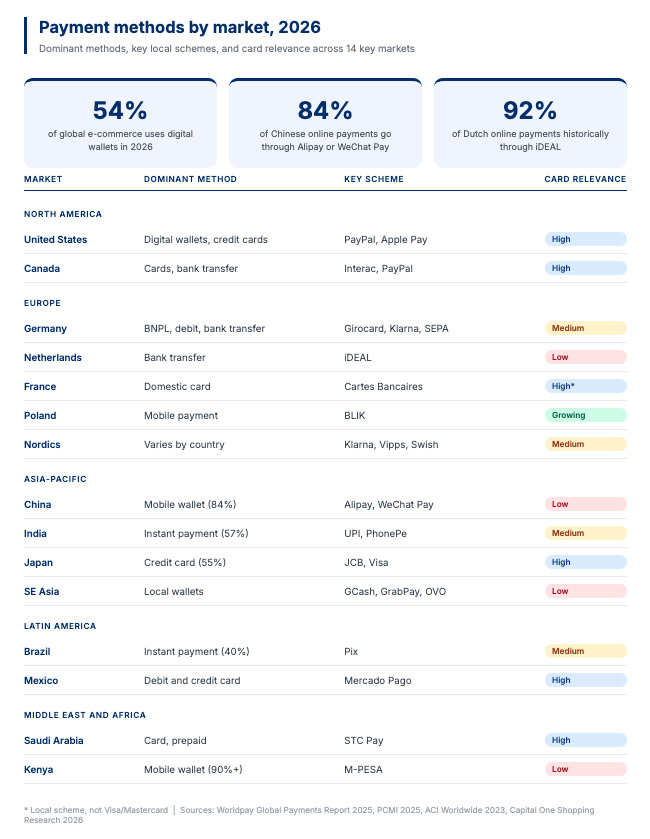
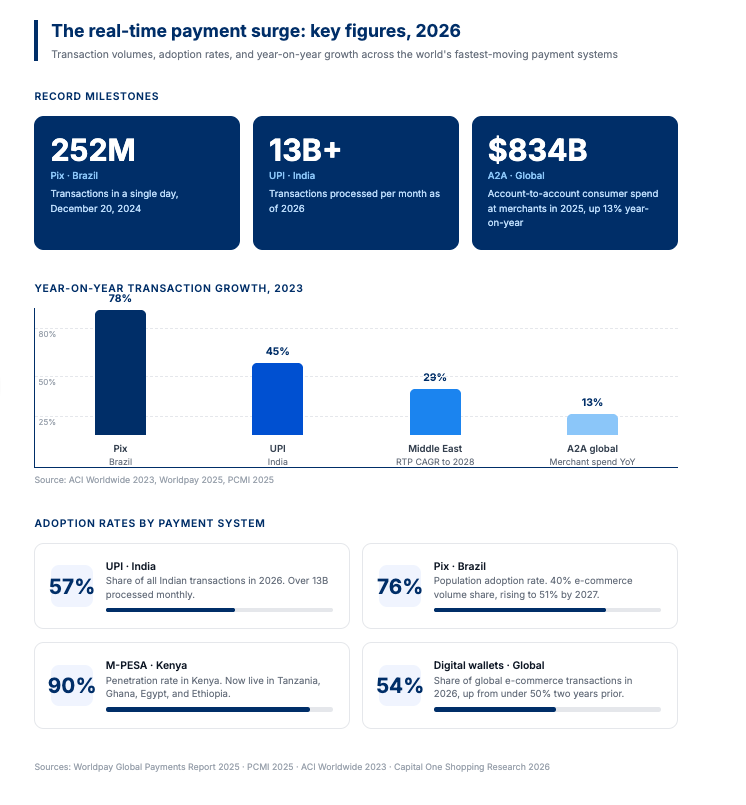
Daniel put it clearly: real-time payments “have solved genuine financial inclusion challenges.” In Brazil alone, more than 90 percent of adults use Pix. Hundreds of millions of consumers in India use UPI. These systems lowered barriers to digital payments for small merchants who were previously underserved by traditional card infrastructure.

But here is the key shift for 2026: these systems are no longer just P2P. They are increasingly person-to-business.

Daniel pointed out that in Brazil, a significant share of Pix volume now flows to merchants. What started as a social payment tool has moved into checkout. That transition is what matters for ecommerce and platforms globally.

Adoption does not equal replacement

One of the biggest misconceptions around P2P payments in commerce is that they are replacing cards. They are not.

In Brazil and India, Pix and UPI have grown rapidly. But card volumes have also continued to grow. As Daniel explained, “it’s not a zero-sum equation.” Both rails are expanding because the digital economy itself is expanding.

In emerging markets, real-time payments replaced cash and legacy bank transfer mechanisms first. They did not immediately displace cards at checkout. Instead, they filled gaps where cards were inaccessible or uneconomical.

This distinction is important for merchants in mature markets.

If your assumption is that P2P payments will eliminate cards, you may be misreading the direction of travel. The more likely outcome is coexistence.

The consumer incentive problem in developed markets

Financial inclusion drove adoption in India and Brazil. But in North America and Europe, the dynamics are different.

Consumers already have access to cards, wallets, and instalment products. They often benefit from interest-free grace periods, chargeback rights, and loyalty rewards. As Daniel noted, when he uses a credit card in Canada, he receives rewards, enjoys dispute protections, and gains a free period before repayment. That creates a structural incentive gap.

Why would a consumer choose a bank-to-bank payment over Apple Pay, PayPal, or a rewards credit card if there is no clear benefit? This is where many European open banking initiatives struggled. Merchant enthusiasm was strong because lower processing costs are attractive. Consumer motivation was weaker because there was no compelling reason to switch behaviour.

For P2P payments in commerce to scale in mature markets, incentives must exist. Those incentives may be price-based, loyalty-based, or tied to convenience. Without them, adoption will remain limited to specific verticals such as bill payments or high-value transfers.

The fraud and liability limits merchants cannot ignore

There is a popular narrative that P2P payments are “chargeback free.” That phrase needs careful interpretation.

Most real-time bank transfers are push payments. The consumer authorises the transaction and pushes funds to the merchant. There is typically no traditional chargeback mechanism in the way card networks operate. That can reduce certain types of merchant risk.

However, it does not eliminate fraud. It shifts it. Social engineering scams, authorised push payment fraud, and mule account schemes have grown in parallel with real-time payment adoption. Fraudsters adapt quickly. As Daniel said, payments is an arms race. Taller walls lead to taller ladders.

In the UK, regulators have already intervened to rebalance liability for certain real-time fraud scenarios. In the US, smaller banks have been cautious about scaling real-time payments because decisions must be made in seconds, not days.

For merchants, the limit is clear: do not equate “no chargebacks” with “no fraud exposure.” Risk models must evolve with push-based systems. Operational processes must adapt to irreversible transactions. In 2026, that risk discipline becomes a competitive advantage.

Are regulators pushing too fast?

Another tension discussed in the episode was regulatory momentum. India and Brazil show what happens when regulators actively shape payment infrastructure. Europe has expressed interest in building domestic alternatives to global card networks, partly for sovereignty reasons.

But pushing infrastructure does not guarantee consumer adoption. Daniel described regulators as catalysts who have a dual responsibility: protect financial stability and foster innovation. When they collaborate with industry, adoption can accelerate. When incentives are misaligned, progress can stall.

For merchants, the takeaway is pragmatic. Regulatory support can accelerate supply. It does not automatically generate demand. If you operate in multiple regions, expect uneven adoption curves for P2P payments in commerce.

Domestic rails versus global commerce

One structural limit of P2P systems in 2026 is geography. Pix works brilliantly in Brazil. UPI works brilliantly in India. RTP and FedNow are evolving in the United States. But most of these systems are domestic.

Cross-border interoperability remains complex. Standards alignment, compliance rules, and AML considerations add friction. While there are early projects linking systems regionally, a seamless global real-time fabric is still developing.

For international merchants, this fragmentation matters. Supporting P2P payments means integrating multiple domestic schemes rather than one global rail. That complexity does not eliminate the opportunity. It simply raises the architectural stakes.

Recurring and subscription use cases are the next battleground

Historically, P2P systems focused on instant transfers. Now they are moving into recurring payments. Brazil has introduced Pix Automático. India supports UPI Autopay. These features allow subscription and recurring billing models to sit on real-time bank rails.

This is where commerce strategy becomes more interesting. If bank-based recurring payments become reliable and widely adopted, they can compete directly with stored card credentials for subscription services, SaaS platforms, and digital content.

But again, the limit is incentives. Consumers will compare bank-based recurring payments with credit-based options that provide rewards or dispute rights. Merchants must assess where bank-based subscriptions offer net benefit without increasing churn or friction.

What merchants must understand in 2026

P2P payments in commerce are not a magic cost reduction lever. They are not a universal card replacement. They are not fraud-proof.

They are powerful in the right context. They excel in markets where financial inclusion and digital transformation coincide. They perform well in bill payments and high-trust environments. They offer structural cost advantages where incentives are aligned.

But they require careful integration into a broader payment strategy. As Daniel summarised, the future is “more integration than replacement.” Cards, bank rails, wallets, and emerging technologies will coexist. The digital economy is expanding, and multiple rails can grow simultaneously.

The question for merchants is not whether to accept P2P payments. It is how to position them intelligently within a diversified payment stack.

The role of payment orchestration

If you operate across regions, you may need to support Pix in Brazil, UPI in India, RTP in the US, SEPA Instant in Europe, alongside cards and wallets everywhere.

Each rail has different risk dynamics, settlement behaviour, refund mechanics, and customer incentives. Managing that complexity manually is not sustainable.

Payment orchestration allows merchants to integrate domestic P2P rails, cards, and alternative payment methods through a unified layer. It enables routing logic based on geography and context. It provides visibility across settlement types. It supports gradual experimentation without full-stack rewrites.

P2P payments in commerce will continue to grow. But growth alone does not guarantee efficiency or profitability.

If you are evaluating how real-time and peer-to-peer payments should fit into your 2026 payment strategy, contact Gr4vy to learn how payment orchestration can help you build a flexible, future-ready payment stack.

Card-not-present interchange fees: will they stay high in 2026?

Online payments are more secure than ever. Tokenization is widely deployed. 3D Secure is mature in many markets. Device fingerprinting, biometrics, and real-time fraud scoring are standard in sophisticated ecommerce stacks. Yet card-not-present interchange fees remain higher than card-present interchange in most major markets, particularly in the United States.

So why have card-not-present interchange fees not come down?

That was the central question in a recent episode of Behind the Checkout, where John Lunn, Founder and CEO of Gr4vy, sat down with Anand Goel, Founder and CEO of Optimized Payments. The discussion cuts to the heart of an issue many merchants feel but struggle to explain.

As John framed it at the start of the episode:

“Why is interchange still higher for card-not-present transactions even though online payments have become more secure than they’ve ever been before?”

Let’s unpack the structural reasons card-not-present interchange fees remain high in 2026.

What card-not-present interchange fees actually pay for

To understand why card-not-present interchange fees stay elevated, you first have to understand what interchange is.

As Anand explains during the conversation:

“Interchange is the fee that merchants pay. They go to the issuing bank that issued that specific credit or debit card.”

Interchange compensates issuing banks for extending credit, funding transactions, managing fraud risk, and maintaining infrastructure. In the United States, it also funds consumer rewards.

Anand makes that explicit:

“It also pays for all the miles and the points that we love for using our cards.”

That detail matters. In credit-heavy markets, interchange is not just a risk-based fee. It is part of a larger economic model that supports cashback, airline miles, and premium card benefits. Card-not-present interchange fees are embedded in that system.

Historically, ecommerce was riskier. Card-not-present transactions were associated with mail order and telephone order. Fraud controls were limited. The pricing reflected that reality. Higher interchange was justified by higher fraud.

The problem is that the infrastructure that set those rules was built decades ago.

The fraud argument still drives card-not-present interchange fees

When EMV chip technology was adopted in the United States, counterfeit fraud in physical stores dropped sharply. Fraud did not disappear. It shifted online.

Anand explains the shift clearly:

“Card present fraud has dropped substantially… and card-not-present fraud remains relatively higher.”

From a macro perspective, that remains true. Card-not-present fraud rates are higher than card-present fraud rates on average.

But averages hide complexity.

Fraud is not uniform across ecommerce. It varies significantly by merchant category, geography, transaction value, and authentication method. A small-ticket recurring subscription does not carry the same risk profile as a high-ticket cross-border electronics purchase. Yet both often sit under the same card-not-present interchange umbrella.

John challenges the security assumption directly during the episode:

“Let’s be honest, a card with no signature on it held by a different person walking into a store versus you’re online, your device is fingerprinted, you’ve got a passkey running, 3D Secure has verified you with your bank. How is that more secure?”

It is a fair question. Modern ecommerce transactions often include device-level authentication, tokenized credentials, behavioral analytics, and step-up authentication. In many scenarios, the identity verification is stronger than a simple chip-and-PIN or contactless tap.

Yet card-not-present interchange fees have not meaningfully adjusted to reflect those advances.

Liability and pricing are not aligned

Another reason card-not-present interchange fees remain high is the way liability is structured.

In most card-not-present transactions, merchants bear the liability for fraud unless a transaction qualifies for liability shift under specific authentication rules. That means merchants absorb chargebacks and associated costs. They also pay higher interchange.

As Anand points out:

“The way the ecosystem is set up today, not only does the merchant own the liability of fraud, but they also have to pay higher interchange fees.”

In theory, higher interchange should compensate for higher issuer risk. In practice, the merchant frequently carries the operational fraud burden in ecommerce while still paying a premium rate.

3D Secure and other authentication technologies were meant to introduce better alignment by shifting liability in certain cases. However, the base pricing structure of card-not-present interchange fees did not fundamentally change.

The incentive to invest in stronger authentication exists, but the reward is not a structurally lower interchange category.

The NFC paradox and outdated categorization

One of the most revealing parts of the discussion centers on mobile wallets.

If a customer taps their phone at a physical terminal using NFC, that transaction is treated as card-present and receives lower interchange. If the same customer uses the same phone, authenticated by biometrics, to complete an in-app purchase, that transaction is treated as card-not-present and carries higher interchange.

John highlights the inconsistency:

“If I have my phone and I’m using an NFC transaction versus going on an app and making a purchase, they’re both getting authenticated because it’s through biometrics… why are there different fees?”

Anand’s response is candid:

“I think I agree with that they should be… the issuers and the network should give it consideration, and currently they don’t.”

This exposes a structural issue. Interchange categories are still built around whether the card is physically present, not around actual risk signals. Technology has evolved faster than pricing logic.

Why risk-based interchange pricing has not materialized

Given the data available to issuers today, risk-based interchange pricing seems technically possible. Issuers can see fraud performance, authentication strength, and customer behavior patterns.

Anand acknowledges the opportunity:

“Issuers have so much more data than they ever had before where they theoretically could consume that data to make risk-based pricing decisions.”

Uniform pricing persists because the system was designed decades ago and because market incentives are powerful. Higher card-not-present interchange fees support issuer revenue, which in turn supports rewards programs. In a credit-driven market like the United States, those rewards shape consumer behavior.

Lowering card-not-present interchange fees would not only affect fraud economics. It would ripple through rewards ecosystems and competitive positioning among issuers.

Competitive pressure from alternative payment methods

If card-not-present interchange fees do not adjust to reflect modern risk controls, pressure will not come from regulation alone. It will come from market behavior.

Anand points to growing merchant responses:

“I’m seeing more and more… incentives or disincentives that drive consumer behavior.”

He describes telecom providers and insurers offering discounts for ACH or bank debit autopay. He notes restaurants adding card surcharges. He highlights grocery chains that reward customers for linking bank accounts instead of using cards.

These shifts are not ideological. They are economic.

Unchecked increases in interchange and scheme fees push merchants to experiment with alternative rails. Real-time payments and pay-by-bank models are becoming more viable. Consumers respond to incentives. If merchants share savings through discounts or loyalty points, behavior changes.

Cards will not disappear. Credit remains valuable. Rewards remain powerful. But sustained pressure on card-not-present interchange fees increases the attractiveness of alternatives.

Will card-not-present interchange fees fall by 2030?

The most realistic outlook is gradual evolution rather than sudden reform.

In some markets, regulators have capped interchange. In others, networks are experimenting with authentication-linked incentives. There are early signs of pricing differentiation tied to secure flows in specific regions.

But as of 2026, card-not-present interchange fees remain structurally higher because of three forces.

First, fraud shifted online after EMV, and aggregate statistics still justify higher baseline pricing. Second, legacy infrastructure and categorization persist, even as technology outpaces them. Third, issuer revenue and rewards economics depend on maintaining certain interchange levels.

Until those dynamics shift meaningfully, card-not-present interchange fees will likely remain elevated.

Watch the full discussion

This article captures the core themes, but the nuance is in the full conversation between John Lunn and Anand Goel.

If you are evaluating your ecommerce cost structure, planning authentication investments, or considering pay-by-bank incentives, the full episode is worth your time:

Understanding why card-not-present interchange fees stay high in 2026 is not just about frustration. It is about strategy. The more clearly merchants understand the economic structure, the better positioned they are to optimize routing, authentication, and alternative payment adoption in the years ahead.

What this means for your ecommerce strategy in 2026

As the conversation between John and Anand makes clear, the opportunity is not just to complain about higher card-not-present interchange fees. It is to rethink how payments are structured, routed, and optimized across channels.

If you want to reduce your ecommerce payment costs, improve authorization rates, and gain more control over how transactions are processed, Contact Gr4vy to learn how payment orchestration can help you take control of your payment stack in 2026 and beyond.

Invisible payments explained: where checkout disappears in 2026

Invisible payments sound like a futuristic concept, but most consumers already experience them every day. The payment is still happening, of course. What’s changing is where the payment moment sits in the journey, and how little effort is required to complete it.

In the latest episode of Behind the Checkout, John Lunn (Gr4vy) and Colin Luce (Basis Theory) describe “invisible” as a steady march from one click toward zero clicks. Not because people love paying, but because payment is the least enjoyable part of buying. The goal is to remove friction without creating a new generation of fraud, privacy issues, and subscription headaches.

This shift is going to matter a lot more in 2026, because checkout is no longer just a page. It’s becoming a background capability across apps, wallets, connected devices, and even agent-driven buying experiences. If you sell online, the question is not whether invisible payments are coming. It’s whether your payment stack is built to support them safely.

You can watch the episode here:

What “invisible payments” actually means

There are two ways to interpret “invisible”:

  1. Invisible behind checkout: the messy complexity of payments is hidden from the buyer. Cards, processors, data flows, routing, fraud tools, networks, all of it is out of view. From a consumer perspective, that has been true for a long time.
  2. Invisible in front of checkout: the buyer does not actively complete a traditional checkout. The decision to pay happens earlier, or the payment executes automatically after a trigger.

The second definition is where 2026 gets interesting.

Colin maps this evolution through familiar moments:

  • Amazon’s one-click checkout
  • Card-on-file experiences that removed repeated data entry
  • Uber’s “walk out and it’s already paid” feeling
  • Newer acceleration via wallet flows and saved identity experiences

The pattern is consistent. Every step removes a little more friction. The end state is “zero clicks,” where payment happens without a conscious payment step in the moment.

The real engine under invisible payments: tokenization

For merchants, invisible payments are often described as a UX trend. In reality, they are an infrastructure choice. The more payment disappears, the more your stack needs strong controls over stored credentials, data access, identity, and permissions.

That is why tokenization keeps coming up in this episode.

Tokenization is not just “security hygiene.” It is what makes modern payment experiences possible at scale because it reduces exposure while enabling reuse, routing, and automation. Colin also points out a practical advantage tokenization can have over encryption in real-world deployments: you can make tokens flexible enough to work across systems that were never designed for a new payment model.

This matters because commerce environments are messy. Many systems still expect a 16-digit-like card format, even when the “real” value is a token. In those cases, tokens can act as an intermediary layer that helps modernize payments without forcing every downstream system to be rebuilt.

If you want a broader Gr4vy view of how orchestration fits into fast-emerging models, this article is a useful companion: payment orchestration for agentic commerce.

From zero clicks to “permissioned payments”

Once you get close to invisible payment, the biggest missing piece is not speed. It’s control.

John uses a simple real-world example: giving your card to your kids, or having subscriptions that renew long after you forgot you signed up. The less visible payment becomes, the more important it is to define: who is allowed to initiate a charge, for what purpose, in what context, with what limits, and how quickly that access can be revoked.

Colin frames this as a permissioning layer that can become programmatic, dynamic, and granular. This is where 2026 shifts from “saved card details” to “policy-driven credentials.”

That second model is the direction invisible payments need to take if they want to scale without backlash.

Why invisible payments create a privacy problem

Here’s the uncomfortable truth: invisible payments work best when credentials are stored and reusable. That typically means your customer’s payment details are sitting, in some form, across many systems.

From the consumer’s perspective, this creates a blind spot. They do not remember every place their payment credential is on file. They often only discover it when something goes wrong.

This is not a niche issue. Research and surveys regularly show how common “subscription forgetting” is, including:

  • A Citizens Advice study found that over 13 million people in the UK (26% of UK adults) had accidentally taken out a subscription in the prior 12 months.
  • Consumer research summarized by C+R Research reports that many consumers find subscription charges easy to forget, and a sizeable share say they have paid for services they stopped using because they forgot to cancel.

When payment is invisible, visibility needs to move somewhere else. Colin suggests a direction that is gaining traction: a consumer-facing view of where their credential is stored and tokenized, so they can manage and revoke it.

Even if that capability comes via networks, banks, wallets, or operating systems, the implication for merchants is clear: subscription transparency and permission control will become table stakes.

The risk trade-off: frictionless vs fraud, and why liability matters

John describes a classic merchant request: “reduce fraud to zero.” The blunt response is still the correct one: if you want zero fraud, stop accepting payments.

Invisible payments intensify this balancing act because removing friction can also remove natural checkpoints that catch risky behavior. Colin calls out how the “we” matters:

  • Consumers often feel insulated, especially in markets where calling a card issuer reverses the loss quickly.
  • Merchants carry very different risk appetites depending on margin and product type.
  • Issuers want fewer losses, which can increase friction or reduce acceptance.

The episode also digs into “liability shift,” which is often presented as a solution but can become a hot-potato dynamic where nobody wants to hold the risk. When everyone designs flows to avoid risk, acceptance suffers.

This is exactly why orchestration becomes more valuable in 2026. Merchants need a way to route intelligently, apply different fraud strategies by context, and avoid blunt “one-size” controls.

If you want a related read that connects fraud dynamics to 2026 planning, see: fraud trends to watch in 2026.

Where invisible payments make sense, and where they backfire

This is one of the most practical parts of the discussion.

Colin argues invisible payments fit best when they align with necessity and predictability, not impulse and dopamine:

  • Commodity goods
  • Recurring household essentials
  • Replenishment purchases
  • Subscriptions that match real ongoing value

The model starts to backfire when frictionless payment is applied to non-essential purchases, social-driven buying, or environments optimized for impulsive conversion.

The role of wallets, devices, and the end of the single checkout page

A subtle point in the episode is that invisible payments are not only a web checkout topic anymore. This is not purely about convenience. It’s about identity and trust. When payment is embedded in a device ecosystem, the ecosystem becomes part of the authentication layer.

The merchant risk is that these experiences can become walled gardens, or shift control away from merchants. That’s why a merchant-controlled orchestration layer matters, especially as payment models diversify across regions, wallets, and agent-driven flows.

For a broader 2026 merchant planning view, these articles are useful supporting context:

What merchants should do now to prepare for 2026

Invisible payments are not a feature you switch on at checkout. They force deeper decisions about how payment data is stored, reused, controlled, and governed across channels. The merchants that succeed in 2026 will treat invisible payments as a platform capability, not a UX experiment.

Start with tokenization as infrastructure, not compliance.

Tokenization is no longer just about reducing PCI scope. It is becoming the foundation that allows payment details to be stored safely, reused across channels, linked to devices, and governed by clear rules. When tokenization is designed as a core platform capability, it supports reusable checkout identity, device-linked payments, and permissioned commerce models without constantly reintroducing sensitive data. It also tends to improve stability, reducing payment failures caused by expired credentials or fragile integrations.

Design permissioning and revocation into the experience from day one.

As payments become less visible, trust depends on control. If customers cannot easily understand who can charge them, for what, and how to stop it, frictionless payments quickly feel risky rather than convenient. Merchants should design flows where consent is explicit at setup, changes are confirmed in real time, and access can be revoked without digging through support tickets or account menus. Limits, spending rules, and authorization boundaries should feel intuitive, not buried in legal language.

Be selective about where invisible payments are used.

Not every product benefits from frictionless execution. Invisible payments work best when they align with real customer value, such as essentials, replenishment purchases, or subscriptions that are actively used and clearly understood. They are far more likely to backfire in impulse-driven environments, social commerce flows, or categories with high return rates. In those cases, a small amount of friction can reduce regret, disputes, and downstream costs.

Orchestrate risk and routing based on context, not averages.

As checkout disappears, the importance of context increases. Fraud strategy and routing decisions should vary based on who the customer is, what they are buying, the device being used, and whether the payment is recurring, usage-based, or one-off. Treating all invisible payments the same increases either fraud exposure or false declines. Context-aware orchestration allows merchants to balance acceptance and risk without reintroducing visible friction.

FAQ

What are invisible payments?

Invisible payments are payment experiences designed to minimize user effort, often shifting the payment step earlier in the journey or removing a traditional checkout moment entirely.

What is the difference between frictionless payments and invisible payments?

They are closely related. Frictionless payments focus on reducing steps and effort. Invisible payments push further, aiming for near-zero active payment actions in the buying moment.

How do invisible payments work in ecommerce?

Common examples include saved payment credentials, one-click checkout, subscriptions, in-app payments, and wallet experiences where authentication is handled at the device level.

Why is tokenization important for invisible payments?

Tokenization reduces exposure of sensitive data while enabling stored and reusable payment credentials. It also supports more controlled, permissioned payment models.

Do invisible payments increase fraud risk?

They can, especially if you remove authentication or consent checkpoints without replacing them with strong identity and permission controls. Merchants need a balanced approach.

How can merchants reduce risk without adding checkout friction?

Use contextual controls such as tokenization, step-up authentication when needed, smarter routing, and orchestration rules based on customer, device, and purchase signals.

Are invisible payments the same as agent-driven payments?

Not exactly. Agent-driven payments are one potential future where software can initiate purchases on behalf of users. Invisible payments are the broader trend toward fewer active payment steps.

In 2026, invisible payments will keep spreading, but not because the industry wants a magic “zero-click” slogan. They will spread because consumers want less hassle, and merchants want higher conversion. The winners will be the teams that pair frictionless experiences with real control: tokenization, permissioning, revocation, and thoughtful risk design.

If you want to build invisible payment experiences without losing flexibility across providers, contact Gr4vy to learn more about payment orchestration: Contact Gr4vy.

Pay by bank payments in ecommerce: readiness checklist for 2026

Pay by bank is having a naming moment, and that matters because confusion slows adoption. In the same category you will hear open banking payments, bank to bank, account to account, and pay by bank. The common thread is simple: the money moves from a customer’s bank account to a merchant’s bank account without card rails in the middle.

In the latest episode of Behind the Checkout, John Lunn (Gr4vy) and Alexandre Gonthier (Trustly) walk through what is driving momentum, what is holding it back, and what merchants should do next. One line from Alexandre is the clearest way to frame the method:

“It works from bank account to bank account directly with no third party network in the middle.”

If you sell online in 2026, the question is not “will pay by bank exist?” It already does. The question is whether your checkout, risk controls, and operations are ready to support it without hurting conversion or increasing fraud exposure.

Here’s the full episode:

What pay by bank is (and what it is not)

Pay by bank is not the same as “enter your routing and account number” experiences from the early days of ecommerce. Alexandre calls out why that older model never worked at scale:

  • The underlying rails were often batch-oriented and slow
  • The user experience was poor because people do not know their account details
  • Settlement timing created risk for merchants that needed to ship fast

Pay by bank, as discussed in the episode, is essentially a modern user experience layered on top of bank rails. The customer authenticates with their bank using familiar behaviors (often Face ID or a banking login), similar to how a user signs in to a wallet.

Alexandre describes the UX shift this way:

“You move from having to fill out the form with information you don’t know to simply doing a Face ID or signing in to your bank.”

That is the first readiness theme for 2026: pay by bank succeeds when it feels as easy as a card or wallet.

Why 2026 is a turning point

Two forces are converging:

1) Real-time rails improve the experience

John frames the big change as near real-time confirmation. Historically, merchants avoided bank transfers in ecommerce because the payment might not confirm for days. In the episode, Alexandre explains how real-time networks change that and why they reduce a specific risk:

“With real time you eliminate that problem because you grab the funds in real time.”

Even when funds do not move instantly to the merchant, the merchant can receive confirmation in real time, or a guarantee, which enables shipping and fulfillment decisions.

2) Merchants are more motivated than consumers

Consumers already have a payment method that works. Cards and wallets are familiar, ubiquitous, and often rewarded. Alexandre makes the economic reality blunt:

“Merchants pay a lot for that product… interchange… it doesn’t go down… it goes up.”

In other words, the stakeholder with the strongest incentive to change behavior is the merchant. That affects how you design your pay by bank rollout. You cannot assume consumers will demand it on their own. You need to present it well and justify it clearly.

What holds pay by bank back in ecommerce

This is the part merchants underestimate. Pay by bank can be technically available and still fail commercially if the rollout ignores three adoption blockers.

Branding confusion at checkout

John points out a common conversion issue: customers may want to pay from their bank, but they see an unfamiliar brand in the flow and hesitate. Alexandre agrees that leading with an unknown processor brand can curb conversion:

“No one is going to use something they don’t know when it comes to their money.”

This is a readiness issue, not a philosophical one. Your checkout presentation should emphasize “pay by bank” and the customer’s own bank. Any intermediary branding needs to be placed carefully and explained simply.

Incentives and habit inertia

A strong quote from Alexandre should be printed and put on a slide for any ecommerce leadership team:

“If you don’t put an incentive structure in place why would consumers walk away from something that works?”

Cards win on rewards, habit, and familiarity. Pay by bank needs a value exchange for mainstream ecommerce adoption. In some verticals, adoption is already natural. In general retail, it often is not.

Risk and non-repudiation

Real-time payments can behave more like cash. Alexandre describes the trade-off clearly: instant movement plus limited reversibility means liability questions matter.

He notes that regulators and banks often respond with velocity limits, and those limits reduce usable ecommerce cases. If you want pay by bank to work for meaningful order values, you need a risk strategy that is more nuanced than “cap everything.”

Readiness checklist for 2026

This checklist is designed for ecommerce teams that want to launch, expand, or optimize pay by bank without guessing. Use it as a working document across product, payments, fraud, finance, and support.

1) Checkout and UX readiness

Goal: make pay by bank feel as fast and familiar as a wallet.

  • Confirm that your pay by bank flow supports mobile-first authentication, including bank app authentication when available.
  • Reduce steps. Treat every extra screen as lost conversion.
  • Use clear language: “Pay by bank” plus a short explanation like “Pay directly from your bank account.”
  • Test the branding layout. Customers should recognize their bank before they are asked to trust anything else.
  • Ensure error handling is specific. “Payment failed” is not good enough. You need guidance that helps users recover.

A practical benchmark: if your pay by bank flow takes noticeably longer than a wallet sign-in, conversion will suffer unless you compensate with incentives or strong messaging.

2) Funds confirmation and fulfillment readiness

Goal: know when you can safely ship.

In the episode, Alexandre explains two approaches when underlying rails are not fully real-time:

  • Use risk signals to provide a real-time “funds are good” guarantee
  • Use real-time rails where available to move funds immediately

Your readiness actions:

  • Decide what “confirmed” means for each market you sell in.
  • Define fulfillment rules for pay by bank orders. For example, ship immediately only if confirmation type is real-time settlement or guaranteed funds.
  • Train operations teams on exceptions. If confirmation arrives but settlement timing differs, your reconciliation and support need to understand that nuance.

3) Fraud and risk readiness

Goal: prevent “instant loss” scenarios.

Alexandre gives a concrete scenario where criminals exploit timing and move money out quickly:

“We have seen and blocked… they put money in the bank account… within minutes… they use Zelle to move the money out.”

What to do in 2026:

  • Treat pay by bank as its own risk category. Do not copy-paste card rules.
  • Add velocity controls that reflect your product and ticket size, not generic bank limits.
  • Build a playbook for mule activity and organized fraud patterns, not just account takeover.
  • Monitor pay by bank fraud separately in reporting so you can detect pattern shifts quickly.
  • Align liability expectations across teams. If a payment is non-revocable, customer support scripts must change.

4) Incentive and messaging readiness

Goal: give customers a reason to choose it.

Alexandre offers two important adoption examples:

  • In bill pay, pay by bank can be a dominant method
  • In donations, messaging shifted adoption dramatically when framed as “more of your donation goes to the cause”

For ecommerce, you need a similar “why.”

Options that work without sounding gimmicky:

  • Small discount for pay by bank
  • Loyalty points that are exclusive to pay by bank
  • Free shipping thresholds tied to pay by bank
  • Faster refunds via pay by bank in markets where it is feasible

Your readiness actions:

  • Choose one incentive that is easy to explain and easy to measure.
  • A/B test placement. Pre-selecting can lift adoption but must be handled carefully to avoid customer frustration.
  • Align messaging with the incentive. If you offer a discount, say it plainly and show it early.

5) Refunds and customer support readiness

Goal: avoid the “refund frustration” trap.

John highlights a truth every shopper recognizes: cards feel instant for payment, slow for refunds. Real-time rails can change that expectation, but only if your operations and provider setup can support it consistently.

Readiness actions:

  • Define refund timelines by method and market, and surface them in customer support tools.
  • Update customer comms to reflect what is actually possible.
  • Build a dispute handling process that fits pay by bank, especially where chargeback-like mechanisms differ from card processes.

6) Reporting and reconciliation readiness

Goal: make pay by bank measurable and finance-friendly.

If you cannot measure performance, you cannot scale adoption responsibly.

Readiness actions:

  • Track share of checkout for pay by bank by country, device, and customer segment.
  • Track approval and completion rates separately from card approvals.
  • Track time-to-confirmation and time-to-settlement.
  • Track refund time and support contact rate for pay by bank orders.
  • Create a single view across providers so finance does not reconcile five dashboards manually.

7) Orchestration readiness

Goal: avoid a new set of payment silos.

John and Alexandre touch on a structural problem: pay by bank systems vary by country and do not behave like a single global network yet. If you operate globally, you will likely need multiple pay by bank providers depending on region, rails, and bank coverage.

That creates complexity fast. Orchestration is what prevents it from becoming a messy set of one-off integrations.

If you want Gr4vy’s perspective on how orchestration fits into emerging payment models, you can reference: payment orchestration for agentic commerce

Even though agentic commerce is a different topic, the core principle carries over: merchants need control across payment mechanisms without lock-in.

What “good” looks like by the end of 2026

If your pay by bank rollout is working, you should see these outcomes:

  • Adoption grows in the segments where the value is obvious (high AOV, recurring-like use cases, cost-sensitive categories)
  • Conversion stays stable because the flow is familiar and the messaging is clear
  • Fraud remains controlled because risk rules are pay-by-bank specific, not generic
  • Refund and support experiences improve, or at least do not deteriorate
  • Finance teams trust the reporting and reconciliation

If adoption is flat, the usual causes are predictable: unclear value for the customer, too much friction, confusing branding, or conservative limits that make the method unusable for meaningful order values.

FAQ

What are pay by bank payments in ecommerce?

Pay by bank payments let customers pay directly from their bank account using bank rails rather than card networks. The user experience is typically powered by online banking or open banking authentication.

Are pay by bank payments the same as open banking payments?

In practice, the terms are often used interchangeably. “Pay by bank” is commonly used as the consumer-facing label, while “open banking payments” describes the enabling mechanism.

Why is pay by bank growing in 2026?

Two drivers are increasing adoption: improved user experience through bank authentication and the spread of real-time rails that reduce settlement delays and uncertainty.

What is the biggest barrier to pay by bank adoption in retail ecommerce?

Habit and incentives. Cards work well for consumers and often offer rewards. Many customers need a reason to switch, such as discounts, loyalty benefits, or better refund experiences.

What are the main fraud risks with pay by bank?

Fraud can include account takeover, mule activity, and social engineering. Faster settlement and limited reversibility can increase loss severity if controls are weak.

Do real-time payment limits affect ecommerce use cases?

Yes. Velocity limits can make some order values impractical. Merchants need a risk strategy that supports legitimate transactions while limiting fraud exposure.

Can pay by bank replace cards by 2026?

In some verticals, it can be the primary method. In general ecommerce, it is more likely to grow alongside cards, especially in markets where real-time rails and incentives align.

Pay by bank in ecommerce is not a single integration you “turn on.” It is a combination of user experience, risk strategy, operations, and incentives. Merchants that treat it as a checkbox will see low adoption or increased fraud. Merchants that prepare properly can reduce costs, improve payment resilience, and offer customers a faster, more direct way to pay.

Contact Gr4vy to learn how payment orchestration can help you launch and scale pay by bank payments in ecommerce for 2026.

Payment performance benchmarks for 2026

By 2026, payment performance is no longer measured by a single metric. Approval rates, fraud levels, latency, uptime, and cost efficiency all interact. Improving one area often impacts another. Merchants that focus on isolated KPIs miss the bigger picture.

What merchants need instead are realistic performance benchmarks that reflect how modern payment stacks actually operate. These benchmarks help teams understand where they stand, where they are underperforming, and which issues deserve attention first.

This article outlines the key payment performance benchmarks merchants should track in 2026 and explains why hitting these targets requires more than choosing the right PSP. It requires control over routing, providers, and workflows.

Authorization rate benchmarks

Authorization rate remains one of the most important indicators of payment performance. It directly impacts revenue and customer experience. In 2026, strong merchants do not aim for a single global approval rate. They track performance by region, payment method, and issuer behavior.

For card payments, a healthy benchmark for domestic transactions typically sits above the mid-to-high 90 percent range. Cross-border transactions are naturally lower, but sustained underperformance often signals routing or acquiring issues rather than customer behavior.

Merchants should also watch authorization variance. Large swings between regions or providers usually indicate that traffic is not flowing through the optimal paths. Payment orchestration helps merchants address this by routing transactions based on location, issuer response patterns, and provider performance rather than static rules.

Soft decline recovery benchmarks

Soft declines continue to be a major source of lost revenue. These declines are often recoverable, but only if merchants have the ability to retry intelligently. In 2026, retry logic based on timing, issuer feedback, and routing choice separates top performers from the rest.

A strong benchmark is not just the number of retries, but the recovery rate. Merchants should aim to recover a meaningful percentage of soft declines without increasing fraud or customer friction. Blind retries damage issuer trust and worsen outcomes over time.

Orchestration enables smarter retries by shifting traffic to alternative PSPs or acquiring paths when appropriate. This improves recovery without overloading issuers or triggering additional declines.

Checkout latency benchmarks

Checkout speed directly affects conversion. Customers expect payment confirmation almost instantly, regardless of payment method. In 2026, delays measured in seconds are enough to cause abandonment.

Merchants should track end-to-end payment latency, not just frontend load time. This includes tokenization, authentication, fraud checks, and provider response time. A competitive benchmark is consistent sub-second response for the majority of transactions, with minimal variance during peak traffic.

High latency often points to fragmented integrations or overloaded providers. Centralized routing and provider selection help keep latency predictable even as complexity increases.

Fraud rate benchmarks

Fraud benchmarks cannot be measured in isolation. Low fraud at the cost of high false declines is not success. In 2026, merchants should evaluate fraud performance alongside approval rates and customer experience.

Key benchmarks include chargeback ratios that remain well below scheme thresholds, stable fraud rates across regions, and declining false positive trends. Sudden changes usually indicate either new attack patterns or overly aggressive controls.

Merchants that perform well use different fraud strategies for different transaction types. Payment orchestration supports this by allowing merchants to route high-risk traffic through stronger checks while keeping low-risk transactions fast.

Authentication rate benchmarks

Strong Customer Authentication and similar requirements remain a balancing act. Too much authentication increases friction. Too little increases fraud exposure. In 2026, high-performing merchants apply authentication selectively.

A healthy benchmark is not the lowest authentication rate possible, but the most effective one. Merchants should monitor challenge rates, success rates, and drop-off rates together. Rising challenge failures often signal poor exemption logic or routing decisions.

Orchestration allows merchants to adjust authentication rules by region, issuer, or transaction context, helping maintain compliance without unnecessary friction.

Uptime and resilience benchmarks

Downtime is more expensive in 2026 than ever before. Customers have alternatives and expect reliability. A single PSP outage can cause immediate revenue loss if no fallback exists.

Merchants should aim for near-continuous availability at the payment layer. This means more than provider SLAs. It requires the ability to reroute traffic automatically when issues occur.

Payment orchestration improves resilience by enabling multi-PSP routing and failover without impacting checkout. Merchants that rely on a single provider often meet technical uptime targets while still losing revenue during partial outages.

Cost efficiency benchmarks

Processing cost benchmarks must account for more than headline fees. Interchange, scheme fees, authentication costs, and fraud losses all contribute to total cost per successful transaction.

In 2026, strong merchants track cost efficiency by route and payment method. They compare providers based on net revenue rather than advertised pricing. Cost spikes often reveal inefficient routing or overuse of premium services.

Orchestration helps merchants balance cost and performance by allowing routing decisions to change as conditions change.

Why benchmarks fail without structural control

Many merchants know their metrics but cannot act on them. Benchmarks lose value when teams lack the ability to change routing, switch providers, or test improvements quickly. Data without control leads to frustration rather than progress.

Payment orchestration connects measurement to action. It allows merchants to adjust workflows, test changes, and see impact without rebuilding integrations. This is what turns benchmarks into a competitive advantage.

Benchmarks for real-time payments versus cards

By 2026, many merchants support both cards and real-time payment rails. Each comes with its own performance profile. Cards typically deliver higher flexibility, support subscriptions, and offer structured dispute processes. Real-time payments deliver faster settlement and lower fees for domestic use cases.

Performance benchmarks differ accordingly. Real-time payments often show higher completion rates once initiated but require stronger upfront authentication. Cards may show slightly lower initial approval rates in some regions but provide better recovery options for soft declines and expired credentials.

Merchants should not compare these rails directly without context. Instead, they should benchmark success rates, cost per successful transaction, and fraud exposure separately. A deeper comparison is covered in real-time payments vs cards in 2026: what merchants need to prepare for

Supporting both rails effectively requires routing logic that respects their differences rather than forcing uniform treatment.

How multi-PSP strategies influence benchmarks

Merchants using multiple PSPs consistently outperform those relying on a single provider when benchmarks are applied correctly. Multi-PSP strategies improve resilience, approval rates, and cost control, but only when routing decisions are active rather than static.

Key benchmarks to watch in multi-PSP environments include approval rate variance between providers, cost per route, and failover effectiveness during incidents. If one PSP consistently underperforms, benchmarks should trigger corrective action rather than acceptance.

Building this structure is covered in:how to build a multi-PSP payment strategy for 2026

Without orchestration, multi-PSP setups often increase complexity. With orchestration, they become a performance lever.

Fraud benchmarks in a high-automation environment

Fraud benchmarks in 2026 must reflect changing attack patterns. Automated fraud, social engineering, and first-party abuse continue to grow. Merchants should track chargeback ratios, fraud loss rates, and false decline rates together rather than in isolation.

Healthy benchmarks show stability over time rather than constant tightening. Sharp drops in fraud paired with falling approval rates often indicate overly aggressive controls. Merchants that perform well apply differentiated fraud strategies based on transaction context.

Emerging fraud patterns and how they affect performance are explored in fraud trends to watch in 2026

Orchestration enables this differentiation by routing transactions through different fraud tools or workflows when risk levels change.

Benchmarks for cost efficiency and routing performance

Cost benchmarks should focus on net outcomes. The key metric is cost per successful transaction rather than blended processing fees. Merchants should benchmark this by payment method, region, and PSP route.

In 2026, merchants that actively manage routing see measurable cost improvements without sacrificing approval rates. Routing decisions that favor local acquiring, avoid unnecessary cross-border fees, and reduce over-authentication consistently outperform static setups.

This approach is explained in how to cut payment processing costs in 2026

Benchmarks lose value if merchants cannot act on them. Routing flexibility is what turns insight into savings.

Reporting and visibility benchmarks

Performance measurement is only as good as the data behind it. In 2026, strong merchants maintain unified reporting across PSPs, payment methods, and regions. Fragmented dashboards slow decision-making and hide underperformance.

Benchmarks for reporting maturity include near real-time visibility, consistent metrics across providers, and the ability to drill down by route and transaction type. Merchants that rely on manual reconciliation struggle to optimize at scale.

Payment orchestration centralizes reporting and standardizes data, allowing benchmarks to guide decisions rather than confirm problems after the fact.

Why orchestration is the foundation for hitting benchmarks

Across all performance metrics, one pattern is clear. Merchants who hit or exceed benchmarks have structural control over their payment stack. They can change routing, test providers, adjust fraud rules, and respond to incidents quickly.

Those without this control often understand where they underperform but cannot fix it without major engineering effort. This gap widens as payment complexity increases.

The broader role of orchestration in addressing these challenges is outlined in top payment challenges for 2026 and how payment orchestration solves them

Benchmarks only drive improvement when merchants can act on them.

FAQ

What are the most important payment benchmarks for 2026?

Approval rates, fraud levels, latency, uptime, and cost per successful transaction are the most critical benchmarks for merchants in 2026.

Should benchmarks be global or regional?

Both. Global benchmarks provide direction, but regional benchmarks reveal where optimization is actually needed.

How often should merchants review payment benchmarks?

High-performing merchants review key metrics continuously and perform deeper analysis monthly or quarterly.

Do benchmarks change with new payment methods?

Yes. Real-time payments, wallets, and cards each require different benchmarks to reflect their strengths and risks.

Payment performance benchmarks in 2026 are not targets to hit once and forget. They are ongoing signals that show where payment stacks succeed and where they fall behind. As payment methods, fraud patterns, and regulations evolve, benchmarks must evolve with them.

Payment orchestration gives merchants the ability to act on performance data rather than just observe it. By centralizing control, routing, and reporting, orchestration turns benchmarks into a continuous improvement framework.

Contact Gr4vy to learn how payment orchestration can help you meet and exceed payment performance benchmarks in 2026.

Agentic payments in 2026: what merchants need to understand and prepare for

AI-powered agents are already being positioned as the next interface for shopping, capable of searching, comparing, negotiating, and completing purchases on behalf of consumers and businesses. Payment providers are announcing roadmaps, card networks are experimenting with new models, and agent platforms are gaining visibility at merchant events worldwide.

What is often missing from these conversations is the merchant perspective. Merchants are the ones who ultimately accept the payment, manage fraud exposure, absorb chargebacks, and deal with regulatory consequences. Agentic payments do not remove these responsibilities. In many ways, they increase them.

By 2026, merchants will need to support agent-initiated transactions without losing control over their payment strategy. That requires a clear understanding of how agentic payments work, where risks emerge, and why orchestration becomes essential rather than optional.

What agentic payments actually are

Agentic payments are transactions initiated by AI agents acting on behalf of a buyer. These agents may represent an individual consumer, a business, or even another system. They are designed to operate autonomously within defined limits, making decisions based on price, availability, preferences, and constraints set by the user.

In practice, this means an agent can search for a product, evaluate multiple merchants, confirm inventory, and trigger payment without direct human interaction at checkout. From a payment perspective, this fundamentally changes how transactions begin. The buyer is still accountable, but the initiator is no longer a person clicking a button.

This shift raises immediate questions for merchants. How do you identify an agent? How do you know it has permission to pay? How do fraud systems react when behavior looks automated by design?

Why payment systems will not converge around one agentic model

One of the earliest challenges merchants face is fragmentation. Card networks, wallets, PSPs, and agent platforms are not aligned on a single agentic payment model. Visa, Mastercard, PayPal, Stripe, and others are exploring different approaches, each optimized for their own ecosystem.

These approaches focus on how agents communicate with payment providers, not on how merchants accept payments across multiple systems. The result is familiar. Merchants risk reliving the early days of online payments, where every provider required a separate integration and behavior varied widely.

Without a unifying layer, merchants are left to manage this complexity themselves. Either they lock into a single provider or they build and maintain multiple payment paths. This is precisely the type of problem payment orchestration was designed to solve.

Agents, bots, and the fraud problem

From a fraud perspective, agentic payments look suspicious by default. Agents behave like bots because they are bots. Merchants are already dealing with rising levels of automated fraud, credential testing, and account takeover attempts. Fraud systems are trained to block this behavior, and rightly so.

Today, most agent-initiated transactions would be declined. There is no reliable, standardized way to distinguish a legitimate agent acting with permission from a malicious automated attack. Until that changes, merchants must assume higher risk.

This makes it critical for agentic payments to be identifiable, permissioned, and controllable at the payment layer. Merchants need the ability to route these transactions through different fraud tools, apply stricter rules, or limit exposure while they learn.

Permissioning and authentication are non-negotiable

For agentic payments to work at scale, every party must authenticate every other party. The agent must be identified. The consumer must authorize the agent. The payment provider must recognize both. The merchant must approve the agent to transact. The agent must trust that the merchant is legitimate.

Any weak link increases fraud risk. Without clear permissioning, agents become a liability rather than a convenience. By 2026, merchants that experiment with agentic payments will need strong controls around who can initiate payments, under what conditions, and with what limits.

This is not just a technical challenge. It is an operational one. Merchants need visibility, auditability, and the ability to revoke access quickly when something goes wrong.

Merchant fraud and fake storefronts

Agentic commerce amplifies an existing problem. Fake e-commerce sites already exploit search engines and social platforms. Agents, lacking intuition, are even more vulnerable. An agent searching for a product may encounter dozens of convincing but fraudulent storefronts offering unrealistic deals.

Without a way to verify merchants at scale, agents cannot reliably distinguish legitimate sellers from impostors. This exposes merchants, consumers, and payment providers to increased fraud and reputational risk.

By 2026, this creates a strong case for verified merchant directories and stronger KYB standards at the agent and payment layer. Until such standards exist, merchants must proceed carefully.

Regulation, PCI, and who carries the risk

Regulation around agentic payments is still undefined. When fraud occurs, responsibility is unclear. Is it the agent platform, the wallet, the payment provider, or the merchant? History suggests merchants will bear much of the burden until rules catch up.

Higher fraud rates lead to more chargebacks. More chargebacks increase processing costs and threaten merchant accounts. For this reason, early adoption of agentic payments must be controlled and measurable. Merchants should treat experimentation as a cost center, not a guaranteed efficiency gain.

PCI compliance also becomes more complex when agents are involved. Payment data handling, token usage, and storage models must remain compliant regardless of who initiates the transaction.

Why agentic payments belong at the payment layer

A key architectural question is where agentic logic should live. If it sits at the shopping cart level, merchants risk being locked into specific platforms. If it sits entirely with PSPs, merchants lose flexibility and control.

Placing agentic payments at the payment layer allows merchants to remain independent. It enables coordination between inventory systems, order management, and payment routing without forcing a single provider choice. Ideally, the shopping layer and payment layer work together, but control remains with the merchant.

This is the foundation of the approach outlined in payment orchestration for agentic commerce.

How orchestration enables agentic payments without lock-in

Gr4vy’s approach introduces MCP servers deployed within single-tenant merchant instances. These servers act as an interface between agents and the payment orchestration layer, much like a frontend does for human users.

This design allows agentic transactions to be identified, routed, and managed separately from traditional ecommerce traffic. Merchants can apply custom rules, choose different PSPs, enforce limits, and experiment safely. Agent-initiated transactions are marked clearly, unlocking targeted workflows through orchestration.

This separation is critical. It allows merchants to learn what works without exposing their entire payment operation to new risks.

Wallets, tokens, and controlled spending

Agentic payments depend on secure credential storage. Wallets may sit at the card network level, within existing wallets like Apple Pay or PayPal, or within merchant-controlled vaults. In all cases, tokens act as the permission mechanism.

Gr4vy’s vaulting approach supports token generation for cards and other payment methods. Tokens can be limited by amount, frequency, or duration and protected with multi-factor authentication. This gives buyers control and gives merchants clearer boundaries around agent behavior.

By 2026, merchants that support agentic payments will need fine-grained control over token usage. Unlimited agent access is not realistic or safe.

Backend orchestration and learning safely

A major advantage of orchestration is visibility. Agentic transactions can be identified, monitored, and analyzed separately. Merchants can route them through different fraud providers, apply stricter limits, or isolate them operationally.

This allows gradual adoption. Merchants can start small, learn patterns, and expand only when confidence grows. Without orchestration, agentic payments become an all-or-nothing decision.

What remains unresolved

Many open questions remain. Standards for agent authentication are still emerging. Merchant verification at scale is unsolved. Consumer behavior is unpredictable. Most agentic shopping is likely to focus on low-risk, repeat purchases rather than high-value items, at least initially.

There is also the risk of walled gardens. If agent platforms control discovery, payments, and verification, merchant choice shrinks. This makes merchant-controlled payment layers even more important.

Agentic payments are coming, but they are not a shortcut to simpler commerce. They introduce new risks, new dependencies, and new operational demands. For merchants, the goal is not to move fast at any cost. It is to stay in control while the ecosystem evolves.

FAQ: agentic payments and agentic commerce

What are agentic payments?

Agentic payments are transactions initiated by AI agents acting on behalf of a consumer or business. The agent selects a product, confirms availability, and triggers payment using pre-authorized credentials or tokens.

What is agentic commerce in payments?

Agentic commerce refers to AI-driven buying experiences where agents discover, compare, and purchase products autonomously. In payments, this introduces new requirements for authentication, permissioning, and fraud controls.

How do agentic payments work for merchants?

For merchants, agentic payments arrive as automated transactions that must be identified, authenticated, and routed correctly. Merchants remain responsible for fraud, chargebacks, and compliance, even if an agent initiates the payment.

Are agentic payments secure?

Agentic payments can be secure if strong permissioning, authentication, and token controls are in place. Without clear agent identification and limits, they increase fraud risk rather than reducing it.

How do merchants prevent fraud in agentic payments?

Merchants prevent fraud by identifying agent-initiated transactions, applying stricter fraud rules, limiting token usage, and routing agentic traffic separately from standard ecommerce payments.

What is the difference between agentic payments and bot traffic?

From a technical perspective, agents behave like bots. The difference is intent and authorization. Legitimate agents must prove they are authorized to act on behalf of a buyer and approved by the merchant.

Payment orchestration provides the structure merchants need to experiment safely, avoid lock-in, and adapt as standards emerge. By treating agentic payments as a payments architecture problem rather than an AI novelty, merchants can prepare for 2026 without repeating past mistakes.

Contact Gr4vy to learn how payment orchestration can help you prepare for agentic payments without giving up control of your payment strategy.

Payment data localization in 2026: all you need to know

Payment data localization is no longer a future concern. According to UNCTAD, more than 130 countries now have data protection or localization requirements in place, a number that has more than doubled over the past decade. By 2026, these rules become a defining constraint for global merchants. Regulations governing where payment data can be stored, processed, and accessed continue to expand, often with little alignment between regions. What once applied only to highly regulated markets now affects a growing number of countries, payment methods, and transaction flows.

For merchants operating across borders, data localization changes how payment stacks are designed. It influences which providers can be used, where infrastructure must live, and how transactions move between systems. Merchants that treat localization as a compliance checkbox risk building fragile payment architectures that limit growth. Those who plan for it early can turn it into a structural advantage.

Understanding data localization in 2026 requires looking beyond legal text. It means examining how payment flows work, where sensitive data travels, and how merchants maintain control as rules continue to evolve.

What payment data localization actually means

Data localization rules dictate where certain types of data must reside. In payments, this often includes cardholder data, transaction metadata, authentication details, and sometimes even logs or audit records. Some regulations require data to stay within national borders. Others allow cross-border transfer only under strict conditions.

The complexity lies in inconsistency. Localization rules differ by country and by data type. One market may require local storage of card data but allow processing elsewhere. Another may restrict access by foreign entities entirely. These differences create friction for merchants that rely on centralized systems.

Payment data localization is not just about storage. It also affects processing, routing, and access control. A transaction may involve multiple systems across regions, each subject to different rules. Without a clear strategy, merchants risk non-compliance or operational bottlenecks.

Why localization pressure is increasing

Several forces are driving stricter localization requirements. Governments want greater oversight of financial data. Regulators want faster access to records during investigations. Consumers want stronger protection over how their data is used and where it lives.

Payments sit at the center of this pressure because they involve sensitive financial information and cross-border flows. As digital commerce expands, regulators seek to prevent unchecked movement of data outside their jurisdiction. This trend is unlikely to reverse in 2026.

Merchants expanding into emerging markets often feel this pressure first. Local regulators may require domestic data residency as a condition for operating. Payment providers must comply, and merchants inherit those constraints whether they plan for them or not.

How localization impacts global payment architectures

Localization rules challenge the traditional model of centralized payment systems. Many merchants rely on global PSPs that process transactions through shared infrastructure. When data must remain local, this model begins to fracture.

Merchants may be forced to use regional PSPs or local acquirers to comply with data rules. This increases the number of providers in the stack and introduces operational complexity. Reporting becomes fragmented. Routing decisions multiply. Support workflows grow harder to manage.

Without a coordination layer, localization can slow expansion and increase cost. Merchants often respond by building market-specific payment setups, which solves compliance but reduces flexibility. Over time, this creates silos that are difficult to unwind.

Data residency versus data sovereignty

By 2026, merchants must distinguish between data residency and data sovereignty. Residency focuses on where data is stored. Sovereignty goes further and defines who can access the data and under what conditions.

Some regulations allow data to be stored locally but accessed remotely. Others restrict access to entities within the country. This distinction matters for payment operations, fraud monitoring, and reporting. A merchant may comply with storage requirements but still violate access rules if the wrong systems can query the data.

Payment stacks must be designed with these nuances in mind. This often requires separating transaction execution from analytics, fraud scoring, and reporting functions. A one-size-fits-all architecture rarely survives these constraints.

The risk of treating localization as a late-stage problem

Many merchants discover localization requirements late in expansion plans. A new market is ready to launch, contracts are signed, and only then does the data question surface. At that point, options are limited.

Late-stage fixes often involve rushed integrations with local PSPs, manual reporting processes, or duplicated infrastructure. These solutions meet compliance needs but add long-term friction. Costs rise. Performance becomes inconsistent. Teams lose visibility across regions.

Planning for localization early allows merchants to choose providers, routing logic, and storage models that scale. It also reduces the likelihood of future rework when regulations change again.

Why flexibility matters more than prediction

No merchant can predict every regulatory update coming in 2026. Localization rules will continue to change, and new markets will introduce new constraints. The goal is not perfect foresight. It is adaptability.

A flexible payment architecture allows merchants to respond to new rules without rebuilding their stack. This includes the ability to route transactions through local providers, isolate sensitive data, and maintain centralized control over logic and reporting where allowed.

Payment orchestration supports this flexibility by decoupling payment logic from infrastructure location. It gives merchants a way to adapt to localization requirements while maintaining consistency across markets.

How data localization reshapes fraud and risk management

One of the less discussed impacts of data localization is how it affects fraud detection and monitoring. Fraud tools rely on data aggregation. Patterns become clearer when transactions across regions can be analyzed together. Localization rules can interrupt this flow by restricting where data is stored or accessed.

By 2026, merchants must accept that some fraud signals will need to stay local. Risk decisions may happen closer to the transaction rather than in a centralized system. This creates tension between compliance and visibility. Too much isolation weakens detection. Too much centralization creates regulatory exposure.

Merchants need architectures that allow fraud tools to operate within local boundaries while still contributing to a broader risk strategy. This is one reason rigid, single-provider setups struggle under localization pressure. Flexible routing and modular fraud tooling allow merchants to adapt risk controls market by market without losing overall coherence.

The challenge of maintaining global visibility

Global merchants rely on consistent reporting to understand performance, cost, and risk. Localization rules complicate this by fragmenting where data lives and how it can be accessed. Finance, risk, and operations teams may suddenly work with partial views of the business.

This fragmentation often leads to delayed insights. Decisions that once took hours now take days. Teams reconcile data manually or depend on regional reports that do not align. Over time, optimization slows down.

Maintaining visibility in 2026 requires separating sensitive data from aggregated metrics. Merchants need ways to analyze performance without exposing restricted data. Payment orchestration helps by centralizing transaction logic and metadata while respecting where sensitive data must remain. This balance allows merchants to stay compliant without operating blindly.

Infrastructure models that support localization without silos

Traditional payment infrastructure assumes centralized processing. Localization pushes merchants toward regional infrastructure. The risk is building isolated stacks that cannot communicate. Each region becomes its own system with its own rules and limitations.

A more sustainable approach is a hybrid model. Sensitive payment data stays within required borders. Routing logic, configuration, and non-sensitive metadata remain centrally managed. This allows merchants to apply consistent policies while respecting local laws.

This approach requires careful design. Data paths must be clearly defined. Access controls must be enforced consistently. Merchants that attempt to retrofit localization onto legacy systems often struggle. Those that design for it upfront gain long-term flexibility.

Why payment orchestration matters in localized environments

Payment orchestration becomes critical as localization requirements grow. It allows merchants to route transactions through local PSPs when required, isolate data by region, and still manage logic from one place. Without orchestration, merchants often duplicate logic across regions, increasing error risk and operational cost.

Orchestration also allows merchants to adapt as regulations change. If a market introduces stricter data rules, routing can be adjusted without rebuilding the checkout. Providers can be swapped or added based on compliance needs. This adaptability is essential in an environment where regulatory clarity often lags enforcement.

Gr4vy’s broader approach to managing complex regulatory environments is reflected in its guide on payment regulation in the USA.

While localization rules differ globally, the underlying challenge is the same. Merchants need structures that respond to regulation rather than react to it.

Data ownership and merchant control

Another critical factor in 2026 is data ownership. Merchants must understand who controls their payment data and under what conditions it can be moved. PSPs may comply with local laws, but their infrastructure choices still affect merchant flexibility.

Merchants that rely entirely on provider-managed vaults may find it difficult to adapt when localization rules change. Portable, merchant-controlled storage models reduce this risk. They allow merchants to keep sensitive data within compliant boundaries while preserving the ability to change providers or routing strategies.

This concept ties closely to secure storage practices. Gr4vy explains the importance of safe and flexible storage in how to store card data safely.

Data localization planning must include a clear view of where data lives today and how easily it can be moved tomorrow.

What happens when localization and growth collide

Many merchants will face moments in 2026 where localization requirements slow expansion. A new market looks attractive, but compliance introduces friction. Without the right architecture, merchants must choose between speed and safety.

Those with flexible payment stacks can launch incrementally. They can route transactions through compliant providers, isolate data, and expand without major rework. Those without flexibility may delay entry or accept inefficient setups that increase cost.

Localization does not have to block growth. It becomes a constraint only when merchants lack control over how payments are routed and managed.

FAQ

Is payment data localization mandatory everywhere by 2026?

No. Rules vary by country. However, more markets are introducing localization requirements, and global merchants should expect this trend to continue.

Does localization mean merchants cannot use global PSPs?

Not necessarily. Many global PSPs offer localized infrastructure. The challenge is ensuring that data handling aligns with local rules while maintaining operational consistency.

Can merchants still analyze performance globally if data is localized?

Yes, if sensitive data is separated from aggregated metrics. Orchestration helps maintain visibility without violating residency or access restrictions.

How does localization affect fraud prevention?

Fraud tools may need to operate locally, but orchestration allows merchants to coordinate risk strategies across regions without centralizing restricted data.

Payment data localization will shape how global merchants build payment systems in 2026. Treating it as a compliance hurdle leads to fragmented stacks and slower growth. Treating it as an architectural requirement leads to resilience and flexibility.

Merchants who plan early can design payment flows that respect local laws while preserving global control. Payment orchestration makes this possible by separating routing logic from data location and by supporting compliant provider selection across regions.

Contact Gr4vy to learn how payment orchestration can help you plan for payment data localization in 2026 without limiting global growth.

Payments in 2026: what merchants need to prepare for now

Payments in 2026 will not be defined by a single technology or payment method. They will be shaped by how well merchants handle complexity. New rails, new fraud patterns, rising costs, regional differences, and changing customer expectations are all converging at once. Merchants who treat payments as a static system will struggle to keep up. Those who design flexibility into their payment stack will be better positioned to grow.

This shift explains why payment orchestration is becoming central to modern payment strategies. It gives merchants control over routing, providers, fraud tools, and payment methods without forcing constant rework. Instead of reacting to change, merchants can plan for it.

This article connects the most important payment themes for 2026 and explains how they fit together into a practical preparation plan.

AI is changing how payments are initiated

Automation is no longer limited to backend processes. AI-driven experiences are beginning to influence how transactions start, especially in commerce flows where agents can search, compare, and initiate purchases. This raises new questions about authentication, fraud, and merchant control.

Merchants cannot assume that traditional checkout patterns will always apply. When transactions originate from automated systems rather than direct user interaction, the payment layer must recognize and manage those differences. This includes identifying agent-initiated traffic, applying tailored fraud rules, and maintaining flexibility across providers.

A deeper look at how orchestration supports this shift is covered in payment orchestration and AI-driven payments in 2026

The takeaway for merchants is not to chase every new AI trend, but to ensure their payment stack can adapt when new initiation models appear.

Fraud pressure will continue to rise across all channels

Fraud is evolving alongside automation. Attackers are using more sophisticated techniques, including synthetic identities, account takeovers, and coordinated bursts that exploit system gaps. At the same time, customer behavior around disputes and refunds is changing, which adds pressure to support teams and costs.

In 2026, fraud prevention cannot rely on a single provider or static rule set. Merchants need the ability to apply different controls based on transaction context, payment method, and risk level. Flexibility matters more than adding friction everywhere.

The patterns merchants should be watching closely are outlined in fraud trends to watch in 2026

Preparing for fraud in 2026 means building a structure that allows change, not locking into one approach.

Single-PSP strategies are becoming a liability

As traffic volumes grow and markets diversify, reliance on one PSP introduces more risk than simplicity. Outages, uneven approval rates, regional underperformance, and pricing changes can affect the entire business at once.

Merchants are responding by moving toward multi-PSP strategies that spread risk and improve performance. The challenge is managing this without increasing operational overhead. Without orchestration, multiple PSPs often mean multiple integrations, dashboards, and workflows.

A structured approach to this shift is explained in how to build a multi-PSP payment strategy for 2026. The key lesson is that multi-PSP setups only work when routing, reporting, and control are centralized.

Payment costs are no longer a fixed expense

Processing costs continue to rise due to scheme fees, cross-border charges, authentication requirements, and inefficiencies hidden in static routing. Many merchants accept these increases as unavoidable because they lack visibility and control over how transactions are routed.

By 2026, cost optimization becomes a competitive necessity. Merchants need to understand not just how much they pay, but why they pay it. Routing decisions play a large role in this equation. Sending traffic through the right provider at the right time can reduce costs without hurting conversion.

This topic is explored in detail in how to cut payment processing costs in 2026. Cost control is not about choosing the cheapest provider. It is about having options and using them intelligently.

Complexity is becoming the biggest hidden challenge

Many payment issues in 2026 will not come from new technologies, but from accumulated complexity. Each new market, method, provider, or regulation adds another layer. Over time, payment stacks become brittle and slow to change.

Merchants often feel this when small updates take months or when reporting becomes fragmented across systems. Optimization slows down, and teams spend more time maintaining integrations than improving performance.

These broader challenges and their root causes are covered in top payment challenges for 2026 and how payment orchestration solves them. Solving complexity requires a control layer that sits above providers rather than adding more point solutions.

Real-time payments and cards will coexist, not compete

One of the most common misconceptions merchants have is that new payment rails replace old ones. That is not how payments evolve. Cards are not disappearing in 2026, and real-time payments are not a universal replacement. Instead, merchants must prepare for a mixed environment where different rails serve different needs.

Cards remain critical for subscriptions, delayed capture, refunds, and cross-border commerce. They also benefit from decades of issuer tooling, network updates, and customer familiarity. Real-time payments excel in domestic use cases where speed, instant confirmation, and immediate settlement matter most.

The challenge for merchants is not choosing between these rails. It is supporting both without creating separate stacks, inconsistent fraud logic, or fragmented reporting. This balance is explored in depth in real-time payments vs cards in 2026: what merchants need to prepare for

Merchants who design their payment strategy around coexistence rather than replacement will be better positioned to adapt as adoption patterns change.

Customer expectations will force smarter payment decisions

By 2026, customers expect payments to feel effortless. They want speed when paying with bank-based methods, flexibility when using cards, and clarity when something goes wrong. They do not care which PSP processed the transaction or which rail moved the money.

This puts pressure on merchants to make better decisions behind the scenes. Payment options should adapt to customer context such as location, device, transaction type, and purchase history. Presenting the same payment experience to every customer is no longer optimal.

A flexible payment stack allows merchants to guide customers toward the most effective option without forcing a choice. This improves conversion while keeping operational complexity under control.

Why orchestration connects every 2026 payment trend

The common thread across all 2026 payment challenges is not a specific technology. It is the need for control. AI-driven transactions, evolving fraud patterns, rising costs, multi-PSP setups, and new payment rails all increase complexity. Without a unifying layer, merchants end up managing dozens of disconnected systems.

Payment orchestration acts as that unifying layer. It sits between the checkout and payment providers, handling routing, authentication, tokenization, and reporting. This allows merchants to respond to change without rebuilding integrations.

Orchestration also turns experimentation into a safe process. Merchants can test new providers, payment methods, or routing strategies in controlled ways. If performance improves, changes can scale quickly. If not, they can be rolled back without disruption.

A practical preparation checklist for merchants

Preparing for payments in 2026 does not require a complete overhaul overnight. It requires a structured approach. Merchants should focus on a few key areas first:

  • Review dependency on single PSPs and identify where redundancy is needed
  • Analyze approval rates by region to spot routing inefficiencies
  • Understand true payment costs beyond headline fees
  • Assess fraud controls for flexibility rather than rigidity
  • Evaluate how easily new payment methods can be added
  • Centralize reporting to gain a unified performance view

Each of these steps becomes easier when orchestration is part of the payment architecture. The goal is not to add more tools, but to reduce friction between the ones already in place.

What happens if merchants do nothing

Merchants who delay these decisions will still be able to process payments in 2026. The risk is that they will do so at a higher cost, with lower approval rates, and less resilience. As competitors adopt more flexible stacks, performance gaps will widen.

Slow response times to outages, delayed expansion into new markets, and higher fraud exposure all compound over time. Payments rarely fail loudly. They fail gradually through missed opportunities and rising operational effort.

FAQ

Is payment orchestration only relevant for large enterprises?

No. Any merchant operating across regions, supporting multiple payment methods, or planning to scale benefits from centralized control and routing flexibility.

Do merchants need to replace their existing PSPs to use orchestration?

No. Orchestration works with existing providers. It connects them and manages how traffic flows between them.

Can orchestration support both cards and real-time payments?

Yes. Orchestration allows merchants to apply different rules, fraud tools, and routing logic to each rail while maintaining a single checkout experience.

How quickly can merchants see results from orchestration?

Many see improvements in approval rates, cost control, and resilience within weeks once routing and reporting are centralized.

Payments in 2026 will be defined by how well merchants manage complexity. New technologies will continue to emerge, but success will depend on having a structure that absorbs change rather than amplifying it.

Payment orchestration provides that structure. It connects AI-driven payments, fraud controls, multi-PSP strategies, cost optimization, and new payment rails into a single operational layer. This gives merchants the flexibility to grow without losing control. Contact Gr4vy to learn how payment orchestration can help you prepare for payments in 2026.

Real-time payments vs cards in 2026: what merchants need to prepare for

Payments are entering a period of structural change. Cards still dominate online commerce, but real-time payments are no longer a niche alternative. They are becoming a standard expectation in many markets. By 2026, merchants will operate in an environment where cards and real-time payment schemes coexist, compete, and serve different customer needs.

This shift is not about replacing cards. It is about understanding how real-time payments change settlement speed, customer behavior, fraud exposure, and operational workflows. Merchants who treat real-time payments as just another payment method often underestimate their impact. The differences between these rails run deeper than checkout buttons.

To prepare properly, merchants need to understand where cards still perform best, where real-time payments create advantages, and how to support both without fragmenting their payment stack.

Why real-time payments are gaining momentum

Real-time payment schemes have expanded rapidly across regions. Consumers now expect instant confirmation and immediate fund movement, especially for bank-based payments. In markets where these schemes are mature, customers increasingly view delayed settlement as outdated.

Several factors drive this shift. Real-time payments reduce waiting periods. They provide clear confirmation to both buyer and merchant. They often avoid interchange structures associated with cards. For domestic transactions, they can feel simpler and more direct.

Merchants also see operational appeal. Faster settlement improves cash flow. Reduced reliance on card networks lowers exposure to certain fees. For specific use cases such as bill payments, peer-to-business transfers, or high-frequency purchases, real-time rails align well with customer expectations.

Why cards still dominate ecommerce

Despite the growth of real-time payments, cards remain deeply embedded in ecommerce. They support recurring billing, subscriptions, delayed capture, refunds, and dispute mechanisms that real-time rails often lack or handle differently. Cards also benefit from global acceptance and consistent customer familiarity.

In cross-border commerce, cards remain the most practical option. Many real-time payment schemes are domestic by design. While they work well within national borders, they rarely support international flows at scale. Cards fill this gap by providing a common standard across regions.

Merchants also rely on card-based tooling for fraud protection, tokenization, and network-level updates. These features are not always available or standardized across real-time payment systems.

The operational differences merchants cannot ignore

Cards and real-time payments behave very differently behind the scenes. Cards involve authorization, clearing, and settlement phases that can span days. Real-time payments settle immediately or near immediately. This difference affects reconciliation, refunds, and error handling.

With cards, merchants can reverse transactions through refunds or chargebacks. With real-time payments, funds may already be settled and harder to retrieve. This changes how merchants handle customer disputes and fraud recovery.

Accounting workflows also differ. Instant settlement improves liquidity but requires tighter reconciliation processes. Merchants must ensure that their systems can handle real-time confirmations and adjust reporting cycles accordingly.

Fraud risk shifts, not disappears

Some merchants assume real-time payments reduce fraud because they bypass card credentials. In reality, fraud risk shifts rather than disappears. Real-time payments reduce certain card-specific fraud types but introduce new risks related to account access, social engineering, and authorization misuse.

Because funds move quickly, fraud detection must happen before the transaction completes. Post-transaction recovery is limited. This places greater importance on authentication and behavioral analysis upfront.

Cards benefit from decades of risk tooling and issuer involvement. Real-time payments rely more heavily on bank-level controls and merchant-side checks. Merchants must understand these differences to apply the right protections to each rail.

Customer experience expectations in 2026

By 2026, customers will not think in terms of rails. They will think in terms of outcomes. They want speed when it matters, flexibility when plans change, and clarity when something goes wrong.

Real-time payments appeal to customers who value immediacy and transparency. Cards appeal to customers who value flexibility, rewards, and familiarity. Merchants must support both without forcing customers to choose between speed and convenience.

A checkout that adapts to customer context performs better than one that treats all payments the same. The challenge lies in delivering this adaptability without building separate payment stacks.

Why merchants struggle to support both rails well

Supporting both cards and real-time payments often leads to fragmented setups. Merchants integrate one provider for cards and another for bank payments, each with its own logic, reporting, and failure modes. Over time, this creates silos.

Routing decisions become static. Fraud tools apply unevenly. Reporting becomes inconsistent. When performance issues arise, teams struggle to trace the cause across multiple systems.

This is where structural flexibility matters. Merchants need a way to manage different payment rails through a single control layer rather than stitching together point solutions.

Laying the groundwork for 2026 readiness

Preparation starts with accepting that cards and real-time payments will coexist for the foreseeable future. Merchants should not optimize for one at the expense of the other. Instead, they should design a payment stack that supports both as first-class options.

This requires clear routing logic, consistent fraud handling, unified reporting, and flexible settlement workflows. Payment orchestration provides this foundation by abstracting provider differences and centralizing control.

Merchants who invest in this structure now will be better positioned to adapt as real-time payments expand into new use cases and regions.

Cost differences merchants need to understand

One of the strongest arguments for real-time payments is cost. Card transactions carry interchange, network fees, assessments, and PSP margins. Real-time payments often bypass card networks and can reduce per-transaction fees, especially for domestic transfers.

That said, lower fees do not always mean lower total cost. Real-time payments may require stronger upfront authentication, additional fraud tooling, or operational changes that offset some savings. Cards, while more expensive per transaction, provide built-in dispute processes and network-level protections that reduce downstream operational effort.

Merchants should evaluate cost at the transaction lifecycle level. This includes processing fees, fraud losses, customer support time, and reconciliation effort. Payment orchestration helps merchants compare these outcomes across rails and route transactions based on total cost rather than headline pricing.

Settlement speed and its impact on cash flow

Settlement speed is one of the most visible differences between cards and real-time payments. Cards typically settle over days. Real-time payments settle almost immediately. This has a direct impact on cash flow and working capital.

For businesses with tight margins or high transaction volumes, faster settlement can reduce reliance on credit lines and improve liquidity. However, instant settlement also removes buffer time. Errors, refunds, and fraud must be handled after funds move, not before.

Merchants must prepare finance teams for these differences. Reconciliation cycles may need to run more frequently. Accounting systems must process confirmations in near real time. Orchestration platforms help normalize these differences by presenting unified settlement data across rails.

Regional adoption patterns merchants should watch

Real-time payment adoption varies significantly by region. Some markets have mature domestic schemes with high consumer trust. Others remain card-dominated. Merchants expanding internationally cannot assume uniform behavior.

Cards still dominate cross-border ecommerce because real-time schemes are usually domestic. Merchants operating in multiple regions must decide where real-time payments improve conversion and where cards remain essential.

Supporting both rails allows merchants to adapt region by region. Gr4vy explores how regional differences affect payment strategy in card acquiring for international markets.

Understanding local expectations helps merchants present the right payment options without overcomplicating checkout.

Routing strategies for cards and real-time payments

Cards and real-time payments should not follow the same routing logic. Each rail has different strengths. Cards work well for subscriptions, delayed capture, and cross-border transactions. Real-time payments suit immediate settlement and one-time domestic purchases.

Routing strategies should reflect this. Low-risk domestic purchases can default to real-time payments when customers choose them. Recurring transactions and international traffic can default to cards. Merchants can also route based on amount, customer history, or risk signals.

Payment orchestration enables this level of control. It allows merchants to define rules that determine which rail to use under specific conditions. For a deeper look at how routing logic works in practice, Gr4vy explains it in what is payment orchestration: all you need to know.

This flexibility is critical as payment rails diversify.

Fraud handling across different rails

Fraud behaves differently across cards and real-time payments. Card fraud often involves stolen credentials and post-transaction disputes. Real-time payment fraud relies more on social engineering, account compromise, and authorization misuse.

Because real-time payments settle instantly, fraud prevention must focus on authentication and behavioral checks before authorization. Cards allow for some recovery through chargebacks, but this increases costs and operational burden.

Merchants need rail-specific fraud strategies. A single approach applied everywhere will fail. Orchestration supports this by allowing merchants to apply different fraud tools and rules depending on the payment method. This reduces false positives and limits exposure.

Why orchestration is essential for coexistence

Supporting both cards and real-time payments without orchestration often leads to fragmented systems. Each rail introduces its own provider, logic, and reporting. Over time, this creates blind spots and inefficiencies.

Payment orchestration provides a single control layer. It connects multiple providers, manages routing, applies consistent fraud logic, and centralizes reporting. This allows merchants to support both rails without duplicating effort or losing visibility.

Gr4vy outlines the broader value of this approach in top 10 benefits of using payment orchestration in 2025.

This structure is what allows merchants to adapt as real-time payments expand.

FAQ

Will real-time payments replace cards by 2026?

No. Cards and real-time payments serve different use cases. Cards remain essential for subscriptions, cross-border commerce, and flexible refunds.

Are real-time payments safer than cards?

They reduce some card-specific fraud but introduce different risks. Security depends on authentication, customer behavior, and merchant controls.

Do real-time payments reduce payment costs?

They can, especially for domestic transactions. Total cost depends on fraud handling, reconciliation effort, and operational processes.

How should merchants decide which rail to prioritize?

Merchants should evaluate region, transaction type, customer preference, and risk. Supporting both rails provides the most flexibility.

Real-time payments and cards will both play important roles in ecommerce in 2026. Each rail brings strengths and trade-offs that merchants must understand. Preparing for this future means building a payment stack that supports choice without complexity.

Payment orchestration enables merchants to manage cards and real-time payments through one control layer. It supports smarter routing, consistent fraud handling, and unified reporting across rails. This flexibility allows merchants to adapt as customer expectations and payment ecosystems evolve.

Contact Gr4vy to learn how payment orchestration can help you support real-time payments and cards in 2026.

Top payment challenges for 2026 (and how payment orchestration solves them)

Payments are no longer a background function. By 2026, they sit at the center of revenue performance, customer experience, and operational risk. Merchants face growing pressure from every side. New payment methods appear faster than platforms can support them. Fraud evolves alongside automation. Regulations tighten while expectations for frictionless checkout remain high.

The challenge is not a single problem. It is the accumulation of many small issues that compound over time. Each new market adds complexity. Each new provider adds another dashboard. Each new rule introduces risk. Without the right structure, payment stacks become fragile, expensive, and difficult to adapt.

Payment orchestration has emerged as the response to this reality. It does not replace PSPs or payment methods. It sits above them, creating a control layer that helps merchants manage complexity rather than absorb it. To understand why orchestration becomes critical in 2026, it helps to break down the challenges merchants will face and how they can be addressed.

Challenge one: growing dependency on single providers

Many merchants still rely on one PSP to handle all transactions. This setup feels simple at first, but it becomes risky as volume grows. Outages, regional underperformance, or pricing changes affect the entire business at once. When issues arise, merchants have limited options beyond waiting or accepting losses.

By 2026, dependency on a single provider becomes harder to justify. Traffic volumes are higher, customer expectations are less forgiving, and downtime carries a heavier cost. Merchants need redundancy without duplicating engineering effort.

Payment orchestration solves this by enabling multi-PSP setups through one integration. Transactions can be routed to different providers based on performance, region, or availability. If one PSP experiences issues, traffic can shift automatically. This reduces risk and gives merchants leverage rather than dependency.

Challenge two: uneven approval rates across regions

Approval rates are rarely consistent across markets. Issuers behave differently by country, and a PSP that performs well domestically may struggle internationally. As merchants expand globally, they often see approval rates drop without a clear explanation.

This is not always a fraud problem. It is often a routing problem. Transactions are sent through acquiring paths that issuers are less familiar with or that trigger unnecessary authentication.

Payment orchestration allows merchants to route transactions based on geography and issuer behavior. Domestic traffic can be sent through local acquiring paths. Cross-border traffic can follow providers that specialize in those regions. This improves approval rates without changing the checkout experience for customers.

Challenge three: rising payment processing costs

Processing costs continue to rise even when sales growth slows. Interchange updates, scheme fees, cross-border charges, and authentication costs add up quickly. Many merchants do not realize how much of this spend is driven by routing decisions rather than unavoidable fees.

When all traffic flows through one provider, merchants lose the ability to compare cost outcomes. Inefficient routes remain hidden inside blended pricing. Over time, this erodes margins.

Payment orchestration gives merchants visibility and control. It allows them to route transactions through lower-cost providers when performance allows and reserve premium routes for cases where they are justified. Cost becomes something merchants can manage rather than accept.

Challenge four: supporting more payment methods without slowing down

Customers expect to pay in ways that feel familiar to them. Cards remain dominant, but wallets, bank transfers, and local payment schemes continue to grow. Each market brings its own preferences.

The challenge is speed. Merchants cannot afford to wait months to add a new payment method or rebuild checkout logic for every region. A single PSP may not support the methods that matter most in a given market.

Payment orchestration removes this bottleneck. Merchants can connect multiple PSPs and enable payment methods through the providers best suited to support them. New methods can be added without reworking the frontend. This keeps checkout flexible as customer expectations evolve.

Challenge five: fraud that evolves faster than controls

Fraud tactics are becoming more automated and more targeted. Attackers adapt quickly to static rules and exploit gaps between systems. Merchants often respond by adding more checks, which increases friction and cost without always stopping fraud.

By 2026, fraud management requires flexibility. Merchants need to apply different controls to different types of transactions. High-risk traffic may need stronger checks. Low-risk traffic should move quickly to avoid false declines.

Payment orchestration supports this approach by allowing merchants to tag transactions and route them through different fraud tools or workflows. This makes fraud controls more precise and reduces unnecessary friction.

Challenge six: limited visibility across the payment stack

As payment stacks grow, data becomes fragmented. Each PSP provides its own reports, dashboards, and terminology. Teams struggle to answer basic questions about performance, cost, or failure points.

Without a unified view, optimization becomes guesswork. Decisions are made too slowly or based on incomplete information.

Payment orchestration centralizes data across providers. It standardizes reporting and gives merchants a clearer picture of how transactions perform across regions, methods, and routes. This visibility is essential for making informed decisions in 2026.

Challenge seven: checkout complexity hurting conversion

Checkout experiences continue to grow more complex. New payment methods, authentication steps, fraud checks, and regional requirements all add friction. Many merchants solve this by layering tools on top of each other, which often results in slower load times and confusing flows for customers.

The problem is not choice. It is coordination. When every payment method and provider introduces its own logic, the checkout becomes fragile. Small changes can break flows, and testing becomes expensive.

Payment orchestration simplifies this by separating the checkout from backend complexity. Merchants maintain a single, consistent checkout while orchestration manages routing, authentication, and provider logic behind the scenes. This keeps conversion high even as the payment stack grows. Gr4vy explains this approach in detail in what is payment orchestration: all you need to know.

Challenge eight: regulatory pressure and compliance risk

Regulation continues to expand across regions. PCI requirements evolve. Authentication rules differ by market. Data residency expectations grow stricter. Merchants operating globally must comply with multiple frameworks at once, often with little guidance on how to balance them.

Compliance becomes especially challenging when payment data is scattered across providers. Each PSP applies rules differently, and merchants must ensure that changes do not introduce gaps.

Payment orchestration reduces compliance risk by centralizing control. Merchants can apply consistent policies across providers while still respecting regional rules. Secure vaulting, standardized workflows, and controlled routing help reduce exposure. For a deeper look at secure data handling, Gr4vy outlines best practices in how to store card data safely

Challenge nine: scaling subscriptions and recurring payments

Subscriptions continue to grow across ecommerce, SaaS, media, and digital services. These models depend on stored credentials, predictable billing, and high authorization rates. Small issues such as expired cards or provider outages can quickly lead to churn.

A single PSP setup limits how merchants can respond. If approval rates drop or retries fail, revenue is lost before teams can react.

Payment orchestration supports subscriptions by allowing retries to move across providers, routing recurring payments through the strongest acquiring paths, and supporting token strategies that reduce card failures. This flexibility improves retention and stabilizes recurring revenue over time.

Challenge ten: slow experimentation and innovation

Merchants often know what they want to test but cannot move quickly enough. Adding a new PSP, testing a fraud tool, or launching a local payment method can take months. Engineering teams become bottlenecks, and opportunities are missed.

By 2026, speed becomes a competitive advantage. Merchants need to experiment safely and measure results without rebuilding infrastructure.

Payment orchestration enables faster experimentation by decoupling integrations from logic. Merchants can test routing rules, PSPs, and workflows through configuration rather than code. This allows teams to respond to market changes without long development cycles. Gr4vy outlines these benefits in top 10 benefits of using payment orchestration

Challenge eleven: preparing for new payment models

Payments in 2026 will not look the same as they do today. Real-time payments, digital wallets, agent-driven transactions, and new authentication models continue to emerge. Merchants who hard-code their payment logic struggle to adapt.

A rigid stack forces merchants to wait for provider updates or accept limited functionality. Over time, this creates a competitive gap.

Payment orchestration prepares merchants for future models by keeping the payment layer flexible. New methods can be added, tested, and scaled without disrupting existing flows. This future readiness is one of the strongest reasons orchestration becomes essential rather than optional.

FAQ

Why will payment orchestration matter more in 2026 than today?

Payment complexity continues to increase. More providers, more methods, and more regulations make centralized control necessary to stay efficient and competitive.

Does payment orchestration replace PSPs?

No. Orchestration works with PSPs. It connects them, manages routing, and gives merchants control over how transactions flow.

Can orchestration help reduce costs and improve approval rates at the same time?

Yes. By routing transactions based on region, cost, and performance, merchants can balance approval rates and fees more effectively.

Is payment orchestration only for large enterprises?

It benefits any merchant that operates across regions, supports multiple payment methods, or wants flexibility as they scale.

The payment challenges of 2026 are not isolated issues. They are interconnected. Provider dependency, rising costs, uneven approval rates, fraud risk, and slow innovation all stem from rigid payment stacks that cannot adapt fast enough.

Payment orchestration addresses these challenges by creating a control layer that puts merchants back in charge. It simplifies complexity, improves resilience, and supports growth without forcing trade-offs between performance and flexibility.

Contact Gr4vy to learn how payment orchestration can help you solve your top payment challenges in 2026.