
A company using five different payment providers maintains five separate codebases. Five token vaults. Five reconciliation reports. Five support tickets when something goes wrong. The engineering team spends roughly two months per year just keeping these integrations alive. The finance team manually matches transactions every week. And despite all this effort, approval rates still lag behind competitors who seem to scale effortlessly.
This is not a hypothetical. It is the reality for thousands of merchants who built their payment stacks organically, adding a provider here for cross-border, another there for digital wallets, another for a specific region. Each integration made sense at the time. Together, they create a tangled mess that slows down every part of the business.
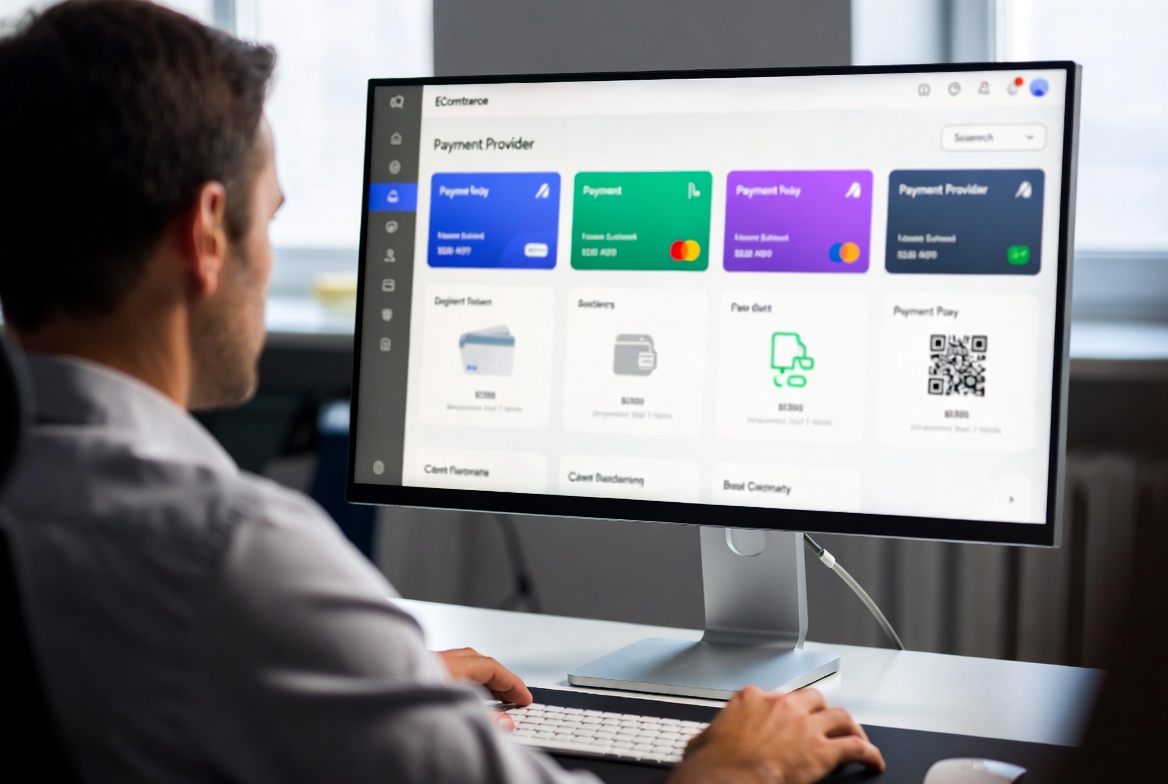
Payment orchestration solves this problem by providing a single integration point for every provider you will ever need. One API connects you to dozens of payment service providers, gateways, acquirers, and payment methods. One dashboard shows performance across your entire stack. One token vault stores credentials that work with any provider. The complexity of managing multiple providers disappears behind a unified control layer.
This guide walks through the benefits of payment orchestration, showing how a single integration transforms payment operations from a source of friction into a competitive advantage.
The hidden cost of multiple direct integrations
Every direct integration with a payment provider carries visible and invisible costs. The visible costs are developer hours, API documentation, testing, and ongoing maintenance. The invisible costs are worse. Fragmented data that hides performance trends. Token silos that prevent switching providers. Routing logic that cannot adapt because each integration stands alone.
Consider a merchant using three providers. Provider A handles North American cards. Provider B processes European payments. Provider C supports digital wallets. Each integration was built separately, by different developers, at different times. Each has its own error handling, its own webhook parsing, its own retry logic.
When approval rates drop for European Visa transactions, is the problem Provider B? Is it the card network? Is it a specific issuing bank? The merchant cannot tell because data from Provider B lives in a separate dashboard with different metrics than Provider A. Finding the answer requires logging into three systems, exporting three reports, and manually correlating data in a spreadsheet.
When the merchant wants to add a backup provider for redundancy, they face months of development work. When they want to test a new routing strategy, they cannot because rules are hardcoded into each integration. When they want to switch away from an underperforming provider, they discover that customer tokens are locked in that provider’s vault.
Payment orchestration eliminates these problems by replacing multiple direct integrations with a single, unified API.
For a deeper look at the challenges of multi-provider management, read our guide on top payment challenges for 2026.
Benefit one: faster time to market
Adding a new payment provider through direct integration typically takes weeks or months. You must read the provider’s API documentation, implement authentication, build request and response handling, parse webhooks, set up error handling, test thoroughly, and deploy. Each provider is different, so little code can be reused.
With payment orchestration, adding a provider takes minutes. You log into the orchestration dashboard, select the provider from a library of pre-built connections, enter your API credentials, and configure routing rules. The orchestration platform handles all the integration complexity. Your checkout code does not change because the orchestration API remains the same regardless of which providers sit underneath.
This speed matters. When a new payment method gains popularity in a key market, the first merchants to offer it capture the most volume. When a competitor launches a better checkout experience, the ability to test and deploy new providers quickly determines who leads and who follows.
For a practical example of fast provider switching, read our guide on how to switch payment providers without downtime.
Benefit two: unified tokenization
Tokenization is essential for security and recurring payments. But traditional tokenization ties credentials to specific providers. A token from Provider A cannot be used with Provider B. This lock-in is a feature from the provider’s perspective and a trap from the merchant’s perspective.
Payment orchestration solves this with provider-agnostic tokenization. When a customer saves their payment details, the orchestration platform generates a token that works with any provider in your stack. You are no longer locked in. You can route that customer’s future transactions to Provider A today, Provider B tomorrow, and Provider C next week. The token stays the same.
This capability transforms how merchants manage recurring payments. Subscription businesses can switch processors without asking customers to re-enter payment details. They can route each recurring charge to the provider with the best approval rate for that specific card type. They can maintain backup providers and fail over instantly when issues arise.
For more on tokenization strategies, read our article on migrating stored card data between providers.
Benefit three: intelligent routing
With direct integrations, routing decisions are static. You decide which provider handles which transactions based on rules you hardcode. Visa transactions go to Provider A. European cards go to Provider B. Digital wallets go to Provider C. These rules may have made sense when you wrote them, but they never adapt.
Payment orchestration enables dynamic, intelligent routing. The platform evaluates each transaction in real time and selects the optimal provider based on dozens of variables: the customer’s location, the card type, the issuing bank’s historical approval patterns, the current performance status of each provider, the cost structures of different routing paths.
The results are measurable. Merchants using intelligent routing typically see authorization rate improvements of 3 to 8 percentage points and processing cost reductions of 15 to 30 percent. A single integration delivers both outcomes simultaneously.
For a comprehensive look at optimization metrics, read our article on top payment performance benchmarks for 2026.
Benefit four: automatic failover
Payment providers experience issues. Scheduled maintenance. Unexpected outages. Latency spikes. Fraud system malfunctions. With direct integrations, a provider issue means your checkout stops working for any transaction routed to that provider. You wait for them to fix it.
With payment orchestration, failover is automatic. The platform monitors provider performance continuously. When a provider returns errors, times out, or exceeds latency thresholds, the orchestration layer reroutes subsequent transactions to backup providers. The customer never knows anything happened.
This resilience protects revenue during incidents that would otherwise cause downtime. For businesses processing high volumes, even a few minutes of outage can cost thousands or millions of dollars. Automatic failover turns an outage from a crisis into a non-event.
Benefit five: unified reporting and reconciliation
Finance teams hate fragmented payment data. Each provider sends settlement reports in different formats, with different field names, on different schedules. Reconciling transactions across three providers takes hours each week. Errors are common.
Payment orchestration consolidates all transaction data into a single reporting interface. Every transaction, regardless of which provider processed it, appears in the same format with the same fields. Settlement reports from different providers are normalized into a consistent structure. Reconciliation becomes a matter of checking totals, not wrestling with spreadsheets.
This unification does not just save time. It reveals insights that fragmented data hides. Which provider has the highest approval rate for European Visa transactions? Which has the lowest cost for American Express? Which settles fastest in Latin America? With unified reporting, the answers are obvious. With fragmented data, they are buried.
Benefit six: simplified compliance
PCI compliance is expensive and time-consuming. Every system that touches cardholder data falls under scope. With multiple direct integrations, each provider connection potentially expands your scope. Each token vault must be secured and audited.
Payment orchestration reduces scope by centralizing sensitive data. The orchestration platform handles tokenization and stores credentials in a certified vault. Your systems interact only with tokens, which are outside PCI scope. Instead of managing security across multiple integrations, you manage one orchestration layer.
For merchants processing significant volume, the compliance savings alone often exceed the cost of the orchestration platform.
The comparison: direct integrations versus payment orchestration
| Aspect | Direct integrations | Payment orchestration |
| Integration effort | Per provider, weeks each | One integration, minutes per additional provider |
| Tokenization | Provider-specific, non-portable | Provider-agnostic, portable across stack |
| Routing logic | Static, hardcoded | Dynamic, real-time, data-driven |
| Failover | Manual or none | Automatic, sub-second |
| Reporting | Separate dashboards, inconsistent formats | Unified, consistent across all providers |
| PCI scope | Expands with each provider | Centralized, minimized |
| Switching providers | Re-integration required | Configuration change |
| Time to add new method | Months | Days or hours |
The numbers that matter
A business processing $50 million annually with an 85% approval rate loses $7.5 million to declines. Raising approval rates to 90% recovers $2.5 million. That is not a marginal gain. It is transformative.
The same business paying 2.5% effective processing costs spends $1.25 million annually on fees. Reducing costs to 2.0% saves $250,000 per year. Over five years, that is $1.25 million.
Payment orchestration delivers both outcomes through intelligent routing, unified tokenization, and automatic failover. The cost of the platform is a fraction of the savings.
For more on approval rate optimization, read our guide on how to increase payment approval rates.
Frequently asked questions
How many providers do I need before payment orchestration makes sense?
If you use two or more providers, orchestration simplifies management and enables intelligent routing. Even with one provider, orchestration offers benefits like centralized tokenization and future flexibility.
Does payment orchestration replace my existing PSPs?
No. Orchestration sits above your providers. You keep your current relationships while adding a unified control layer. This allows you to benefit from orchestration without disrupting your existing setup.
How long does integration take?
A typical orchestration integration takes days or weeks, not months. Your developers integrate once with the orchestration API. Adding new providers later requires no additional code.
Is payment orchestration only for large enterprises?
No. While large enterprises have the most complex needs, orchestration platforms scale down as well as up. Smaller businesses benefit from simplified management, better reporting, and the ability to add providers as they grow.
What about security and compliance?
Payment orchestration platforms maintain PCI certification and reduce your scope by centralizing tokenization. Your systems handle only tokens, not raw card data.
The shift from complexity to control
The businesses that thrive in 2026 are not those with the most payment providers. They are those with the best control over the providers they use. Control comes from visibility, flexibility, and automation. Visibility into performance across all providers. Flexibility to add, remove, or switch providers at will. Automation to route transactions intelligently and fail over instantly.
Payment orchestration delivers all three. A single integration replaces dozens. A unified dashboard replaces fragmented reporting. A provider-agnostic token vault eliminates lock-in. Intelligent routing and automatic failover optimize every transaction.
The old way of managing multiple providers through separate integrations is not just inefficient. It is a competitive disadvantage. While you struggle with fragmented data and static routing, competitors using orchestration move faster, approve more transactions, and pay lower fees.
The question is not whether you will adopt payment orchestration. It is whether you will adopt it before your competitors do.
Ready to replace multiple integrations with a single connection that gives you control over your entire payment stack? Book a demo today.