
Merchants who want to grow in 2026 face a very different payments landscape than they did even a few years ago. Regional rules continue to shift, new payment methods appear faster than legacy systems can support them, and consumer expectations move toward higher speed and stronger reliability. At the same time, a single PSP setup exposes merchants to outages, uneven approval rates, slow settlement cycles, and rising costs that they cannot control.
This is why multi-PSP strategies are becoming a core part of modern payment infrastructure. A flexible setup that works across many providers gives merchants the freedom to route transactions, improve support for local payment methods, reduce downtime risks, and optimize performance in every market. The goal is not to layer more complexity onto the checkout. The goal is to design a structure that responds to real conditions rather than locking the merchant into one provider’s performance or roadmap.
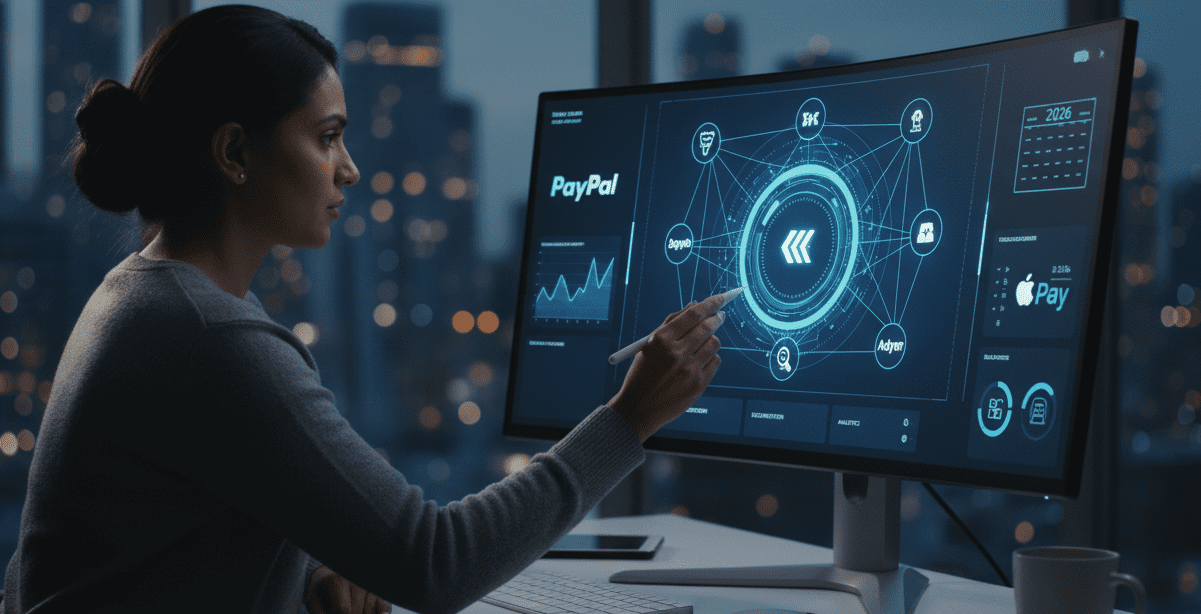
Payment orchestration provides this structure. It acts as a control layer that handles routing, tokenization, authentication flows, and PSP selection without forcing merchants to rebuild their frontend each time they want to change how payments work. As more PSPs enter the market and more merchants expand globally, orchestration becomes the foundation for a multi-provider approach. Gr4vy outlines wider orchestration benefits in its guide on the
top 10 benefits of using payment orchestration in 2025
A multi-PSP approach supports long-term flexibility, but merchants need a clear plan to build it the right way. Part 1 explores the groundwork that must be in place before expanding into a multi-provider model.
Why merchants outgrow a single PSP
A single PSP may work well at the beginning, but merchants often find that it starts to limit performance as their traffic grows or becomes more global. Several signals reveal that it is time to expand into a multi-PSP design.
One sign is inconsistent approval rates. Issuers behave differently across markets, and a provider that works well for domestic traffic may struggle with cross-border transactions. Another signal appears when checkout teams begin to request more payment methods than the provider supports. New regions often require payment methods that reflect local habits, and a single PSP rarely covers these at the depth required for conversion.
Merchants also face operational risks when outages occur. Even a short disruption can cause abandoned carts, lost revenue, and customer frustration. With a multi-PSP structure, merchants can redirect traffic in seconds and avoid losing entire sales cycles. A single PSP cannot offer that kind of backup.
Finally, merchants begin to outgrow a one-provider setup when they seek more control over routing logic, authentication rules, and fees. Markets shift quickly, and relying on a single PSP creates a long-term dependency that becomes difficult to unwind.
Designing a payment stack around markets, not providers
A strong multi-PSP strategy starts by studying the regions where growth is expected. Each market has different characteristics, including issuer behavior, popular payment methods, and regulatory requirements. Some regions are sensitive to interchange rates, while others are more focused on authentication flows or local acquiring.
Local acquiring is often the most influential factor in approval performance. Domestic transactions tend to be approved at a higher rate than cross-border ones, so merchants should match PSP selection with the markets where they expect the most activity. Gr4vy provides a deeper explanation of regional considerations in card acquiring for international markets.
A multi-PSP setup gives merchants the ability to select one provider for domestic transactions and another for cross-border or regional flows. This immediately boosts conversion because it ensures each transaction is handled by the PSP most familiar with the issuer and local rules.
Payment stack design should always lead with market needs. Providers should be selected based on performance within those markets, not the other way around.
Adding support for more payment methods without slowing development
Customers in 2026 will continue to expect payment methods that fit their preferences. Cards remain dominant in many regions, but the rise of bank transfers, digital wallets, and domestic schemes is accelerating. Merchants can only support these methods if they have a flexible structure that does not require months of engineering work each time a new method becomes popular.
A multi-PSP setup allows merchants to access payment methods from multiple providers rather than depending on a single PSP’s roadmap. This is especially helpful in regions where alternative payment methods influence conversion heavily. Gr4vy explains how merchants can evaluate and add these methods in its guide on how to accept alternative payment methods.
By drawing from several PSPs, merchants can activate the payment methods that matter most for each region. This improves conversion, reduces cart abandonment, and allows the checkout to evolve without becoming a bottleneck.
Routing as the foundation of a multi-PSP system
Routing is the core advantage of a multi-provider setup. The goal is to send each transaction to the PSP that offers the highest approval probability at that moment. Approval rates vary by time of day, issuer performance, authentication requirements, traffic load, and the type of payment method being used.
Static routing does not capture these changes. Merchants need real-time decisions that reflect actual performance conditions. A routing engine should evaluate many factors at once, such as:
- Where the customer is located
- Which PSP has stronger acceptance for that region
- The payment method being used
- Fee structures for each provider
- Whether the transaction requires strong authentication
- Whether tokens need to be routed through specific PSPs
Orchestration layers give merchants this dynamic routing capability. They allow merchants to adjust performance rules without rewriting code or changing the checkout flow. This is essential for building a multi-PSP strategy that actually improves outcomes rather than adding more complexity.
Storing cards in a way that supports multiple PSPs
A multi-PSP plan requires a storage strategy that does not tie tokens to a single provider. When stored cards depend on one PSP’s token system, merchants lose freedom to route transactions or switch integrations. Network tokens and vault-agnostic storage help prevent this problem.
Gr4vy provides a simple explanation of how modern tokenization works in network tokenization for beginners: network tokenization for beginners
Preparing teams for a multi-PSP operational model
A multi-PSP setup affects more than engineering. It influences risk teams, finance teams, support workflows, compliance practices, and reconciliation processes. Each group must understand how traffic moves across providers and what data is available from each one.
Risk teams need visibility into which PSPs approve or decline specific patterns of traffic. Some providers have stronger issuer relationships in certain regions, while others perform better on low-risk consumer transactions. Finance teams need to manage settlement files from multiple sources and understand how fees differ by provider. Support teams need tools to trace customer issues across more than one PSP.
These changes require clear processes and shared dashboards. Payment orchestration helps centralize this view. Instead of checking five separate portals, teams work from a single environment with consistent records. Once teams build comfort with the new structure, the operational burden drops rather than increases.
How orchestration handles risk, authentication, and fallback paths
A multi-PSP strategy works only if the orchestration layer can manage risk logic across different routes. Authentication flows, fraud checks, and compliance rules vary by PSP. A strong orchestration layer harmonizes these differences.
For example, one PSP might require an extra authentication step for specific card ranges, while another might allow frictionless approval for the same traffic. Without orchestration, merchants must code these differences manually. With orchestration, routing rules determine which flow the transaction follows.
Fallback paths are also essential. Outages will happen, even with the strongest providers. When a PSP slows down, the orchestration layer can reroute incoming payments to a backup path. The shopper never sees an error, and the checkout continues without disruption.
Routing also plays a role in risk control. If a provider shows weaker approval performance for a certain issuer or region, those transactions can be redirected to a stronger PSP. This protects revenue and avoids false declines.
Data as the engine of multi-PSP optimization
A multi-PSP strategy performs best when merchants use data to guide routing decisions. Performance should not be based on assumptions or static rules. Instead, merchants should review:
- Approval trends by issuer and BIN range
- PSP response times
- Authentication friction levels
- Costs by route
- Changes in regional acceptance
- PSP performance during peak seasons
These metrics reveal when a PSP begins to underperform or excel. Patterns shift frequently, especially in fast-growing markets. A merchant who monitors this data can adjust routing before revenue loss becomes visible.
Payment orchestration platforms provide consolidated analytics that make this process practical. Merchants can experiment with new routing strategies, measure results, and refine their approach without changing their checkout code.
Fraud and compliance considerations in a multi-PSP setup
Supporting several PSPs introduces a broader set of fraud signals and compliance requirements. Each provider has its own rules for authentication, verification, and risk scoring. This diversity can be an advantage if managed correctly.
Fraud teams can route high-risk traffic through a PSP with stronger fraud tools, while low-risk transactions can be sent to a faster, lower-cost provider. Compliance teams gain flexibility when a provider experiences regulatory limitations in a certain region. Instead of halting traffic, merchants can shift volume to another PSP.
Stored credentials are another area of risk. If merchants do not use a provider-agnostic vault or network tokens, stored cards may become locked to one PSP. In a multi-PSP strategy, this creates a serious limitation. The vault must support safe storage and portability so that the merchant remains in control of customer credentials.
Scaling the strategy for future growth
A multi-PSP setup gives merchants the room to expand without redesigning the payment stack each time they enter a new region or adopt a new payment method. This structure also prepares merchants for market shifts in 2026, such as new instant payment schemes, regional authentication rules, or issuer-led initiatives like network tokenization.
As more providers update their tools or strengthen their capabilities in specific regions, merchants with flexible infrastructure can adopt these improvements quickly. Those locked into a single-PSP structure must wait for updates or accept delayed performance gains.
A multi-PSP strategy supports long-term resilience. It reduces reliance on any single partner, improves conversion, and creates a foundation that can adapt to whatever changes the market introduces next.
FAQ
What is the main advantage of using multiple PSPs?
It reduces dependency on one provider and increases resilience. When a PSP underperforms, merchants can route traffic to another provider without affecting customers.
Does a multi-PSP setup require more engineering work?
Not when supported by payment orchestration. The orchestration layer manages integrations, routing, and workflows from a single point.
Can a multi-PSP approach improve approval rates?
Yes. Approval rates vary by region, issuer, and authentication rules. Sending the transaction to the PSP best suited for that route improves performance.
Will a multi-PSP setup increase operational complexity?
Only if merchants manage providers manually. With orchestration, reporting, workflows, and credentials are centralized.
Can merchants still use stored cards with multiple PSPs?
Yes, when they use vault systems or network tokens that support PSP portability. This avoids lock-in and keeps retry flows intact.
A multi-PSP payment strategy is one of the most effective ways for merchants to strengthen their payment stack in 2026. It improves approval rates, protects against outages, expands support for regional payment methods, and gives teams more control over cost and performance. The real value comes from building a structure that can adapt as markets, issuers, and technologies continue to change.
Payment orchestration provides the flexibility needed to make this strategy possible. It manages routing, credential storage, authentication flows, and integration logic through one unified layer. As merchants scale across regions or experiment with new methods, orchestration ensures that changes happen without disrupting the checkout.
Contact Gr4vy to explore how a multi-PSP strategy can help your business grow in 2026.