GR4VY

Tokenization in payments: Network vs PCI tokenization compared

Securing payment information is a critical concern for businesses and consumers in today’s digital economy. Tokenization stands out as a robust solution among the various strategies employed to protect sensitive data. However, tokenization is not monolithic; it encompasses different methods tailored to specific needs and regulatory requirements. Two key forms of tokenization are network tokenization and PCI tokenization. This article explores the nuances of these two methods, shedding light on their unique characteristics, benefits, and practical applications, helping businesses choose the best approach for their security needs.

What is network tokenization?

Definition and explanation

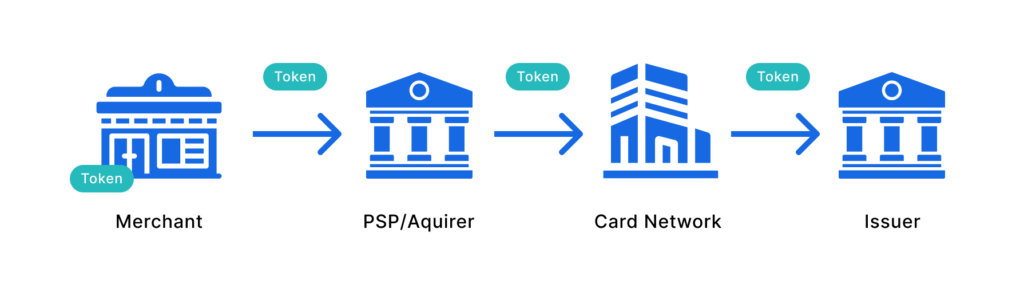
Network tokenization involves replacing sensitive card information with a unique token generated and managed by the payment network (e.g., Visa, MasterCard). This token can be used across multiple merchants and transactions, providing a consistent and secure way to handle payments.

In network tokenization, the payment network stores the actual card details securely. The network generates a token representing the card details when a transaction is initiated. This token is then used for the transaction, ensuring that the card information is not exposed during the process. This method enhances security by reducing the risk of data breaches and fraud.

Benefits

Network tokenization offers several advantages:

  • Enhanced security: Using tokens instead of actual card information significantly reduces the risk of data breaches and fraud.
  • Interoperability: Tokens can be used across multiple merchants and transactions, providing a seamless payment experience.
  • Compliance: Network tokenization helps businesses comply with various regulatory requirements, as sensitive data is not stored or transmitted during transactions.
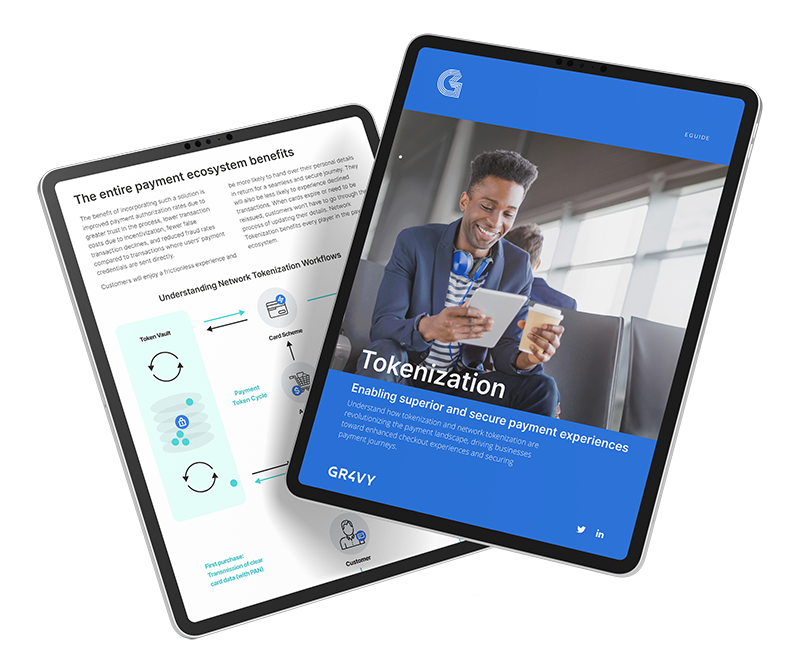
For a deeper understanding of network tokenization, you can refer to our comprehensive eGuide on network tokenization.

What is PCI tokenization?

Definition and explanation

PCI tokenization involves replacing sensitive card information with a token generated and managed by a PCI-compliant service provider. This method focuses on helping businesses reduce their PCI DSS (Payment Card Industry Data Security Standard) scope by ensuring that card data is not stored or processed in their systems.

In PCI tokenization, the card details are stored in a secure token vault managed by the service provider. The provider generates a token representing the card details when a transaction is initiated. This token is then used for the transaction, ensuring that the card information is not exposed during the process. PCI tokenization helps businesses achieve compliance with PCI DSS requirements, reducing the burden of managing sensitive data.

Benefits

PCI tokenization provides several key benefits:

  • PCI DSS compliance: This service helps businesses meet PCI DSS requirements by ensuring that card data is not stored or processed in their systems.
  • Security: Reduces the risk of data breaches and fraud by using tokens instead of actual card information.
  • Simplified operations: By outsourcing the management of sensitive data to a PCI-compliant service provider, businesses can focus on their core operations.

What is the difference between PCI tokenization and network tokenization?

Key differences

While both PCI tokenization and network tokenization aim to enhance payment security by replacing sensitive card information with tokens, they differ in their scope and implementation:

  • Scope: PCI tokenization focuses on reducing businesses’ PCI DSS scope by ensuring that card data is not stored or processed in their systems. Network tokenization, on the other hand, provides a broader scope by allowing tokens to be used across multiple merchants and transactions.
  • Management: In PCI tokenization, tokens are managed by a PCI-compliant service provider, while in network tokenization, tokens are managed by the payment network.
  • Interoperability: Network tokens can be used across merchants and transactions, providing a seamless payment experience. PCI tokens are typically limited to specific use cases within a single merchant’s environment.

Use cases

  • PCI tokenization: Ideal for businesses that need to comply with PCI DSS requirements and want to reduce the burden of managing sensitive data.
  • Network tokenization: Suitable for businesses that operate across multiple merchants and require a consistent and secure payment experience.

What is the difference between network tokenization and gateway tokenization?

Definitions

  • Network tokenization: Involves replacing sensitive card information with a token generated and managed by the payment network, used across multiple merchants and transactions.
  • Gateway tokenization: Involves replacing card information with a token generated by the payment gateway, typically used within the context of a single merchant or transaction.

Key differences

  • Scope: Network tokenization provides a broader scope, allowing tokens to be used across multiple merchants and transactions. Gateway tokenization is more limited in scope, typically confined to a single merchant or transaction.
  • Management: The payment network manages network tokens, while the payment gateway manages gateway tokens.
network tokenization

For more detailed insights, download our comprehensive eGuide on network tokenization.

What is the difference between network tokenization and acquirer tokenization?

Definitions

  • Acquirer tokenization: Involves replacing card information with a token generated by the acquiring bank and used within the acquiring bank’s ecosystem.
  • Network tokenization: Involves replacing card information with a token generated by the payment network, used across multiple merchants and transactions.

Key differences

  • Scope: Acquirer tokenization is limited to the acquiring bank’s ecosystem, while network tokenization has a broader scope, allowing tokens to be used across multiple merchants and transactions.
  • Management: The acquiring bank manages acquirer tokens, while the payment network manages network tokens.

What is the difference between network token and merchant token?

Definitions

  • Merchant token: A token generated by the merchant or their payment processor, used within the merchant’s ecosystem.
  • Network token: A token generated by the payment network, used across multiple merchants and transactions.

Key differences

  • Scope: Merchant tokens are limited to the merchant’s ecosystem, while network tokens can be used across multiple merchants and transactions.
  • Management: Merchant tokens are managed by the merchant or their payment processor, while network tokens are managed by the payment network.

Tokenization in payments FAQs

How does tokenization enhance payment security?

 Tokenization enhances payment security by replacing sensitive card information with tokens without exploitable value, reducing the risk of data breaches and fraud.

Can network tokens be used across different merchants? 

Yes, network tokens can be used across different merchants and transactions, providing a seamless and secure payment experience.

What are the compliance benefits of PCI tokenization? 

PCI tokenization helps businesses meet PCI DSS requirements by ensuring that card data is not stored or processed in their systems, reducing the scope of compliance.

Is gateway tokenization more secure than network tokenization? 

Both methods offer security benefits, but network tokenization provides a broader scope and interoperability, making it suitable for use across multiple merchants and transactions.

How do businesses choose between different types of tokenization? 

When choosing between different types of tokenization, businesses should consider their specific needs, such as compliance requirements, scope of operations, and desired level of interoperability.

Understanding the differences between network tokenization and PCI tokenization is crucial for businesses looking to enhance their payment security and compliance. Each method offers unique benefits and serves different purposes within the payment ecosystem. By carefully evaluating their needs and the features of each tokenization method, businesses can make informed decisions to protect sensitive payment information.

If you want to learn more about how tokenization can benefit your business, contact Gr4vy to book a demo and discover how our payment orchestration solutions can help you enhance security and efficiency in your payment processes.
Alternative payment methods: examples and trends

As technology continues to evolve, so do the ways we conduct transactions. Alternative payment methods have emerged to cater to the diverse needs of modern consumers and businesses. These innovative solutions enhance convenience and offer improved security and flexibility. In this article, we will delve into what alternative payment methods are, explore their history, and examine the various types and trends shaping their adoption globally. Understanding these methods is crucial for payment professionals, business decision-makers, and developers aiming to stay competitive in today’s dynamic market.

What are alternative payment methods?

Definition and explanation

Alternative payment methods refer to any form of payment that differs from traditional cash, checks, or standard credit and debit cards. These methods include digital wallets, cryptocurrencies, buy now, pay later (BNPL) services, and mobile money solutions. They have been developed to provide more convenience, security, and efficiency in financial transactions, adapting to consumers’ changing needs and preferences.

Benefits

Alternative payment methods offer several advantages for both consumers and businesses. For consumers, they provide enhanced convenience and faster transaction times. Businesses can reduce transaction costs, increase security, and expand the customer base by accommodating various payment preferences.

The history of alternative payment methods

Early examples

The concept of alternative payment methods is not entirely new. Historically, bartering was one of the earliest non-cash transactions, exchanging goods and services without using money. As societies evolved, various forms of currency and trade emerged, paving the way for modern financial systems.

Digital evolution

The digital age has revolutionized the way we think about payments. The introduction of credit cards in the mid-20th century marked the beginning of electronic payments. However, it was the advent of the internet and mobile technology that truly transformed payment methods. PayPal, launched in 1998, was one of the pioneers in digital payments, allowing users to send and receive money online. This set the stage for developing a wide range of alternative payment methods we see today.

Types of alternative payment methods

Digital wallets

Digital wallets, such as Apple Pay, Google Wallet, and Samsung Pay, store payment information on mobile devices, enabling users to make payments through their smartphones. These wallets offer convenience and security, utilizing technologies like near-field communication (NFC) and biometric authentication.

Cryptocurrencies

Cryptocurrencies like Bitcoin, Ethereum, and Ripple use blockchain technology to facilitate secure and decentralized transactions. These digital currencies offer an alternative to traditional banking systems, providing users with more control over their finances and enabling cross-border transactions with lower fees.

Buy now, pay later (BNPL)

BNPL services, such as Klarna, Afterpay, and Affirm, allow consumers to purchase goods and services immediately and pay for them in installments over time. This payment method is popular for its flexibility and convenience, particularly among younger consumers.

Bank transfers and direct debit

Traditional bank transfers and direct debit payments have been enhanced by digital technology, making them more efficient and accessible. These methods are commonly used for recurring payments, such as subscriptions and utility bills.

Mobile money

Mobile money services like M-Pesa and Venmo enable users to store, send, and receive money using their mobile phones. These services have been particularly transformative in developing regions, where access to traditional banking infrastructure is limited.

Alternative payment methods around the world

North America

In North America, digital wallets such as PayPal, Venmo, and Apple Pay are widely used. The region has also seen significant adoption of BNPL services, driven by consumer demand for flexible payment options.

Europe

Europe has a diverse payment landscape, with methods like SEPA, Klarna, and various local solutions. Digital wallets and BNPL services are popular, reflecting the region’s advanced financial infrastructure and consumer preference for innovative payment solutions.

Asia

Asia is a leader in mobile payments, with platforms like Alipay and WeChat Pay. These mobile wallets offer services beyond payments, including social media integration and financial management tools.

Africa

Africa has pioneered mobile money services, with M-Pesa being a prime example. These services have revolutionized financial inclusion by providing access to banking for unbanked populations and facilitating economic growth.

Latin America

In Latin America, digital wallets and mobile payment methods are on the rise. Platforms like MercadoPago and PicPay are gaining traction, driven by increasing smartphone penetration and the need for secure, convenient payment options.

Criteria for popularity

Various factors, including user adoption, transaction volume, and geographic reach, can measure the popularity of an alternative payment method. Methods offering high convenience, security, and integration with other services are more popular.

Digital wallets and mobile payment platforms are among the most popular alternative payment methods globally. For instance, Alipay and WeChat Pay dominate in China, while PayPal and Venmo are widely used in the United States. To learn more about the rise of these payment methods, download our comprehensive eGuide on network tokenization.

Future predictions

As technology evolves, we can expect to see further innovations in alternative payment methods. Cryptocurrencies and blockchain technology, for example, have the potential to become mainstream as regulatory frameworks develop and consumer trust increases.

Examples

Case studies

Many businesses have successfully implemented alternative payment methods to enhance customer experience and streamline operations. For example, Starbucks has integrated its mobile payment system with its loyalty program, resulting in higher customer engagement and increased sales. Similarly, Amazon offers a variety of payment options, including Amazon Pay and installment plans, to cater to diverse customer preferences.

Consumer adoption

Statistics show that consumer adoption of alternative payment methods is on the rise. According to a survey by FIS, nearly 46% of global consumers use digital wallets, while BNPL services are expected to account for 4.2% of global e-commerce transactions by 2024.

Business benefits

Businesses that adopt alternative payment methods can benefit from increased sales, improved customer satisfaction, and reduced transaction costs. These methods also enable businesses to reach a wider audience, including customers who prefer non-traditional payment options.

Growth of mobile payments

Mobile payments are experiencing rapid growth, driven by increasing smartphone penetration and consumer demand for convenience. Platforms like Alipay, WeChat Pay, and Apple Pay are leading the way, offering services extending beyond payments.

Expansion of cryptocurrencies

Cryptocurrencies are gaining acceptance as legitimate payment methods, with more merchants and financial institutions recognizing their potential. Companies like Tesla and PayPal have started accepting Bitcoin for transactions, signaling a shift towards mainstream adoption.

Integration with e-commerce

Alternative payment methods are increasingly being integrated into e-commerce platforms, giving consumers more choices at checkout. This trend is particularly evident in the rise of BNPL services, which offer flexible payment options that can boost conversion rates.

Enhanced security features

Security remains a top priority for alternative payment methods. Innovations such as biometric authentication, tokenization, and blockchain technology are being used to enhance transaction security and protect consumer data.

Regulatory developments

As alternative payment methods are popular, regulatory frameworks are evolving to ensure their safe and fair use. Governments and financial institutions are working to develop standards and guidelines that protect consumers while fostering innovation.

FAQs

What are the risks associated with alternative payment methods? 

Alternative payment methods can pose risks such as fraud, data breaches, and regulatory challenges. However, advancements in security technology and regulatory compliance help mitigate these risks.

How do alternative payment methods impact transaction fees? 

Transaction fees for alternative payment methods can vary. Some methods, like digital wallets, may offer lower fees than traditional credit cards, while others, like cryptocurrencies, may have higher fees depending on network congestion.

Are alternative payment methods secure? 

Yes, alternative payment methods are generally secure, employing encryption, tokenization, and biometric authentication technologies to protect transactions and consumer data.

What should businesses consider when adopting alternative payment methods? 

Businesses should consider factors such as integration with existing systems, transaction fees, consumer preferences, and regulatory compliance.

How do alternative payment methods benefit consumers? 

They offer increased convenience, faster transaction times, enhanced security, and greater flexibility in managing their finances.

Alternative payment methods are reshaping how we conduct transactions, offering numerous benefits for consumers and businesses. By understanding the different types, trends, and regional preferences, payment professionals and business decision-makers can make informed decisions about integrating these methods into their operations.

If you’re interested in learning more about how alternative payment methods can benefit your business, download our comprehensive eGuide to explore the intricacies of these technologies. Additionally, contact Gr4vy to book a demo and discover how our payment orchestration solutions can help you enhance security and efficiency in your payment processes.

What is payment account reference?

Imagine a world where managing multiple payment methods across various platforms is seamless and secure. This is the promise of Payment Account Reference (PAR). Designed for payment professionals, business decision-makers, and developers, PAR provides a consistent and reliable way to track and manage payment accounts. In this article, we will uncover what PAR is, its significant benefits, various use cases, and how you can leverage PAR to enhance your company’s payment systems. Dive in to discover how PAR can transform your payment processes.

What is payment account reference (PAR)?

Definition and explanation

Payment Account Reference (PAR) is a unique identifier assigned to a cardholder’s payment account. Unlike traditional payment identifiers such as card numbers, PAR remains consistent across different cards issued for the same account, even if the number changes due to expiration or re-issuance. This consistency makes PAR a valuable tool for tracking and managing payment data without compromising security.

Historical context

The concept of PAR was introduced to address the limitations of traditional card numbers, which are prone to changes and can cause disruptions in payment tracking and data management. The development of PAR is part of a broader effort to enhance the efficiency and security of payment processing in an increasingly digital and interconnected world.

Technical details

Technically, PAR is a tokenized identifier that maps to the cardholder’s account but does not carry any sensitive card information itself. This ensures that PAR can be used for various payment-related purposes without exposing the cardholder’s actual card number. The structure of PAR is standardized, ensuring compatibility across different payment systems and platforms.

Industry standards

PAR is governed by industry standards such as those set by EMVCo, which ensures that it meets the stringent security and operational requirements of the payments industry. These standards help maintain the integrity and reliability of PAR, making it a trusted component of modern payment systems.

Benefits of payment account reference

Enhanced security

PAR improves transaction security by reducing the exposure of sensitive card information. Since PAR does not contain the actual card number, it minimizes the risk of fraud and data breaches. Learn more about payment security.

Improved data management

PAR enables better data tracking and management by providing a consistent identifier for the cardholder’s account, regardless of changes to the card number. This consistency is crucial for maintaining accurate transaction histories and customer profiles. Discover how to manage payment data effectively.

Increased efficiency

By using PAR, businesses can streamline their payment processes, reduce errors, and enhance operational efficiency. PAR simplifies the reconciliation of transactions and helps in the smooth handling of recurring payments. Explore efficient payment processing methods.

Customer experience

PAR enhances the customer experience by ensuring seamless and uninterrupted payment processes. Customers can enjoy a more reliable service, as their payment information remains consistent even if their card details change. Improve your customer payment experience.

Payment account reference use cases

Retail

In the retail sector, managing multiple transactions and payment methods can be challenging. PAR simplifies this process by providing a consistent identifier for each payment account. This helps retailers streamline their transaction processing and ensure accurate tracking of customer purchases. For instance, a customer can make a purchase using a new card issued for their existing account without any disruption in service, thanks to PAR. Retail payment solutions.

E-commerce

E-commerce platforms benefit significantly from the use of PAR. By using a consistent identifier, online merchants can enhance the customer experience by reducing payment friction. PAR helps in managing recurring payments, such as subscriptions, ensuring that even if a customer’s card details change, their subscription remains uninterrupted. This reduces churn and improves customer satisfaction. E-commerce payment optimization.

Financial institutions

Financial institutions use PAR to improve the accuracy and security of their payment processes. By linking multiple cards to a single PAR, banks and other financial institutions can offer better fraud detection and prevention measures. This consistent identifier also aids in compliance with regulatory requirements, providing a clear audit trail for all transactions. Financial services payment compliance.

Subscription services

For businesses that rely on recurring payments, such as streaming services or membership platforms, PAR is invaluable. It ensures that subscription payments continue seamlessly, even if a customer’s card is replaced or updated. This leads to fewer payment failures and an overall better customer experience, as users do not need to update their payment information manually. Managing recurring payments.

B2B transactions

PAR provides a reliable way to manage payments in the B2B space, where large transactions and complex payment processes are common. It helps businesses maintain accurate transaction records and ensures that payments are processed efficiently. PAR’s consistency reduces administrative overhead and streamlines financial operations, making managing accounts receivable and payable easier. B2B payment solutions.

How can you use PAR for your company?

Integration steps

Implementing PAR involves several steps:

  1. Assessment: Evaluate your current payment infrastructure and identify areas where PAR can add value.
  2. Integration: Use tools and APIs to connect PAR with your existing payment systems.
  3. Testing: Conduct thorough testing to ensure that PAR is working correctly and securely.
  4. Deployment: Roll out PAR across your payment systems and monitor its performance.

Customization

Customization allows businesses to tailor PAR to meet specific needs. This might include configuring PAR for different payment methods, handling recurring transactions, or managing complex payment flows. Customization ensures that PAR integrates seamlessly with your existing payment processes.

Implementation guide

Here’s a step-by-step guide to implementing PAR:

  1. Identify requirements: Determine your specific requirements for using PAR in your payment system.
  2. Select tools: Choose the appropriate tools and platforms that support PAR integration.
  3. Develop and test: Develop the necessary integrations and perform rigorous testing to ensure functionality.
  4. Deploy and monitor: Deploy the integration and continuously monitor its performance to make necessary adjustments.

FAQs about payment account reference

What is the difference between PAR and traditional payment identifiers?

PAR is a consistent identifier that remains unchanged even when card details change, unlike traditional card numbers that change with reissuance.

How secure is PAR?

PAR is highly secure as it does not contain sensitive card information, reducing the risk of fraud and data breaches.

Can PAR be used across multiple payment methods?

Yes, PAR can be used across various payment methods, providing a unified identifier for managing payments.

What are the costs associated with implementing PAR?

The costs vary depending on the complexity of your payment infrastructure and the tools you use for integration.

How does PAR affect compliance with payment regulations?

PAR helps maintain compliance with payment regulations by providing a clear audit trail and reducing exposure to sensitive card information.

Payment Account Reference (PAR) is a powerful tool for enhancing payment processes’ efficiency, security, and management. PAR helps businesses streamline their operations and improve customer experiences by providing a consistent identifier for payment accounts.

If you want to learn more about how PAR can benefit your business, contact Gr4vy to book a demo and explore our comprehensive payment orchestration solutions.

Payment timeout: Why it happens and how to avoid it

Imagine you’re running a business, and just as you’re about to close a major deal, you realize the payment from a previous transaction hasn’t come through yet. This scenario, known as payment timeout, can cause significant business headaches. Payment timeout happens when payments are delayed or fail to process, and it’s a common issue that can disrupt operations and strain relationships. Fortunately, businesses can manage and mitigate these delays with the right strategies and tools, especially through effective payment orchestration. Let’s dive into payment timeout, why it happens, and how businesses can keep their cash flow smooth and their partners happy.

What is payment timeout?

Payment timeout refers to the delay or failure to process payments within the expected timeframe. This can happen due to various reasons, such as technical glitches, administrative delays, or issues from the payer’s side. For businesses, particularly those dealing with large transactions, these delays can lead to cash flow challenges and strained relationships with partners and suppliers.

Causes of payment timeout

  1. Technical issues: Network failures, system errors, and payment gateway issues can all contribute to payment timeout. These technical problems often arise from outdated systems or insufficient payment orchestration, where the integration and management of different payment methods and gateways are not optimized.
  2. Administrative delays: Slow invoice processing, approval delays within the organization, and invoicing or payment details errors are common administrative causes. Effective payment orchestration can streamline these processes, reducing the likelihood of delays.
  3. Customer-related issues: Client late payments, payment disputes, and insufficient funds are typical challenges. Implementing clear communication and efficient dispute-resolution mechanisms within the payment orchestration framework can mitigate these issues.

Effects of payment timeout on businesses

When payments are delayed, businesses can face several challenges:

  • Cash flow problems: Delayed payments can disrupt cash flow, making it difficult for businesses to meet their financial obligations. Effective payment orchestration helps maintain a steady cash flow by ensuring smoother transaction processes.
  • Strained relationships: Regular payment delays can strain relationships with suppliers and partners, leading to potential loss of trust and business opportunities. An efficient payment orchestration system can help maintain these relationships by ensuring timely payments.
  • Impact on credit rating: Consistent payment delays can negatively impact a business’s credit rating, making it harder to secure loans and favorable terms in the future. Payment orchestration can improve payment reliability and consistency, thus protecting the business’s credit standing.

Discover the secrets behind approval rates in payments and learn how to optimize them for your business. Our in-depth article delves into what approval rates mean, why they matter, and effective strategies to improve them. Click here to read Approval Rates in Payments: Meaning and Deep Dive for comprehensive insights into enhancing your payment processes and ensuring smooth transactions.

Strategies to manage and reduce payment timeout

To mitigate the risks associated with payment timeout, businesses can adopt several strategies:

  • Implement robust invoicing systems: Ensure that invoicing systems are efficient and error-free. An effective invoicing system, often a key component of payment orchestration, helps generate and send out invoices promptly and accurately, reducing the chances of errors that could delay payments.
  • Automate payment reminders: Use automated systems to send reminders to clients about upcoming or overdue payments. Automation, an integral part of payment orchestration, ensures that clients are always aware of their payment obligations, thus reducing the likelihood of late payments.
  • Set clear payment terms: Clearly define payment terms and conditions in contracts to avoid misunderstandings. This strategy involves outlining payment expectations upfront, which can prevent disputes and delays. Payment orchestration platforms can help consistently apply these terms across all transactions.
  • Utilize payment processing tools: Leverage advanced tools and services to streamline transactions and reduce delays. Often part of a payment orchestration system, these tools can handle various payment methods, automate transaction processing, and provide real-time updates on payment statuses, minimizing delays and ensuring smoother transactions.

Implement robust invoicing systems

A reliable invoicing system is crucial in preventing payment timeout. A robust system ensures that invoices are generated and sent out accurately and promptly, reducing the chances of errors that could delay payments. Additionally, a good invoicing system can help track payment statuses, making it easier to follow up on overdue invoices. Invoicing systems are integrated with other payment processes within payment orchestration, enhancing overall efficiency.

Automate payment reminders

One effective way to reduce payment timeout is by automating payment reminders. Automated systems can send out reminders to clients before the payment due date, on the due date, and after the due date if necessary. This reduces the likelihood of late payments and ensures that clients are always aware of their payment obligations. Automation, a key aspect of payment orchestration, helps maintain regular communication and prompt payments.

Set clear payment terms

Setting clear and concise payment terms is another essential strategy. When payment terms are well-defined and agreed upon upfront, it minimizes the risk of misunderstandings that could lead to delayed payments. Businesses should ensure that these terms are included in contracts and communicated clearly to all parties involved. Payment orchestration platforms can standardize these terms, making them consistently enforceable across all transactions.

Utilize payment processing tools

Modern payment processing tools can significantly reduce the incidence of payment timeout. These tools streamline the payment process, making it faster and more efficient. They can handle various payment methods, automate transaction processing, and provide real-time updates on payment statuses. By leveraging these tools, businesses can minimize delays and ensure smoother transactions. Payment orchestration integrates these tools into a unified system, enhancing their effectiveness.

Curious about payment routing and its role in your business? Our detailed article breaks down what payment routing is, how it functions, and why it’s critical for optimizing your transactions. Learn how effective payment routing can enhance your payment process by reading What is Payment Routing and How Does It Work?.

Conclusion

Understanding and managing payment timeout is crucial for any business looking to maintain financial health and strong operational relationships. By adopting proactive strategies and leveraging modern tools within the framework of payment orchestration, businesses can significantly reduce the occurrence and impact of payment delays.For businesses seeking an advanced solution, Gr4vy offers a powerful platform to streamline your payment processes. With Gr4vy, you can easily build workflows for optimal approval rates and transaction costs. Our platform allows you to route card payments to any payment processor based on card type, BIN ranges, amount, or other custom metadata, offering unlimited customization options for your checkout process. Prevent failed payments by dynamically creating retry rules and timeout controls for each payment provider, all without writing any code. Book a demo with Gr4vy today to discover how our platform can transform your payment operations and enhance your business efficiency.

Understanding real-time payments: Key insights and benefits

Real-time payments (RTP) are transforming the way we handle financial transactions by enabling instant transfers of funds any time of the day. This guide will walk you through everything you need to know about RTP, from how they work to their benefits and risks. Whether you’re an individual or a business, understanding RTP can help you navigate the evolving landscape of digital payments.

How do RTP payments work?

RTP payments work by allowing money to be transferred between bank accounts instantly, without the delays typical of traditional banking methods. Here’s a step-by-step look at the process:

Initiation

The sender initiates a payment through their banking app or online platform. This step involves entering the recipient’s details, the amount to be transferred, and any reference or description for the transaction. Modern banking apps make this process user-friendly, often allowing users to select recipients from a contact list.

Authorization

The bank verifies the sender’s account and authorizes the transaction. This may involve multiple security checks, including password verification, biometric authentication, and sometimes even two-factor authentication to ensure that the transaction is legitimate.

Clearing

The payment information is sent to the recipient’s bank in real-time. Unlike traditional methods that rely on batch processing, RTP systems process transactions individually, ensuring that each transfer is handled immediately. This stage involves the interbank network that facilitates the transfer of payment information.

Settlement

The recipient’s bank receives the funds immediately and makes them available to the recipient. The entire process from initiation to settlement typically takes seconds to complete, providing instant confirmation to both parties involved. This speed is what sets RTP apart from traditional payment methods, offering a significant advantage for time-sensitive transactions.

How does RTP compare to other payment methods?

When comparing RTP to other payment methods, several key differences stand out. Understanding these differences can help you decide when to use RTP over other options like ACH, wire transfers, or credit card payments.

Speed

RTP transactions are completed in real-time, whereas traditional methods like ACH (Automated Clearing House) can take several days. For instance, an ACH transfer initiated on a Friday might not be completed until the following Monday, while an RTP transaction would be completed within seconds.

Availability

RTP systems operate 24/7, including weekends and holidays, unlike many traditional banking services that only process transactions during business hours. This availability ensures that you can make payments whenever needed, without worrying about banking hours.

Cost

While fees vary, RTP can be more cost-effective than credit card transactions, which often come with higher processing fees. Businesses, in particular, can benefit from lower transaction costs and quicker access to funds, improving cash flow management.

Certainty

RTP offers immediate confirmation and finality, reducing the risk of payment reversals or delays. Once a transaction is completed, it cannot be undone, providing certainty to both the sender and the recipient. This is particularly useful for transactions where immediate confirmation is crucial, such as online purchases or emergency payments.

Overall, RTP provides a faster, more reliable alternative to traditional payment methods, making it highly attractive for both personal and business use.

Are you prepared for the upcoming changes in the payment landscape? Our latest article, “Are You Ready for Co-Badged Card Regulations?”, provides a comprehensive guide on how these new regulations will affect your business and what steps you need to take to stay compliant. Stay informed and ahead of the curve by clicking to read more!

What is RTP vs ACH?

Understanding the difference between RTP vs ACH is crucial for making informed payment decisions. Both methods have their unique features and are suited for different types of transactions.

RTP: Real-Time Payments

Real-time payments are instant and available 24/7. They provide immediate transfer and confirmation of funds. RTP systems are designed for urgent transactions where speed and certainty are essential. For example, a small business can pay its suppliers instantly, ensuring quick restocking and avoiding delays.

ACH: Automated Clearing House

Automated Clearing House payments typically take 1-3 business days to process. ACH transactions are batch-processed, meaning they are grouped and processed at specific times rather than immediately. This method is often used for scheduled payments, such as payroll deposits, bill payments, and recurring transfers. While ACH is generally more cost-effective than RTP, the trade-off is the processing time.

While ACH is suitable for scheduled payments and payroll deposits due to its lower cost, RTP is ideal for urgent transactions requiring immediate confirmation.

What is the difference between faster payments and real-time payments?

Faster payments and real-time payments are often used interchangeably, but there are subtle differences that are important to understand.

Real-Time Payments (RTP)

These are transactions where the funds are transferred and settled instantly, usually within seconds. RTP systems are designed for immediate fund transfers and are available 24/7. They offer real-time processing and immediate availability of funds, making them ideal for urgent transactions and on-demand payments.

Faster Payments

This term generally refers to systems that process transactions more quickly than traditional methods but may not be instant. For example, the UK’s Faster Payments Service (FPS) processes transactions within minutes rather than seconds. While these payments are significantly faster than traditional methods, they may not offer the same level of immediacy as RTP.

The primary distinction lies in the speed and finality of the transaction, with RTP ensuring immediate settlement and availability of funds. Faster payments improve transaction speed but might not always provide the real-time settlement that RTP offers.

What are the risks associated with real-time payments?

While real-time payments offer numerous benefits, they also come with risks that users need to be aware of. Understanding these risks can help in making informed decisions and implementing appropriate safeguards.

Fraud

The speed of RTP can make it challenging to detect and prevent fraudulent transactions in time. Because transactions are completed within seconds, there is little time to flag and stop fraudulent activities. Financial institutions must invest in advanced fraud detection systems that can monitor transactions in real-time and identify suspicious patterns.

Errors

Immediate transfers mean that any mistakes, such as sending funds to the wrong account, are harder to rectify. Once a payment is processed, it cannot be reversed. This places a greater responsibility on users to double-check transaction details before initiating payments.

Security

Ensuring robust security measures is critical to protect against cyber threats and unauthorized access. As RTP systems operate 24/7, they are constantly exposed to potential cyber-attacks. Financial institutions must implement strong encryption, secure authentication methods, and regular security audits to safeguard against breaches.

To mitigate these risks, financial institutions must implement advanced fraud detection systems and provide users with secure authentication methods.

Curious about the latest in online payment innovations? Our article, “Click to Pay: How Does It Work?”, breaks down everything you need to know about this convenient and secure payment method. Learn how it streamlines transactions and enhances security for both businesses and customers. Click to read more and stay ahead in the digital payment game!

How many countries have RTP?

Real-time payments are gaining global traction, with many countries adopting or developing RTP systems. As of now, over 50 countries have implemented RTP systems, including:

United Kingdom

The UK’s Faster Payments Service (FPS) was one of the first RTP systems and has been in operation since 2008. It allows users to make instant payments 24/7, enhancing the efficiency of personal and business transactions.

United States

The Real-Time Payments (RTP) network in the US, launched by The Clearing House in 2017, provides instant settlement and availability of funds. It supports a variety of transactions, from consumer payments to business disbursements.

India

India’s Immediate Payment Service (IMPS) and Unified Payments Interface (UPI) are among the world’s leading RTP systems, offering instant fund transfers and a wide range of payment services.

Australia

Australia’s New Payments Platform (NPP), launched in 2018, enables real-time payments with data-rich capabilities, supporting both consumers and businesses.

European Union

The SEPA Instant Credit Transfer (SCT Inst) system allows for instant euro transfers across the Eurozone, enhancing cross-border payments within Europe.

These systems are helping to create a more interconnected global economy, where funds can be transferred instantly across borders.

What other types of payments could benefit from real-time payments?

Many types of payments can benefit from the efficiency of real-time payments. RTP can enhance the speed and reliability of various transaction types, providing significant advantages for both senders and recipients.

E-commerce Transactions

Immediate payment confirmation enhances the shopping experience. Customers receive instant confirmation of their purchases, reducing the risk of cart abandonment and increasing customer satisfaction.

Bill Payments

Utility and service providers can receive instant payments, reducing late fees and improving cash flow. Customers also benefit from avoiding late payment penalties and ensuring that their services are not interrupted.

Person-to-Person (P2P) Payments

Friends and family can transfer funds instantly, making splitting bills and sending gifts more convenient. RTP simplifies the process of sending and receiving money, making it easier for individuals to manage their finances.

Business-to-Business (B2B) Transactions

Companies can settle invoices instantly, improving liquidity and reducing the need for credit. Real-time payments can streamline supply chain operations, ensuring that businesses can operate more efficiently and respond quickly to market demands.

RTP is versatile and can enhance various payment scenarios by providing speed and certainty.

Real-time payments are revolutionizing the way we transfer money, offering unparalleled speed and convenience. By understanding how RTP works and how it compares to traditional methods like ACH, individuals and businesses can make more informed financial decisions. Despite the risks, the benefits of RTP are driving global adoption and transforming the payments landscape. As RTP continues to evolve, its potential applications will only expand, making it an essential tool for the modern economy.

How blockchain payments work: Everything you need to know

Blockchain technology has revolutionized the way we think about and use money. If you’re new to this concept, you might wonder, “What are blockchain payments?” This article will summarize it in simple terms, using real-world examples and addressing common questions. By the end, you’ll understand how blockchain payments work and why they’re gaining popularity.

What is a blockchain transaction?

A blockchain transaction transfers data from one party to another on a blockchain network. Unlike traditional transactions through banks or payment processors, blockchain transactions are peer-to-peer and do not require intermediaries. The transaction is recorded on a transparent and immutable digital ledger when you send or receive money through blockchain. This ledger is maintained by a network of computers (nodes) that validate and confirm each transaction.

To give you a clearer picture, imagine you want to send money to a friend. In a traditional setting, you’d need a bank to process this transfer. The bank checks if you have enough funds, approves the transaction, and then updates your and your friend’s account balances. With blockchain, this whole process happens without a bank. Instead, the blockchain network verifies the transaction, ensuring you have the funds and that the transfer is legitimate. Once verified, the transaction is recorded on the blockchain, visible to anyone who wants to check it, but secure and tamper-proof.

How does blockchain money work?

Blockchain money works by using cryptographic principles to secure transactions. The most popular form of blockchain money is cryptocurrency, like Bitcoin or Ethereum. When you own cryptocurrency, you essentially hold a private key to access your funds. This key is stored in a digital wallet, which can be software-based or hardware-based.

Here’s a simple way to understand it:

  1. Digital Wallet: Your cryptocurrency is stored in a digital wallet, much like how you might store cash in a physical wallet.
  2. Unique Address: Your wallet has a unique address, similar to a bank account number, which you use to receive funds.
  3. Private Key: To send money, you use a private key—a secret code known only to you—that authorizes transactions from your wallet.
  4. Blockchain Network: When you send money, the transaction is broadcasted to the blockchain network. Nodes (computers) in the network validate the transaction by solving complex mathematical problems.
  5. Verification: Once verified, the transaction is added to the blockchain, a public ledger that records all transactions.

This process ensures that transactions are secure and transparent. No one can alter a transaction once it’s been added to the blockchain, making fraud extremely difficult.

How do you transfer money using blockchain?

Transferring money using blockchain is straightforward. Here’s how you can do it:

  1. Open your digital wallet: This is where your cryptocurrency is stored. Most wallets are user-friendly, with interfaces similar to online banking apps.
  2. Enter the recipient’s wallet address: Make sure you have the correct address, as blockchain transactions are irreversible. Think of this like entering a bank account number—you want to get it right the first time.
  3. Specify the amount to transfer: Enter the cryptocurrency you wish to send. Transaction fees can vary depending on the blockchain network.
  4. Authorize the transaction: Sign off on the transfer using your private key. This step is crucial for security, ensuring that only you can approve transactions from your wallet.
  5. Wait for confirmation: The network will verify the transaction, which may take a few minutes to several hours, depending on the blockchain’s activity.

After these steps, the recipient will see the funds in their wallet. This method is quick and often more cost-effective than traditional bank transfers, especially for international payments.

What is blockchain used for?

Blockchain is used for much more than just payments. Here are some of its popular uses:

  • Cryptocurrencies: The most well-known use, enabling secure and fast digital payments. Cryptocurrencies like Bitcoin and Ethereum are built on blockchain technology, allowing for peer-to-peer transactions without intermediaries.
  • Smart Contracts: are self-executing contracts with terms directly written into code. They automatically enforce and execute agreements when predefined conditions are met, reducing the need for third parties.
  • Supply Chain Management: Blockchain can track goods from production to delivery, ensuring transparency and reducing fraud. It can also verify the authenticity of products such as organic foods or luxury items.
  • Voting Systems: Blockchain can ensure secure, tamper-proof voting processes, making voting more transparent and trustworthy and reducing the risk of fraud.
  • Identity Verification: Providing a secure way to verify identities online. Blockchain can store personal information securely, giving users control over their data.

These applications highlight the versatility of blockchain technology. It’s not just about money; blockchain can transform various industries by making processes more transparent, secure, and efficient.

Stay ahead with our comprehensive guide on PCI DSS v4.0: All you need to know as a merchant for 2024. Learn about the latest requirements, ensure compliance, and protect your business from cyber threats. This article provides everything you need to know to stay secure and compliant in the evolving digital landscape.

Is money safe in blockchain?

Yes, money is safe in blockchain as long as you take proper precautions. Blockchain technology is highly secure due to its decentralized nature and cryptographic principles. However, the safety of your funds also depends on how you manage your digital wallet and private keys. Here are some tips:

  • Use reputable wallets: Choose well-known and trusted digital wallets—research reviews and security features before selecting one.
  • Keep your private key secure: Do not share it with anyone and consider using hardware wallets for added security. A hardware wallet is a physical device that stores your private keys offline, making it less susceptible to hacks.
  • Be cautious of phishing attacks: Double-check URLs and avoid clicking on suspicious links. Cybercriminals often use phishing scams to trick people into revealing their private keys or login information.

By following these steps, you can ensure that your funds remain safe. Blockchain’s decentralized and transparent nature also adds an extra layer of security, as transactions are publicly recorded and verified by the network.

What are blockchain payments?

Blockchain payments refer to sending and receiving money using blockchain technology. These payments are typically faster, cheaper, and more secure than traditional methods. They are handy for international transactions, bypassing the need for currency exchange and reducing transaction fees.

Blockchain payments offer several advantages:

  • Speed: Transactions can be completed in minutes, compared to days with traditional banking systems.
  • Cost: Lower transaction fees, especially for international payments. This is because blockchain eliminates the need for intermediaries like banks and payment processors.
  • Security: Enhanced security features, such as cryptographic encryption and decentralized verification. This makes it harder for fraudsters to tamper with transactions.
  • Transparency: All transactions are recorded on a public ledger, making tracking and verifying payments easy.

These benefits make blockchain payments an attractive option for anyone who transfers money quickly and securely.

How do you receive money from blockchain?

Receiving money from blockchain is simple:

  1. Provide your wallet address: Provide the sender with your wallet address, a string of letters and numbers unique to your wallet.
  2. Wait for the transaction: The sender initiates the transfer. Depending on the blockchain network, this might take a few minutes to confirm.
  3. Check your wallet: Once the transaction is confirmed by the blockchain network, the funds will appear in your wallet. Most wallets will notify you when a transaction is complete.

Receiving money via blockchain is convenient and quick. Unlike traditional banking systems, there are no business hours or bank holidays to worry about; transactions can be made 24/7.

Can I withdraw money from blockchain?

You can withdraw your money from the blockchain by transferring your cryptocurrency to a bank account or converting it to cash. Here’s how:

  1. Use an exchange platform: Sign up on a cryptocurrency exchange that supports withdrawals to your local currency. Examples include Coinbase, Binance, and Kraken.
  2. Transfer your cryptocurrency: Send the cryptocurrency from your wallet to the exchange. This involves entering the exchange’s wallet address and specifying the amount to transfer.
  3. Sell your cryptocurrency: On the exchange, sell your cryptocurrency for your local currency. The exchange will handle the conversion based on current market rates.
  4. Withdraw to your bank account: Once sold, withdraw the funds to your bank account. Depending on the exchange and your bank, this process can take a few days.

Explore the basics of network tokenization for beginners. Discover how this technology enhances security, reduces fraud, and streamlines payment processes. This article breaks down the concept, making it easy to understand how network tokenization can benefit your business.

Can you convert blockchain to cash?

Yes, you can convert blockchain to cash. This process involves selling your cryptocurrency on exchange for your local currency. Once sold, you can withdraw the funds to your bank account and access them as cash. Many exchanges also offer options to transfer funds directly to a debit card, making it easy to access your money quickly.

To convert blockchain to cash:

  1. Choose a reputable exchange: Ensure the exchange has a good reputation and supports withdrawals to your local currency.
  2. Transfer your cryptocurrency: Move your funds from your wallet to the exchange.
  3. Sell your cryptocurrency: Convert your digital assets to your local currency.
  4. Withdraw the funds: Transfer the converted funds to your bank account or debit card.

This process is straightforward and similar to withdrawing funds from an online brokerage account.

Blockchain payments offer a modern, secure, and efficient way to handle money. Whether you’re sending funds to a friend or receiving payments from clients, understanding how blockchain works can help you take advantage of this innovative technology. As with any financial tool, it’s important to stay informed and take necessary precautions to ensure the safety of your funds. Blockchain is not just a buzzword; it’s a powerful tool that can transform the way we conduct transactions and manage money.

How to optimize approval rates: 15 actionable tips

Enhancing your approval rate is crucial for smooth transactions and customer satisfaction. Here are 15 detailed strategies to help you achieve higher approval rates, integrating insights from modern payment orchestration concepts.

Implement fraud screening before authorization

Start by introducing fraud screening measures before transactions reach the authorization stage. By identifying and filtering out high-risk transactions early, you reduce the number of fraudulent attempts reaching the issuer. This not only improves your overall approval rate but also builds trust with the issuers over time. Utilize real-time purchase data and shopping history to detect suspicious activities.

Keep card information current with automatic updates

Expired card details can cause transaction declines. Use an account updater service to automatically refresh cardholder information. This ensures that recurring transactions use the most up-to-date card details, minimizing declines due to outdated information and providing a seamless experience for your customers.

Leverage network tokens for secure transactions

Network tokens replace traditional card numbers for online purchases, staying valid even if the underlying card details change or expire. This improves transaction approval rates by ensuring that the most current payment credentials are used, reducing the chances of declines due to expired cards. Centralizing the storage of these tokens can also simplify PCI compliance.

Share additional data with issuers

In regions where it’s not mandatory, sharing extra transaction data with issuers can help reduce declines. Providing comprehensive information about each transaction allows issuers to better verify its legitimacy, increasing the likelihood of approval. Use dynamic filters based on country, cart, currency value, or custom metadata to personalize this data sharing.

Optimize your merchant category code (MCC)

Regularly review and update your Merchant Category Code (MCC) to ensure it accurately reflects your business type. An accurate MCC helps issuers understand your business better, reducing the risk of declines associated with misclassification.

Use multiple forms of payment to address declines

Support partial authorizations to handle transactions with insufficient funds. Allowing customers to split payments across multiple methods can reduce declines and improve the chances of completing the sale, enhancing customer satisfaction. Implement retry rules and timeout controls for each payment provider to handle failed payments dynamically.

Maintain low fraud and chargeback rates

A high fraud rate, including chargebacks, can severely impact your approval rates. Implement robust fraud prevention measures and closely monitor your chargeback rates. Utilize risk providers and control 3DS (Three-Domain Secure) to enhance security and prevent fraudulent transactions effectively.

Discover the key differences between refunds and chargebacks, and learn how understanding these distinctions can protect your business and improve customer satisfaction. Click here to find out more!

Authenticate transactions when necessary

Implement authentication processes for transactions, especially in regions where it’s required or beneficial. Authentication gives issuers confidence that the transaction is legitimate, leading to higher approval rates. Balance this with the potential for customer dropout during authentication.

Enhance data integrity to avoid declines

Ensure that all mandatory data fields are accurately filled in your transaction requests. Missing or incorrect data can lead to declines. Regularly audit your data submission process to maintain high data integrity and reduce front-end decline failures.

Support digital wallets for higher acceptance rates

Encourage using digital wallets like Apple Pay and Google Pay, which typically have higher acceptance rates due to their strong security measures and two-factor authentication. These methods can significantly improve your approval rates.

Perform validation checks upstream

Conduct validation checks on transactions before sending them for authorization. This can include verifying card details, billing information, and other critical data points to ensure the transaction is legitimate and complete. Early validation helps reduce declines and improves overall approval rates.

Correctly flag recurring transactions

Identify and flag recurring transactions correctly during the initial authorization request. Recurring transactions are often seen as lower risk by issuers, leading to higher approval rates. Ensure your data elements correctly indicate recurring transactions to benefit from this perception.

Use intelligent payment routing

Implement a payment orchestration layer to intelligently route transactions through the payment networks that offer the highest approval rates and lowest fees. This smart routing maximizes revenue and minimizes costs, enhancing your overall approval performance. Build workflows for optimal approval rates and transaction costs using no-code rules engines.

Provide clear decline messages

When transactions are declined, display clear and informative messages to customers. This helps them understand why the transaction failed and what steps they can take to resolve the issue. Providing actionable feedback can improve customer satisfaction and encourage retry attempts.

Audit and update stored cardholder data

Regularly audit your stored cardholder data to remove outdated information. Contact customers to update their card details if no approvals are available for a specified period. Keeping your database clean and current prevents declines due to outdated card information. Utilize cloud vault solutions to manage and update card data securely.

Implementing these 15 strategies can significantly enhance your approval rates, ensuring smoother transactions and happier customers.


Payment Acceptance Rate: An Updated Guide for 2024 – Stay ahead of the curve with our comprehensive guide on payment acceptance rates. Learn the latest strategies to maximize approvals and enhance your business performance. Click here to read more!

Frequently Asked Questions

How to improve approval rate?

To improve your approval rate, implement fraud screening before authorization, keep card information current, leverage network tokens, share additional data with issuers, and use intelligent payment routing. These are key steps to ensuring accurate data and reducing fraudulent transactions.

How to improve the authorization rate

Improving your authorization rate involves enhancing data integrity, supporting digital wallets, performing validation checks upstream, correctly flagging recurring transactions, and providing clear decline messages. Authentication processes and maintaining low fraud rates also play crucial roles.

What is the authorization rate?

The authorization rate is the percentage of payment transactions approved by the issuer compared to the total number of transactions submitted for authorization. It reflects how often payments are successfully processed without being declined.

How to improve payment success rate?

To improve your payment success rate, use multiple forms of payment, maintain low fraud and chargeback rates, ensure data integrity, implement pre-authorization validation checks, and support digital wallets. Additionally, updating stored cardholder data and using intelligent payment routing can enhance success rates.

Optimizing your approval rate is vital for maintaining seamless transactions and satisfied customers. Implementing the strategies outlined above can significantly enhance your approval rates, ensuring smoother operations and increased customer loyalty. By leveraging modern payment orchestration techniques, you can customize your checkout process, reduce transaction declines, and provide a better payment experience for your customers.

Easily build workflows for optimal approval rates and transaction costs by routing card payments to any payment processor based on card type, bin ranges, amount, or custom metadata you provide. This flexibility allows for an unlimited number of combination choices to customize your checkout process. Prevent failed payments by dynamically creating retry rules and timeout controls for each payment provider, all without writing any code. Ready to take your approval rates to the next level? Contact Gr4vy to learn how you can streamline your payment processes, reduce transaction costs, and enhance customer satisfaction with our advanced payment orchestration solutions. Book a demo now and see how Gr4vy can help you achieve your goals.

Card network vs. payment processor: Essential insights

Understanding the roles of different entities is crucial for smooth and secure transactions in electronic payments. This article explores the distinctions between various key players: card networks, payment processors, merchant acquirers, and others. We’ll break down these concepts to clarify their functions and relationships, providing examples and detailed explanations to ensure a comprehensive understanding.

What is the difference between a payment processor and a payment network?

A payment processor is a company responsible for handling transactions between the merchant and the customer’s bank. It ensures that funds are transferred from the customer’s account to the merchant’s account securely and efficiently. Payment processors manage the technical aspects of the transaction, including authorization, capturing, and settlement. Examples of payment processors include PayPal, Square, and Stripe.

On the other hand, payment networks facilitate the transfer of transaction data between the issuing bank (the customer’s bank) and the acquiring bank (the merchant’s bank). Payment networks, also known as card networks or card schemes, set the rules and standards for processing transactions. Examples of payment networks include Visa, MasterCard, and American Express.

To illustrate, when you swipe your card at a store, the payment processor is the company that handles the request to deduct money from your account. Meanwhile, the payment network is the system that routes this request between your bank and the merchant’s bank. The difference between payment processor and payment network lies in their roles: the processor manages the transaction, while the network facilitates the data transfer.

What is the difference between a payment processor and a card scheme?

A payment processor handles the details of transaction authorization, processing, and settlement. They are the middlemen that connect merchants with the broader banking network, ensuring that the transaction flows smoothly from the point of sale to the final deposit into the merchant’s account.

A card scheme, such as Visa or MasterCard, provides the infrastructure and rules allowing card transactions. They set the standards for processing transactions and ensure that different banks and payment processors can work together seamlessly. Card schemes also manage the branding and marketing of their respective networks, maintaining trust and recognition among consumers and merchants.

For example, when a customer uses a Visa card, Visa (the card scheme) ensures that the transaction adheres to its standards and rules. The payment processor, such as Square, then handles the actual transaction, ensuring funds move from the customer’s account to the merchant’s. Thus, the difference between a payment processor and a card scheme is that the processor handles the transaction, while the card scheme provides the framework for these transactions.

Stay ahead in 2024 with our comprehensive guide on improving your payment acceptance rates. Learn the latest strategies and tips in Payment Acceptance Rate: An Updated Guide for 2024. Click to read more!

What is a card payment network?

A card payment network is the backbone of card transactions. It is a system of rules, technology, and financial institutions that work together to facilitate the transfer of money when a card is used. Major card payment networks include Visa, MasterCard, American Express, and Discover. These networks ensure that transactions are authorized, cleared, and settled correctly, providing a reliable way for consumers and merchants to conduct business.

For instance, when you use your MasterCard at a retail store, the card payment network is responsible for routing the transaction information between the merchant (the acquiring) and your bank (the issuing bank). The network checks for sufficient funds, validates the transaction, and ensures the funds are transferred appropriately.

Card payment networks also handle dispute resolution and chargebacks, allowing consumers to contest unauthorized or incorrect transactions. This robust system ensures trust and reliability in electronic payments, making it a cornerstone of modern commerce.

What is the difference between ISO MSP and PSP?

An Independent Sales Organization (ISO) and a Member Service Provider (MSP) partner with acquiring banks to provide merchants with payment processing services. They often handle the sales and service aspects of the payment processing business. For example, an ISO might help a small business set up credit card processing capabilities by connecting them with the right payment processor and providing customer support.

On the other hand, a Payment Service Provider (PSP) offers a more comprehensive suite of payment services. PSPs provide payment processing and additional services like fraud detection, multiple payment methods, and integrations with other business tools. Examples of PSPs include PayPal, Stripe, and Adyen.

The main difference between ISO MSP and PSP is the range of services provided. ISOs and MSPs focus more on sales and support, while PSPs offer a broader range of payment-related services, including advanced technological solutions and comprehensive payment gateways.

What is the difference between a PSP and a card network?

A Payment Service Provider (PSP) is a company that allows merchants to accept payments online. PSPs offer various services, including payment processing, fraud prevention, and integration with other business systems. They simplify the payment process by providing a single platform for merchants to manage all their transactions. Examples of PSPs include Stripe, Square, and PayPal.

A card network, however, is a system that facilitates the transfer of transaction information and funds between the issuing bank and the acquiring bank. The card network sets the rules and standards for these transactions, ensuring compatibility and security across different banks and payment processors. Examples of card networks are Visa, MasterCard, and American Express.

The difference between PSP and card network lies in their roles: PSPs provide merchant services and facilitate payments, while card networks provide the infrastructure and rules for these transactions. PSPs interact directly with merchants, whereas card networks operate behind the scenes to ensure the transaction ecosystem functions smoothly.

What is the difference between ISO and MSP?

ISO and MSP are terms often used interchangeably, but there can be subtle differences. Both entities resell payment processing services on behalf of an acquiring bank. An ISO typically focuses on signing up merchants for payment processing services, while an MSP may have a broader role that includes customer support and additional merchant services.

For example, an ISO might approach a retail store to offer payment processing services from a specific acquiring bank, helping them set up and get started. An MSP, while also performing these functions, might provide ongoing support and additional services like fraud prevention tools and business analytics.

The difference between ISO and MSP often comes down to the specific agreements and roles defined by the acquiring bank they partner with. ISOs are primarily sales agents, while MSPs may offer a wider range of services and support.

Merchant acquirer vs. payment processor

A merchant acquirer is a bank or financial institution that processes credit and debit card payments on behalf of a merchant. The merchant acquirer works directly with the merchant to manage their account and ensure funds are deposited. Examples of merchant acquirers include Chase Paymentech, Bank of America Merchant Services, and Wells Fargo Merchant Services.

A payment processor, meanwhile, handles the technical aspects of the transaction. They ensure that the transaction data is sent to the correct networks and banks, and that the transaction is authorized and settled. Examples of payment processors include First Data, Square, and Global Payments.

The key difference between merchant acquirer vs payment processor is that the acquirer works directly with the merchant to provide financial services, while the processor handles the technical processing of transactions. The acquirer ensures the merchant receives their funds, while the processor ensures the transaction is executed correctly.

Expand your payment options and attract more customers! Discover the best ways to accept various payment methods in our article How to Accept Alternative Payment Methods. Click here to learn more!

Payment acquirer vs. payment gateway

A payment acquirer is a financial institution that processes card transactions and settles funds into the merchant’s account. They are responsible for ensuring that transactions are authorized and funds are transferred correctly. Examples include Worldpay, Chase Paymentech, and Elavon.

A payment gateway, on the other hand, is the technology that facilitates the transfer of transaction data from the merchant’s website to the payment processor or acquirer. It encrypts sensitive information to ensure secure transactions. Examples of payment gateways include Authorize.Net, PayPal, and Stripe.

The main difference between payment acquirer vs payment gateway is that the acquirer handles the financial aspect of transactions, while the gateway handles the technological transfer of transaction data. The gateway bridges the merchant’s website and the payment processor, ensuring that transaction data is securely transmitted.

What is an acquirer in payments

An acquirer in payments is a bank or financial institution that processes merchant credit and debit card transactions. They ensure funds are correctly transferred from the customer’s bank to the merchant’s account. Acquirers also provide merchants with the tools and support to accept card payments, manage accounts, and handle transactions.

For example, if you run an online store and accept credit card payments, the acquirer is the entity that ensures the money from your customer’s payment ends up in your business account. They handle the authorization and settlement processes, ensuring that transactions are processed securely and efficiently.

Acquirers play a critical role in the payment ecosystem by enabling merchants to accept card payments and ensuring that transactions are processed securely and efficiently. They often provide additional services such as fraud prevention, chargeback management, and transaction reporting, helping merchants manage their payment processes effectively.

Conclusion

Understanding the distinctions between different entities in the payment ecosystem is vital for anyone accepting electronic payments. Card networks, payment processors, merchant acquirers, and others each have unique roles that contribute to the seamless processing of transactions. By recognizing these differences, businesses can decide which services best meet their needs, ensuring smooth and secure customer payment experiences.

Whether you’re choosing a payment processor, understanding the role of a card network, or selecting a merchant acquirer, knowing these differences will help you confidently navigate the complex world of electronic payments.

At Gr4vy, we simplify managing electronic payments. Easily build custom workflows for optimal approval rates and transaction costs. Route card payments to any processor based on card type, bin ranges, amount, or custom metadata. Prevent failed payments with dynamic retry rules and timeout controls without writing any code.

Contact Gr4vy today to optimize your checkout process and secure smooth, efficient transactions. Visit our website or reach out to our team to get started.

Payment trends in the US (updated for 2025)

As we navigate through 2025, the payment landscape in the US continues to evolve at a rapid pace, influenced by technological advancements and shifting consumer expectations. Businesses are adapting to a dynamic environment where staying current with the latest payment trends is beneficial and essential. Innovations such as mobile payments, digital wallets, and AI-driven solutions are significantly reshaping transaction processes, presenting both opportunities for growth and challenges in implementation.

This article delves into the most significant payment trends in 2025. From the growing adoption of buy now, pay later services to the increasing acceptance of crypto payments, these trends offer valuable insights into how businesses can adapt and thrive. Understanding these developments is crucial for companies looking to enhance their payment processes, improve customer satisfaction, and maintain a competitive edge in a fast-paced market.

Mobile payments

Mobile payments are becoming increasingly popular as smartphones become integral to daily life. Consumers opt for the convenience of paying directly from their mobile devices, whether through apps or mobile-optimized websites. This trend is driven by the widespread adoption of mobile wallets and the improvement in mobile payment security features.

The use of mobile payments streamlines the checkout process, reduces friction and makes it easier for customers to complete purchases. This enhances the shopping experience and boosts sales by reducing cart abandonment rates. Businesses that embrace mobile payments can stay ahead of the curve and meet consumer expectations for fast and convenient transactions.

Buy now, pay later

The buy now, pay later (BNPL) trend is gaining traction as more consumers seek flexible payment options. This model allows customers to split their purchases into manageable installments, often without interest or fees if paid on time. BNPL services appeal to younger consumers who prefer not to use credit cards.

Offering buy now, pay later options can increase average order values and attract customers who might otherwise be hesitant to purchase. As this trend continues to grow, integrating BNPL into the checkout process can provide a competitive edge and improve customer satisfaction.

Digital wallets

Digital wallets such as Apple Pay, Google Wallet, and Samsung Pay are becoming mainstream payment methods. These wallets store payment information securely, allowing users to make purchases with a simple tap or click. The convenience and security offered by digital wallets are significant factors driving their adoption.

By accepting digital wallets, businesses can cater to a tech-savvy customer base that values quick and secure transactions. Additionally, digital wallets often come with added security measures such as tokenization, which reduces the risk of fraud and enhances customer trust.

Open banking

Open banking is transforming the financial services industry by enabling third-party providers to access bank account information with customer consent. This access allows for developing innovative financial products and services that can improve the customer experience.

Open banking means more opportunities for businesses to offer personalized services and streamlined payment processes. By leveraging open banking, companies can provide customers with seamless payment experiences and better financial insights, fostering loyalty and engagement.

Curious about handling disputes and returns? Check out our detailed guide on Refund vs. Chargeback: Learning the Difference to understand how to manage these processes effectively and keep your business running smoothly. Click to learn more!

Crypto payments

Crypto payments are rising as cryptocurrencies become more accepted in mainstream commerce. Bitcoin, Ethereum, and other digital currencies offer an alternative to traditional payment methods, appealing to a growing number of tech-savvy consumers and investors.

Accepting crypto payments can differentiate a business and attract a new segment of customers who prefer using digital currencies. While the volatility of cryptocurrencies can be a concern, using payment processors that convert crypto to fiat currency instantly can mitigate this risk.

Peer-to-peer payments

Peer-to-peer payment (P2P) systems like Venmo, PayPal, and Cash App are revolutionizing how people send and receive money. These platforms offer a convenient way to transfer funds between individuals, often with minimal fees and real-time processing.

Businesses can benefit from peer-to-peer payments by enabling quick and easy transactions for their customers. P2P payment options can enhance the overall payment experience and reduce the need for traditional banking methods, making transactions more accessible and efficient.

Currency

In 2025, businesses must also consider the implications of currency fluctuations and the increasing use of digital and alternative currencies. Managing multiple currencies efficiently is crucial for companies operating internationally or dealing with cross-border transactions.

Adopting technologies that simplify currency conversions and provide real-time exchange rate updates can help businesses stay competitive and reduce the costs associated with international payments. Tools like multi-currency wallets and cross-currency sweeps can offer significant advantages in managing global finances.

Contactless payments

Contactless payments have surged in popularity, especially following the COVID-19 pandemic. Consumers appreciate the speed and hygiene benefits of tapping their card or mobile device to pay without touching a payment terminal.

Contactless payments can enhance customer experience by reducing wait times and streamlining checkout. As contactless technology becomes the norm, businesses that offer contactless payments will likely see higher customer satisfaction and loyalty.

FAQ about payments in the US

What is the payment industry outlook for 2025?

The payment industry is expected to continue growing and innovating in 2025. Key trends include the increased adoption of mobile payments, digital wallets, and contactless payments. Additionally, emerging technologies like AI and blockchain are set to transform the industry further, making transactions more secure and efficient.

In 2025, cash management trends will focus on improving visibility and efficiency. This includes advanced analytics, real-time cash reporting, and automated cash flow forecasting. Open banking and integrated financial platforms will also play a significant role in enhancing cash management strategies.

Want to know if gift cards can boost your sales? Learn all about using gift cards as a payment method in our latest article: Can Gift Cards Be Used as a Payment Method?. Click here to read more!

What is the trend in BNPL in 2025?

The buy now, pay later (BNPL) trend will continue to grow in 2025, with more consumers seeking flexible payment options. BNPL services are expected to expand their market reach and integrate more deeply into e-commerce platforms, offering consumers an alternative to traditional credit options.

What is the retail outlook for 2025?

The retail sector is expected to focus heavily on enhancing the customer experience through digital transformation in 2025. This includes adopting omnichannel strategies, embedded banking, and advanced payment solutions like contactless and digital wallets. Retailers will also leverage data analytics to understand consumer behavior better and personalize shopping experiences.

What is the growth of buy now, pay later in the US?

In the US, buy now, pay later (BNPL) is experiencing significant growth. The flexibility and convenience of BNPL options are attracting many consumers, particularly millennials and Gen Z. This growth is expected to continue as more retailers and online platforms offer BNPL solutions.

What is the strongest current trend in payment processing?

The strongest current trend in payment processing is the shift towards contactless payments and digital wallets. Consumers increasingly prefer quick, secure, and convenient payment methods. The adoption of mobile payments and the integration of AI for fraud detection and transaction efficiency are also prominent trends driving the payment processing industry forward.

The payment trends for 2025 highlight the importance of staying current with technological advancements and consumer preferences. By embracing trends such as mobile payments, buy now, pay later, digital wallets, open banking, crypto payments, peer-to-peer payments, currency management, and contactless payments, businesses can meet their customers’ evolving needs and stay competitive in a dynamic market.

Adapting to these trends requires a proactive approach and a willingness to invest in new technologies. However, the payoff in terms of customer satisfaction, increased sales, and operational efficiency makes it worthwhile. As the payment landscape evolves, staying informed and flexible will be key to success.

What is a card issuer?

Credit cards are a fundamental part of everyday transactions. Whether you’re shopping online or swiping at a physical store, the convenience and security they offer are undeniable. Have you ever wondered who stands behind these pieces of plastic? This article will delve into what a card issuer is, its role in the payment ecosystem, and how it benefits consumers and businesses alike.

Understanding the entities involved in issuing and managing credit cards can help both consumers and businesses make informed decisions. From the financial institutions that provide these cards to the networks that facilitate transactions, the ecosystem is complex and interwoven. This comprehensive look at card issuers will illuminate their crucial role in ensuring smooth and secure transactions.

What is the meaning of a card issuer?

A card issuer is a financial institution, such as a bank or credit union, that provides credit or debit cards to consumers. These institutions are responsible for the underwriting, approval, and issuance of cards. For example, if you apply for a credit card with Chase Bank and are approved, Chase becomes your card issuer. They determine your credit limit, set your interest rates, and manage your account.

Card issuers also handle the ongoing maintenance of your account:

  1. Monthly statements: Issuers send detailed statements of your transactions and account status.
  2. Payment processing: They process your payments, whether made online, by mail, or over the phone.
  3. Customer service: Issuers provide support for inquiries or issues, such as lost or stolen cards.
  4. Account upgrades: If your card expires or if you qualify for a card with better rewards, the issuer handles the upgrade.

For instance, if your credit history improves, your issuer might offer a card with enhanced benefits, demonstrating the dynamic relationship between issuers and cardholders.

What is the role of a card issuer?

The role of a card issuer extends beyond just providing the card. They assess the creditworthiness of applicants by evaluating their credit scores, income, and other financial factors. For example, if you have a strong credit history, you might receive a card with a high credit limit and lower interest rates from your issuer. This initial evaluation is crucial for determining the terms of your card.

In addition to underwriting, card issuers offer various services designed to enhance the user experience:

  1. Fraud protection: Monitoring transactions for suspicious activity and offering zero-liability policies on unauthorized charges.
  2. Rewards programs: Providing points, cashback, or travel miles for every dollar spent.
  3. Customer support: Offering assistance through call centers, online chat, and email.
  4. Perks and benefits: Additional perks like travel insurance, purchase protection, and extended warranties on purchases.

For instance, if your card is used in a different city without prior notice, your issuer might flag the transaction and notify you immediately. These services ensure cardholders have a secure and rewarding experience.

Is a Visa a card issuer?

Visa itself is not a card issuer. Instead, Visa is a payment network that facilitates transactions between consumers, merchants, and financial institutions. Visa partners with banks and other financial institutions that issue Visa-branded cards to consumers. For example, if you have a Visa card from Wells Fargo, Wells Fargo is the card issuer, while Visa provides the network that processes the transactions.

Visa’s role as a payment network involves:

  1. Transaction processing: Ensuring transactions are carried out swiftly and securely.
  2. Infrastructure management: Maintaining the systems that allow Visa cards to be accepted worldwide.
  3. Security protocols: Implementing measures to protect against fraud and ensure data security.

For instance, when you swipe your Visa card at a local café, Visa’s network ensures the transaction is processed quickly and securely, while the financial institution that issued the card handles the actual issuance and account management.

Is Mastercard an issuer or acquirer?

Mastercard is similar to Visa in that it is a payment network, not a card issuer. Mastercard partners with financial institutions that issue Mastercard-branded cards. For example, if you have a Mastercard credit card from Citibank, Citibank is the issuer, and Mastercard is the network facilitating the transactions. This distinction is crucial for understanding how payment processing works.

On the other hand, acquirers are financial institutions that process card payments on behalf of businesses. Unlike issuers, acquirers work with businesses to ensure they can accept credit and debit card payments. For instance, if a business wants to accept Mastercard payments, they would work with an acquiring bank to set up the necessary systems. While Mastercard is not an acquirer, it collaborates closely with acquirers to enable seamless payment processing for businesses.

How Does a Credit Card Scheme Work?: Curious about the inner workings of credit card transactions? Click to discover how a credit card scheme operates from start to finish.

What benefits do credit card issuers offer cardholders?

Credit card issuers provide a range of benefits to cardholders, making credit cards attractive and useful. One of the most popular benefits is rewards programs. Issuers offer points, cashback, or travel miles for every dollar spent. For example, a cardholder might earn 2% cashback on all purchases or accumulate points that can be redeemed for travel or merchandise.

Another significant benefit is fraud protection. Issuers implement advanced security features, such as real-time transaction monitoring and alerts, to protect against unauthorized transactions. For instance, if your card is used in a different city without prior notice, your issuer might flag the transaction and notify you immediately. Additional perks often include travel insurance, purchase protection, and extended warranties, adding value to the cardholder’s experience.

Issuers also provide credit-building opportunities. Responsible use of credit cards can help improve your credit score over time. For example, by paying your bill on time and keeping your balance low, you demonstrate good credit habits, which can lead to higher credit limits and better interest rates in the future. This ability to build and improve credit is a significant advantage for many cardholders.

What is card issuing and acquiring?

Card issuing refers to the process where financial institutions provide consumers with credit or debit cards. For example, when you apply for a credit card from Bank of America and get approved, Bank of America becomes the card issuer. They handle everything from setting your credit limit to managing your account.

Card acquiring, on the other hand, involves financial institutions that manage the process of accepting and processing card payments on behalf of businesses. For instance, if a business wants to accept credit card payments, they would work with an acquiring bank like First Data to set up the necessary systems. While issuers deal with consumers, acquirers work with businesses to ensure they can accept card payments smoothly, facilitating the entire transaction process.

In practical terms, this means that when a customer uses their card to make a purchase, the acquirer processes the payment and ensures the merchant receives the funds. For example, when you buy a coffee using your credit card, the acquiring bank handles the transaction’s backend, ensuring the coffee shop gets paid. This collaboration between issuers and acquirers is essential for the seamless operation of the payment ecosystem.

What role do issuers play in payment networks?

Issuers play a pivotal role in payment networks. They are responsible for authorizing transactions, ensuring that sufficient funds or credit are available, and approving the purchase. For example, when you swipe your card at a store, the issuer verifies your account and approves the transaction within seconds.

This process involves complex communication between the issuer, the payment network (like Visa or Mastercard), and the acquirer. The issuer ensures the cardholder has sufficient credit or funds, and once the transaction is approved, the payment network processes it, and the acquirer ensures the merchant receives the payment. This seamless collaboration ensures secure and efficient transactions for both consumers and businesses.

Issuers also play a crucial role in maintaining the security of the payment network. They implement various fraud detection and prevention measures, such as monitoring for unusual activity and requiring additional authentication for suspicious transactions. For instance, if your card is used in a location far from your usual spending area, the issuer might flag the transaction and require you to verify your identity. This vigilance helps protect both cardholders and businesses from fraud.

Credit Card Decline Codes: Updated List and How to Fix Them (2024): Frustrated by credit card declines? Click to check out the updated list of decline codes for 2024 and learn how to fix them.

How do card issuers work with businesses?

Card issuers work closely with businesses to facilitate smooth and secure transactions. They provide the necessary infrastructure and support to ensure that businesses can accept credit and debit card payments. For example, issuers offer authorization services that verify transactions in real time, ensuring they are legitimate and approved.

Additionally, issuers implement fraud detection measures, using advanced algorithms to identify and prevent fraudulent activities. This not only protects cardholders but also helps businesses avoid losses from fraudulent transactions. For example, if a business experiences a high volume of suspicious transactions, the issuer can provide tools and support to enhance security measures. Issuers also offer customer support to resolve any issues that may arise during transactions, ensuring a smooth experience for both the business and the consumer.

Issuers also provide valuable data insights to businesses. By analyzing transaction data, issuers can offer businesses information about consumer spending patterns and preferences. For instance, a retailer might learn that customers using a particular credit card are more likely to shop during certain times of the year, allowing the retailer to tailor their marketing efforts accordingly. These insights can help businesses make informed decisions and improve their overall operations.

Unlock easy payment solutions with Gr4vy

Understanding card issuers and their benefits is key to smooth, secure transactions. For businesses wanting to streamline payment processing, Gr4vy offers a simple solution. With unlimited providers and one easy integration, Gr4vy makes payment integration straightforward.

Using a single, low-code API, your development team will only need to integrate once to access everything Gr4vy offers. Adding new payment services is as easy as flipping a switch. Contact Gr4vy today to simplify your payment processes and enhance your business.