GR4VY

Azupay and Gr4vy partner to transform eCommerce payments with NPP-Powered solutions

Azupay, Australia’s leading pure-play New Payments Platform (NPP) provider, has partnered with Gr4vy, a no-code payment orchestration platform, to bring real-time, account-to-account payment solutions to Australian e-Commerce businesses. This collaboration enables merchants to leverage Azupay’s PayID, PayTo, and Pay by Bank offerings through Gr4vy’s payment orchestration platform, streamlining transactions, reducing costs, and enhancing the customer experience.

By integrating Azupay’s NPP-powered solutions, on top of Gr4vy’s orchestration infrastructure, where businesses can easily activate and manage over 400 anti-fraud tools, payment service providers and payment methods, businesses can now take advantage of a centralized Gr4vy platform where Azupay’s real-time NPP-powered payments is available, without additional development effort. Also, PayID allows for seamless, real-time payments using easily recognisable identifiers such as email addresses or phone numbers, while PayTo introduces pre-authorised, real-time direct debit payments for greater control and efficiency. Additionally, Pay by Bank provides a simple and secure way for customers to pay directly from their bank accounts.

“We’re excited to be partnering with Gr4vy, providing Australian ecommerce merchants access to Azupay’s PayID & PayTo solutions with simple, no-code orchestration. This innovation serves to increase accessibility of these leading payment solutions for Australian businesses.” said Trent Daniel, Chief Customer Officer at Azupay.  “Through Gr4vy’s powerful orchestration platform, more merchants can easily implement our NPP solutions to reduce costs and enhance the payment experience, providing faster, safer, and frictionless payments, reducing fraud risks and lowering transaction costs”.

As the only payment orchestration platform with edge computing, Gr4vy, allows businesses to control, automate, customize and optimize their payment strategy and their stack in just a few clicks, all in a centralized platform. Through this integration, eCommerce merchants can access Azupay’s NPP payment solutions effortlessly, ensuring a seamless checkout experience for customers.

“At Gr4vy, we are committed to empowering enterprises with flexibility, on-demand scalability, simplicity and innovation while enhancing performance along the way” said Gary Kemper, Head of Commercial at Gr4vy. “Azupay’s real-time, account-to-account payment solutions align perfectly with our goal to offer businesses cost-efficient, seamless, and future-ready payment options.”

The partnership between Azupay and Gr4vy represents a significant step forward in the adoption of real-time payments for eCommerce businesses. By leveraging NPP payment rails, merchants can enjoy greater efficiency, security, and customer satisfaction, further driving Australia’s transition to a faster, more modern payments ecosystem.

For more information about this partnership, visit azupay.com.au and www.gr4vy.com

About Azupay

Established in 2019, Azupay is an Australian fintech focused on payment solutions leveraging New Payments Platform (NPP) technology. Starting from our systems integrator heritage and close relationships with our clients, we have evolved to become a customer-centric product company and now a leading and specialist provider of cloud based real time payments APIs and Apps to Government, Banks, Billers & Business.

About Gr4vy

Gr4vy’s no-code payment orchestration platform empowers enterprises with full control to automate, customize, and optimize their payment strategy effortlessly. 

Through a single integration, businesses can access over 400 payment methods, anti-fraud tools and payment service providers, enabling them to optimize their stack in just a few clicks, all in a centralized platform. 

Built on dedicated cloud instances, Gr4vy infrastructure eliminates the risk of a single point of failure, ensuring redundancy and high performance. 

As the only cloud-based payment orchestration platform, Gr4vy future-proofs payment stacks with flexibility, scalability, simplicity and innovation—enhancing performance along the way.

Gr4vy welcomes JustGiving as a new client and introduces Gr4vy Pulse

Gr4vy, the cloud-native payment orchestration layer, announces JustGiving, the UK’s leading online fundraising platform. Through Gr4vy’s innovative payment orchestration platform, JustGiving supports over 60 forms of cryptocurrency donations. With no international exchange fees, cryptocurrency makes cross-border donations easier than ever, opening the door to a wide range of global donors. Gr4vy’s ability to integrate diverse payment methods simplifies operations and ensures a seamless giving experience for donors using JustGiving worldwide. “Gr4vy’s connections capabilities have enabled us to keep up with payment trends and expand our reach, making donating simpler for all.” Oliver Shaw-Latimer, Senior Director of Payments and Innovation, JustGiving.

Alongside these customer announcements, Gr4vy is proud to communicate the launch of Gr4vy Pulse, a dedicated space to share the latest feature releases, platform enhancements, and innovations from Gr4vy. The first edition includes the redesign of their platform Dashboard, allowing merchants to access real-time data while having a 360° view of all their payment stack, improvements on their Settlement Reporting capabilities, and the release of Payouts, a new feature that enables merchants to process Original Credit Transactions (OCT). 

Gr4vy also announced the introduction of Gift Cards and Split-tender support and a new Routing feature that allows merchants to route directly to any PSP, bypassing any pre-set rule on the workflow engine. Building on its existing support for Network Tokenization, Gr4vy now offers self-provisioned Network Tokens. This feature allows businesses to manage their own tokens while enabling dynamic retries using traditional card PANs, ensuring greater flexibility for merchants. Advanced Authentication for Vault Forwarding is also part of this edition’s release, enabling merchants to securely forward PCI data to endpoints that require signed, encrypted, or verified payloads beyond basic API keys or passwords. 

On their integrations hub, Gr4vy updated their support for Apple Pay, including new cross-browser support, alongside recurring payments for Apple Pay and Google Pay, with card-on-file functionality.

“These new features mark an important milestone for Gr4vy as we continue to empower businesses with greater control and flexibility over their payment operations. The addition of these features further solidifies Gr4vy as the platform of choice for businesses seeking innovative, secure, and seamless payment solutions”

John Lunn, CEO and Founder of Gr4vy.  

All features announced are now available to Gr4vy merchants. To explore these updates, visit Gr4vy Pulse or check out our documentation for detailed information.

About Gr4vy:

Gr4vy is the leading cloud-native payment orchestration platform that simplifies payment operations for merchants worldwide.  With Gr4vy, businesses can optimize authorization rates, expand payment options, seamlessly manage transactions across multiple PSPs, and expand to new markets. Built on an IaaS model, their no-code environment allows businesses to customize every checkout experience and increase conversion while making every payment safe.

For more info, visit gr4vy.com/ or contact us at hello@gr4vy.com.

Forter and Gr4vy: Streamlining payments and mitigating risk for enterprise merchants

Forter and Gr4vy are thrilled to announce a new partnership aimed at transforming the landscape of payments and risk management for enterprise merchants. By seamlessly integrating Forter’s advanced fraud prevention solutions with Gr4vy’s innovative payment orchestration platform, we’re simplifying payments and minimizing risk on a global scale.

“A winning payments and fraud strategy balances customer experience and risk. With Gr4vy and Forter, merchants can optimize their payment flows to drive higher conversions all while blocking fraud from impacting the bottom line.”

— Ryan Quaye, VP, Growth & Alliances, Forter

With ecommerce fraud costing merchants over $20 billion annually and the average merchant losing 5.9% of revenue to fraud yearly, our partnership provides a robust defense against fraudulent activities. Our integrated solution offers enterprise merchants unparalleled security and efficiency, maximizing revenue and delivering a superior customer experience. 

Solving Global Challenges With Ease

With a single integration, our partnership addresses the challenges merchants face in managing fraud and legacy risk infrastructure globally. We provide an easy and secure end-to-end experience for both merchants and consumers, regardless of geographical location.

“I am excited to announce our strategic partnership with Forter. Together, we empower businesses to own and act on their payment strategies by providing the tools to orchestrate the complexities of payment processing and payment optimization, reducing integration times from months to weeks.” 

John Lunn, CEO, Gr4vy

Effortless Management and Optimization

Enterprise merchants can now effortlessly manage multiple processors, payment methods, and geo expansions through Gr4vy’s platform while benefiting from Forter’s insights to optimize payment flows. By leveraging Forter’s fraud prevention capabilities, merchants can ensure seamless transactions and enhanced customer security.

“Leveraging the integration between Gr4vy and Forter has been a game-changer for our business. Together, they seamlessly tackle payment processing and fraud prevention, offering us unparalleled flexibility, efficiency, and control of payments risks and chargebacks. We’ve not only streamlined our operations but improved conversion and enhanced our customers’ experience while mitigating the ever evolving risk of payments fraud.” 

— Rod Williams, General Manager, Digital & Online, Baby Bunting

Discover the Power of Integration

Forter is the Trust Platform for digital commerce, processing over $1 trillion in transactions and trusted by industry leaders such as Nordstrom and Instacart. Gr4vy is one of the fastest-growing payment orchestrators in the world, tripling its volumes every six months and working with enterprise clients globally.

With Forter and Gr4vy, your business can navigate the complexities of payments and fraud management with ease and confidence. Click here to learn more and book a demo to discover how our integrated solution can empower your enterprise to streamline payments and easily mitigate risk. 

Gr4vy expands enterprise Cloud Vault-as-a-Service to merchants of all sizes

Self-service cloud vault stores and manages card data, streamlines data portability and ensures PSP independence 

Gr4vy, the leading cloud-native payments infrastructure company, today announced the expansion of its enterprise-grade cloud vault to merchants of all sizes through a subscription-based, self-service model. With three tailored plans, merchants can now simplify payment data management and storage while accessing highly scalable cloud infrastructure. PCI DSS Level 1 certified, Gr4vy’s vault ensures data portability, PSP independence and helps manage an entire tokenization strategy within a secure environment. 

“The ability to store card details and replace them with network-specific tokens while ensuring enhanced security and data portability can be complex. Merchants must contend with infrastructure, PSP-specific tokens and other restrictions as they grow,” said John Lunn, founder and CEO of Gr4vy, “Merchants require a ready-made vault that provides network tokens for payment processing and keeps card data secure. This is why we’ve expanded our vault. We wanted to give merchants a level of service that fits their individual needs while allowing them to take on tokenization and scale.” 

Tokenization is part of payments and fintech at a time when the fintech as a service market will surpass $995.9 Bn in 2023, and the total volume of tokenized payment transactions was $680M in 2022 and projected to surpass $1T by 2026. With growing data breaches, data compliance regulations, and growth within the tokenized payment transactions market, merchants can no longer afford to put their tokenization strategy on the back burner.  

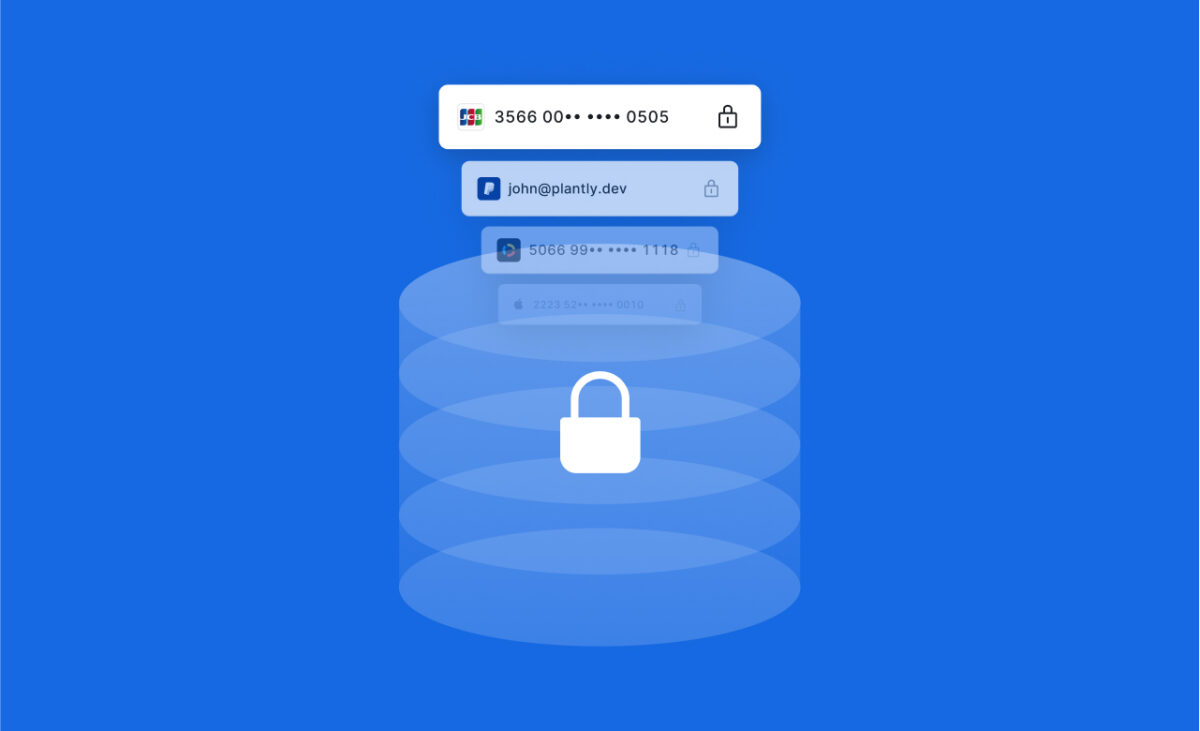
Gr4vy’s vault-as-a-service makes it easy to store, pull, update and distribute card data while minimizing the PCI compliance process. Merchants can easily store original raw card data, billing and shipping details and link them to a vaulted card. Token management is made effortless as merchants can provision network tokens and their cryptograms, provision PSP tokens and distribute card data for third-party processing. The centralized cloud vault supports regional data deployment, keeping merchants compliant and ahead of local data regulations. 

Data portability concerns also become a thing of the past with Gr4vy’s subscription cloud vault services. Merchants can quickly import existing card data and PSP tokens from any PSP into Gr4vy’s vault. They can export data as a PSP token, Network Token, Card Push, or export it into a new service. Additionally, data stored in the cloud vault belongs to the merchant, removing vendor lock-in for maximum portability and flexibility. 

Discover more information on the level of service and plans Gr4vy offers or sign up here.

Streamlining data portability in a multi-PSP environment

In today’s ever-changing payment landscape, the security and management of sensitive card data has become a top priority for businesses and consumers alike. With the increasing number of data breaches and cyber attacks, it is crucial for organizations to implement robust security measures to protect their card data, but often this results in vendor lock-in with the retailer’s primary payment service provider (PSP).

Storing card data with a single PSP can severely limit the data portability of card data for a retailer. True data portability ensures that a retailer has the ability to transfer data from one service provider to another without any loss of functionality or security. In the context of card data storage, this means that businesses can easily switch between different PSPs without having to worry about the migration of sensitive card data. This is particularly important for businesses that want to maintain flexibility and adapt to changing market conditions.

So, how can merchants ensure maximum data portability across their card data when working with multiple PSPs?

1) Always store your card data in an independent external cloud vault

Storing card data in an independent external vault is the most essential step in ensuring maximum data portability for a retailer. Any retailer only storing their card data with their primary PSP will inevitably encounter significant hurdles every time a new payment service is introduced.

By keeping card data in an independent cloud vault, a retailer can ensure that the same card data can instantly be used to process with any PSP, without any migration. This cloud vault can store card data securely while ensuring maximum PCI compliance. The data from the vault can then be used to process on the fly with any PSP, routing card data on demand to the preferred processors based on cost, preference, location, availability, or any other factor.

When evaluating a vault it’s important to ensure that the vault is truly agnostic. A real agnostic vault should be external to any PSP while simultaneously ensuring it keeps all the data needed to process payments through any route. This means the vault should keep not just the card data secure but should also store any associated data needed to properly process payments including necessary scheme data and customer data.

Additionally, it’s important to consider the infrastructure behind a PCI vault. Cloud-based vaults with true data segregation, full multi-region redundancy, and linear scalability are going to be more secure, more scalable, and more powerful than traditional on-prem and Software-as-a-Service (SaaS) solutions. A truly independent, external, cloud-based, PSP agnostic vault will not just reduce cost through easier migration, but it will also enable any retailer to seize the opportunity of newer payment routes and experiment with new PSPs before committing to a full switch.

2) Make the most of your vault with network tokens 

Network tokens are an exciting new innovation in the world of card data security. They are unique, digital identifiers that replace sensitive card data during transactions, making it more difficult for fraudsters to access and use the information. Additionally, network tokens provide uplifts in authorization rates and cost, dependent on the scheme and PSP used – for example, Visa’s Token Service 2020 report shows an uplift of 3.2% in authorization rates. 

One of the main benefits of network tokens is that they can be used across multiple PSPs, providing retailers with greater flexibility and control over their payment processing. Additionally, network tokens can be easily updated or replaced if they become compromised, ensuring that card data remains secure at all times. When evaluating a cloud vault, a retailer should consider built-in network token functionality. The ability to provision and de-provision network tokens allow for maximum portability and will future-proof any retailer’s payment stack. 

One caveat to consider is that not all network tokens are created equal. When a network token is generated it’s associated with the business that requested the token. This is essential to the security feature of network tokens, but it does mean that network tokens generated by some services are associated with those services and not the merchant retailer, limiting the network token’s usage with other PSPs. It’s essential to ensure that network tokens are generated and associated with the retailer, not the service, for exactly this reason.

3) Ensure your vault is always kept fresh

Keeping card data fresh is essential for ensuring future payments can be processed without any issues. Stale or outdated card data can lead to declined transactions, increased chargebacks, and a poor customer experience. By storing card data in a cloud vault retailers have a variety of options to ensure that their customer’s data is always up-to-date and accurate.

One way to keep card data fresh is by using a built-in account updater with their cloud vault. These account updaters will be able to fetch the newest data for an expired or replaced card. A built-in account updater can automatically fetch the new primary account numbers and expiry dates and store these directly in the vault. This ensures the retailer remains out of PCI scope for these updates, and removes the need to re-request card data from consumers.

A new alternative approach to keeping data fresh is to utilize network tokens. Because network tokens replace the original card data they do not require updating when the actual card is replaced. Additionally, network tokens can be extended beyond their original expiry date, providing similar benefits to an account updater.

4) Owning the data in your vault is non-negotiable

The final thing to consider when ensuring maximum data portability is that a retailer’s card data should always remain fully owned by them. Although most payment services promise the ability to export raw card data on request, these processes can be far from frictionless and fast. Additionally, depending on the PSP used, the card data might not actually belong to the retailer. For example, any network tokens may belong to the PSP, and if the payment service also acts as a merchant-of-record then even the card data may be off limits for the retailer.

To maximize data portability a cloud vault should provide multiple export options for the payments data, both on-demand and for full migrations. The ability to directly request network tokens and PSP tokens from the vault is a good start, but for full flexibility, a vault should allow for the ability to push card data to any PCI endpoint, as well as a full export of all data on request. 

If you’re a merchant looking to securely store card data, learn more about the Gr4vy Cloud Vault

Gr4vy launches Cloud Vault to securely collect and store card data

Cloud Vault empowers merchants to simplify the burden of data compliance and card data storage without being locked into a single provider

Gr4vy has announced the launch of its centralized vault to securely tokenize, store, pull, update and distribute card data, including network tokens, alternative payment methods (APMs) tokens and PSP tokens. Backed by PCI DSS Level 1 certification, merchants can now manage payment data how they want, without added security burdens, all while ensuring payment service provider (PSP) independence and data portability. The new product can be used as a standalone tool or as a fully integrated solution with Gr4vy’s payment orchestration platform.

“Not all payment providers support easy card and payment data portability. Moving recurring payments from one provider to another can be complex. Merchants have to re-map their data and set up a new infrastructure before unplugging the old one,” said John Lunn, founder and CEO of Gr4vy. “This process gets more complex if merchants are locked in by PSP-specific tokens. Merchants need a ready-made vault to support network tokens for payment processing and to keep card data secure. We are proud to say that we have built our cloud vault to do that and still allow merchants to manage data and scale.”

The global payment security market is projected to reach 63.96 billion by 2029. With market growth driven by growing consumer concerns about data privacy and security, and the need to lock down customer payment details and card data, merchants can no longer ignore tokenization or how they store sensitive card data.

Gr4vy offers its vault as a standalone service or as a fully integrated solution with Gr4vy’s payment orchestration capabilities. When used in conjunction with full orchestration, merchants can build unique checkout experiences and safely collect and store card data. Data stored in the cloud vault belongs to the merchant, removing vendor lock-in for maximum portability and flexibility. 

With Gr4vy, merchants can also easily tokenize payment methods and use them to process transactions via various PSPs and store multiple network tokens and PSP tokens per customer. The vault is ready-made to support network tokens for payment processing and can return card data, PSP tokens, or network tokens, to use with any compatible payment service. 

Additional Gr4vy Key Features and Benefits for card data storage:

  • Cloud Infrastructure: Gr4vy’s vault runs as a single-tenant solution on the Google Cloud Platform (GCP), allowing merchants to operate, scale, and manage card data in their own protected environment
  • Optimized Payment Selection: Merchants get to decide how to charge customers without building complicated routing logic. Gr4vy’s tokenization solution allows merchants to tokenize cards as well as all APMs that support repeated transactions, such as wallets, bank mandates and more
  • Data Portability: Any card data vaulted with Gr4vy can be used across multiple PSPs seamlessly, so merchants can work with more than one provider or even migrate operations without having to re-tokenize all their card data. And Gr4vy uses a sophisticated decision engine to determine what token to use for any particular processor, removing the complexity of provisioning and storing card data, tokens, and network tokens
  • Network Tokens: Gr4vy’s vault is ready-made to support network tokens
  • Seamless Migration: Merchants can import existing tokens from their current payment service provider into Gr4vy’s Cloud Vault for a seamless migration, and easily export these tokens from the vault

Read more about Gr4vy’s platform and how Gr4vy can help your business securely manage its data.

Gr4vy will be attending Money20/20 Europe 2023

Gr4vy will be attending Money20/20 Europe this year in Amsterdam. Gr4vy’s team of payments experts will be joining other industry experts to discuss some of the issues facing merchants today when it comes to payments. 

With speakers across the industry, the 2023 Money20/20 Europe event will focus on four key themes:

  • Strategic decisions
  • Unexpected finance
  • Socio-economic impact
  • Thinking differently 

Gr4vy’s team will be on hand to talk to merchants about how payment orchestration can help e-commerce businesses to scale internationally and reach new customers. 

Interested in learning more about payment orchestration? Download our eGuide, ‘IaaS vs. SaaS: An e-commerce merchant’s guide to payment orchestration’, to discover which platform is best for your needs – including building a payment orchestration layer in-house.

If you’re a merchant, and attending Money20/20 Europe, and you’re experiencing any of the following, a payment orchestration platform can help:

  • Growing volume of online transactions
  • International expansion
  • High cost and complexity of payment technologies
  • Need for additional payment methods
  • High checkout abandonment rate
  • Difficulty complying with data and privacy laws

To discover more, check out the Gr4vy platform or view our latest news and views on our blog. If you’re a merchant or a vendor interested in partnering with Gr4vy and attending Money20/20 Europe this year, get in touch with our team. 

What is payment orchestration? Is it a single point of failure?

Payment orchestration has gained momentum over the past few years as more and more businesses grew internationally thanks to the continued growth in cross-border e-commerce. Merchants are operating in multiple geographic, with multiple currencies, and with multiple regulatory and compliance requirements. On top of that, merchants are expected to cater to an ever-growing number of payment methods preferred by their customers which can swap and change depending on the age, income, and location of each customer.

So, let’s break down payment orchestration, the differences between payment orchestration providers (POPs) and payment gateways/processors, and some of the main questions and concerns merchants might have around payment orchestration with the Founder and CEO of Gr4vy, John Lunn. 

What is payment orchestration? 

Payment orchestration is basically a layer that sits between a merchant and its partners in the payments ecosystem. It exists to help merchants to streamline, manage, and expand their partnerships with multiple gateways, processors, payment service providers, fraud/risk providers, and much more, through one singular integration.

Merchants connect to a payment orchestration platform normally through an API integration, and, once connected, they have access to unlimited payment providers, payment methods, and anti-fraud providers worldwide. In some cases, merchants can leverage their existing e-commerce platform plugins, significantly simplifying the integration process.

Through payment orchestration platforms, merchants can personalize checkout experiences for every customer, create dynamic and smart rules for routing and retries, tokenize transactions, migrate data between providers and much more. In addition, select payment orchestration platforms, such as Gr4vy, are PCI DSS Level 1 compliant, PSP-agnostic, and offer dedicated cloud instances for resilience, redundancy, and performance, eliminating the risk of a single point of failure.

Is payment orchestration the same as a payment gateway or a payment processor?

In short, no. The reality is that a true payment orchestration platform adds much more value to your payment stack than working with just a gateway and/or a PSP. Whilst a number of payment service providers (PSPs) might have some similar functionality and claim to offer payment orchestration, there are some key differences merchants should be aware of. 

Payment orchestrators are typically provider-agnostic and work with payment gateways and processors so that merchants can have access to more than one provider and reap the benefits of a multi-provider payment stack, without any additional coding required.

By using a payment orchestration to access multiple payment providers, merchants can:

  • Set up automatic failover and retries on the back-end so that if one PSP cannot process a transaction, another PSP automatically kicks in and the merchant does not lose the sale
  • Avoid vendor lock-in with a centralized PCI DSS Level 1 certified vault, allowing merchants to securely collect and store card data and tokenize transactions while seamlessly migrating all data across multiple PSPs
  • Get advanced visibility by using insights across all payment providers within the merchant’s orchestration ecosystem, so merchants can set up routing rules for the most efficient pricing
  • Work with even more payment methods across the world – one integration with a payment orchestration platform will give you access to the payments ecosystem across multiple countries, with the ability to build more bespoke offerings if and when a merchant needs them
  • Simplify payments management and reporting, consolidating all your payment reporting in one single place

Does payment orchestration introduce a single point of failure for merchants? 

Yes and no. This is one of the key differences between a Software-as-a-Service (SaaS) payment orchestration provider, and an Infrastructure-as-a-Service (IaaS) payment orchestration provider. While SaaS payment orchestration platforms (POP) may claim that having multiple payment service providers (PSPs), such as Stripe or PayPal, on the platform removes the risk of being a single point of failure, if the SaaS POP itself goes down, every single merchant loses access to payments, potentially resulting in a significant loss of revenue depending on recovery time.

IaaS platforms, on the other hand, do not have a single point of failure. IaaS platforms have a hugely reduced risk of downtime because it’s unlikely any of the large cloud service providers, such as AWS and Google Cloud, will go down in multiple geographies at the same time. In fact, during the 2022 summer heatwave in the UK, Google Cloud experienced a local outage, and Gr4vy, an IaaS payment orchestration platform, was able to immediately move all merchants over to another region while remaining compliant with local data regulations, ensuring merchants did not lose a single transaction. 

What if a payment orchestration platform goes down?

SaaS payment orchestration platforms are widely available, and have several benefits for smaller businesses, but with SaaS platforms, merchants have no control over the cloud-based infrastructure it runs on, and if the provider experiences an outage, all merchants using it will experience an outage. If a merchant is processing a high volume of transactions using the shared bandwidth on that platform, all merchants will experience a slowdown. 

Perhaps more importantly, merchants are at the mercy of the SaaS organization’s security measures and data leaks can lead to a huge distrust in a brand. By 2025, cybercrime is estimated to cost $10.5 trillion globally, increasing by 15% year-on-year, and reports suggest that the average company with data in the cloud using SaaS platforms represents $28 million in data breach risk

Unlike the shared tenancy SaaS platforms offer, an IaaS provider offers a single-tenant cloud infrastructure which reduces points of failure to ensure a merchant never loses a transaction. Merchants will not share infrastructure or server loads with other merchants meaning there is no risk of slowdown or interference from other merchants, as well as the ability to create bespoke deployments to improve regional storage. IaaS is not a ‘one deployment fits all’ solution – merchants have their own private payment infrastructure customized to meet their individual needs. 

Looking forward, regulations and standards such as PCI 4.0 will have a heavier focus on security in the cloud, and large merchants that are relying on a SaaS platform may fall foul of the breaches mentioned above because they aren’t retaining ownership of their data, and are bound to the platform provider’s standards. 

Interested in learning more about payment orchestration? Download our eGuide, ‘IaaS vs. SaaS: An e-commerce merchant’s guide to payment orchestration’, to discover which platform is best for your needs – including building a payment orchestration layer in-house.

Do I need payment orchestration? 

It depends on the size of your business. For small and micro businesses, your existing commerce platform’s functionality is likely a far more cost-effective route to growth. For larger businesses and enterprise merchants, and/or businesses operating in multiple regions, you should absolutely consider adding payment orchestration to your strategy – whether you’re outsourcing it to a payment orchestration platform, or have the resources to build a payment orchestration layer in-house. 

If you’re experiencing any of the following, a payment orchestration platform can help:

  • Growing volume of online transactions
  • International expansion
  • High cost and complexity of payment technologies
  • Need for additional payment methods
  • High checkout abandonment rate
  • Difficulty complying with data and privacy laws

Gr4vy, trusted by Woolworths Group, Setplex, Mythical Games, Ding, ELEVEN Sports, and more, is a powerful payments platform that allows you to deploy, manage, customize and optimize all your payments through one simple, universal integration. With a unique single-tenant, cloud-based infrastructure, Gr4vy makes scaling your business faster than ever.

Built natively in the cloud, Gr4vy gives every merchant full control over the bespoke resilience, redundancy, and performance expected from a cloud service that integrates into their payment stack. To find out more about Gr4vy, get in touch with our team, or explore our platform

Gr4vy speaking at MRC Barcelona 2023 with Ding, Etsy, and Triple-A

Gr4vy is at MRC Barcelona in May 2023. CEO and Founder of Gr4vy, John Lunn, will be speaking on a panel alongside Etsy, Triple-A payments, and Ding, a Gr4vy customer. The panel will cover the big trends that will shape payments and e-commerce in the coming years.

The session will cover:

  • The top ways that consumer expectations are evolving
  • App-based payments and digital currencies beyond cards and cash
  • Embedded finance and payment methods offered by merchants

With over 20 years of experience working and investing in financial services, commerce enablement, e-payments, data, security and infrastructure, John will be bringing in his expertise around how cloud-native payment orchestration can enable merchants to future-proof their payment stacks.

Panel details:

Tuesday 30th May, Room 131/132, MRC Barcelona, 16:45 CET

In addition, Gr4vy’s team of payments experts will be in attendance for any burning questions merchants may have about payment orchestration. 

If you’re an e-commerce merchant and would like to discover more about how payment orchestration can help you to scale internationally and reach new customers, check out the Gr4vy platform or view our latest news and views on our blog. If you’re a merchant or a vendor interested in partnering with Gr4vy, and attending MRC in Barcelona this year, get in touch with our team. 

To find out more about Gr4vy’s partnership with Ding, check out the full press release