GR4VY

Popular payment methods in Europe: Localized payment solutions

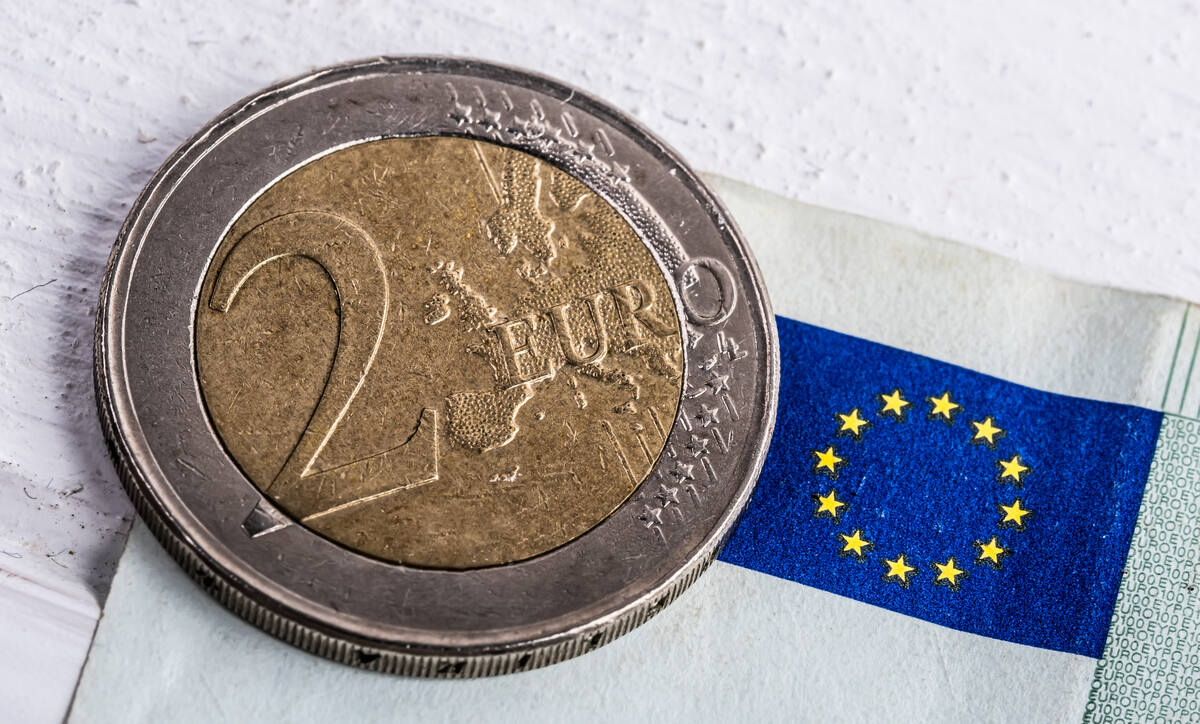
For any business looking to make headway in Europe, understanding how people prefer to pay is more than just a smart move—it’s essential. Across Europe, payment habits vary widely, shaped by culture, technology, and regional trends. What’s popular in one country might be less so in another, making it critical for companies to cater to these preferences to build trust and drive sales.

In this guide, we’ll dive into the most popular payment methods across Europe, explore the distinct trends in different regions, and share practical tips to help businesses offer a seamless payment experience. Whether you’re looking to expand into new European markets or simply want to refine your existing strategy, this overview will help you meet the needs of European customers and stay competitive in an ever-evolving market.

Why understanding European payment preferences Matters

In Europe, payment preferences aren’t one-size-fits-all. For businesses targeting this market, aligning with local payment preferences is crucial. Failing to do so may result in lower conversion rates, higher cart abandonment, and, ultimately, lost revenue. Customers in Europe value convenience, security, and familiarity, making it vital for companies to offer the right payment mix that appeals to each demographic.

Providing local payment methods also builds trust. European customers are accustomed to options like iDEAL in the Netherlands and Giropay in Germany. When businesses offer these familiar choices, customers are more likely to complete their purchases, knowing they can rely on trusted, secure payment methods.

Key Payment Methods Across Europe

Let’s examine the dominant payment methods and their regional variations, as well as trends and considerations when choosing the right mix for European consumers.

Credit and Debit Cards

Credit and debit cards are widely used across Europe, but adoption and usage patterns vary by country. In places like the UK and France, credit cards (Visa, Mastercard) are standard, while Germany and the Netherlands have a strong preference for debit cards over credit.

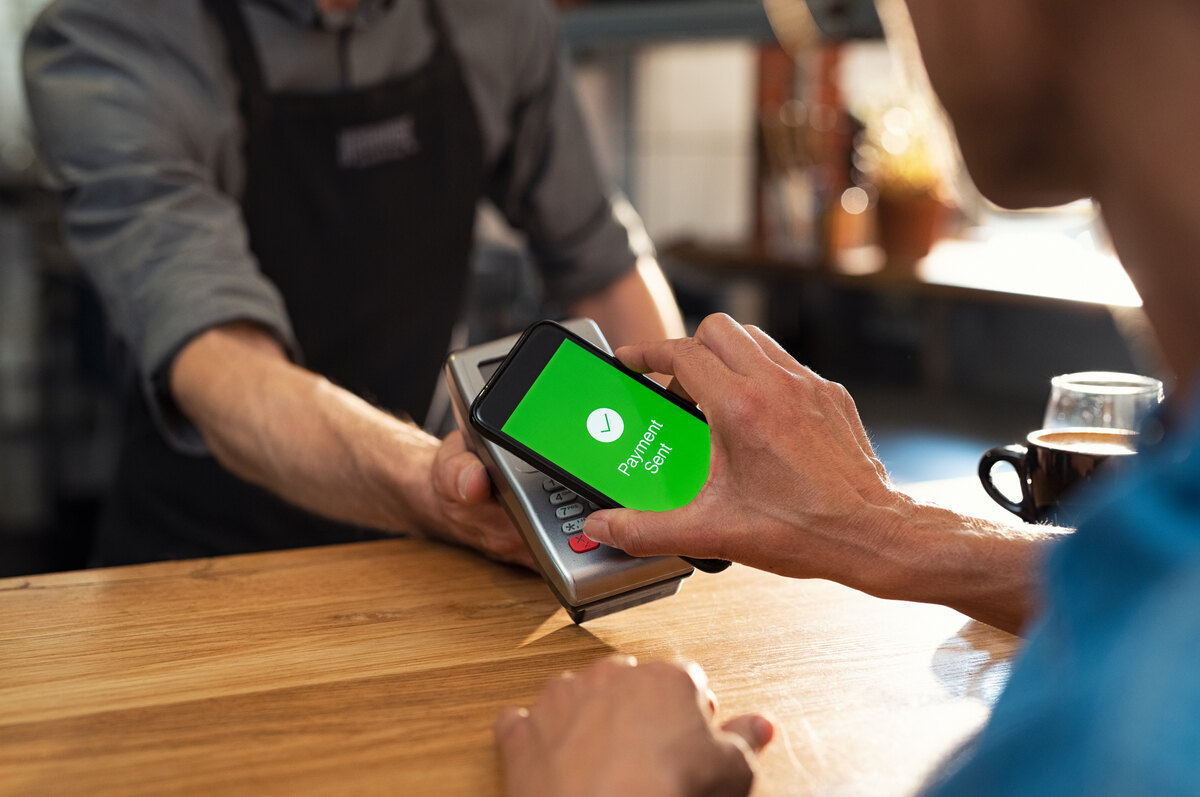
For businesses, offering both credit and debit card options is essential. However, businesses should also consider contactless payment options associated with these cards, as the COVID-19 pandemic accelerated demand for contactless solutions, especially for in-store purchases. In many cases, adding options like Visa and Mastercard with contactless support can enhance convenience and appeal to a broader audience.

Bank Transfers

Bank transfers are a preferred payment method in Europe, particularly in countries like Germany, the Netherlands, and Sweden. The SEPA (Single Euro Payments Area) initiative allows for cross-border bank transfers, making it a seamless option for businesses operating within the EU. The SEPA Direct Debit system is another popular choice for recurring payments, like subscriptions and memberships.

Bank transfer solutions vary by country:

  • Germany: Consumers often prefer methods like Giropay and Sofort, which allow real-time bank transfers.
  • Netherlands: iDEAL is the dominant online payment method, highly trusted and widely used.
  • Sweden: Swish is popular for bank-to-bank transfers, especially for mobile transactions.

Digital Wallets

The popularity of digital wallets is growing rapidly across Europe, with younger generations leading this shift. Wallets such as Apple Pay, Google Pay, and PayPal are prevalent, enabling customers to make secure, fast payments online and in-store. Mobile payment adoption rates are particularly high in the UK, France, and Nordic countries, where contactless payment technology is well-integrated.

For businesses, supporting digital wallets can be a competitive advantage, particularly in regions where mobile commerce is booming. Consumers increasingly expect to be able to use their smartphones for transactions, and digital wallets meet this demand effectively.

Country-specific payment methods in Europe

To succeed in Europe, businesses must cater to country-specific payment preferences. Here’s a closer look at the most popular methods in key markets:

Germany

German consumers favor bank-based payment methods. Credit card use is less common than in other countries, with many opting for direct debit options and local solutions like Giropay and Sofort. These methods are bank-linked, offering secure, real-time transactions that appeal to security-conscious German shoppers. Cash usage, while decreasing, is still notable in in-person transactions.

Netherlands

The Netherlands is highly digital in terms of payment, with iDEAL dominating online transactions. Nearly all Dutch banks support iDEAL, making it the top choice for e-commerce. For businesses targeting this market, integrating iDEAL is essential for reaching Dutch consumers, as it accounts for a large share of online purchases.

France

In France, Carte Bancaire (CB) is the most widely used payment card, while Visa and Mastercard are also common. Credit and debit cards remain popular, and digital wallet adoption is growing, with Apple Pay and Google Pay leading in mobile payments. In recent years, there’s been a shift towards mobile and contactless solutions, particularly among younger consumers.

United Kingdom

The UK is a leader in digital payments, with high adoption of contactless cards and digital wallets like Apple Pay and Google Pay. Buy Now, Pay Later (BNPL) services, such as Klarna and Clearpay, have also gained popularity, especially among millennials. Businesses aiming to succeed in the UK should consider offering a wide variety of digital and alternative payment methods.

Sweden

Sweden’s payment landscape is one of the most advanced, with Swish being a popular mobile payment method. Cash usage is nearly obsolete, and digital wallets, alongside debit cards, are preferred for both in-store and online transactions. The Swedes are tech-savvy, and businesses targeting Sweden benefit from focusing on mobile-first payment solutions.
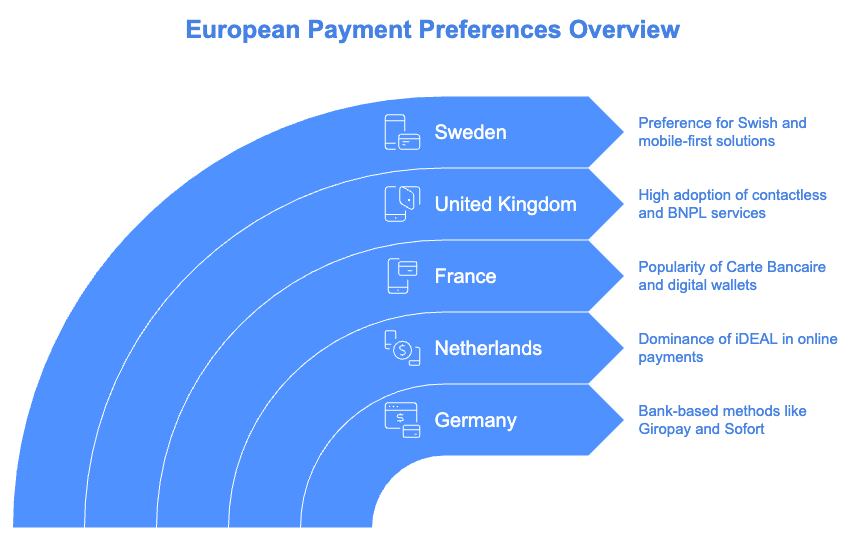
Europe can be divided into regions where payment habits vary:

Western Europe

Western Europe has high rates of credit card and digital wallet usage, especially in countries like the UK, France, and Belgium. Contactless payments have become standard in these countries, driven by mobile and wearable technology adoption.

Eastern Europe

Eastern Europe is still catching up in terms of digital payment adoption. Many consumers continue to prefer cash, though digital wallet use is rising as smartphone penetration increases. Poland and the Czech Republic have strong bank transfer systems, and mobile payment solutions are becoming more popular among urban populations.

Northern Europe (Nordics)

The Nordics are highly digital, with a strong preference for mobile and digital wallet payments. Countries like Sweden and Denmark lead in cashless transactions, and bank transfers through mobile solutions like Swish are common.

Southern Europe

In Southern Europe, credit cards and bank transfers are commonly used, but cash is still prevalent in countries like Italy and Spain. Digital wallets are gaining traction, but adoption is slower compared to Northern Europe.

RegionPopular Payment MethodsNotes
Western Europe– Credit and Debit Cards (Visa, Mastercard)Contactless payments are widely adopted.
– Digital Wallets (Apple Pay, Google Pay, PayPal)France, UK, and Belgium lead in mobile wallet adoption.
– Bank Transfers (SEPA Direct Debit)Common for recurring payments and high-value transactions.
Eastern Europe– CashStill widely used in certain areas, particularly in rural regions.
– Bank Transfers (SEPA)Popular in Poland and the Czech Republic.
– Digital Wallets (PayPal, Apple Pay)Growing adoption, especially in urban areas and among younger populations.
Northern Europe– Digital Wallets (Swish in Sweden, MobilePay in Denmark)High mobile payment adoption, low cash usage.
– Credit and Debit CardsContactless and mobile payments are common.
– Bank Transfers (SEPA)SEPA transfers are widely used and trusted.
Southern Europe– Credit and Debit Cards (Visa, Mastercard)Credit cards are standard, but digital wallets are gradually gaining traction.
– CashCash remains common, especially in countries like Italy and Spain.
– Digital Wallets (Apple Pay, Google Pay)Slowly increasing in popularity with younger consumers.

Key trends in european payment methods

European payment trends are continuously evolving. Some key trends include:

Growth of Contactless Payments

Contactless payments saw significant growth during the COVID-19 pandemic. In many countries, consumers have come to expect contactless options for in-store purchases, whether through contactless-enabled cards or digital wallets.

Buy Now, Pay Later (BNPL) Options

BNPL options like Klarna, Clearpay, and Afterpay are rapidly expanding in Europe. They’re particularly popular with younger consumers who prefer flexible payment options. Businesses can benefit from integrating BNPL solutions, especially for e-commerce transactions.

Digital Wallet Adoption

Digital wallets are becoming standard payment methods, with rapid adoption across the continent. Apple Pay, Google Pay, and Samsung Pay are widely accepted, and local solutions like Swish (Sweden) and MobilePay (Denmark) are expanding.

Decrease in Cash Usage

Cash is declining across Europe, with many countries aiming to become cashless. Sweden is at the forefront, with plans to phase out cash entirely, while other countries see digital payments replacing cash, especially in urban areas.

Practical tips for businesses: Choosing the right payment methods

For businesses, the diversity of payment preferences in Europe can be challenging. Here are some actionable tips for selecting the right payment methods:

  1. Offer Multiple Payment Options: Give customers a variety of choices, including credit cards, bank transfers, and digital wallets. This inclusivity increases the likelihood of conversion.
  2. Consider Country-Specific Solutions: Integrate local payment solutions like iDEAL in the Netherlands and Giropay in Germany to meet regional expectations.
  3. Optimize for Mobile: Ensure that payment interfaces are mobile-friendly, as mobile commerce is significant in Europe. A smooth mobile checkout process is essential.
  4. Prioritize Security: European consumers are increasingly concerned about data privacy. Use secure payment solutions and communicate your commitment to data protection to build customer trust.
  5. Utilize a Payment Orchestration Platform: Solutions like Gr4vy’s orchestration platform allow businesses to integrate multiple payment providers effortlessly, customizing payment options based on country-specific needs.

Frequently Asked Questions (FAQs)

What is the most common payment method in Europe?

Credit and debit cards remain the most common payment methods, with digital wallets and bank transfers also popular depending on the country.

PayPal leads digital wallet usage across Europe, with Apple Pay and Google Pay also gaining significant traction, especially in Western Europe.

What are the alternative payment methods in Europe?

Alternative payment methods include buy now, pay later (BNPL) options like Klarna, direct bank transfers, and local methods like Giropay in Germany and iDEAL in the Netherlands. Learn more about Alternative payment methods in this article. 

What is the biggest payment provider in Europe?

Major players include Visa, Mastercard, and PayPal, along with region-specific providers like SEPA for bank transfers within the EU.

What is the most common international payment method?

Credit cards and digital wallets are widely accepted across borders, while SEPA bank transfers facilitate cross-border payments within the EU.

Gr4vy’s role in supporting payment methods in Europe

For businesses expanding in Europe, Gr4vy’s payment orchestration platform offers an efficient way to manage and integrate multiple payment options. With support for credit cards, digital wallets, and local payment methods, Gr4vy helps businesses deliver seamless payment experiences tailored to each country’s needs.

How does Gr4vy help businesses with payment methods in Europe?

Gr4vy enables businesses to manage multiple payment providers across Europe, ensuring seamless transactions tailored to each country’s payment preferences.

Can Gr4vy support local payment methods?

Yes, Gr4vy supports a variety of local methods, helping businesses cater to country-specific needs and improve their payment conversion rates. Check out Gr4vy’s integrations. 

Does Gr4vy support digital wallets in Europe?

Absolutely, Gr4vy integrates with digital wallets like Apple Pay, Google Pay, and PayPal to meet the rising demand for mobile and contactless payments across Europe.

Understanding Europe’s diverse payment preferences is crucial for any business aiming to succeed in this market. By offering a tailored mix of payment options that resonate with local customers, companies can create a smoother purchasing experience, build trust, and ultimately increase sales. With trends like digital wallets and contactless payments gaining ground, staying agile and responsive to these shifts can be a true competitive advantage.

For businesses looking to simplify payment management, Gr4vy’s payment orchestration platform offers the flexibility to integrate and optimize payment methods across different countries. Ready to streamline your payment strategy? Contact Gr4vy to learn how their platform can support your expansion and help you connect with customers across Europe.


Why do online payments fail: an updated guide for 2025

For businesses and consumers alike, online payments are essential for smooth transactions, whether it’s shopping online, subscribing to services, or booking travel. However, payment failures can disrupt this flow, leading to frustration and potentially lost revenue for merchants. Understanding why online payments fail is crucial to minimizing these disruptions and maintaining a reliable experience for customers.

Payment failures can occur for various reasons, from network issues to insufficient verification steps or security protocols blocking certain transactions. This guide unpacks the most common reasons for online payment failures and offers actionable strategies for businesses to prevent them, enhancing the overall customer experience and maximizing transaction success.

Common reasons for failed online payments

Online payments can fail for a variety of reasons, from insufficient funds to technical glitches. Below are the primary causes of payment failures and how each impacts the transaction process.

1. Insufficient funds

One of the most common reasons a transaction fails is due to insufficient funds in the user’s account. When a customer’s balance doesn’t cover the transaction amount, the bank or card issuer will automatically decline the payment. This situation is particularly common with debit cards.

2. Incorrect payment details

Entering incorrect payment details, such as the card number, expiration date, or CVV code, is another frequent cause of payment failure. Security protocols in most payment gateways and banks decline transactions when details don’t match to prevent unauthorized access.

3. Card expiration

Using an expired card results in an automatic transaction decline. This is a frequent issue with recurring payments, where customers may forget to update their stored card information.

4. Network and connectivity issues

Stable internet and network connections are essential for successful online payments. Any interruption in connectivity between the user, bank, and payment gateway can disrupt the transaction, resulting in a failure. This is particularly common during high-traffic periods or events, where network latency can cause timeouts.

5. Fraud detection protocols

Banks and payment gateways use fraud detection measures to prevent unauthorized payments. If a transaction appears suspicious, such as being initiated from an unfamiliar location, the bank may block it. These security measures are essential but can sometimes result in false positives, where legitimate payments are blocked by mistake.

For more information on optimizing transaction approvals, check out our guide on payment fraud prevention.

6. Payment gateway issues

Payment gateways may experience technical issues or downtimes, especially during peak periods. Even when all other transaction factors are in order, issues with the gateway itself can prevent payments from processing successfully.

7. Exceeding daily card limits

Many debit and credit cards have daily spending limits. If a customer tries to make a payment that exceeds this limit, the transaction may be declined. While some banks allow users to adjust these limits through mobile banking, payments exceeding these thresholds are typically unsuccessful.

8. Insufficient account verification

Banks may require additional verification, such as 3D Secure or OTP codes, to authorize online transactions. If the customer fails to complete this verification, the transaction won’t go through.

Learn more about optimizing payment approval rates to enhance your customer experience.

Why online payments fail due to technical issues

Technology plays a central role in online payments, but it’s also a common source of transaction failure. Here are some ways technical issues can disrupt payments:

Network and connectivity interruptions

Successful online transactions rely on smooth data exchange between the customer, payment gateway, and bank. If connectivity is lost at any point, the payment may not complete, leading to timeouts or failures.

Incompatible payment gateways

Not all banks or cards work with every payment gateway. Some banks only support domestic transactions, while others have limitations on certain payment types. This can lead to failed transactions when a card or bank isn’t compatible with the merchant’s gateway.

System maintenance

Banks and payment gateways periodically undergo maintenance, which can disrupt the payment process. Scheduled downtimes typically result in temporary unavailability, affecting payment success rates.

Outdated browser or app

Using an outdated browser or app can also impact payment processing. Compatibility issues with older versions may prevent payments from going through, especially if the platform doesn’t support current security protocols.

Check out how payment orchestration can improve transaction success rates by addressing common technical issues.

Why certain transactions fail due to bank policies

Banks have policies to protect customer accounts and ensure safe transactions, but these policies sometimes result in failed payments. Here are a few ways bank policies can affect online transactions:

Fraud detection protocols

Banks use fraud detection algorithms to monitor unusual spending patterns. If a transaction triggers one of these protocols, the bank may block it. Unusual spending, foreign transactions, or high-value purchases are common reasons for flagged transactions.

Card type restrictions

Certain businesses only accept specific card types, such as Visa or Mastercard, causing payments to fail if the customer’s card type isn’t supported. Customers may need to use an alternative payment method to complete the purchase.

International transaction restrictions

Some banks automatically block international payments for security reasons. In these cases, customers may need to authorize international transactions through online banking or contact their bank to lift the restriction.

Spending limits on debit and credit cards

Most banks impose daily spending limits on debit and credit cards. If a customer’s transaction exceeds this limit, the payment will be declined. Customers should check their bank’s policies on spending limits to prevent disruptions.

Why online payments fail due to insufficient user verification

Security verification steps are essential for protecting online transactions, but they can also cause payment failures when users are unable to complete the necessary steps. Here’s how verification issues impact payments:

One-time password (OTP) requirements

For high-value purchases or foreign transactions, banks often send OTPs to confirm the payment. If the user doesn’t complete the OTP verification, the transaction will fail. This is a common issue in ecommerce and online bookings.

3D Secure requirements

3D Secure adds a layer of protection by requiring cardholders to authenticate transactions through their bank. However, if the user fails this step, the transaction will be declined.

Inactive or unverified account

Some online services require users to verify their account details or activate specific security features before making payments. If an account is inactive or unverified, payments may fail.

How payment orchestration can reduce failed transactions

Payment orchestration platforms help minimize payment failures by offering flexible routing options, managing multiple gateways, and enhancing security measures. Here’s how payment orchestration supports transaction success:

Smart routing for increased approval rates

Payment orchestration platforms use smart routing to direct each transaction to the provider with the highest approval rates based on transaction type, location, and payment method. This ensures that payments are more likely to succeed, minimizing disruptions.

Multi-gateway support

Orchestration platforms connect with multiple payment gateways, reducing the risk of downtime. If one gateway is experiencing issues, the platform can reroute the transaction through an alternative provider, ensuring continuity.

Fraud prevention and security measures

By integrating advanced fraud detection and verification protocols, payment orchestration platforms reduce the likelihood of false declines. This prevents genuine transactions from being blocked due to security triggers.

For more on minimizing payment failures with orchestration, explore Gr4vy’s guide to payment orchestration.

Improved customer experience

Payment orchestration platforms create a seamless customer experience by supporting multiple payment methods, reducing the likelihood of failed payments, and enhancing approval rates. This makes the checkout process smoother and reduces cart abandonment.

See how Gr4vy’s platform supports a seamless payment experience for businesses worldwide.

FAQ about failed online payments

Why would a transaction fail?
A transaction can fail for various reasons, including insufficient funds, incorrect details, network issues, or fraud detection protocols.

Why would a payment be unsuccessful?
Unsuccessful payments can result from card expiration, network errors, incompatible payment gateways, or security policies from the bank.

Why is my payment failing with my debit card?
Debit card transactions may fail if the card has international restrictions, spending limits, or additional security verification requirements.

Why would a payment not go through?
Payments may not go through due to temporary bank holds, system maintenance, or limitations set by the payment gateway or bank.

Why are my online transactions failing?
Online transactions can fail due to expired cards, outdated payment information, or blocked international transactions.

How does Gr4vy help reduce payment failures?
Gr4vy’s platform minimizes payment failures through smart routing, multi-gateway support, and integrated fraud detection, ensuring a smooth checkout experience.

Understanding the reasons behind online payment failures helps both customers and businesses address and prevent these disruptions. Whether caused by technical issues, insufficient funds, or verification requirements, failed payments are a challenge that can be minimized through strategic solutions. Payment orchestration platforms, like Gr4vy, enable businesses to improve transaction success rates by offering routing flexibility, fraud protection, and backup options across multiple gateways.

Ready to optimize your payment success rates? Contact Gr4vy today to learn how our payment orchestration platform can support seamless transactions and enhance your customer experience.

Payment routing: All you need to know for 2025

Managing payments efficiently is a priority for businesses handling diverse transactions and high-volume sales. Payment routing—a method of directing transactions to specific providers based on factors like cost, location, or approval likelihood—plays a pivotal role in meeting these needs. It enables companies to deliver a fast and dependable checkout experience while minimizing expenses.

For merchants expanding into new markets or handling cross-border payments, strategic payment routing optimizes approval rates and customizes the payment flow, making it an indispensable tool for growth and customer satisfaction.

What is payment routing?

Payment routing is the process of directing payment transactions to the most suitable payment provider based on criteria like cost, currency, or location. By setting these rules, businesses can improve transaction success rates, reduce transaction fees, and ensure a smoother experience for customers.

The importance of payment routing in Ecommerce

In an increasingly global market, payment routing allows businesses to navigate complex payment networks, enhance their approval rates, and control costs across multiple payment providers and regions. For example, routing to a local provider for Australian customers or using a high-approval-rate provider for large transactions can make a substantial difference in both user experience and operational cost.

To learn more about optimizing payment flows, check out our comprehensive guide on payment orchestration.

How does payment routing work?

Payment routing operates based on rules that assess transaction data in real-time to select the most efficient path for each payment. These rules may consider factors like transaction size, card type, and currency. This process typically involves the following steps:

  1. Transaction Initiation: A customer initiates a payment on the merchant’s platform.
  2. Criteria Evaluation: The payment platform assesses transaction factors, such as customer location or currency.
  3. Route Selection: Based on set rules, the platform selects the optimal payment provider.
  4. Transaction Completion: The selected provider processes the transaction, resulting in approval or denial.

Real-Life Example of Payment Routing in Action

Consider an online retail platform with customers worldwide. When a customer from Europe makes a purchase, the system may route the transaction to a European payment provider with lower fees, enhancing approval rates and reducing cross-border charges.

Types of Payment Routing

Various routing types are available, each suited to specific business needs. Understanding these options can help merchants design effective payment flows.

1. Static Payment Routing

Static routing employs fixed rules for all transactions, directing payments through a specific path regardless of changing factors. This method can be suitable for smaller businesses or straightforward payment processes but lacks flexibility in response to dynamic conditions.

Benefits of Static Routing

  • Predictable: Offers consistent and reliable routing without fluctuations.
  • Simple Setup: Easy to configure, particularly for merchants with limited routing requirements.

2. Dynamic Payment Routing

Dynamic routing adjusts to real-time transaction conditions, selecting the best route for each transaction based on factors like location, card type, or provider performance.

Benefits of Dynamic Routing

  • Optimized Costs: Minimizes transaction costs by routing through providers with the best rates.
  • Higher Approval Rates: Adapts routes to maximize transaction approvals, reducing decline rates.

Explore dynamic routing in payment orchestration and how it benefits merchants.

3. Smart Payment Routing

Smart routing leverages machine learning to make data-informed routing decisions based on historical transaction data. Over time, this method becomes increasingly effective as it learns from each transaction.

Benefits of Smart Routing

  • Advanced Optimization: Uses data to refine routing paths continually.
  • Enhanced Fraud Prevention: Routes high-risk transactions to providers with strong fraud detection capabilities.

For merchants seeking to manage fraud while improving efficiency, learn about Gr4vy’s integrations for fraud prevention.

The key benefits of payment routing for merchants

Payment routing offers substantial benefits, making it a valuable tool for businesses aiming to improve transaction management.

1. Reduced Processing Costs

Routing transactions to the provider with the most competitive fees reduces the overall cost of transactions. For high-volume businesses, these cost savings can significantly impact the bottom line.

2. Higher Approval Rates

Payment routing improves approval rates by directing transactions to providers with favorable approval histories, ensuring that more transactions succeed and fewer are declined.

3. Enhanced Customer Experience

Customers experience quicker approvals, minimal payment failures, and a seamless checkout process, which enhances satisfaction and encourages repeat business.

4. Simplified Cross-Border Transactions

For businesses with international customers, routing transactions through local providers minimizes cross-border fees and reduces the risk of transaction declines.

Implementing payment routing: Step-by-Step guide

Implementing effective payment routing involves several key steps. Here’s a step-by-step guide for businesses:

Step 1: Define Business Objectives

Clearly identify your routing goals. Are you looking to reduce fees, increase approval rates, or expand into new markets? Defining these objectives will shape the routing rules you establish.

Step 2: Choose a Payment Orchestration Platform

Select a payment orchestration platform that offers comprehensive routing capabilities. Platforms like Gr4vy enable flexible routing configurations and simplify the management of multiple providers.

Learn more about payment orchestration platforms and how they help merchants.

Step 3: Set Up Routing Rules

Based on your objectives, configure rules that determine routing criteria. For instance, routing transactions based on geographic regions, currency types, or high-risk profiles can be effective.

Step 4: Monitor and Optimize

Regularly monitor your routing performance and adjust rules as needed. Data analysis can help you fine-tune your routing strategies to enhance transaction outcomes.

Step 5: Implement Fraud Prevention Measures

Incorporate fraud detection tools in your payment routing strategy. Routing high-risk transactions to providers with robust fraud protection can help minimize losses and safeguard customer data.

Staying updated with emerging trends can help businesses refine their payment routing strategies. Here are a few key trends in 2025:

  1. AI-Powered Routing: AI and machine learning enhance routing by predicting the most efficient paths for each transaction, making routing smarter and more adaptable.
  2. Focus on Cross-Border Payment Efficiency: As global ecommerce grows, efficient cross-border routing has become a priority, with platforms adding more local providers to streamline international payments.
  3. Increased Focus on Fraud Detection: Integrating fraud detection into routing is a growing trend, with platforms like Gr4vy providing robust fraud prevention tools.

For more on enhancing approval rates and managing fraud, check out our guide on approval rates.

Frequently asked questions (FAQs)

What is payment routing information?

Payment routing information includes data points like transaction type, currency, and location, used to determine the optimal route for each payment.

What is smart payment routing?

Smart routing uses machine learning to analyze transaction data and choose the most efficient route, often improving approval rates and reducing fees.

What is the routing number on a payment method?

In banking, this refers to a bank identifier, but in payment routing, it relates to the decision path for each transaction based on set criteria.

What is merchant routing?

Merchant routing is the practice where businesses set specific rules to direct transactions, often to optimize costs or increase approval rates.

How does smart routing work?

Smart routing applies algorithms to analyze transaction data in real time, choosing routes that improve approval rates and minimize transaction costs.

Does Gr4vy support payment routing?

Yes, Gr4vy’s platform offers customizable payment routing, allowing merchants to optimize their transaction flows across multiple providers.

How does Gr4vy’s payment routing benefit my business?

With Gr4vy, you gain flexibility to manage routing rules, reduce processing fees, and maximize approval rates, especially useful for global and high-volume businesses.

Can Gr4vy help with fraud detection in payment routing?

Absolutely. Gr4vy integrates advanced fraud detection tools, allowing merchants to route high-risk transactions to providers with strong security features.

How can I set up payment routing with Gr4vy?

To start, explore Gr4vy’s integration options, define routing rules in the platform, and customize the system to align with your business needs.

Payment routing is a powerful tool that allows merchants to manage payment processes with precision, ensuring smoother transactions, cost efficiency, and better approval rates. By understanding the different types of routing—static, dynamic, and smart—businesses can choose a strategy that aligns with their goals. Implementing payment routing through a capable orchestration platform, such as Gr4vy, simplifies complex transactions and provides the flexibility needed for growth.

Want to optimize your payment routing? Contact Gr4vy today to learn how our platform can help you integrate, manage, and streamline your payment processes for success.

Popular payment methods in Australia: A complete guide for 2025

Australia has rapidly transitioned to a cashless society, driven by the convenience and security of digital payment methods. As the ecommerce landscape grows, Australian consumers are opting for contactless, digital-first transactions over traditional cash payments. For businesses, understanding the most popular payment methods in Australia is essential for providing seamless and efficient customer experiences. This guide offers a comprehensive overview of the payment methods Australians prefer and how merchants can leverage these trends for growth.

Australia’s payment landscape is dominated by digital wallets, credit cards, Buy Now, Pay Later (BNPL), and BPAY. Below is a detailed breakdown of each method:

  1. Digital Wallets
    Digital wallets, including Apple Pay, Google Pay, and Samsung Pay, have seen significant growth, particularly for contactless payments. These wallets allow consumers to store their payment information securely on their mobile devices, providing speed and convenience at checkout. In 2021, monthly digital wallet transactions increased by 90%, illustrating their dominance.
  2. Credit and Debit Cards
    Despite the rise of alternative payment methods, credit and debit cards remain widely used, with Visa and Mastercard continuing to lead the market. Most merchants accept these cards both online and in-store, benefiting from the security protocols like 3-D Secure.
  3. Buy Now, Pay Later (BNPL)
    BNPL services like Afterpay, Zip, and Klarna are rapidly gaining traction, especially among younger consumers. This flexible payment option allows customers to make purchases immediately and pay off the balance in installments, without interest, boosting consumer purchasing power. BNPL is expected to grow by 20% annually through 2028 in Australia. Dive deeper into payment trends in Australia.
  4. BPAY
    A trusted method for bill payments, BPAY allows consumers to use their banking apps to pay bills. It is popular due to its simplicity, security, and integration with nearly all major financial institutions in Australia.
  5. Cryptocurrency Payments
    While still niche, cryptocurrency is gaining interest among Australians, particularly among tech-savvy users. Some merchants have begun accepting Bitcoin and Ethereum as payment options, although their mainstream use is still limited compared to traditional payment methods.

What is the most used payment method in Australia?

The most used payment method in Australia is digital wallets. Consumers favor Apple Pay, Google Pay, and Samsung Pay for contactless transactions. This trend is driven by their convenience, security features, and widespread merchant acceptance. Additionally, the COVID-19 pandemic accelerated the adoption of contactless payments, making digital wallets the go-to option for millions of Australians.

What do people use to pay in Australia?

Australians predominantly use digital wallets, credit cards, and Buy Now, Pay Later services for payments. In-store, contactless payments through digital wallets and cards are standard, while BNPL has become a favored option for online purchases. Additionally, BPAY is commonly used for bill payments, and cryptocurrency is slowly making its way into the payment ecosystem.

For more details on emerging payment trends, visit our comprehensive guide.

What payment app does Australia use?

Australia widely uses Apple Pay, Google Pay, and Samsung Pay for contactless payments. These mobile wallets are widely accepted by most retailers and are integrated into the everyday purchasing experience. Additionally, PayPal remains a popular option for online transactions, offering secure payments for both ecommerce and peer-to-peer transfers.

If you’re interested in understanding more about payment approval rates, check out how to optimize approval rates in ecommerce transactions.

Does Australia use Cash App or PayPal?

While Cash App is not widely used in Australia, PayPal is a leading platform for both online shopping and money transfers. PayPal’s secure and user-friendly interface makes it a popular choice for both consumers and businesses. Additionally, Venmo, owned by PayPal, is also starting to gain traction for peer-to-peer payments.

Australia is experiencing several key trends that are shaping its payment landscape:

  1. Contactless Payments: The rise of digital wallets has transformed the way consumers make in-person payments. By 2024, contactless payments are expected to dominate the retail space, with digital wallets leading the charge.
  2. BNPL Growth: Buy Now, Pay Later (BNPL) is one of the fastest-growing payment trends in Australia, particularly in ecommerce. It offers flexibility for consumers and drives conversion rates for merchants.
  3. Increased Payment Security: As digital payments grow, so does the emphasis on fraud prevention. Merchants are investing in advanced fraud detection and prevention tools, including tokenization and 3-D Secure, to safeguard transactions. Learn more about how to prevent ecommerce fraud.
  4. Cryptocurrency Adoption: While still a niche payment method, cryptocurrencies like Bitcoin and Ethereum are gaining ground as alternative payment options in Australia. Though mainstream adoption is limited, some merchants now offer cryptocurrency payment options to cater to tech-savvy consumers.

Additional payment methods used in Australia

Australia’s payment ecosystem extends beyond digital wallets and BNPL services. Here are some additional payment methods used across the country:

  • Direct Debit: For subscriptions and recurring payments, direct debit from bank accounts remains a popular option.
  • POLi Payments: An online payment method allowing consumers to pay directly from their bank account without needing a credit or debit card.
  • EFTPOS: Widely used for in-person debit transactions, EFTPOS is a secure and instant payment method, connecting directly to the customer’s bank account.

For merchants looking to integrate these payment methods, explore Gr4vy’s payment orchestration integrations in the APAC region.

FAQs about payment methods in Australia

What is the most used payment method in Australia?
Digital wallets, particularly Apple Pay and Google Pay, are the most used payment methods, especially for contactless payments.

What do people use to pay in Australia?
Australians use digital wallets, credit/debit cards, Buy Now, Pay Later services, and BPAY for payments, depending on the context.

What payment app does Australia use?
Australia’s top payment apps are Apple Pay, Google Pay, and Samsung Pay. PayPal is widely used for online transactions.

Does Australia use Cash App or PayPal?
While Cash App is not common in Australia, PayPal is widely used for both online shopping and peer-to-peer money transfers.

What are the payment trends in Australia?
Key trends include the rise of contactless payments, BNPL, enhanced payment security, and increasing cryptocurrency adoption.

Australia’s payment landscape is rapidly evolving, with digital wallets, BNPL, and contactless payments shaping the future of transactions. To stay competitive, merchants must adapt by integrating these popular payment methods. By offering a variety of payment options and staying informed about the latest trends, businesses can enhance customer satisfaction and drive growth.

Ready to optimize your payment methods for the Australian market? Contact Gr4vy today to learn how our payment orchestration platform can streamline your payment processes and integrate seamlessly with your business.

Fraud prevention for ecommerce: Best practices for merchants

As ecommerce grows, so does the threat of online fraud. For merchants, safeguarding their businesses from fraud is critical to maintaining customer trust, minimizing financial losses, and preserving brand reputation. Effective fraud prevention strategies are essential for running a secure ecommerce operation.

This article provides an in-depth look at the best practices for ecommerce fraud prevention and explores how merchants can benefit from the anti-fraud tools integrated into Gr4vy’s payment orchestration platform. From multi-layered security measures to advanced fraud detection solutions, Gr4vy partners with industry-leading anti-fraud providers to ensure merchants can focus on growth while staying protected.

What are the ways to prevent ecommerce fraud?

Preventing ecommerce fraud requires a proactive and multi-layered approach. Here are some of the most effective ways to protect your online store:

  1. 3-D Secure Authentication: This additional verification step requires customers to authenticate themselves (usually with a one-time password) before completing a transaction. By using 3-D Secure, fraudsters are prevented from making unauthorized purchases with stolen card details. Gr4vy’s platform allows seamless integration with 3-D Secure, providing extra security without compromising user experience.
  2. Address Verification System (AVS): AVS ensures that the billing address entered by the customer matches the one on file with the issuing bank. This simple method can help detect fraud, particularly in card-not-present (CNP) transactions.
  3. Tokenization: Protect sensitive cardholder data by using tokenization to replace sensitive information with encrypted tokens. Gr4vy’s payment orchestration platform offers tokenization services, ensuring that customer card details remain protected even during breaches. Learn more about tokenization and its role in fraud prevention.
  4. Real-Time Fraud Detection: Leverage real-time monitoring tools to detect suspicious activities as they happen. Gr4vy integrates leading anti-fraud providers like Accertify, CyberSource Decision Manager, Forter, and more, all designed to continuously monitor transactions and flag potential fraud based on advanced machine learning algorithms and data analytics.
  5. Multi-Factor Authentication (MFA): MFA provides an additional layer of security by requiring more than just login credentials to access accounts or make purchases. Combining this with Gr4vy’s orchestration solutions further safeguards against unauthorized transactions.

What is fraud detection in e-commerce?

Fraud detection in ecommerce is the process of identifying suspicious activities that may indicate fraudulent transactions. It involves analyzing various data points, such as transaction amounts, IP addresses, geolocation, and purchasing patterns, to detect and block fraud attempts before they occur.

Gr4vy integrates with powerful fraud prevention tools like Forter and Sift, which use machine learning and artificial intelligence to assess transactions in real time. These tools can flag unusual behaviors, such as multiple transactions from the same IP address or mismatched billing and shipping addresses. By using machine learning, the fraud detection systems get smarter over time, adapting to new types of fraud that may emerge.

What is the most common type of ecommerce fraud?

The most common type of ecommerce fraud is card-not-present (CNP) fraud, where fraudsters use stolen credit card information to make online purchases without physically possessing the card. Since merchants cannot physically verify the customer’s identity, CNP fraud poses a higher risk to ecommerce businesses.

Other types of common ecommerce fraud include:

  • Chargeback fraud: Customers dispute legitimate transactions, often claiming they did not authorize the purchase, in order to receive a refund.
  • Account takeover fraud: Fraudsters gain access to customer accounts using stolen login credentials and make unauthorized purchases.
  • Phishing attacks: Fraudsters trick customers into providing sensitive information through fraudulent websites or emails, which they then use to make purchases.

To mitigate these types of fraud, Gr4vy’s anti-fraud integrations with Accertify and CyberSource Decision Manager help merchants monitor transactions and automatically flag potential fraud. These solutions prevent fraud from affecting the business while maintaining a smooth checkout experience for legitimate customers.

How can you prevent fraud when selling online?

When selling online, merchants need to take extra precautions to prevent fraud. Below are actionable steps to reduce the risk of fraud in your ecommerce store:

  1. Enable 3-D Secure Authentication: By using 3-D Secure, you can require customers to complete an extra verification step (such as entering a one-time password) before the transaction is processed. This adds a layer of security to prevent CNP fraud.
  2. Leverage machine learning-based fraud detection: Fraud detection tools that use machine learning can analyze thousands of data points to identify fraud patterns in real time. Gr4vy integrates with fraud detection leaders like Sift and Riskified, which dynamically prevent fraud by analyzing data from their vast networks of ecommerce transactions. These tools learn from past transactions, becoming smarter and more accurate over time.
  3. Tokenize payment data: Use tokenization to replace sensitive card details with encrypted tokens, reducing the likelihood of data breaches and fraud. Tokenization is critical for storing customer information for recurring transactions or subscriptions.
  4. Monitor IP addresses and geolocation: Look for patterns in transaction locations to detect unusual behavior, such as multiple orders from different IP addresses within a short time. Gr4vy’s integration with Forter provides detailed insights into customer behaviors to help detect and prevent fraud.

For more tips on how to improve payment security and reduce fraud, visit our guide on online payment security.

How do you secure e-commerce?

Securing your ecommerce store is about more than preventing fraud—it’s about creating a safe environment for both your customers and your business. Here are essential steps for securing your platform:

  • PCI Compliance: Ensuring that your business follows PCI DSS guidelines is vital for protecting cardholder data. Compliance minimizes the risk of data breaches and helps avoid costly fines.
  • SSL Certificates: SSL certificates encrypt the data shared between customers and your website, ensuring that sensitive payment information is securely transmitted.
  • Secure Payment Gateways: Gr4vy’s payment orchestration platform integrates with multiple payment gateways, offering a secure checkout experience while protecting transactions with tools like 3-D Secure, tokenization, and fraud detection.
  • Regular Security Audits: Regularly audit your ecommerce platform’s security settings to identify and close any potential vulnerabilities.

For more information on securing your ecommerce platform, read our guide on how to ensure online payment security.

Fraud prevention tools for e-commerce

Ecommerce merchants can significantly reduce fraud risk by using the right tools. Gr4vy integrates with several industry-leading fraud prevention providers to give businesses access to advanced fraud detection solutions.

Here are some of the most powerful fraud prevention tools available through Gr4vy’s integrations:

  1. Accertify: Accertify prevents fraud by using AI and machine learning to analyze transactions and detect anomalies. With over 7.6 billion ecommerce transactions analyzed last year, Accertify’s platform offers powerful insights to help businesses prevent fraud while enabling growth.
  2. CyberSource Decision Manager: Cybersource’s Decision Manager combats fraud using one of the world’s largest fraud detection databases, allowing merchants to maximize revenue while reducing operational costs.
  3. Forter: Forter provides real-time fraud prevention by assessing digital interactions at every touchpoint. Forter’s network includes data from major global retailers, giving it the ability to prevent account takeovers, promo fraud, and chargebacks.
  4. Kount: Kount offers fraud prevention from the first customer interaction, verifying identities and detecting synthetic IDs throughout the customer journey. This protects merchants from account takeovers and chargebacks.
  5. Sift: Sift dynamically prevents fraud and abuse using machine learning algorithms. Sift specializes in preventing account takeovers, promo abuse, and payment fraud, particularly in APAC, EMEA, LATAM, and NA regions.

With these powerful fraud prevention tools integrated into Gr4vy’s platform, merchants can feel confident that their transactions are secure while maintaining an optimal customer experience. Explore all of Gr4vy’s fraud prevention tools.

FAQs about ecommerce fraud prevention

What is the most common type of ecommerce fraud?


The most common type of ecommerce fraud is card-not-present (CNP) fraud, where fraudsters use stolen credit card information for online transactions without having the physical card.

How can merchants prevent fraud when selling online?


Merchants can prevent fraud by enabling multi-factor authentication, using tokenization to protect sensitive card data, and leveraging machine learning-based fraud detection tools like Accertify, Forter, and Sift, which are available through Gr4vy’s integrations.

What tools can prevent ecommerce fraud?


Gr4vy integrates with fraud prevention tools such as CyberSource Decision Manager, Forter, Kount, and Riskified to help merchants detect and prevent fraud in real time, protecting against chargebacks, promo abuse, and account takeovers.

How do I secure payments in my ecommerce store?


To secure payments, use SSL certificates, comply with PCI DSS standards, integrate fraud detection tools like Sift, and use tokenization to protect sensitive customer data.

Fraud prevention is crucial for ecommerce businesses, but with the right tools and strategies, merchants can significantly reduce their risk. By leveraging the powerful anti-fraud tools integrated into Gr4vy’s payment orchestration platform, merchants can prevent fraud, protect their customers, and focus on growing their businesses.

Want to protect your business from online fraud? Contact Gr4vy today to learn how our platform can integrate industry-leading fraud prevention tools and secure your ecommerce transactions.

Salesforce and payment orchestration: Integration benefits explained

Salesforce Commerce Cloud is a leading ecommerce platform that empowers businesses to create, manage, and optimize their online stores. From streamlined checkout processes to customized shopping experiences, Commerce Cloud supports a seamless and flexible ecommerce journey. However, to fully maximize its potential, many businesses rely on integrations with specialized tools. These integrations extend the platform’s native functionality, helping businesses tailor Salesforce Commerce Cloud to meet specific operational needs.

This article explores the most valuable integrations for Salesforce Commerce Cloud, covering how these tools enhance payment processing, inventory management, marketing, and more. With the right integrations, businesses can leverage Commerce Cloud as a comprehensive solution, ideal for scaling and optimizing their ecommerce operations.

What is Salesforce Commerce Cloud and why integrations are essential

Salesforce Commerce Cloud (SFCC) is an ecommerce platform that provides a comprehensive set of tools for creating and managing online stores. Designed for businesses that want to offer an engaging and secure shopping experience, Commerce Cloud supports product catalog management, customer segmentation, and checkout. Unlike Salesforce’s CRM, which focuses on customer relationships and sales tracking, Commerce Cloud is specifically built for ecommerce, competing with platforms like Shopify and Magento.

Despite its robust features, every business has unique needs. Integrating Salesforce Commerce Cloud with specialized software allows companies to expand its functionality, bringing in additional features for payment processing, security, and automation. These integrations help businesses unlock the platform’s full potential, making it an adaptable and scalable ecommerce solution.

Key benefits of Salesforce Commerce Cloud integrations

  • Expanded payment processing: Integrations with payment orchestration platforms allow businesses to offer diverse payment methods, multi-currency transactions, and localized checkout options.
  • Improved inventory management: Inventory integration ensures real-time updates and synchronization across sales channels, minimizing overselling and backorders.
  • Enhanced security and compliance: Security-focused integrations safeguard sensitive data and help meet industry standards, like PCI DSS compliance.
  • Operational efficiency: Integrated tools for inventory, payment, and marketing allow businesses to streamline processes and reduce manual tasks.

Top Salesforce Commerce Cloud integrations for e-commerce

As ecommerce evolves, the demand for specialized tools to enhance core functions within Salesforce Commerce Cloud grows. Here are the most impactful integrations that ecommerce businesses can use to optimize their Commerce Cloud experience:

  1. Payment orchestration platforms
    Payment orchestration platforms offer advanced payment solutions that support diverse methods, from credit cards to digital wallets and buy-now-pay-later (BNPL) options. These platforms integrate with Salesforce Commerce Cloud to provide a unified, customizable checkout experience, ensuring secure, multi-currency transactions for global customers.
    Benefits of payment orchestration:
    • Multi-currency support: Essential for businesses with a global customer base, allowing seamless international transactions.
    • Flexible payment options: BNPL and alternative payment methods increase accessibility and customer satisfaction.
    • Centralized payment management: A unified dashboard consolidates multiple payment processors, making it easy to manage and optimize transactions across regions.
  2. Inventory management systems
    Real-time inventory management is critical for ecommerce, especially for businesses selling across multiple channels. Integrating an inventory management system with Salesforce Commerce Cloud ensures accurate stock levels across platforms, reducing overselling and enabling seamless order fulfillment.
    Key benefits:
    • Synchronized inventory: Keep product availability updated across websites, marketplaces, and physical stores.
    • Reduced manual intervention: Automated stock updates and tracking save time and minimize errors.
    • Scalability: Ideal for businesses expanding their product lines or sales channels, as it adapts to growing inventory demands.
  3. Marketing automation tools
    Marketing automation tools integrate with Salesforce Commerce Cloud to support data-driven campaigns. These tools help segment customers based on behavior, manage targeted emails, and deliver personalized product recommendations, boosting engagement and conversion rates.
    Advantages of marketing automation:
    • Personalized outreach: Tailor marketing messages to individual customer segments for higher engagement.
    • Automated campaigns: Set up triggered emails based on customer actions, like abandoned carts or recent purchases.
    • Enhanced analytics: Track customer interactions and adjust campaigns based on real-time data.
  4. Customer loyalty and rewards programs
    Loyalty program integrations enable businesses to build stronger relationships with repeat customers. Integrating loyalty and rewards tools with Salesforce Commerce Cloud allows businesses to reward purchases, referrals, and other actions, encouraging customer retention.
    Loyalty program benefits:
    • Increased customer retention: Rewards create an incentive for repeat purchases.
    • Better customer insights: Track reward usage and loyalty program data to understand customer preferences.
    • Customized rewards: Offer points, discounts, or early access to promotions based on customer purchase history.

Curious about payment orchestration? Dive into our guide on payment orchestration to learn how it can optimize your payment processes and reduce costs.”

Gr4vy’s integration with Salesforce Commerce Cloud

Gr4vy’s payment orchestration platform offers an ideal integration for businesses using Salesforce Commerce Cloud, providing advanced payment functionality that enhances the checkout experience. Through Gr4vy, businesses can manage multiple payment processors, support alternative payment methods, and ensure secure transactions, making it easier to cater to a global audience.

Key features of Gr4vy’s integration with Salesforce Commerce Cloud

  • Customizable checkout: Gr4vy’s integration provides a flexible, unified checkout experience that can be tailored to match brand aesthetics and customer preferences.
  • Multi-currency support: Businesses using Gr4vy can handle transactions in multiple currencies, facilitating cross-border payments for international customers.
  • Buy now, pay later (BNPL): Gr4vy supports BNPL options, a growing payment preference that allows customers to pay in installments, boosting conversion rates and customer satisfaction.
  • Secure PCI-compliant vault: Gr4vy’s vault ensures that sensitive payment data is stored securely, meeting PCI compliance standards and reducing the risk of data breaches.
  • 3-D secure authentication: For added security, Gr4vy provides 3-D Secure, an authentication layer that minimizes fraud and protects businesses from chargebacks.
  • Workflow management for payment processes: Gr4vy simplifies the authorization, capture, and refund workflows, reducing manual intervention and making payment management efficient.

Technical setup for Gr4vy’s Salesforce Commerce Cloud integration

  1. Sandbox installation: Start by installing Gr4vy’s cartridge in a sandbox environment to verify that it works seamlessly with your Commerce Cloud setup.
  2. Cartridge installation: Upload Gr4vy’s cartridges (int_gr4vy_sfra, int_gr4vy, and bm_gr4vy) to the Salesforce Commerce Cloud Business Manager.
  3. Configuration settings: Configure the cartridge path, adding Gr4vy to both the Site and Business Manager paths. Customize settings under the “Gr4vy” and “Gr4vyTheme” preferences in Business Manager.
  4. Embed checkout integration: Integrate Gr4vy Embed directly on your storefront’s checkout page, allowing customers to see all available payment options.
  5. Order payment management: Access payment details like transaction IDs, amounts, and currencies in Business Manager’s order management section.

With Gr4vy integrated into Commerce Cloud, businesses can enhance their checkout experience by offering multiple payment options, multi-currency support, and secure data handling, all through a single interface.

The benefits of integrating Gr4vy with Salesforce Commerce Cloud

Gr4vy’s integration with Salesforce Commerce Cloud delivers specific benefits tailored to ecommerce businesses that prioritize secure, flexible, and customer-friendly payment solutions. Here’s how Gr4vy enhances Commerce Cloud’s capabilities:

  • Streamlined checkout process: By supporting multiple payment methods and localized payment options, Gr4vy helps reduce cart abandonment and provides a smooth checkout experience for customers worldwide.
  • Improved transaction visibility: Gr4vy’s centralized dashboard simplifies transaction tracking, allowing businesses to monitor payment flows across multiple processors and regions.
  • Increased payment security: Gr4vy’s PCI-compliant vault and 3-D Secure authentication add critical layers of security, protecting sensitive payment data and reducing the risk of fraud.
  • Scalability for global commerce: With support for multi-currency transactions, Gr4vy’s integration enables businesses to expand internationally without complications, making it easier to cater to customers in multiple regions.
  • Operational efficiency: Gr4vy’s simplified workflows for authorization, capture, and refunds save time and minimize the need for manual intervention, allowing businesses to focus on growth.

Want to improve payment approval rates? Check out our in-depth article on approval rates to discover actionable tips and insights.

FAQs on Salesforce Commerce Cloud Payment Integrations

What is payment integration in Salesforce Commerce Cloud?


Payment integration in Salesforce Commerce Cloud allows businesses to connect third-party payment platforms to Commerce Cloud, enabling secure payment processing directly through Commerce Cloud. This integration centralizes transaction management, streamlines checkout processes, and helps track payment data, all within Salesforce.

Can you accept payments through Salesforce Commerce Cloud?


Yes, with the right integrations, businesses can accept payments directly through Salesforce. By using platforms like Salesforce Commerce Cloud and integrating with payment orchestration solutions such as Gr4vy, businesses can offer various payment methods, handle multi-currency transactions, and streamline the checkout process.

How do I set up payments in Salesforce Commerce Cloud?


To set up payments in Commerce Cloud, you’ll first need to choose a compatible payment integration or payment orchestration platform, like Gr4vy. From there, installation usually involves adding the integration’s cartridges, configuring settings in the Salesforce Business Manager, and testing in a sandbox environment before deploying live.

Does Salesforce Commerce Cloud have an API?


Yes, Commerce Cloud provides various APIs (Application Programming Interfaces), such as the REST API, SOAP API, and Bulk API, enabling developers to integrate Commerce Cloud with other systems, access data, and create custom applications.

What types of payment methods can be integrated with Commerce Cloud?


Commerce Cloud integrations support a wide range of payment methods, including credit and debit cards, digital wallets (such as Apple Pay and Google Pay), bank transfers, and Buy Now, Pay Later (BNPL) options. The exact options depend on the payment orchestration or processing platform integrated with Salesforce Commerce Cloud.

Is Salesforce Commerce Cloud PCI-compliant for payments?


Salesforce Commerce Cloud offers a secure environment, but PCI compliance depends on the payment solution integrated with Commerce Cloud. By using a PCI-compliant payment platform, like Gr4vy, businesses can ensure that sensitive payment data is handled securely in adherence to PCI DSS standards.

Can I customize the checkout experience with Salesforce Commerce Cloud?


Yes, integrations with payment orchestration platforms allow businesses to customize their checkout pages to reflect brand aesthetics, support multiple languages, and offer region-specific payment methods, enhancing the overall user experience.

What are the benefits of using payment orchestration with Salesforce Commerce Cloud?


Using payment orchestration with Salesforce Commerce Cloud enables businesses to manage multiple payment processors, offer diverse payment methods, and handle multi-currency transactions from a unified platform. This setup enhances flexibility, reduces transaction costs, and improves payment success rates.

How does Gr4vy integrate with Salesforce Commerce Cloud?


Gr4vy integrates with Salesforce Commerce Cloud through a cartridge installation available on Salesforce AppExchange. It enables features like customizable checkout, multi-currency support, BNPL, and secure data storage, all accessible through Salesforce’s Business Manager.

Integrating the right tools within Salesforce empowers businesses to go beyond the platform’s native capabilities, offering a complete solution for e-commerce, customer service, and security. For businesses looking to optimize their Salesforce Commerce Cloud setup, payment orchestration solutions like Gr4vy bring flexibility, scalability, and a secure checkout experience to the forefront. By leveraging integrations effectively, businesses can streamline operations, improve customer satisfaction, and set a strong foundation for sustainable growth.

Interested in maximizing your Salesforce Commerce Cloud setup? Visit Gr4vy’s integration or reach out for a demo to explore our robust payment solutions.

Card acquiring for international markets: global, local, and cross-border insights

As more businesses expand into international markets, accepting payments from customers around the globe has become essential for growth. Card acquiring plays a crucial role in enabling businesses to accept credit and debit card payments from customers in various countries. Understanding card acquiring, the differences between cross-border and local acquiring, and the role of global acquirers are essential for companies looking to optimize their payment strategies in multiple markets.

This article explains card acquiring in-depth, including cross-border payments, local acquiring, and global acquiring, and offers insights to help you decide which strategy fits best for your business. We’ll explore examples of popular acquirers, the difference between card acquiring and processing, and answer some key questions about this critical component of international commerce.

What is card acquiring?

Card acquiring is a process whereby a financial institution, known as an acquirer or acquiring bank, enables a merchant to accept payments from a customer’s credit or debit card. The acquirer ensures the transaction goes through securely, verifies funds with the customer’s issuing bank, and settles payments with the merchant.

In essence, card acquiring connects the merchant, the issuing bank (the customer’s bank), and the card networks (like Visa and Mastercard) to facilitate secure, seamless payments. The acquiring bank handles all aspects of the transaction, including authorization, processing, and settlement, making it a vital part of any ecommerce or retail business looking to accept card payments.

The role of card acquirers in international payments

In international markets, card acquirers manage the complexities of cross-border transactions, such as currency exchange, regulatory compliance, and data security. Here’s a breakdown of the main functions they perform:

  • Authorization: Acquirers ensure that funds are available in the customer’s account before proceeding with the transaction.
  • Data security: Acquirers and payment solutions, like PCI-compliant vaults, protect sensitive customer data during the transaction, meeting security standards and protecting against fraud.
  • Settlement: Acquirers transfer funds from the issuing bank to the merchant’s account, completing the transaction cycle and ensuring merchants are paid.

Examples of card acquirers

Popular card acquirers include banks and financial institutions that specialize in acquiring services for both domestic and international payments. Here are some well-known examples:

  • Chase Merchant Services: Widely used in the U.S., providing comprehensive acquiring services for businesses.
  • Worldpay: Offers local and international card acquiring options, making it a strong choice for global merchants.
  • Adyen: A global acquirer that supports local acquiring and cross-border payments, especially for high-volume businesses.
  • Barclaycard: Prominent in the European market, particularly for companies with a large customer base in the EU.

Each acquirer provides services tailored to different business needs, enabling them to support secure and efficient card payments worldwide. Check out Gr4vy’s integrations to learn more. 

What is the difference between card acquiring and card processing?

While often used interchangeably, card acquiring and card processing represent distinct steps in the payment flow:

  • Card acquiring: This refers specifically to the acquirer’s role in authorizing, settling, and managing card transactions for a merchant.
  • Card processing: This involves the technical side of moving transaction data between the merchant, the acquirer, the issuer, and card networks. Processors handle data routing, ensuring each party receives the necessary information to complete the transaction.

To clarify, an acquirer is responsible for the business’s merchant account and ensuring funds reach the merchant’s bank account, while processors focus on the transaction’s data flow and routing.

Is Visa or Mastercard an acquirer?

No, Visa and Mastercard are not acquirers. Instead, they are card networks that manage the infrastructure for transactions between acquirers, issuers, and merchants.

  • Visa and Mastercard establish the rules, standards, and data transfer processes for card transactions.
  • They provide the backbone of the transaction network, allowing for fast and secure payment processing across millions of merchants worldwide.

In short, Visa and Mastercard facilitate payments but do not act as acquiring banks. Instead, acquirers work within the framework provided by these networks to support transactions for merchants.

Cross-border payments and their impact on card acquiring

Cross-border payments are transactions that occur between a merchant and a customer in different countries. For businesses expanding internationally, cross-border payments offer a way to reach new customers without needing a physical presence in each country.

However, cross-border payments come with additional costs and complexities:

  • Currency exchange rates: Converting currencies can lead to additional fees, affecting the merchant and customer.
  • Higher transaction fees: Card networks and acquirers typically charge more for cross-border transactions, given the added risk and regulatory requirements.
  • Regulatory hurdles: Each country has different regulatory standards, meaning businesses must comply with various laws when accepting cross-border payments.

For businesses prioritizing reach over transaction cost, cross-border payments provide a relatively easy way to accept payments from international customers. To dive deeper into transaction costs and considerations, check out our article on understanding real-time payments.

Local acquiring: a tailored approach for specific markets

Local acquiring means partnering with an acquirer located in the same country or region as your customers. This strategy has several advantages:

Benefits:

  • Lower transaction fees: Local transactions often carry fewer fees than cross-border payments, reducing costs for merchants and customers alike.
  • Higher approval rates: Local transactions are less likely to be declined by issuers, improving approval rates and reducing the risk of cart abandonment.
  • Enhanced customer experience: Local acquiring allows customers to pay in their own currency, enhancing convenience and customer satisfaction.

Challenges:

  • Multiple acquirer relationships: Businesses in numerous regions may need to set up relationships with multiple local acquirers, increasing administrative complexity.
  • Compliance considerations: Each country has specific rules for data security, reporting, and regulatory compliance, adding complexity to the process.

For companies with a large customer base in specific regions, local acquiring offers cost and experience benefits that can increase customer loyalty and streamline payments. For more on approval rates, see our deep dive on payment approval rates.

Global acquiring: streamlining payments for international expansion

Global acquiring allows businesses to process payments across multiple regions through a single acquiring partner. This approach is ideal for businesses seeking rapid global growth without managing multiple local acquirers.

Advantages of global acquiring:

  • Consistent payment experience: Using a single acquirer provides a unified, streamlined payment experience for customers worldwide.
  • Simplified setup: Businesses can work with a single acquirer, reducing the need to manage multiple acquiring relationships.
  • Scalability: Global acquiring allows companies to expand into new regions without needing to establish local acquirer relationships.

Drawbacks:

  • Higher cross-border fees: Since transactions may be treated as cross-border payments, fees may be higher than with local acquiring.
  • Potential declines on cross-border payments: Some banks may decline international transactions due to perceived risk, which can affect approval rates.

Global acquiring is best suited to businesses prioritizing speed and scalability over transaction fees and aiming for a consistent payment experience across markets.

FAQs about card acquiring for international markets

What is card acquiring?
Card acquiring is the process by which a financial institution (acquirer) enables a business to accept card payments. The acquirer manages transaction authorization, security, and fund settlement, allowing merchants to receive payments.

What is the difference between card acquiring and processing?
Card acquiring involves managing the business’s merchant account and settling payments, while card processing refers to the technical workflow of routing transaction data between the merchant, acquirer, issuer, and card networks.

What is local acquiring?
Local acquiring is when a business works with an acquirer in the same country as its customers. This approach reduces fees, improves approval rates, and allows payments in the customer’s local currency.

What is the benefit of cross-border payments?
Cross-border payments allow businesses to accept payments from international customers without needing local acquirers. Although convenient, cross-border transactions often come with higher fees and regulatory considerations.

Why choose global acquiring?
Global acquiring provides a single acquiring partner for processing international payments, simplifying operations for businesses expanding across multiple regions. It’s ideal for companies seeking scalability and consistency in payment processing.

Is Visa an acquirer?
No, Visa is a card network that facilitates communication and data transfer between issuing and acquiring banks. It is not an acquirer itself but enables transactions on behalf of acquirers and issuers.

Choosing the right card acquiring strategy can make a significant difference for businesses in international markets. From reducing fees with local acquiring to streamlining global payments with a single partner, each strategy has unique benefits depending on a company’s target markets and goals. By implementing an informed card acquiring approach, businesses can optimize payments, reduce costs, and improve customer experience across regions.

Looking to streamline your card acquiring process for international markets? Contact Gr4vy to learn more about how our payment orchestration solutions can support your business with secure, flexible, and efficient global payment options.

What is the difference between payment orchestration and a PSP?

As companies compete to offer seamless online payment experiences, they face a pivotal choice: Payment Service Providers (PSPs) or Payment Orchestration Platforms. These two solutions play essential roles in supporting transactions and securing payment flows, yet they serve distinct purposes that align with different business needs.

Whether aiming for simplicity or needing advanced control, businesses must consider factors like provider flexibility, transaction routing, and global compatibility to choose the right payment strategy.  In 2024, the choice between PSPs and payment orchestration platforms is more relevant than ever, as businesses expand globally and customers demand more payment options.

This guide will explore PSPs and payment orchestration platforms, breaking down the advantages, features, and key differences of each solution to help you make an informed decision for your business. We’ll cover industry-related concepts like payment gateways, aggregators, and acquirers, and provide insights into the latest trends shaping the payments industry this year.

What is a Payment Service Provider (PSP)? 

A Payment Service Provider (PSP) is a third-party entity that enables merchants to process online transactions by providing a connection to payment networks, such as credit cards, debit cards, and digital wallets. PSPs simplify the complexities of handling payments, from authorizing credit cards to complying with regulatory requirements like PCI DSS.

Key Features of a PSP

  • Payment Processing: A PSP handles the end-to-end processing of transactions, including card authorization, capture, and settlement, ensuring that the funds are moved from the customer’s account to the merchant’s account seamlessly.
  • Security and Compliance: Most PSPs manage compliance with PCI DSS standards, ensuring that payment data is handled securely, which minimizes risks and the burden of compliance for businesses.
  • Fraud Detection and Prevention: Many PSPs offer fraud detection tools that analyze transactions for suspicious patterns, helping prevent fraudulent charges.
  • Integration Support: PSPs often provide APIs, plugins, and SDKs to streamline integration with e-commerce platforms, shopping carts, and business websites, allowing merchants to go live quickly.

Examples of Popular PSPs

  • Stripe: Known for developer-friendly integration, Stripe offers robust fraud prevention and support for multiple payment methods, including card payments, BNPL, and cryptocurrency.
  • PayPal: A well-known PSP that supports credit card, debit card, and PayPal payments, favored by small to medium-sized businesses for its ease of use.
  • Adyen: Adyen is a global PSP with a strong focus on high-volume enterprises, offering multi-currency processing, in-depth analytics, and fraud management.

Advantages of Using a PSP

  • Simplified Setup: PSPs reduce the complexities of setting up a payment infrastructure by providing all the necessary components under a single account.
  • Cost Efficiency: PSPs are cost-effective for smaller businesses, as they offer bundled services and typically charge a straightforward transaction fee.
  • Time Savings: Businesses can quickly integrate a PSP and begin accepting payments without having to manage separate relationships with multiple banks or gateways.

Trend: Demand for All-in-One PSP Solutions

The popularity of PSPs continues to grow as they expand their range of supported payment methods. Today’s consumers expect businesses to offer options like buy-now-pay-later (BNPL), mobile wallets, and cryptocurrency payments, and PSPs are meeting these needs by offering seamless access to these payment types in one package. This trend is particularly important for small and mid-sized businesses, which may not have the resources to negotiate with multiple providers independently.

Explore how payment orchestration optimizes payment processing in What Is Payment Orchestration? All You Need to Know in 2024.

What is a Payment Orchestration Platform?

A Payment Orchestration Platform is a comprehensive solution that goes beyond the typical services of a PSP by enabling businesses to manage multiple payment providers and gateways through a single, unified integration. Unlike traditional PSPs, which often focus on providing a single pipeline for transactions, payment orchestration platforms are designed to work with multiple providers and dynamically route transactions to optimize costs, improve transaction success rates, and ensure failover in case of disruptions. This flexibility makes them particularly attractive for businesses with complex or high-volume payment needs, especially in global e-commerce and multi-region operations.

Key features of Payment Orchestration

  • Multi-Provider Integration: Payment orchestration platforms allow businesses to connect to multiple PSPs and gateways simultaneously, creating redundancy in payment processing and allowing merchants to select providers based on their specific needs.
  • Dynamic Transaction Routing: Smart routing features enable the platform to send transactions through the most suitable provider or gateway, optimizing for factors like location, transaction success rate, fees, and compliance requirements. This flexibility improves transaction success rates by dynamically adjusting to the best-performing route.
  • Failover Management: By automatically rerouting transactions if one provider experiences downtime, payment orchestration ensures that businesses can maintain a consistent and reliable payment experience for customers. This capability is crucial for high-volume businesses that cannot afford disruptions.
  • Consolidated Reporting and Analytics: Payment orchestration platforms centralize transaction data across all providers, offering businesses a complete view of their payment ecosystem. These analytics can reveal insights into customer behavior, transaction success rates, and fraud patterns, helping businesses make data-driven decisions to improve their payment processes.
  • Enhanced Security and Compliance: Many orchestration platforms offer advanced security measures, such as tokenization and encryption, to protect payment data. They also simplify compliance with global standards, such as PCI DSS and local data protection laws.

Advantages of using a payment orchestration platform

  • Improved Flexibility and Customization: Businesses have full control over the selection and routing of payment providers, allowing them to tailor the payment process to match customer preferences and regional requirements.
  • Cost Savings: By optimizing routing based on transaction fees, payment orchestration platforms can help reduce transaction costs, particularly for international payments where fees can vary significantly across providers.
  • Scalability for Growth: Payment orchestration platforms make it easier for businesses to expand globally by offering support for local payment providers, currencies, and regulatory compliance, all of which are critical when entering new markets.

Trend: The rise of payment orchestration for flexibility

With the acceleration of cross-border e-commerce, payment orchestration platforms are becoming indispensable for businesses seeking to offer localized payment methods without being locked into a single provider. These platforms help companies maintain high approval rates, lower fees, and ensure compliance with local regulations across different regions.

Key differences between payment orchestration and PSPs

While both PSPs and payment orchestration platforms enable online transactions, they serve different purposes and offer unique features. Let’s break down the core differences between the two options:

FeaturePayment Service Provider (PSP)Payment Orchestration Platform
Provider FlexibilityLimited to one providerSupports multiple PSPs and gateways
Transaction RoutingFixed, with no or minimal routingDynamic routing to optimize cost and success rates
Failover CapabilitiesRelies on a single provider’s uptimeBackup routing reduces transaction failures
Data ConsolidationBasic, limited to one PSP’s reportsCentralized data and reporting from multiple sources
Customization OptionsBasic control over brandingFull control over routing, security, and UX
ScalabilityDependent on one provider’s servicesScalable across multiple regions and providers
Security and ComplianceManaged by the single PSPCentralized compliance, tokenization, and encryption
Customer Experience ControlLimited, single provider UXEnhanced experience through custom routing

How do PSPs and Payment Orchestration differ in practice? 

Understanding how PSPs and payment orchestration platforms work in real-world scenarios can clarify the practical benefits and limitations of each. Below, we’ll explore specific use cases where PSPs or payment orchestration platforms offer unique advantages.

  1. Flexibility in Provider Selection
    • PSP: Ideal for small to medium-sized businesses that need an all-in-one solution without the complexity of managing multiple providers. These businesses may prioritize ease of setup and cost-effectiveness over advanced routing or failover capabilities.
    • Payment Orchestration: Suited for enterprises with complex payment needs, such as cross-border e-commerce sites that must cater to different regional providers. For instance, an online retailer operating in North America, Europe, and Asia could leverage payment orchestration to route transactions through local PSPs, reducing costs and enhancing approval rates.
  2. Advanced Routing and Failover
    • PSP: Limited in its ability to manage failed transactions due to reliance on a single provider. If a transaction fails, there may be no backup provider to reroute it, potentially resulting in lost revenue.
    • Payment Orchestration: Smart routing and failover capabilities mean that if one provider experiences issues, the platform automatically reroutes transactions to another provider. This results in higher transaction success rates, especially important for businesses with high transaction volumes, where even a small percentage of failed transactions can lead to substantial losses.
  3. Enhanced Reporting and Data Consolidation
    • PSP: Provides reports only from a single provider, limiting insights to what that provider offers.
    • Payment Orchestration: Aggregates data across multiple PSPs, giving businesses a complete view of payment performance across different markets, providers, and currencies. This data allows businesses to optimize their payment flow, adjust routing strategies, and monitor trends in real time.

Real-World application example 

Consider an e-commerce business expanding to Europe, where they encounter local regulations and regional payment preferences. Using a payment orchestration platform, the business could integrate with local PSPs in European countries, offering preferred local payment methods while ensuring compliance with the EU’s General Data Protection Regulation (GDPR). This would enhance customer experience and optimize transaction costs, creating a smooth and profitable expansion process.

Is a PSP the same as a Payment Gateway?

While PSPs and payment gateways are both integral to processing online payments, they serve distinct roles within the payment ecosystem. Understanding the differences can help businesses identify the components necessary for their payment infrastructure.

  • Payment Gateway: A payment gateway is a technology that facilitates the authorization of credit card payments by securely transmitting data between the merchant’s website and the acquiring bank. It acts as an intermediary, ensuring that sensitive payment data, such as card numbers and personal information, is encrypted and securely passed from the customer to the bank. However, the gateway itself doesn’t settle or process payments; it merely facilitates authorization and secure transmission.
  • Payment Service Provider (PSP): A PSP often includes a payment gateway as part of its offering but also provides additional services, such as transaction processing, fraud detection, and support for alternative payment methods. PSPs manage the entire payment lifecycle from authorization through settlement, providing a more comprehensive solution than a standalone gateway.

Comparison of Payment Gateway and PSP

FunctionPayment GatewayPayment Service Provider (PSP)
Primary RoleAuthorizes transactionsProcesses entire transaction lifecycle
Security and ComplianceSecure transmission of data onlyEnsures end-to-end security and PCI DSS compliance
Fraud DetectionBasic fraud preventionAdvanced fraud detection tools
Settlement and ReconciliationNo settlement capabilitiesManages settlement, reconciliation, and reporting
Integration ScopeStandalone integrationTypically bundles gateway with other services

In short: A payment gateway handles transaction authorization and secure transmission of data, whereas a PSP provides a full-service solution covering everything from authorization to settlement and security compliance. 

What is the difference between PSP and Payment Aggregator?

Payment Aggregators and PSPs both facilitate the processing of online payments, but they differ primarily in terms of account setup and customer base:

  • Payment Aggregator: A payment aggregator pools multiple merchants under a single account, allowing smaller merchants to accept payments without having to open their own merchant accounts. This model is often more cost-effective and quicker to set up than traditional PSP accounts, as it eliminates the need for individual merchant accounts. However, sharing a merchant account across multiple businesses can lead to increased risk of fraud, and some merchants may face additional challenges in customizing their payment setup.
  • Traditional PSP: A PSP offers individual merchant accounts, providing merchants with more control and reducing the risk of chargebacks due to pooled accounts. PSPs offer additional services like advanced reporting, customization options, and direct control over account settings.

When to use each solution

  • Payment Aggregator: Ideal for smaller businesses, startups, or freelancers who need a cost-effective solution with a quick setup and minimal requirements for customization.
  • Traditional PSP: More suitable for mid-sized to large businesses that require individual accounts, in-depth reporting, and advanced customization options.

What is the difference between Payment Gateway and Payment Orchestration?

Both payment gateways and payment orchestration platforms are involved in processing payments, but they play different roles within the payment process.

  • Payment Gateway: A payment gateway is primarily responsible for authorizing transactions by securely transmitting payment data between the merchant, the acquirer, and the issuing bank. The gateway facilitates the initial steps of a transaction, verifying the validity of the payment method and ensuring that customer data is securely encrypted and transmitted. However, gateways are generally limited to one provider and don’t offer dynamic routing or failover management.
  • Payment Orchestration Platform: A payment orchestration platform manages multiple gateways, PSPs, and acquirers, enabling businesses to build a flexible payment infrastructure. Orchestration platforms provide additional capabilities, such as smart routing, failover management, consolidated reporting, and customizable workflows. They allow businesses to choose the best-performing route for each transaction, ensuring higher approval rates, reducing fees, and providing a seamless experience for customers across multiple regions.

Summary of differences

FeaturePayment GatewayPayment Orchestration Platform
FunctionAuthorizes and transmits transaction dataManages multiple gateways and PSPs
RoutingNo routing capabilitiesSmart routing for cost efficiency and higher approval rates
Failover ManagementLimited to single provider, no failoverReduces transaction failures with backup routing
Data and ReportingBasic transaction data onlyCentralized reporting from multiple sources
CustomizationLimited to gateway-specific settingsHigh level of customization, control over workflows

In brief: Payment gateways handle transaction authorization and data security, while payment orchestration platforms manage complex payment setups with features like dynamic routing, failover, and consolidated data analytics.

How many types of Payment Gateways are there?

Payment gateways are broadly categorized based on their integration style and user experience, with two main types commonly used:

  1. Hosted Payment Gateways: Hosted gateways redirect customers to an external payment page (such as PayPal or Stripe Checkout) where the payment provider manages the transaction and secures the payment information. This model is popular for small to medium businesses as it reduces PCI DSS compliance requirements and limits the merchant’s exposure to sensitive payment data.
    • Advantages: Low compliance burden, quick to set up, and secure as the payment provider handles the sensitive data.
    • Disadvantages: Less control over the checkout experience, as customers are redirected to another page, potentially impacting conversion rates.
  2. Integrated Payment Gateways: Integrated gateways, also known as on-site gateways, allow customers to complete the payment process within the merchant’s website or app. They offer a seamless experience and keep customers on the merchant’s platform, which can increase conversion rates.
    • Advantages: Enhanced customer experience and greater control over branding.
    • Disadvantages: Requires more stringent compliance with PCI DSS standards, as sensitive payment data is handled directly on the merchant’s website.

What is the difference between payment orchestration and a PSP

The payments industry is evolving rapidly, with customer expectations, technological advancements, and regulatory changes driving new trends. Here’s a look at some of the key trends for 2024 that are influencing the adoption and features of Payment Orchestration Platforms and PSPs:

1. Increased Demand for Alternative Payment Methods

  • With the rise of alternative payment methods (APMs), including buy-now-pay-later (BNPL), digital wallets, and cryptocurrencies, consumers expect more options at checkout. In 2024, both PSPs and orchestration platforms are expected to expand their support for these payment methods. Businesses that cater to international customers especially benefit from offering local payment methods, as preferences can vary significantly by region.
  • Implications for PSPs and Orchestration: PSPs are integrating with more APMs to remain competitive. Meanwhile, payment orchestration platforms allow businesses to manage a range of APMs, switching easily between providers based on regional demand and optimizing transaction success rates.

2. AI-Driven Fraud Detection and Prevention

  • Fraud detection is an essential part of payment processing, with AI-powered tools becoming more sophisticated in identifying and preventing fraudulent transactions. In 2024, payment orchestration platforms are leveraging AI to analyze transaction data across multiple PSPs and gateways, spotting unusual patterns and implementing real-time prevention measures.
  • Implications for PSPs and Orchestration: PSPs are enhancing their fraud detection capabilities to retain customers, but orchestration platforms have a unique advantage, as they can detect fraud patterns across a wider ecosystem of providers. This cross-platform monitoring provides an additional layer of security for high-risk businesses.

3. Enhanced Data Privacy and Global Compliance

  • Data privacy is a top priority, especially as regulations like GDPR (Europe) and CCPA (California) set high standards for handling customer data. In 2024, payment orchestration platforms are focusing on tools that help businesses manage and comply with data privacy regulations across multiple jurisdictions. Compliance with PCI DSS and local privacy laws is built into orchestration platforms, reducing the burden on businesses.
  • Implications for PSPs and Orchestration: PSPs generally manage compliance within their own ecosystems. However, businesses using payment orchestration platforms benefit from centralized compliance management, which reduces complexity when expanding into new markets with unique regulatory requirements.

4. Increased Focus on Smart Routing and Cost Optimization

  • Cost savings are a significant driver for payment orchestration, with businesses looking to optimize transactions by routing payments through the most cost-effective providers. Smart routing can reduce transaction costs and improve approval rates, especially for international payments. This trend is accelerating as businesses prioritize customer experience while also seeking to maximize profitability.
  • Implications for PSPs and Orchestration: While some PSPs offer regional cost optimization, payment orchestration platforms excel by routing transactions based on various factors, such as cost, region, and provider performance. This approach offers greater savings and enhanced control over transaction routing.

Boost your approval rates with expert insights in How to Optimize Approval Rates.

FAQs on Payment Orchestration and PSPs

Here’s a quick look at some frequently asked questions related to payment orchestration platforms and PSPs, aimed at helping businesses understand these solutions better:

Is payment orchestration only for large businesses?

  • No, while payment orchestration platforms offer advanced capabilities suitable for large enterprises, they can also benefit small businesses that want to reduce transaction costs and improve payment success rates. Even businesses with moderate transaction volumes can leverage payment orchestration to optimize routing and failover.

Can I use a payment gateway without a PSP?

  • Yes, some businesses use standalone payment gateways and work directly with acquirers to manage transactions. However, many companies find PSPs more convenient as they bundle gateway services with other essential features, such as compliance management and fraud prevention.

How does payment orchestration improve transaction approval rates?

  • Payment orchestration platforms use smart routing to direct transactions through the best-performing provider based on success rates and other criteria. This dynamic routing minimizes declines and improves overall approval rates.

Are white-label PSPs available for businesses wanting a branded payment solution?

  • Yes, many PSPs offer white-label solutions, allowing businesses to integrate a fully branded payment experience into their websites or apps without the need to build a payment infrastructure from scratch.

What’s the advantage of payment orchestration over a single PSP?

  • Payment orchestration offers flexibility, cost savings, and failover management by supporting multiple PSPs. This is something a single PSP cannot provide, as orchestration allows businesses to adjust routing and provider selection based on performance and cost.

Choosing between a PSP and a payment orchestration platform depends on the specific needs, size, and growth goals of a business. For smaller businesses or those with simpler payment requirements, a PSP provides a streamlined, easy-to-integrate solution that covers payment processing, fraud prevention, and compliance. However, a payment orchestration platform offers advanced flexibility, scalability, and optimization for companies with larger transaction volumes, global customers, or complex payment needs.

By using a payment orchestration platform, businesses gain full control over their payment processes, enabling them to provide an exceptional customer experience and maximize transaction success rates. In 2024, the choice between these solutions is no longer just about convenience but about strategy, scalability, and meeting customer expectations in an evolving digital economy.

Ready to streamline and optimize your payment process? Contact Gr4vy to learn more about our comprehensive payment orchestration platform and discover how it can support your payment strategy.

What are white-label payment solutions? A guide for businesses

As businesses look for ways to stand out and offer unique experiences to their customers, payment processes are often overlooked. However, ensuring a smooth, branded payment experience can make a huge difference in how customers perceive your business. This is where white-label payment solutions come into play. Rather than building a payment infrastructure from scratch, companies can use pre-built systems that are fully customizable, allowing them to offer seamless payments under their own brand.

With a white-label solution, businesses gain full control over the look and feel of their payment system while leveraging the technology and security of an established provider. It’s a win-win: improved customer experience without the high cost and time investment of developing a proprietary solution.

What are white-label payment solutions?

A white-label payment solution is a third-party payment processing platform that businesses can rebrand and offer to their customers as their own service. Instead of building a payment gateway from the ground up—which is costly and time-consuming—companies can use an existing platform that’s already built and tested, but with their branding, design, and functionality layered on top.

For example, if you’ve ever used a payment system through an app that’s branded with the company’s logo and design but is actually powered by another provider in the background, that’s a white-label payment solution in action.

How do white-label payment solutions work?

White-label payment solutions work by allowing businesses to license or partner with a third-party payment provider. The payment provider handles all the backend processes—such as security, compliance, and transaction processing—while the business presents the system as their own to customers.

Here’s how the process typically works:

  1. Integration: The business integrates the white-label payment solution into its platform (website, app, or software). This process is often quick, thanks to APIs that the payment provider supplies.
  2. Brand Customization: The business customizes the look and feel of the payment interface, adding its own branding, colors, and messaging so that customers perceive it as the company’s own payment solution.
  3. Transaction Processing: The white-label provider processes payments behind the scenes, including authorizing transactions, handling refunds, and ensuring compliance with industry regulations.
  4. Reporting and Analytics: Businesses get access to detailed reports and payment analytics, which are customized to their brand and platform, helping them track performance and customer activity.

Benefits for businesses

White-label payment solutions offer a range of benefits, making them a valuable option for businesses of all sizes, from startups to large enterprises:

1. Brand Control and Customization

One of the biggest advantages is that they allow businesses to maintain full control over their brand. Instead of sending customers to a third-party payment page with a different look and feel, businesses can create a seamless user experience by customizing the payment interface to match their brand. This enhances customer trust and makes the checkout process feel more cohesive.

2. Faster Time to Market

Building a payment solution from scratch can take months (if not years) and require significant resources. White-label payment solutions dramatically reduce development time, allowing businesses to quickly launch and scale their payment services without having to reinvent the wheel.

3. Cost Efficiency

Developing and maintaining a proprietary payment gateway is expensive. Businesses avoid high upfront development costs and ongoing maintenance expenses, as these responsibilities are managed by the white-label provider. This allows companies to focus their budget on other areas of growth.

4. Access to Advanced Features

White-label providers typically offer advanced payment features that would be challenging to develop in-house. These may include support for multiple payment methods, fraud detection, subscription billing, and recurring payments. By leveraging these features, businesses can offer their customers a more robust and sophisticated payment experience.

5. Security and Compliance

One of the most challenging aspects of building a payment solution is ensuring compliance with security standards like PCI DSS and adhering to data protection regulations. White-label payment providers manage these responsibilities, ensuring that all transactions are secure and compliant with industry regulations. This reduces the burden on businesses to stay up to date with evolving compliance requirements.

6. Scalability

As businesses grow, their payment needs become more complex. White-label solutions are designed to scale with the business, whether it’s expanding into new markets, adding new payment methods, or processing a higher volume of transactions. This scalability ensures that businesses can continue to meet their customers’ payment needs without disruption.

Learn how payment orchestration simplifies multi-channel payments in Payment Orchestration: The Future of Multi-Channel Payments.

Use cases for white-label payment solutions

These solutions are used across various industries, particularly where businesses want to maintain control over the payment experience without building it themselves. Common use cases include:

1. E-commerce Platforms

E-commerce businesses often use white-label payment solutions to streamline the checkout process while keeping their branding front and center. Customers can complete purchases without leaving the site, and merchants can offer multiple payment methods under their own brand.

2. SaaS (Software as a Service) Providers

Many SaaS platforms need to handle payments, whether it’s for subscriptions, memberships, or in-app purchases. By implementing a white-label payment solution, these platforms can offer a smooth payment experience that matches the rest of their software.

3. Marketplaces

Online marketplaces that connect buyers and sellers often use white-label payment solutions to manage payments between parties. By integrating a white-label service, these marketplaces can facilitate secure transactions while maintaining control over the user experience.

4. Financial Institutions and Neobanks

Traditional banks, fintech companies, and neobanks can use white-label payment solutions to expand their service offerings, enabling customers to make payments directly from their accounts without relying on third-party processors.

White-label vs. proprietary payment solutions

While white-label payment solutions offer many advantages, they may not be the right fit for every business. Let’s compare white-label solutions with building a proprietary payment system:

White-Label Payment SolutionProprietary Payment Solution
Faster Implementation: Quick setup and integration.Long Development Time: Building a custom payment solution from scratch takes time and resources.
Cost-Effective: Lower upfront costs, as no need to build from scratch.Higher Costs: Significant upfront development and maintenance expenses.
Limited Customization: Branding and interface can be customized, but backend functionality is fixed.Full Customization: Complete control over functionality, but more complexity.
Security Managed by Provider: PCI DSS compliance handled by the provider.In-House Security: Businesses must manage their own security and compliance measures.
Scalability Included: Easily scale as the business grows.Scalability Requires Effort: Scaling requires additional development and resources.

Discover how vaulting and tokenization protect payment data in What Is Vaulting and Tokenization?.

Challenges

While white-label payment solutions offer significant benefits, there are some challenges businesses should be aware of:

  • Limited Backend Control: Although the payment experience can be customized on the front end, businesses don’t have full control over the backend systems. This may limit the ability to create highly specialized features.
  • Dependence on Provider: Since white-label solutions rely on third-party providers, businesses are dependent on the provider’s uptime, security, and performance. It’s crucial to choose a reliable provider with a strong track record.
  • Costs Over Time: While white-label solutions are cost-effective upfront, businesses will continue to pay licensing or usage fees over time. These costs can add up as transaction volumes grow.

FAQs about white-label payment solutions

Can I customize a white-label payment solution to match my brand?

  • Yes, white-label payment solutions allow for full customization of the front-end interface, including your brand’s logo, colors, and messaging.

Is a white-label payment solution secure?

  • Most white-label payment providers are fully PCI DSS compliant and use advanced encryption to ensure transactions are secure.

How long does it take to integrate a white-label payment solution?

  • The integration process is usually fast, often taking just a few days to weeks, depending on the complexity of your system and customization needs.

What industries benefit most from white-label payment solutions?

  • Industries like e-commerce, SaaS, financial services, and marketplaces benefit greatly from using white-label payment solutions.

Are white-label payment solutions scalable?

  • Yes, white-label payment solutions are built to scale as your business grows, handling increasing transaction volumes and expanding payment options as needed.

Want to know how tokenization secures transactions? Learn more in Understanding Credit Card Tokenization.

White-label payment solutions offer businesses a powerful way to provide a seamless, branded payment experience without the time and expense of building a proprietary system. From enhanced control over the user experience to cost savings and faster time to market, these solutions provide both flexibility and reliability.

If you’re looking to provide a frictionless payment experience for your customers while maintaining full brand control, white-label payment solutions might be the answer.

Gr4vy’s payment orchestration platform offers white-label solutions that help businesses streamline payments while retaining full customization. Contact us today to learn more about how Gr4vy can enhance your payment strategy.

SOC 2 Type 2 Compliance: What you need to know to protect payments

Every time you make an online purchase, sensitive information is exchanged—credit card details, personal data, and transaction history. For businesses, ensuring that this data is handled securely is a responsibility that goes beyond compliance checkboxes. SOC 2 Type 2 is a widely respected audit process that digs deep into how well a company protects its customers’ data over time.

Unlike one-off assessments, SOC 2 Type 2 looks at the day-to-day effectiveness of security practices. It’s not just about having the right policies on paper; it’s about proving those policies are actively protecting data through continuous evaluation. This is crucial for businesses that process payments, as it offers both a safeguard against growing cyber risks and a way to build lasting trust with customers.

What is SOC 2 Type 2?

SOC 2 (System and Organization Controls 2) is a compliance framework developed by the American Institute of Certified Public Accountants (AICPA). It is designed for service organizations that manage customer data, especially those that store, process, or transmit sensitive information. SOC 2 assesses whether a company’s internal controls meet specific Trust Service Criteria, which include:

  1. Security: Systems must be protected against unauthorized access, breaches, and other vulnerabilities.
  2. Availability: The system should be available for operation as agreed upon, ensuring consistent access.
  3. Processing Integrity: The processing of data should be accurate, authorized, and complete.
  4. Confidentiality: Sensitive information must be protected and restricted to authorized parties.
  5. Privacy: Personal information must be collected, used, retained, and disclosed appropriately.

While SOC 2 Type 1 assesses these controls at a single point in time, SOC 2 Type 2 goes further by evaluating their effectiveness over a sustained period, typically 6 to 12 months. This provides a deeper insight into how well security measures are maintained and whether they operate consistently.

Want to secure your customers’ payment data? Explore the benefits of What Is Vaulting and Tokenization? to learn how these techniques enhance payment security.

Is it important for payment security?

For businesses that process payments, managing large volumes of sensitive customer information—including credit card numbers, account details, and personal data—is a huge responsibility. SOC 2 Type 2 compliance ensures that companies have the right protections in place to secure this data from cyber threats and breaches.

Here are some of the key reasons why SOC 2 Type 2 is crucial for payment security:

1. Comprehensive data protection

SOC 2 Type 2 compliance involves rigorous scrutiny of security controls, ensuring that data is protected from unauthorized access and breaches. This level of protection is essential for companies that handle sensitive payment information.

2. Operational reliability

Since SOC 2 Type 2 evaluates controls over time, it ensures that these measures are consistently effective. For payment systems, this means fewer interruptions and better reliability, providing businesses with confidence that their systems are secure and operational at all times.

3. Enhanced fraud prevention

SOC 2 Type 2 helps companies reduce the risk of fraud by ensuring their systems are protected against various attack vectors. This includes monitoring for suspicious activity and securing transaction data to prevent unauthorized use.

4. Building trust with customers

Customers and business partners are more likely to trust a company that meets SOC 2 Type 2 standards. Achieving this certification signals that your organization is serious about protecting sensitive data and is committed to high standards of security and privacy.

5. Regulatory compliance

Many industries have stringent requirements for handling financial and personal data. SOC 2 Type 2 compliance aligns with various regulatory frameworks, helping businesses stay compliant with laws and standards like PCI DSS (Payment Card Industry Data Security Standard), GDPR (General Data Protection Regulation), and others.

Key components of SOC 2 Type 2 audit process

The SOC 2 Type 2 audit is a comprehensive evaluation of how well a company’s internal controls are operating over an extended period. Here’s an overview of the steps involved:

1. Planning and preparation

Before the audit begins, organizations must ensure they have the appropriate security controls in place. This often involves documenting procedures, configuring security systems, and training employees to adhere to security policies.

2. Audit period

The audit typically covers a period of 6 to 12 months, during which the organization’s controls are monitored to verify that they are consistently followed and effective in protecting data.

3. Testing and validation

During the audit, third-party auditors will assess how well the company’s security controls meet the five Trust Service Criteria. They will conduct tests such as system checks, personnel interviews, and process reviews to validate that the controls are operating as intended.

4. Final report

At the end of the audit, the company will receive a detailed SOC 2 Type 2 report. This report outlines the auditor’s findings, including whether the organization meets all the necessary security standards and how well the controls performed during the audit period.

Want to secure your customers’ payment data? Explore the benefits of What Is Vaulting and Tokenization? to learn how these techniques enhance payment security.

Benefits of SOC 2 Type 2 for businesses and customers

Achieving SOC 2 Type 2 compliance provides significant benefits, both for businesses and their customers:

1. Stronger security posture

The SOC 2 Type 2 audit forces companies to constantly evaluate and improve their security controls. As a result, businesses can strengthen their defense against cyberattacks, breaches, and fraud.

2. Increased trust and credibility

For customers, knowing that a company is SOC 2 Type 2 compliant offers peace of mind. It assures them that their payment data is handled securely, making them more likely to continue doing business with the organization.

3. Reduced risk of data breaches

SOC 2 Type 2 helps businesses mitigate the risk of data breaches by requiring ongoing monitoring and maintenance of security controls. This proactive approach reduces the likelihood of incidents that could result in financial and reputational damage.

4. Efficient business operations

By enforcing strict processes around data management, SOC 2 Type 2 compliance often leads to more efficient operations. Businesses are able to handle large volumes of transactions without security gaps or disruptions.

SOC 2 Type 2 vs. SOC 2 Type 1: What’s the difference?

While both SOC 2 Type 1 and SOC 2 Type 2 evaluate a company’s security practices, there are key differences between the two:

  • SOC 2 Type 1: This report assesses whether a company’s controls are appropriately designed at a specific point in time. It’s a snapshot evaluation that shows whether the necessary security measures are in place.
  • SOC 2 Type 2: This report goes beyond design and assesses how well those controls operate over an extended period (usually 6 to 12 months). It provides deeper insights into whether the controls are functioning consistently and effectively over time.

For companies handling payment data, SOC 2 Type 2 offers a more comprehensive evaluation of how security controls are managed and maintained in practice.

How to achieve compliance

To achieve SOC 2 Type 2 compliance, businesses need to implement and maintain stringent security controls. Here are a few key steps to ensure compliance:

  1. Implement strong security measures: Invest in robust security tools, such as firewalls, encryption, and intrusion detection systems, to protect sensitive data.
  2. Employee training: Ensure that all employees are trained to follow security policies and understand the importance of data protection.
  3. Continuous monitoring: Regularly monitor your systems for potential vulnerabilities and ensure that controls are updated to address new threats.
  4. Document processes: Keep detailed documentation of all security measures and processes to provide auditors with evidence of compliance.
  5. Prepare for the audit: Engage with a third-party auditing firm to review your controls and provide feedback on how to improve before the formal audit period begins.

FAQs about SOC 2 Type 2 Compliance

What’s the difference between SOC 2 Type 1 and SOC 2 Type 2?

  • SOC 2 Type 1 evaluates security controls at a single point in time, while SOC 2 Type 2 evaluates the operational effectiveness of these controls over a period of time, typically 6-12 months.

How long does it take to achieve SOC 2 Type 2 compliance?

  • The process can take anywhere from several months to a year, depending on the complexity of your systems and how well your controls are already in place.

Do all businesses need SOC 2 Type 2 compliance?

  • SOC 2 Type 2 is not mandatory for all businesses, but it is highly recommended for companies that handle sensitive customer data or operate in industries with strict regulatory requirements.

Is SOC 2 Type 2 compliance only for tech companies?

  • No, SOC 2 Type 2 is applicable to any service organization that manages customer data, including financial institutions, healthcare providers, cloud service providers, and more.

Can SOC 2 Type 2 compliance help with regulatory requirements?

  • Yes, achieving SOC 2 Type 2 compliance can help businesses meet regulatory standards, including PCI DSS and GDPR, by proving their commitment to data security and privacy.

Want to secure your customers’ payment data? Explore the benefits of What Is Vaulting and Tokenization? to learn how these techniques enhance payment security.

SOC 2 Type 2 compliance is a vital certification for businesses that handle sensitive customer data, especially in the payment processing space. By ensuring the security, confidentiality, and availability of your systems, SOC 2 Type 2 not only protects your business from potential security breaches but also builds trust with customers and partners.

Achieving SOC 2 Type 2 demonstrates that your organization takes data security seriously and that you are committed to protecting your customers’ sensitive information at every stage.

Looking to enhance your payment security? Gr4vy’s payment orchestration platform offers robust solutions to help you securely manage your payment data while maintaining compliance with the highest security standards. Contact us today to learn more.