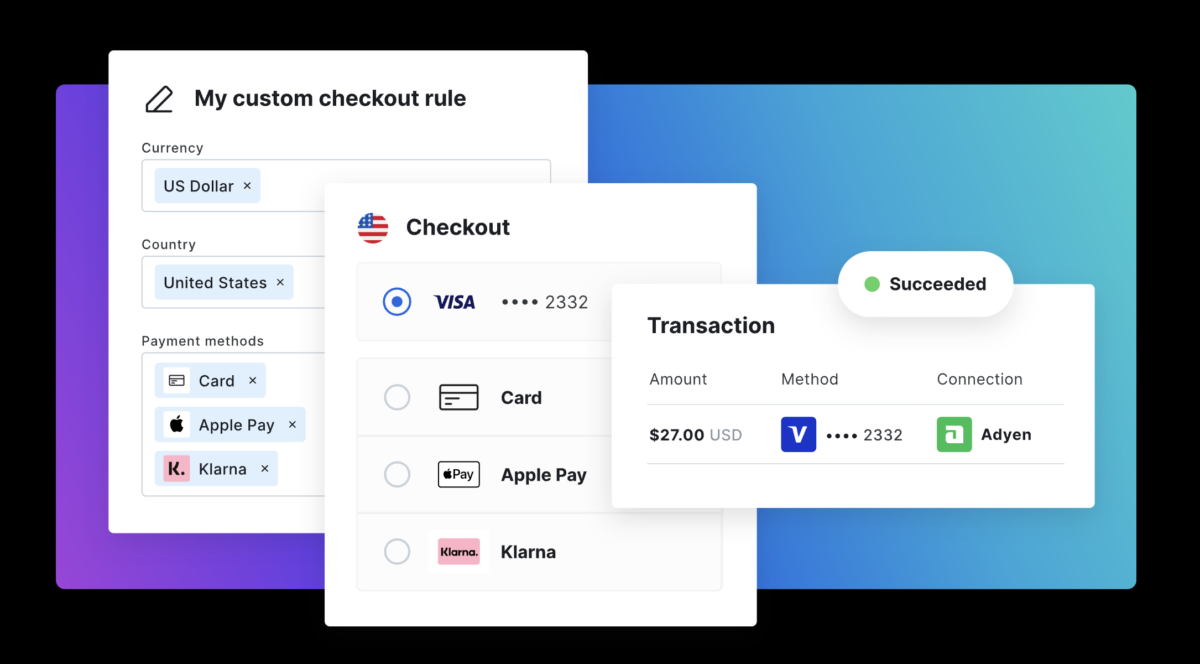
Payments shouldn’t hold you back. Discover why Gr4vy is the go-to platform for enterprises that want to unlock new revenue and get empowered by their payment strategy.
From global merchants to fast-growing platforms, Gr4vy has the tools to run payments your way. See how we simplify payments for enterprises, power branded experiences for their sub-merchants, and help them start with Agentic Commerce.
Explore the network behind Gr4vy. With over 400 payment methods and anti-fraud providers, plus strategic partnerships, our ecosystem helps you expand globally with local options and innovate faster.
As payment security becomes more critical, businesses are increasingly adopting tokenization to safeguard sensitive data.
Two common types of tokens are PSP tokens and network tokens. While both serve the same core function—protecting cardholder data—they operate in different ways, with distinct implications for merchants.
In this article, we’ll break down the differences between PSP and network tokens, the pros and cons of each, and how to choose the right approach for your payments strategy.
What is a PSP token?
A PSP token is created and managed by a payment service provider (PSP), such as Stripe, Adyen, or Braintree. It replaces the customer’s card data during transactions but is typically limited to that PSP’s environment.
Key characteristics:
Token is merchant-specific and PSP-specific
Cannot be transferred between PSPs
Used to reduce PCI scope and improve security
This setup is convenient for merchants who don’t plan to change providers or need a fast integration. However, it creates vendor lock-in, making migration more difficult.
What is a network token?
A network token is issued by card networks such as Visa, Mastercard, or American Express. Unlike PSP tokens, network tokens are interoperable across different providers and channels.
Key characteristics:
Managed by the card network
Supports omnichannel and multi-provider use cases
Includes lifecycle management (e.g., auto-updates for expired or reissued cards)
Network tokens improve payment performance, reduce fraud, and support digital wallets like Apple Pay and Google Pay.
Your choice between PSP and network tokens should depend on your business model, transaction volume, and flexibility needs.
Choose PSP tokens if:
You operate with a single PSP
You’re looking for a fast, low-complexity solution
You don’t expect to switch PSPs soon
Choose network tokens if:
You want better control and portability
You need multi-PSP or omnichannel support
You’re focused on long-term security and scalability
Pairing network tokens with a payment orchestration platform gives you the infrastructure to manage multiple PSPs and routing rules with ease.
Why token portability matters for growing businesses
As companies expand into new markets or adopt new technologies, the ability to move payment data across systems becomes a major advantage. PSP tokens, while useful for isolated setups, limit this flexibility because they are tethered to a single provider.
By contrast, network tokens offer true portability. Businesses can migrate to new PSPs, integrate with different platforms, or test multiple providers—all without re-tokenizing customer data. This agility supports faster scaling and improves resilience when PSPs experience outages or performance issues.
Authorization rates are a crucial metric for any business that relies on recurring or card-on-file payments. Tokens play a significant role in maintaining these rates by preventing transaction failures due to expired or reissued cards.
Network tokens are especially powerful here. Because card networks manage them, they are automatically updated when a customer’s card is replaced or expires. This dramatically reduces soft declines and helps maintain a consistent cash flow.
In contrast, PSP tokens often rely on manual processes to update expired credentials, which can lead to higher failure rates unless the merchant takes proactive steps.
Tokenization and omnichannel commerce
For businesses operating across multiple channels—web, mobile, in-store—ensuring a consistent and secure payment experience is essential. PSP tokens, which are typically siloed within one provider’s system, may not support seamless cross-channel transactions.
Network tokens, however, are designed for omnichannel use. The same tokenized card credentials can be used securely across different touchpoints, including in-app payments, subscriptions, and even connected devices. This improves both customer experience and operational efficiency.
As more commerce shifts to mixed environments, network tokenization becomes key to offering a frictionless journey from screen to store.
Common misconceptions
1. Network tokens are more complex to implement. While they require a slightly longer integration process, many orchestration platforms simplify this by handling token requests and management in the background.
2. PSP tokens are more secure. Both token types offer enhanced security. However, network tokens often come with additional protections like domain control and transaction cryptograms.
3. You can’t use both. Many businesses benefit from using a hybrid strategy: PSP tokens for short-term operations and network tokens for long-term growth.
Both PSP and network tokens play a critical role in improving security and reducing PCI scope. However, network tokens offer a strategic advantage for businesses that want more flexibility, improved approval rates, and omnichannel readiness.
Frequently asked questions: PSP tokens vs. network tokens
What is a PSP token?
A PSP token is a payment token generated by a Payment Service Provider (PSP) to replace cardholder data. It’s typically only usable within the specific PSP’s system, meaning it can’t be transferred or reused with another provider.
What is a network token?
A network token is created and managed by a card network like Visa or Mastercard. Unlike PSP tokens, network tokens are interoperable, meaning they can be used across multiple payment service providers and platforms.
How do PSP and network tokens differ?
The primary difference lies in ownership and portability. PSP tokens are tied to one provider and offer limited flexibility, while network tokens are managed by card networks and are transferable across platforms.
Are network tokens more secure than PSP tokens?
Both token types improve security by replacing actual card data, but network tokens often come with additional protections, such as dynamic cryptograms and lifecycle management features like auto-updates for reissued cards.
Can I switch PSPs and keep my tokens?
Not with PSP tokens. Since they’re owned and managed by the PSP, switching providers typically means losing access to those tokens. Network tokens, however, are portable and can be used across providers.
Do network tokens help reduce transaction declines?
Yes. Because network tokens automatically update when a card expires or is replaced, they reduce the chances of declines due to outdated card details.
Can I use both PSP and network tokens?
Absolutely. Many businesses implement a hybrid strategy—using PSP tokens for short-term simplicity and network tokens for long-term flexibility and performance.
Are network tokens compatible with digital wallets?
Yes. Network tokens are essential for enabling secure transactions through digital wallets like Apple Pay and Google Pay, supporting tokenized credentials stored on user devices.
Is tokenization required for PCI compliance?
Tokenization is not mandatory but strongly recommended. It significantly reduces PCI DSS scope by eliminating the need to store or transmit sensitive card data.
How do I start using network tokens in my business?
Partnering with a payment orchestration provider like Gr4vy allows you to integrate network tokenization across all your PSPs and platforms efficiently.
To future-proof your payment infrastructure, combining network tokenization with payment orchestration ensures better performance, stronger security, and lower operational risk.
Want to talk about how to make this work for your stack?Contact Gr4vy todayto learn more about tokenization, orchestration, and secure payment flows.
Bank-to-bank payments are growing rapidly, with global account-to-account (A2A) payments expected to reach $850 billion by 2026 (Juniper Research). Businesses and consumers are shifting away from credit cards and digital wallets in favor of direct bank transfers, which offer lower fees, faster settlement times, and enhanced security.
With the rise of real-time payments, Open Banking, and alternative payment methods, bank-to-bank transactions are reshaping the payments landscape, particularly for B2B, payroll, and high-value transactions. But how do these transfers work, and why are they becoming essential for businesses?
This article explores how bank-to-bank payments work, their advantages, and how businesses can optimize them using modern payment technologies.
What are bank-to-bank payments?
Bank-to-bank payments refer to direct money transfers between two bank accounts, bypassing intermediaries like card networks or third-party processors. These transfers use banking infrastructure to move funds securely, efficiently, and often at lower costs than traditional payment methods.
Types of bank-to-bank payments
Bank transfers vary based on speed, geographic reach, and processing networks. The most common types include:
ACH transfers – Used in the United States for payroll, bill payments, and recurring transactions.
Wire transfers – Faster but more expensive bank transfers, often used for international payments.
SEPA transfers – The standard for bank-to-bank payments across Europe.
SWIFT payments – Used for global cross-border transactions between banks.
Real-time payments (RTP) – Instant bank transfers that are growing in popularity worldwide.
Each type of bank transfer has different processing times, fees, and use cases, making it essential for businesses to choose the right one based on their needs.
Bank transfers follow a standardized process depending on the type of transfer and the financial institutions involved.
Step-by-step breakdown
Payment initiation – The sender authorizes a transfer through their bank or payment service provider.
Verification and authorization – The bank verifies account details, available balance, and compliance with security protocols.
Processing and clearing – The transfer is routed through a clearing network such as ACH, SEPA, or SWIFT.
Settlement – Funds are deposited into the recipient’s account, completing the transaction.
For a breakdown of payment authorization vs. authentication, check outthis article.
Key benefits of bank-to-bank payments for businesses
Bank-to-bank transfers offer several advantages over credit cards and digital wallets, particularly for B2B transactions, payroll, and high-value payments.
Lower transaction fees – Unlike credit cards, which charge interchange fees, bank transfers have minimal processing costs.
Faster settlement times – Real-time payments and SEPA Instant allow immediate fund transfers, improving cash flow.
Reduced chargeback risks – Unlike card payments, bank transfers are irreversible, reducing fraudulent disputes.
Stronger security – Encryption, two-factor authentication, and fraud detection tools make bank payments highly secure.
Global reach – Bank transfers enable cross-border transactions, supporting businesses that operate internationally.
For insights on managing payment fees, check outthis guide.
Bank-to-bank payments vs. other payment methods
Feature
Bank-to-Bank Transfers
Credit Cards
Digital Wallets
Transaction Speed
Instant – 3 Days
Instant
Instant
Fees
Low
High
Medium
Chargebacks
No
Yes
Limited
Best for
B2B, payroll, large transactions
Consumer purchases
Mobile and small transactions
Bank transfers are ideal for businesses handling large transactions, while credit cards and digital wallets remain dominant for everyday consumer purchases.
The role of payment orchestration in bank-to-bank payments
Many businesses struggle with managing multiple payment providers, optimizing bank transfers, and ensuring compliance. This is where payment orchestration platforms offer a solution.
How payment orchestration supports bank-to-bank payments
Automates direct bank transfers – Businesses can process real-time payments, ACH, and wire transfers from a single platform.
Reduces failed transactions – Smart routing automatically retries transactions if a payment fails.
Ensures compliance – Built-in regulatory controls keep businesses compliant with banking and payment laws.
Frequently asked questions (FAQs) about bank-to-bank payments
How secure are bank-to-bank payments?
Bank transfers use strong encryption, authentication protocols, and fraud detection systems, making them highly secure compared to other payment methods.
What is the difference between ACH and wire transfers?
ACH transfers are typically used for recurring payments and take 1-3 business days, while wire transfers are faster but come with higher fees.
Can bank-to-bank payments be reversed?
No, most bank transfers are irreversible, unlike credit card payments which allow chargebacks.
How do real-time payments work?
Real-time payments (RTP) settle instantly, 24/7, allowing businesses to move funds quickly without waiting for standard bank processing times.
Are bank transfers better than credit cards for businesses?
For B2B and high-value transactions, bank transfers are often more cost-effective and secure than credit cards, which have higher fees and chargeback risks.
Why businesses should prioritize bank-to-bank payments
Bank-to-bank payments are gaining momentum as businesses look for low-cost, secure, and efficient payment methods. With the rise of real-time payments, Open Banking, and AI-driven fraud prevention, direct bank transfers are becoming a preferred choice for businesses worldwide.
To fully optimize bank-to-bank payments, businesses should consider payment orchestration platforms, which automate transfers, reduce failures, and ensure compliance.
The way people pay is evolving rapidly. Over 50% of global transactions are now cashless, and digital wallets are becoming the preferred payment method in many regions. In the U.S., mobile wallet transactions exceeded $2 trillion in 2023, with Apple Pay, Google Pay, and Samsung Pay leading the market (Statista).
With fast-growing adoption, seamless integrations with banking apps, and support for cryptocurrencies, digital wallets are increasingly seen as the future of payments. But will they actually replace credit cards?
Despite the convenience and security benefits of digital wallets, credit cards still dominate in many aspects—from rewards programs to global acceptance. This article dives into the evolution of digital payments, their advantages and limitations, and what the future holds for both digital wallets and credit cards.
Are digital wallets safer than credit cards?
Security is one of the biggest concerns when comparing digital wallets vs. credit cards. While both have strong fraud protection measures, digital wallets offer advanced security features that make them a safer option in many cases.
How digital wallets enhance security
Encryption & tokenization – These wallets encrypt payment details and replace them with a randomized token. This ensures that actual card numbers are never stored or shared, reducing fraud risks.
Biometric authentication – Most digital wallets require fingerprint scanning, facial recognition, or passcodes before authorizing a payment, making it harder for fraudsters to gain access.
One-time authentication per transaction – Unlike physical credit cards, which can be stolen and used repeatedly, digital wallets require authentication for every purchase.
Remote disabling – If a phone is lost or stolen, users can remotely lock or erase their digital wallet, preventing unauthorized transactions.
While digital wallets provide strong security, credit cards still offer unique protections, including:
Chargeback rights – If a fraudulent charge occurs, cardholders can file a chargeback request and often get their money back.
Widespread fraud protection – Credit card networks like Visa, Mastercard, and American Express have long-standing fraud detection systems.
Offline usability – Unlike digital wallets, which require a charged and functional phone, physical cards can still be used even in low-battery or no-internet situations.
What are the advantages of using a digital wallet instead of a physical card?
Businesses and consumers are increasingly shifting toward digital wallets for several reasons:
Faster checkouts – They speed up transactions both in-store and online. More payment options – Many now support cryptocurrency, BNPL, and direct bank payments. No risk of card loss – Since everything is stored digitally, there’s no risk of misplacing a card or having it stolen. Seamless integration with financial apps – Digital wallets work alongside banking apps, budgeting tools, and investment platforms.
However, digital wallets are not without limitations.
What is one disadvantage of using a digital wallet?
Despite their benefits, digital wallets still face adoption challenges:
Not universally accepted – While adoption is growing, some merchants still don’t support digital wallets, especially in developing markets.
Requires internet or NFC-enabled devices – Unlike credit cards, which can be swiped anywhere, digital wallets need compatible devices and network access.
Dependency on smartphone security – If a phone is hacked or infected with malware, digital wallets could be compromised.
Limited to certain banking infrastructures – Some smaller banks and credit unions may not yet support all digital wallet functionalities.
What are the risks of digital wallets?
While digital wallets offer strong security protections, they still come with potential risks:
Phone hacking and malware – If a user’s device is compromised, attackers may gain access to stored payment information.
Limited dispute resolution – Unlike credit cards with strong chargeback protections, some digital wallet transactions may be harder to reverse.
Data privacy concerns – Digital wallets collect transactional and behavioral data, which may be used for targeted advertising or shared with third parties.
The future of digital payments: Coexistence or replacement?
The rise of digital wallets has led many to believe that credit cards may become obsolete, but the reality is more nuanced. While digital wallets are becoming more dominant in everyday transactions, credit cards still offer advantages that will keep them relevant for the foreseeable future.
Will digital wallets replace credit cards entirely?
At this stage, digital wallets are not positioned to fully replace credit cards but rather to coexist with them. Several factors contribute to this:
Credit infrastructure is deeply embedded in global finance – Banks and merchants have spent decades building a system based on credit cards.
Rewards and credit-building incentives – Many consumers rely on credit card reward programs, cash back incentives, and credit-building opportunities.
Global acceptance – Credit cards are still the most widely accepted payment method, especially for international transactions.
Consumer habits – While digital wallets are growing, some consumers prefer the familiarity of using physical credit cards.
However, long-term trends indicate a shift toward digital wallets for everyday transactions:
Younger generations prefer mobile payments – Studies show that Millennials and Gen Z are adopting digital wallets at higher rates than older consumers.
More merchants are prioritizing contactless payments – Businesses worldwide are upgrading point-of-sale systems to accept digital wallets.
New financial models are emerging – Buy Now, Pay Later (BNPL), real-time payments, and Open Banking are giving consumers new ways to pay that don’t rely on credit cards.
What businesses need to do to stay ahead
With digital wallets and credit cards continuing to coexist, businesses must adapt their payment strategies to support both. A flexible payment system ensures:
Higher conversion rates by allowing customers to pay the way they prefer.
Reduced payment failures through multiple transaction options.
Stronger fraud prevention by integrating secure, tokenized transactions.
Future-proof payment infrastructure by supporting emerging digital wallet technologies.
Learn how payment orchestration helps businesses adapt to the evolving payment landscape inthis guide.
Regional variations in payment preferences
While digital wallets are growing worldwide, adoption rates and preferences vary significantly between developed and developing markets.
Developed vs. developing markets: How adoption rates differ
In developed markets like the United States, Europe, and Australia, digital wallets are seeing widespread adoption due to:
High smartphone penetration – Most consumers already use smartphones for banking and transactions.
Contactless infrastructure – Retailers and merchants have upgraded point-of-sale systems to accept digital payments.
Consumer preference for convenience – Digital wallets provide faster checkouts and seamless integrations with financial apps.
Example: The UK – In the United Kingdom, over 60% of in-store transactions are now contactless, and mobile wallets account for a significant portion of digital payments.
Example: Australia – Digital wallets are projected to surpass credit card transactions by 2026, fueled by Open Banking and real-time payment initiatives.
In contrast, developing markets are experiencing slower but steady adoption, primarily due to:
Lower smartphone penetration – Many consumers still rely on cash or basic mobile banking.
Lack of infrastructure – Not all businesses have upgraded to accept digital payments.
Limited financial inclusion – Many regions still have large unbanked populations, making it harder for digital wallets to gain traction.
Example: India – While mobile payments through UPI have grown rapidly, credit cards are still widely used for large transactions.
Example: Latin America – Digital wallets are gaining ground, but many consumers still rely on cash-based transactions and prepaid cards.
Learn how different payment methods are evolving across global markets inthis article.
Challenges facing digital wallet adoption
Despite their benefits, digital wallets face several barriers that limit adoption in some regions.
Security concerns: Addressing fraud and data breaches
One of the biggest concerns for consumers and businesses alike is security. While digital wallets use encryption and tokenization, they are not immune to risks:
Data breaches – If a digital wallet provider experiences a security breach, customer payment data could be exposed.
Phishing attacks – Cybercriminals target users with fake payment requests and scam apps.
Device hacking – If a smartphone is compromised, stored payment information could be at risk.
Solution: Advanced biometric authentication, two-factor authentication (2FA), and AI-driven fraud detection are helping improve digital wallet security.
Explore how encryption and tokenization protect payments inthis guide.
Technological barriers: The need for infrastructure improvements
For digital wallets to fully replace credit cards, they must overcome technological challenges, including:
Smartphone access – Not everyone owns a smartphone, particularly in developing countries.
Internet connectivity – Digital wallets require stable internet or NFC-enabled devices, which are not always available.
Point-of-sale (POS) compatibility – Many merchants still lack NFC-enabled payment terminals, limiting the ability to accept digital wallets.
Solution: As mobile penetration increases and governments push for financial digitization, digital wallet adoption is expected to grow.
Merchant acceptance: Are businesses ready for a cashless future?
For digital wallets to replace credit cards, businesses need to adopt and promote them. However, not all merchants are ready due to:
Processing fees – Some digital wallets charge higher transaction fees than traditional credit card networks.
Lack of consumer demand – In some regions, customers still prefer cash or card payments.
Education and training gaps – Some businesses don’t fully understand the benefits of digital wallets or how to implement them.
Example: Japan – Despite being a tech-savvy country, many small businesses still prefer cash due to cultural habits and high transaction fees for digital payments.
Example: Germany – Bank transfers and cash payments still dominate, making digital wallet adoption slower than in other European markets.
Solution: Businesses must invest in digital payment solutions and educate consumers on the benefits of digital wallets.
Learn how businesses can optimize payment acceptance inthis article.
The role of payment orchestration in digital wallet adoption
As digital wallets become more widely used, businesses must optimize their payment infrastructure to support multiple payment methods. This is where payment orchestration plays a crucial role.
How payment orchestration supports digital wallet transactions
A payment orchestration platform (POP) allows businesses to seamlessly integrate multiple digital wallets, payment gateways, and banks into a single system. This helps:
Enable global payment acceptance – Merchants can support Apple Pay, Google Pay, Samsung Pay, PayPal, and regional digital wallets without needing separate integrations.
Optimize transaction routing – If one payment provider declines a transaction, the system automatically reroutes it to another provider, reducing failed payments.
Enhance security and compliance – Payment orchestration platforms ensure secure tokenized transactions while keeping businesses compliant with PSD2, PCI DSS, and GDPR.
Reduce operational complexity – Businesses don’t need to manage multiple payment integrations separately, saving development time and reducing costs.
Learn how payment orchestration improves digital payment acceptance inthis guide.
Why businesses need payment orchestration for digital wallet payments
Despite the growth of digital wallets, many businesses still struggle with fragmented payment infrastructures. Common challenges include:
Limited regional support – Some digital wallets aren’t available in every country, requiring businesses to offer multiple options.
Higher transaction failure rates – Cross-border digital wallet payments are often declined due to security and authentication issues.
Lack of fraud prevention tools – While digital wallets are secure, merchants still need AI-driven fraud detection tools to prevent suspicious transactions.
The future of payment orchestration and digital wallets
With real-time payments, Open Banking, and alternative payment methods gaining traction, businesses that adopt payment orchestration will be better positioned for future payment trends.
Faster settlement times – Reducing payment processing delays. Lower transaction costs – Bypassing expensive card networks when possible. Seamless omnichannel payments – Supporting in-store, online, and mobile transactions in one unified system.
Frequently asked questions (FAQs) about digital wallets and credit cards
Will digital wallets replace credit cards entirely?
No, digital wallets are growing in popularity, but credit cards still offer advantages like rewards programs, widespread acceptance, and credit-building opportunities. Instead of replacing credit cards, digital wallets are becoming a complementary payment method.
Are digital wallets safer than credit cards?
Yes, digital wallets use encryption, tokenization, and biometric authentication, making them highly secure. However, credit cards offer strong fraud protection measures like chargebacks, which digital wallets may lack.
What are the advantages of using a digital wallet instead of a physical card?
Digital wallets provide faster checkouts, added security, and integration with multiple payment methods, including cryptocurrency and bank transfers. They also eliminate the need to carry physical cards.
What is one disadvantage of using a digital wallet?
Digital wallets are not universally accepted, especially in regions with limited payment infrastructure. Additionally, they require a smartphone and internet access, which can be a barrier in some areas.
What are the risks of digital wallets?
Risks include phone hacking, malware, and data privacy concerns. While digital wallets encrypt payment information, compromised devices can expose users to fraud. Additionally, not all digital wallet transactions offer chargeback protections like credit cards do.
Digital wallets are undeniably shaping the future of payments, offering speed, security, and seamless integration with financial services. However, credit cards remain essential, particularly for building credit, earning rewards, and handling large transactions.
Rather than one replacing the other, the payment industry is moving toward a hybrid model, where consumers have more flexibility in choosing how they pay.
For businesses, the key to success is offering both options—embracing digital wallets while continuing to support credit cards. Want to optimize your payment strategy?Talk to a Gr4vy expert today.
Europe is undergoing a massive transformation in digital payments, with over 90% of transactions now cashless in countries like Sweden, Norway, and the Netherlands (European Payments Council). The rise of mobile payments, Buy Now, Pay Later (BNPL), and real-time bank transfers is reshaping customer expectations and forcing businesses to adapt quickly.
However, operating in multiple European markets presents serious challenges:
Payment fragmentation – Each country has its own dominant payment methods. For example, iDEAL accounts for 70%+ of online payments in the Netherlands, while Germans prefer SOFORT and direct bank transfers.
High transaction failure rates – Decline rates for card transactions in Europe can be 15-20% higher than in North America, largely due to fraud prevention systems and SCA (Strong Customer Authentication) requirements.
Complex compliance regulations – Businesses must adhere to PSD2 (Strong Customer Authentication), GDPR (data protection laws), SEPA (bank transfers), and national regulations.
For companies processing high volumes of cross-border transactions, these issues lead to:
Lost revenue due to declined payments and friction at checkout. Higher operational costs from managing multiple PSPs (Payment Service Providers). Slower expansion into new European markets due to regulatory barriers.
This is why payment orchestration platforms (POPs) are becoming essential for European businesses in 2025. By centralizing payment operations, optimizing transaction routing, and automating compliance, payment orchestration allows businesses to scale across Europe seamlessly while improving approval rates, security, and customer experience.
Discover how payment orchestration improves global payment performance withGr4vy’s platform.
The foundation of modern payment processing
A payment orchestration platform (POP) is an intelligent, centralized layer that helps businesses:
Connect multiple PSPs (Payment Service Providers) – Instead of relying on a single payment processor, businesses can integrate multiple PSPs, ensuring higher authorization rates and lower fees.
Optimize transaction routing – Payments can be dynamically routed to the best-performing provider, reducing declines and optimizing costs.
Enable automated failover mechanisms – If a payment fails with one provider, the system automatically retries with another PSP, reducing lost revenue.
Support multiple currencies and payment methods – Businesses can easily expand across Europe, offering region-specific payment options like iDEAL, SEPA, SOFORT, and Klarna.
Enhance fraud prevention and compliance – AI-driven security features help businesses comply with PSD2, GDPR, and PCI DSS without manual intervention.
How payment orchestration differs from traditional payment setups
Feature
Payment orchestration
Traditional payment gateway
Payment aggregator
Multi-PSP support
✅ Yes
❌ No
❌ No
Smart transaction routing
✅ Yes
❌ No
❌ No
Failover protection
✅ Yes
❌ No
❌ No
Support for alternative payment methods
✅ Yes
✅ Limited
✅ Limited
Regulatory compliance management
✅ Yes
❌ No
❌ No
Unlike traditional payment gateways, which require businesses to commit to a single provider, payment orchestration provides flexibility, allowing companies to adapt to market trends, reduce transaction costs, and increase payment success rates.
Read more about how payment orchestration can improve approval rates inthis guide.
The evolving payments landscape in Europe
Europe’s payments ecosystem is experiencing rapid transformation, driven by shifting consumer preferences, regulatory developments, and technological advancements. Businesses operating in this region must adapt to new payment behaviors and emerging trends to stay competitive.
How European payment preferences impact business operations
Unlike North America, where card payments dominate, Europe’s payment landscape is highly fragmented, requiring businesses to support a wide variety of payment methods:
Country
Preferred Payment Methods
Key Considerations
Germany
SOFORT, PayPal, SEPA bank transfers
Strong preference for direct bank payments
Netherlands
iDEAL, Apple Pay, Mastercard
iDEAL accounts for over 70% of online transactions
France
Carte Bancaire, Visa, Paylib
Local payment networks still play a major role
Nordics
Klarna, MobilePay, Swish
BNPL dominates, with Klarna leading the region
UK
Debit cards, PayPal, Open Banking
Open Banking adoption is rapidly expanding
For businesses operating across multiple European countries, failing to offer the right payment options leads to high cart abandonment rates and reduced conversion rates.
With payment orchestration, businesses can dynamically offer the right payment method based on the customer’s location and preferences—ensuring higher checkout success rates.
Europe leads the world in contactless payments and mobile wallet adoption.
Key statistics on digital payments in Europe:
85% of in-store transactions in the UK, Germany, and France are now contactless.
Mobile wallet usage (Apple Pay, Google Pay, PayPal) is growing 18% YoY.
SEPA Instant Credit Transfer (SCT Inst) transactions have increased by 33% annually.
Consumers are expecting faster, more secure, and more seamless payment experiences, and businesses that fail to offer modern payment methods risk losing customers to competitors.
Payment orchestration helps businesses integrate new payment methods instantly—whether it’s real-time bank transfers, BNPL, or digital wallets—without complex development work.
Buy Now, Pay Later (BNPL) is reshaping e-commerce
BNPL usage in Europe is expected to surpass €300 billion by 2025, as consumers continue to seek flexible payment options. However, regulatory scrutiny is increasing under PSD2, requiring providers to ensure responsible lending practices.
For businesses, integrating BNPL options like Klarna, Afterpay, and PayPal Pay Later is critical for maintaining high conversion rates.
With payment orchestration, merchants can seamlessly integrate multiple BNPL providers and dynamically select the best option per transaction.
For merchants expanding across Europe, cross-border transactions bring unique challenges:
Higher fraud risks – Cross-border payments are more likely to trigger fraud alerts and transaction declines. FX and processing fees – Currency conversion fees and higher interchange rates drive up costs. Regulatory differences – Each country enforces different rules for authentication, data security, and compliance.
Payment orchestration helps businesses optimize cross-border transactions by routing payments through local acquirers, reducing FX costs, and ensuring regulatory compliance.
Learn how payment orchestration reduces failed cross-border transactions inthis article.
Key payment regulations in Europe impacting orchestration
As businesses expand across Europe, compliance with payment regulations is critical to ensuring seamless transactions and avoiding penalties. The European Union (EU) has implemented strict regulatory frameworks to protect consumers, enhance security, and promote competition in the payments industry. Payment orchestration platforms help businesses navigate these complexities by automating compliance processes.
PSD2 and Strong Customer Authentication (SCA)
What is PSD2?
The Revised Payment Services Directive (PSD2) is a European regulation that governs electronic payments and data sharing in financial services. Its primary objectives are to
Enhance security through Strong Customer Authentication (SCA). Encourage innovation through Open Banking APIs. Reduce fraud by enforcing stricter transaction monitoring.
How does SCA impact businesses?
SCA requires customers to verify their identity using at least two of the following authentication factors:
Something they know (password or PIN). Something they have (smartphone or hardware token). Something they are (biometric authentication like fingerprint or facial recognition).
While SCA improves security, it has also caused a rise in cart abandonment rates, as additional authentication steps introduce checkout friction.
Solution: Payment orchestration ensures seamless compliance with SCA by dynamically applying authentication only when required, reducing unnecessary friction.
Explore how to optimize payment authentication inthis guide.
GDPR and payment data security
What is GDPR?
The General Data Protection Regulation (GDPR) is a European law that governs how businesses collect, store, and process personal data—including payment information.
GDPR requires that businesses: Encrypt sensitive payment data to prevent unauthorized access. Ensure secure storage of customer payment details using PCI DSS-compliant vaulting solutions. Give customers control over their financial data, including the right to request deletion.
Failure to comply with GDPR can result in fines of up to €20 million or 4% of annual global turnover.
Solution: Payment orchestration platforms help businesses comply with GDPR by leveraging secure tokenization and vaulting services, eliminating the need to store sensitive cardholder data.
Learn how Gr4vy’s vaulting and tokenization solution simplifies GDPR compliancehere.
SEPA and cross-border payments
What is SEPA?
The Single Euro Payments Area (SEPA) is a payment integration initiative by the EU that simplifies cross-border euro transactions. It ensures that euro-denominated payments are processed as efficiently as domestic payments across 36 European countries.
SEPA Instant Payments (SCT Inst)
A key component of SEPA, SCT Inst allows businesses and consumers to transfer funds across Europe in less than 10 seconds, 24/7.
How does SEPA impact businesses? Lower transaction fees for euro-based payments. Faster settlements, reducing cash flow delays. Reduced reliance on card networks like Visa and Mastercard.
Solution: Payment orchestration allows businesses to seamlessly integrate SEPA Instant Payments alongside other payment methods, ensuring the fastest and most cost-effective transactions.
Discover how SEPA payments impact European commerce inthis report.
Consumer Data Right (CDR) and Open Banking
What is Open Banking?
Open Banking is a regulatory framework that enables customers to share their financial data securely with third-party providers, improving transparency and fostering competition in the payments industry.
How does Open Banking improve payments?
Direct account-to-account payments, reducing dependency on card networks. Lower transaction costs by bypassing interchange fees. Stronger fraud prevention, as payments are authenticated directly through the customer’s bank.
Open Banking adoption is growing rapidly in Europe, with the UK leading the charge.
Solution: Payment orchestration allows businesses to integrate Open Banking payments seamlessly, providing customers with faster, more secure payment options.
Explore the future of Open Banking in Europe here.
Why regulatory compliance is a challenge for businesses
Each European country has its own interpretation of regulations, making cross-border compliance difficult. Regulatory updates frequently change requirements, forcing businesses to constantly adapt. Failure to comply results in penalties, reputational damage, and potential loss of payment processing privileges.
Solution: Payment orchestration automates compliance, allowing businesses to stay ahead of regulatory changes without disrupting operations.
Frequently asked questions (FAQs) about payment orchestration in Europe
What is payment orchestration, and how does it work?
Payment orchestration is an advanced payment management system that enables businesses to integrate multiple payment service providers (PSPs), optimize transaction routing, and automate compliance. It works by dynamically selecting the best-performing PSP for each transaction, reducing failed payments, improving approval rates, and lowering processing costs.
What is a payment orchestration platform?
A payment orchestration platform (POP) is a technology layer that connects merchants with multiple PSPs, payment gateways, fraud detection tools, and alternative payment methods. It simplifies payment operations by automating transaction processing, failover handling, and regulatory compliance.
How does a payment orchestrator differ from a traditional payment gateway?
Unlike traditional payment gateways that rely on a single processor, a payment orchestrator integrates multiple PSPs and optimizes transaction routing to ensure the best performance. It also offers failover mechanisms to recover failed transactions, ensuring higher success rates and lower processing fees.
What are the benefits of using a payment orchestration platform in Europe?
Higher authorization rates by intelligently routing payments to the most successful PSP. Lower transaction costs by selecting the most cost-effective payment providers. Seamless regulatory compliance with PSD2, GDPR, and SEPA. Enhanced fraud prevention using AI-driven security tools. Cross-border payment optimization by supporting multiple local payment methods.
What are the differences between payment orchestration, payment gateways, and middleware?
Feature
Payment orchestration
Payment gateway
Middleware
Multi-PSP support
✅ Yes
❌ No
✅ Yes
Smart transaction routing
✅ Yes
❌ No
❌ No
Failover protection
✅ Yes
❌ No
❌ No
Support for local payment methods
✅ Yes
✅ Limited
❌ No
Regulatory compliance automation
✅ Yes
❌ No
❌ No
Which businesses benefit the most from payment orchestration?
Any business that processes online transactions can benefit from payment orchestration, including: E-commerce stores looking to improve checkout conversion rates. SaaS and subscription businesses needing reliable recurring payments. Travel and hospitality companies handling multi-currency and cross-border transactions. Marketplaces and platforms requiring multiple PSP integrations.
What are the best payment orchestration platforms available today?
Some of the top payment orchestration providers include Gr4vy, Adyen, Stripe, and Primer, each offering unique features for different business needs.
Why businesses should adopt payment orchestration now
Europe’s payments ecosystem is evolving rapidly, with increasing regulatory complexity, diverse payment preferences, and higher transaction failure rates affecting businesses of all sizes. Companies operating across multiple European markets need a solution that optimizes approval rates, reduces costs, and ensures seamless compliance.
How payment orchestration solves these challenges
Smart transaction routing – Directs payments to the most efficient PSP, increasing success rates. Multi-PSP support – Provides flexibility and prevents reliance on a single provider. Automated compliance – Ensures seamless adherence to PSD2, GDPR, and SEPA regulations. Cost optimization – Reduces processing fees by dynamically selecting cost-effective payment options. Enhanced fraud prevention – Uses AI-powered security to minimize risk and chargebacks.
As Europe moves toward real-time payments, Open Banking, and AI-driven fraud detection, businesses that fail to optimize their payment stack will fall behind. Payment orchestration is no longer optional—it’s essential for staying competitive.
In 2024, digital payments accounted for 53% of all e-commerce transactions in Australia, overtaking traditional card payments and cash for the first time (Coingeek). This surge is fueling rapid industry growth, with Australia’s e-commerce market projected to reach $55 billion by 2025, reflecting an 8% compound annual growth rate. As consumers embrace digital wallets, Buy Now, Pay Later (BNPL) services, and real-time payments, businesses must adapt to an evolving payment ecosystem that prioritizes speed, security, and seamless customer experiences.
For merchants, managing multiple payment providers, ensuring compliance with strict regulations, and optimizing transaction success rates can be overwhelming. Payment orchestration in Australia simplifies this complexity, offering a centralized solution to route transactions intelligently, reduce failures, and enhance operational efficiency. As Australia moves toward a predominantly cashless economy, businesses that embrace payment orchestration will be better positioned to scale, minimize costs, and stay ahead in an increasingly digital-first marketplace.
Understanding payment orchestration
What is payment orchestration?
Payment orchestration is a technology-driven approach to managing digital payments, allowing businesses to integrate multiple payment service providers (PSPs), fraud prevention tools, and alternative payment methods through a single, centralized platform. Unlike traditional payment solutions that rely on a single PSP or acquiring bank, payment orchestration offers flexibility, efficiency, and better control over transaction flows.
With smart routing capabilities, a payment orchestration platform dynamically selects the best PSP for each transaction, improving approval rates and reducing transaction failures. It also automates failover processes, meaning if one payment provider declines a transaction, the system automatically retries with another, increasing overall payment success.
How it differs from traditional payment gateways and aggregators
Many businesses still rely on payment gateways and aggregators, but these solutions come with limitations:
Feature
Payment orchestration
Payment gateway
Payment aggregator
Multi-PSP support
✅ Yes
❌ No
❌ No
Smart routing
✅ Yes
❌ No
❌ No
Failover management
✅ Yes
❌ No
❌ No
Support for multiple payment methods
✅ Yes
✅ Limited
✅ Limited
Control over PSP relationships
✅ Yes
❌ No
❌ No
Payment gateways act as transaction processors but rely on a single PSP, meaning businesses are locked into one provider’s approval rates, fees, and service limitations.
Payment aggregators bundle multiple merchants under one master account, reducing administrative work but offering little control over transaction flows.
Payment orchestration provides businesses with direct relationships with multiple PSPs, allowing greater flexibility, reduced costs, and improved transaction success rates.
Key benefits of payment orchestration for businesses
Higher approval rates – Transactions are routed through the best-performing PSP, increasing the likelihood of approval.
Lower transaction costs – Businesses can compare and optimize processing fees by selecting the most cost-effective PSP for each transaction.
Seamless global expansion – Merchants can accept multiple currencies and local payment methods without relying on a single provider.
Automated compliance and fraud prevention – Integrated fraud detection tools and compliance mechanisms reduce chargebacks and regulatory risks.
Improved user experience – Customers enjoy faster, more reliable transactions, leading to higher conversion rates and reduced cart abandonment.
As the Australian payments landscape evolves, businesses that adopt payment orchestration will gain a competitive advantage, ensuring smooth and secure transactions while minimizing operational friction.
The evolving payments landscape in Australia
Growth of digital and contactless payments
Australia is rapidly becoming a cashless society, with digital and contactless payments now dominating everyday transactions. According to the Reserve Bank of Australia (RBA), card payments account for over 75% of in-person transactions, and contactless methods—including mobile wallets—have become the preferred way to pay. This shift is fueled by consumer demand for speed, convenience, and security, leading businesses to prioritize digital-first payment strategies.
Real-time payment infrastructure, such as the New Payments Platform (NPP) and PayID, has also accelerated the adoption of instant bank transfers, allowing consumers and businesses to complete transactions within seconds. As digital payment volumes continue to rise, businesses must integrate scalable and secure payment solutions to keep pace with evolving consumer expectations.
Rise of Buy Now, Pay Later (BNPL) services and their impact
BNPL services such as Afterpay, Zip, Klarna, and Latitude Pay have transformed the Australian retail landscape, providing consumers with flexible, interest-free installment payment options. This trend has significantly influenced consumer spending behavior, particularly among younger demographics who favor alternative credit solutions over traditional credit cards.
The growing reliance on BNPL services presents both opportunities and challenges for businesses:
Increased sales and average order values – BNPL encourages higher spending by breaking purchases into manageable payments.
Stronger customer retention – Offering BNPL at checkout can improve conversion rates, reducing cart abandonment.
Regulatory scrutiny and compliance risks – As BNPL services continue to expand, they face stricter regulatory oversight, requiring businesses to stay updated on evolving compliance requirements.
With BNPL adoption expected to continue growing, merchants must ensure their payment infrastructure supports seamless BNPL integrations while maintaining control over transaction flows and settlement processes.
How businesses are adapting to an increasingly cashless economy
As Australia moves closer to a fully cashless economy, businesses must implement versatile payment solutions that accommodate consumer preferences for contactless, digital, and real-time payments. Key strategies include:
Offering multiple payment options – Businesses integrating credit cards, digital wallets, BNPL, and direct bank transfers can maximize customer choice and satisfaction.
Leveraging payment orchestration for seamless transactions – A payment orchestration platform enables businesses to connect with multiple PSPs, optimize routing, and automate compliance, ensuring smooth transaction processing.
Strengthening security and fraud prevention – With digital payments increasing, businesses must invest in AI-driven fraud detection, tokenization, and end-to-end encryption to protect customer data and prevent cyber threats.
In this fast-changing payments landscape, businesses that adopt flexible and secure payment solutions will be best positioned to meet consumer expectations, reduce transaction costs, and stay ahead of regulatory shifts.
Key payment regulations in Australia
The role of the Reserve Bank of Australia (RBA) in payments regulation
The Reserve Bank of Australia (RBA) plays a critical role in overseeing the national payments infrastructure, ensuring that payment systems remain efficient, secure, and competitive. It regulates payment providers, enforces security standards, and promotes greater transparency in transaction processing. The RBA’s Payment Systems Board is responsible for regulating interchange fees, payment surcharges, and access to payment networks, impacting how businesses manage transaction costs and provider relationships.
For businesses adopting payment orchestration, staying aligned with RBA regulations is crucial to ensure compliance, cost efficiency, and seamless integrations with Australia’s regulated financial ecosystem.
Compliance with the Payment Card Industry Data Security Standard (PCI DSS)
PCI DSS compliance is a mandatory security standard for any business that processes, stores, or transmits cardholder data. It establishes strict encryption, authentication, and security requirements to prevent fraud and data breaches.
Businesses that adopt payment orchestration platforms can leverage built-in PCI DSS compliance measures, such as tokenization, end-to-end encryption, and secure payment vaulting, reducing their compliance burden while protecting customer payment data.
The New Payments Platform (NPP) and real-time payment innovations
Australia’s New Payments Platform (NPP) enables real-time, data-rich payments through services like PayID and Osko, providing businesses and consumers with instant transaction capabilities. The RBA continues to expand NPP functionality, making real-time payments a key focus for future financial infrastructure.
For businesses, payment orchestration can simplify NPP adoption by integrating real-time payment providers into a single platform, ensuring faster settlements, lower transaction costs, and improved customer experience.
Consumer Data Right (CDR) and Open Banking: How they shape payment orchestration
The Consumer Data Right (CDR) and Open Banking framework give Australian consumers greater control over their financial data, allowing them to share transaction information securely between financial institutions and third-party providers. This regulation is transforming how payments are processed by increasing competition, enhancing security, and driving innovation in financial services.
For businesses using payment orchestration, Open Banking unlocks new opportunities, including:
Faster, direct bank payments with lower fees
Improved fraud detection using real-time consumer data insights
Enhanced customer verification processes for secure transactions
By leveraging Open Banking integrations, businesses can enhance payment efficiency, security, and personalization, offering customers greater control over their payment preferences.
Why Australian businesses need payment orchestration in 2025
Reducing payment failures and improving authorization rates
One of the biggest challenges businesses face is failed transactions due to payment declines, fraud checks, or provider downtimes. Payment orchestration minimizes these failures by dynamically routing transactions to the most reliable payment service provider (PSP) based on real-time success rates and risk assessments.
Smart routing increases approval rates by directing payments to the best-performing acquirers.
Automatic failover ensures payments are retried with another provider if the first attempt fails.
AI-driven fraud detection prevents false declines and enhances security.
By reducing payment failures, businesses can increase revenue, enhance customer satisfaction, and minimize cart abandonment rates.
Expanding payment method support: Cards, BNPL, digital wallets, and bank transfers
Australian consumers expect a seamless, flexible payment experience across multiple channels, from credit and debit cards to BNPL, mobile wallets, and real-time bank transfers. Payment orchestration enables businesses to support a wide range of payment methods without the complexity of managing multiple integrations.
Digital wallets (Apple Pay, Google Pay, Samsung Pay) drive contactless adoption.
Real-time bank payments via NPP/Osko reduce reliance on traditional card networks.
By integrating multiple payment methods through a single orchestration platform, businesses can maximize customer choice and improve checkout experiences.
Optimizing cross-border payments for international sales
For Australian businesses expanding globally, cross-border payment efficiency is essential. Traditional payment setups often struggle with currency conversions, high processing fees, and slow settlement times.
Payment orchestration streamlines international transactions by:
Automatically routing payments through local acquirers to reduce fees.
Providing multi-currency support for seamless global expansion.
Ensuring compliance with regional payment regulations.
By optimizing cross-border payments, businesses can lower costs, improve customer trust, and scale internationally with ease.
Managing compliance and fraud prevention more effectively
Regulatory compliance and fraud prevention are top priorities for Australian businesses, especially with rising cyber threats and stricter data protection laws. Payment orchestration simplifies compliance by offering:
Automated fraud detection tools powered by AI and machine learning.
Tokenization and encryption to secure customer payment details.
Real-time compliance monitoring to meet PCI DSS, Open Banking, and AML regulations.
By centralizing fraud prevention and compliance within a payment orchestration platform, businesses can reduce risk exposure while maintaining seamless payment flows.
How payment orchestration works in the Australian market
Smart transaction routing for better approval rates
In Australia’s rapidly evolving payments landscape, businesses face challenges with payment declines, high processing costs, and varied consumer preferences. Payment orchestration solves these issues by enabling smart transaction routing, where each transaction is dynamically sent to the most optimal payment service provider (PSP) based on real-time success rates, geographic preferences, and transaction type.
For instance, an e-commerce business might find that Visa transactions have a higher approval rate with a local Australian acquirer, while international purchases perform better with a global PSP. With smart routing, payments are automatically directed to the best-performing provider, reducing failure rates and maximizing revenue.
With Australia’s payment landscape shifting rapidly, businesses must adapt to consumer behavior and emerging payment preferences. Learn more about the latest payment trends in Australia for 2025 in this comprehensive guide.
Multi-provider integration for greater payment flexibility
Unlike traditional payment setups, which lock businesses into a single PSP or acquiring bank, payment orchestration enables seamless integration with multiple providers. This means businesses can:
Offer wider payment acceptance, supporting credit cards, digital wallets, BNPL, and local payment methods.
Switch between PSPs without disrupting operations, reducing downtime and processing delays.
Expand internationally with region-specific payment providers, ensuring higher approval rates and lower transaction costs.
By integrating multiple PSPs, businesses gain greater flexibility, optimizing costs while maintaining a frictionless payment experience for customers.
Automated failover mechanisms to prevent transaction declines
A major pain point for businesses is failed transactions, whether due to bank downtimes, technical issues, or fraud prevention filters. Payment orchestration solves this problem with automated failover mechanisms, where a declined transaction is instantly retried through an alternative PSP without the customer having to reattempt payment.
For example:
If a BNPL transaction via Afterpay is declined, the payment orchestration platform can instantly reroute it to Zip or Klarna, ensuring the customer can complete their purchase.
If a credit card transaction is declined due to issuer-specific restrictions, the system can retry the charge through a different acquirer or an alternative payment method like a digital wallet.
This reduces cart abandonment, ensures seamless checkout experiences, and improves overall conversion rates.
AI-driven fraud detection and compliance management
Fraud and compliance remain top concerns for Australian businesses, particularly with the rise of real-time payments and digital wallets. A payment orchestration platform integrates AI-powered fraud detection, analyzing transactions in real time to detect anomalies, prevent chargebacks, and reduce false declines.
With machine learning-based fraud prevention, businesses can:
Detect high-risk transactions before they are processed.
Adapt fraud detection based on customer behavior and payment trends.
Ensure compliance with Australian regulatory requirements like PCI DSS and Open Banking standards.
By integrating AI-driven fraud detection, businesses can improve security while reducing manual intervention, ensuring smoother transactions with minimal risk exposure.
Understanding Australia’s most popular payment methods in 2025 is crucial for implementing the right fraud prevention and compliance strategies. Explore the most widely used payment options in Australia in this complete guide.
Local payment methods in Australia and their impact on businesses
Credit and debit cards: Visa, Mastercard, and eftpos
Credit and debit cards remain the most widely used payment method in Australia, with Visa and Mastercard dominating online and in-store transactions. However, eftpos, Australia’s local debit card network, plays a significant role in reducing processing fees and offering domestic payment solutions.
For businesses, supporting all three card networks is essential for maximizing payment acceptance and minimizing processing costs.
Digital wallets: Apple Pay, Google Pay, and Samsung Pay
Contactless and mobile payments have seen massive adoption, particularly with Apple Pay, Google Pay, and Samsung Pay leading the charge. These digital wallets allow frictionless payments via NFC-enabled devices, making checkout faster and more secure.
Businesses that support mobile wallets benefit from:
Higher conversion rates due to fast and seamless transactions.
Enhanced security with biometric authentication and tokenized transactions.
Increased customer preference, especially among younger demographics.
With over 90% of face-to-face transactions in Australia now contactless, accepting digital wallets is no longer optional—it’s a necessity.
Buy Now, Pay Later (BNPL): Afterpay, Zip, Klarna, and Latitude Pay
Australia was one of the first markets to embrace BNPL at scale, and services like Afterpay, Zip, Klarna, and Latitude Pay continue to drive consumer spending. BNPL enables customers to split purchases into smaller installments without interest, making it an attractive option for retail and e-commerce businesses.
By integrating BNPL, businesses can:
Increase average order values, as customers are more likely to make larger purchases.
Attract younger consumers, who prefer BNPL over traditional credit cards.
Real-time payments through PayID and Osko (NPP infrastructure)
Australia’s New Payments Platform (NPP) has revolutionized how businesses and consumers send money. With PayID and Osko, payments can be completed in real time, 24/7, offering a faster alternative to traditional bank transfers.
For businesses, NPP integration provides:
Instant settlement of payments, reducing delays in fund access.
Lower transaction costs compared to credit card processing fees.
Better customer experience, particularly for service-based industries and B2B payments.
Cryptocurrency and emerging payment options
While cryptocurrency payments are still in their early adoption stage in Australia, businesses are beginning to explore digital assets as a viable payment method. With global brands supporting crypto transactions, Australian businesses may soon follow suit, particularly for:
High-value purchases, such as real estate and luxury goods.
International transactions, reducing foreign exchange costs.
Decentralized finance (DeFi) integrations, allowing users to pay directly from crypto wallets.
As consumer interest in alternative payment methods grows, businesses that stay ahead of trends will be best positioned to offer flexible, future-ready payment solutions.
The future of payment orchestration in Australia
Trends shaping the payments industry in the next five years
Australia’s payment landscape is evolving rapidly, driven by technological advancements, regulatory changes, and shifting consumer preferences. Over the next five years, several key trends will shape how businesses approach payment orchestration and digital transactions:
Expansion of real-time payments – With the New Payments Platform (NPP) continuing to evolve, businesses will increasingly adopt real-time settlement solutions to reduce delays and improve cash flow.
Growth of digital wallets and mobile commerce – Contactless transactions will continue to rise, with Apple Pay, Google Pay, and BNPL services playing a dominant role in consumer spending.
Stronger compliance requirements – Regulations like the Consumer Data Right (CDR) and enhanced PCI DSS requirements will push businesses to adopt more secure and compliant payment solutions.
Increased demand for multi-currency and cross-border payments – Australian businesses expanding internationally will leverage payment orchestration to optimize foreign transactions and reduce FX conversion fees.
To stay competitive, businesses must adopt flexible, scalable payment strategies that support emerging payment technologies and compliance requirements.
How AI and machine learning will enhance payment security and efficiency
Artificial intelligence (AI) and machine learning (ML) are set to revolutionize payment orchestration, providing businesses with:
Real-time fraud detection – AI-driven risk analysis can identify fraudulent transactions instantly, reducing chargebacks and false declines.
Smart transaction routing – Machine learning optimizes payment approval rates by selecting the best PSP based on historical transaction success.
Automated compliance monitoring – AI-powered tools can detect regulatory risks, ensuring that transactions align with PCI DSS, AML, and Open Banking requirements.
As AI and ML continue to improve payment intelligence, businesses using orchestration platforms with AI capabilities will benefit from higher approval rates, lower fraud risks, and a more seamless payment experience.
The role of real-time payments and Open Banking in future transactions
With Open Banking expanding in Australia, businesses will gain access to real-time financial data, allowing for faster, more secure, and data-rich transactions. Combined with real-time payments via PayID and Osko, Open Banking will drive:
Instant bank-to-bank payments with lower fees than credit cards.
Seamless customer authentication for secure transactions.
Faster business settlements, improving cash flow and financial operations.
By leveraging payment orchestration alongside Open Banking, businesses can provide faster, smarter, and more cost-effective payment options while maintaining full compliance with regulatory standards.
The business case for payment orchestration in 2025
With Australia’s payments ecosystem becoming increasingly complex, businesses must ensure that their payment infrastructure is efficient, secure, and adaptable. Payment orchestration provides the necessary flexibility, allowing companies to:
✔ Improve payment success rates with smart routing and multi-PSP integration. ✔ Reduce transaction costs by selecting the most cost-effective providers. ✔ Ensure compliance with evolving PCI DSS, Open Banking, and CDR regulations. ✔ Support a diverse range of payment methods, from BNPL and digital wallets to real-time bank transfers.
By implementing a payment orchestration platform, businesses future-proof their payment strategy, ensuring seamless transactions while maintaining control over payment operations.
How to integrate a payment orchestration platform seamlessly
Adopting a payment orchestration platform does not require replacing existing payment systems. Instead, it serves as a unified layer that connects multiple PSPs, fraud prevention tools, and alternative payment methods, providing:
API-based integrations for quick deployment.
Customizable routing rules to optimize approvals.
Scalable architecture that grows with business needs.
With a well-planned implementation strategy, businesses can integrate payment orchestration without disrupting existing checkout flows, ensuring minimal downtime and maximum efficiency.
Where to start: Contacting a payment orchestration expert for a consultation
For Australian businesses looking to optimize payments, reduce costs, and enhance security, working with a payment orchestration provider is the best next step.
Cybercrime targeting financial transactions is on the rise, with payment fraud losses expected to reach $40.62 billion globally by 2027, nearly doubling from 2020 levels. As digital payments become the norm, businesses must prioritize encryption to safeguard sensitive financial data.
Encryption plays a critical role in securing payment transactions, ensuring that payment details, customer information, and transaction data remain protected from cyber threats. But how exactly does encryption work in payments? What types of encryption are used? And how can businesses leverage encryption to enhance security, ensure compliance, and build customer trust?
This article explores the fundamentals of encryption in payments, including key encryption methods, real-world applications, and how businesses can implement secure payment solutions to stay ahead of evolving cyber risks.
What is transaction encryption?
How transaction encryption protects payment data
Transaction encryption is the process of converting sensitive payment data into an unreadable format to prevent unauthorized access during transmission. When a customer initiates a transaction—whether online or at a physical point-of-sale (POS)—their payment details are instantly encrypted, ensuring that even if the data is intercepted, it cannot be read or misused.
This encryption process is a critical layer of security in modern payment systems, helping businesses:
Protect cardholder information from cyber threats and fraud attempts
Comply with regulatory requirements like PCI DSS and GDPR
Prevent data breaches that could lead to financial and reputational damage
Encryption works by transforming payment data into ciphertext, which can only be decrypted using a specific key. This ensures that even if hackers intercept the data, they cannot decipher it without access to the correct decryption key.
The steps involved in encrypting a transaction
Data entry and encryption initiation
When a customer enters their card details at checkout or taps their card on a payment terminal, the data is immediately encrypted at the point of entry.
Secure encryption algorithms scramble the payment details, converting them into unreadable ciphertext.
Transmission through the payment network
The encrypted transaction data is sent through a secure channel to the payment processor or acquiring bank.
Security protocols like TLS (Transport Layer Security) ensure that data remains protected during transmission.
Verification and authorization
The payment processor decrypts the transaction using a secure key, verifying the payment details.
The processor then communicates with the issuing bank to authorize or decline the transaction based on available funds and fraud detection measures.
Completion and settlement
Once approved, the transaction is completed, and funds are set for settlement.
The transaction details remain encrypted at every stage to ensure security from initiation to final processing.
By integrating encryption into every step of the transaction lifecycle, businesses minimize the risk of payment fraud and data breaches, providing a safer payment experience for their customers.
The concept of encrypting money
Meaning and misconceptions
The phrase “encrypting money” can be misleading, as money itself isn’t encrypted—instead, the payment data associated with transactions is encrypted to prevent unauthorized access. When a customer makes a payment, their card details, banking credentials, and transaction information are converted into an unreadable format, ensuring that sensitive financial data remains secure.
It’s important to differentiate between:
Encryption of transaction data – This refers to securing card details, personal information, and payment instructions to prevent fraud and breaches.
Tokenization of payment details – This process replaces sensitive card data with a unique, non-sensitive token that can be stored safely and used for future transactions without exposing the original data.
Encryption and tokenization often work together to enhance payment security. While encryption scrambles data so it can only be decrypted with a key, tokenization eliminates the need to store raw cardholder data altogether.
Practical applications of encrypted transactions
Encryption is used across various industries and payment channels to secure transactions and protect customer data. Some real-world applications include:
E-commerce payments – When customers enter their card details online, the data is encrypted before being transmitted to the payment processor.
Mobile wallets and NFC payments – Apple Pay, Google Pay, and contactless payments use encryption and tokenization to secure transactions.
Recurring payments and subscriptions – Encrypted payment data ensures that stored card details remain protected when businesses process recurring transactions.
Bank transfers and wire payments – Encrypted end-to-end communication safeguards banking credentials and financial transfers from cyber threats.
By encrypting transaction data at every stage, businesses ensure that customer information remains secure, reducing the risk of fraud and unauthorized access.
Types of encryption in payments
Encryption in payments can be classified into three main types, each serving a unique function in securing transaction data.
Symmetric encryption
Symmetric encryption uses a single key for both encryption and decryption. This means that the same key is used to scramble and unscramble data, making the process fast and efficient.
How it works:
The payment data is encrypted using a shared key.
The receiving system uses the same key to decrypt the data and process the transaction.
Advantages:
Faster encryption and decryption
Requires less computational power, making it ideal for high-speed transactions
Limitations:
Key management challenges – If the encryption key is compromised, attackers can decrypt the data.
Not ideal for large-scale payment networks that require multiple layers of security.
Businesses using secure vaulting solutions benefit from additional layers of encryption that minimize the risks associated with symmetric key management. Learn more aboutsecure vaulting and PSP independence.
Asymmetric encryption
Asymmetric encryption uses two separate keys—a public key for encryption and a private key for decryption. This method is widely used in online payments and secure communications.
How it works:
A merchant’s system encrypts payment data using a public key.
The receiving payment processor decrypts the data using a private key that only they control.
Advantages:
Enhanced security – Even if the public key is exposed, transactions remain protected because the private key is required for decryption.
Ideal for online payments where secure communication is critical.
Limitations:
Slower processing speed due to the complexity of encryption and decryption.
Higher computational requirements compared to symmetric encryption.
Asymmetric encryption is widely used in:
✔ SSL/TLS protocols to secure online payments ✔ Cryptographic signatures for digital authentication ✔ Tokenization gateways to protect payment credentials
Hash functions
Hash functions are used in payment security to ensure data integrity and prevent tampering. Unlike symmetric and asymmetric encryption, hash functions do not allow decryption—instead, they generate a unique, irreversible fingerprint of the original data.
How it works:
Payment data is passed through a hashing algorithm, which produces a unique hash value.
If the data is altered in any way, the hash value changes, alerting the system to possible fraud.
Advantages:
Prevents data tampering by ensuring transaction records remain unchanged.
Used in password storage and blockchain transactions for added security.
Common payment security applications include:
✔ Verifying digital signatures in online transactions ✔ Detecting unauthorized changes to transaction data ✔ Ensuring stored payment credentials remain unchanged
Why encryption is essential in payments
Encryption is a fundamental layer of security in modern payment processing, ensuring that transaction data remains confidential, tamper-proof, and protected from cyber threats. By implementing symmetric encryption for speed, asymmetric encryption for security, and hash functions for integrity, businesses can fortify their payment infrastructure against fraud and unauthorized access.
Encryption in payments: meaning and examples
The significance of encryption in the payment industry
Encryption is the backbone of secure digital transactions, ensuring that sensitive payment data remains protected from cybercriminals. In an era where data breaches and fraud are increasing, encryption helps businesses:
Prevent unauthorized access to customer payment details
Ensure compliance with industry regulations like PCI DSS and GDPR
Protect brand reputation by mitigating data breach risks
Without encryption, cardholder data, banking credentials, and personal information would be transmitted in plain text, making them highly vulnerable to interception. By encrypting transaction data, businesses can reduce fraud risks, increase customer trust, and maintain seamless payment experiences.
Real-world examples of encryption safeguarding payment data
Example 1: Online banking security Major banks use encryption to secure customer logins, transactions, and fund transfers. Through TLS encryption, all communication between the customer and the bank remains protected from cyber threats.
Example 2: E-commerce checkout encryption When a customer enters their credit card details on an e-commerce website, their information is encrypted before being sent to the payment gateway. This prevents hackers from intercepting and stealing sensitive cardholder data.
Example 3: Contactless and mobile payments Services like Apple Pay and Google Pay utilize encryption and tokenization to protect card details during tap-to-pay transactions. Each payment generates a unique encrypted token, ensuring that even if a hacker intercepts the data, it cannot be reused.
Payment security relies on strong encryption protocols that create secure communication channels between merchants, customers, and payment processors.
SSL/TLS encryption – Secure Sockets Layer (SSL) and its modern version, Transport Layer Security (TLS),encrypt the connection between a web browser and a payment server. This ensures that sensitive payment data remains unreadable to third parties.
P2PE (Point-to-Point Encryption) – Used in POS systems, P2PE encrypts card data immediately when a payment is made, ensuring that even if a terminal is compromised, the data remains protected.
HSM (Hardware Security Module) encryption – A specialized security device used by banks and payment processors to securely store encryption keys and perform cryptographic functions.
EMV encryption – Chip-based cards use encryption to generate a unique transaction code for every payment, making counterfeit fraud nearly impossible.
End-to-end encryption (E2EE): protecting data from entry to completion
End-to-end encryption (E2EE) ensures that payment data remains encrypted from the moment it is entered until it reaches its final destination.
How E2EE works in payments:
Customer enters card details at checkout (online or in-store).
Payment information is encrypted immediately at the point of entry.
Data remains encrypted as it moves through the payment network.
Only the receiving entity (payment processor or bank) can decrypt the data using a secure key.
The role of tokenization in payment security
What is tokenization, and how does it protect payments?
Tokenization replaces sensitive payment data with unique, randomly generated tokens, ensuring that actual card details are never stored or transmitted in their original form. Unlike encryption, tokens are not mathematically reversible, meaning they cannot be decrypted by hackers.
How tokenization works:
A customer enters their credit card details at checkout.
The payment gateway replaces the card number with a randomly generated token.
The token is stored securely, while the actual card details remain protected in a secure vault.
The token is used for future transactions without exposing the original card number.
Tokenization is widely used in:
Subscription payments and recurring billing Mobile wallets and contactless transactions Stored card details for one-click checkouts
How tokenization complements encryption in payments
While encryption scrambles payment data, tokenization removes the need to store raw cardholder data altogether. By combining encryption and tokenization, businesses achieve the highest level of security for payment transactions.
Encryption vs. tokenization in payment security:
Feature
Encryption
Tokenization
Method
Converts data into ciphertext
Replaces sensitive data with a unique token
Reversibility
Can be decrypted with a key
Cannot be reversed (no mathematical relationship to the original data)
Why businesses must implement encryption and tokenization
With cyber threats and payment fraud increasing, businesses must prioritize strong encryption and tokenization strategies. By integrating these technologies, companies:
Ensure compliance with PCI DSS, GDPR, and global data protection laws. Reduce fraud risks by preventing unauthorized access to payment details. Enhance customer trust by providing secure, seamless payment experiences.
Compliance and regulatory considerations
PCI DSS requirements: securing payments through encryption
The Payment Card Industry Data Security Standard (PCI DSS) is a global security framework designed to protect cardholder data and prevent payment fraud. Businesses that store, process, or transmit payment information must comply with PCI DSS to avoid financial penalties, data breaches, and reputational damage.
Encryption requirements under PCI DSS:
Strong encryption protocols (TLS 1.2 or higher) must be used to secure payment data during transmission.
Cardholder data must not be stored in plaintext; sensitive data must be either encrypted or tokenized.
Decryption keys must be securely managed, ensuring restricted access only to authorized personnel.
End-to-end encryption (E2EE) and point-to-point encryption (P2PE) are recommended to protect payment transactions.
PCI DSS compliance is not optional—businesses that fail to encrypt payment data risk severe fines and potential suspension of payment processing privileges.
Global data protection regulations: encryption for compliance
Beyond PCI DSS, businesses must comply with regional data protection laws that mandate strong encryption standards for securing financial transactions.
GDPR (General Data Protection Regulation – EU): Requires businesses to use encryption when storing or transmitting personal financial data. Non-compliance can result in fines up to €20 million or 4% of annual global revenue.
CCPA (California Consumer Privacy Act – US): Demands encryption for protecting consumer financial data and requires businesses to notify customers in case of a breach.
PSD2 (Revised Payment Services Directive – EU): Implements Strong Customer Authentication (SCA) and mandates secure encryption for online payments.
RBI regulations (India), PCI Brazil, and other regional frameworks also impose strict encryption mandates on payment service providers and merchants.
By implementing robust encryption and tokenization, businesses stay compliant and avoid legal risks while ensuring customer data remains protected.
Quantum-resistant encryption: preparing for next-gen cyber threats
As quantum computing advances, traditional encryption methods may become vulnerable to brute-force decryption attacks. Researchers are developing quantum-resistant encryption algorithms that will ensure long-term security for payment transactions.
Post-quantum cryptography (PQC) is emerging as the future of encryption, with new algorithms designed to withstand quantum computing attacks.
The National Institute of Standards and Technology (NIST) is actively working on standardizing quantum-safe encryption models to future-proof payment security.
Businesses must stay ahead of these technological changes by adopting flexible, upgradeable encryption solutions that can transition to quantum-resistant standards when necessary.
Emerging technologies in payment encryption
Encryption continues to evolve with innovative security technologies designed to enhance fraud protection and streamline payment experiences.
Tokenization 2.0: Advanced tokenization systems now support multi-PSP token portability, eliminating vendor lock-in and improving payment flexibility.
AI-driven encryption key management: Artificial intelligence is being integrated into encryption key lifecycle management, ensuring smarter security policies and automated risk detection.
Biometric encryption: Combining encryption with biometric authentication (face recognition, fingerprint ID) enhances fraud prevention while keeping payment experiences seamless.
Businesses that adopt these new encryption technologies will be better equipped to handle emerging cyber threats and compliance challenges.
As cyber threats become more sophisticated, payment encryption is no longer a luxury—it’s a necessity. By implementing strong encryption and tokenization solutions, businesses can:
✔ Protect customer data from fraud and cyberattacks ✔ Ensure compliance with PCI DSS, GDPR, and global security regulations ✔ Enhance trust with customers by offering secure and seamless transactions
Adopt advanced encryption and tokenization with Gr4vy
To stay competitive, businesses must go beyond basic encryption and embrace comprehensive payment security solutions.
The global digital payments market is projected to reach $14.78 trillion by 2027, with businesses processing millions of transactions across multiple payment providers, currencies, and channels. Yet, 15% of online transactions fail due to payment processing inefficiencies, leading to lost revenue and frustrated customers.
For businesses operating at scale—e-commerce, subscription-based services, marketplaces, and global enterprises—managing payments has never been more complex. They must deal with multiple payment service providers (PSPs), acquirers, fraud prevention tools, regulatory compliance, and transaction routing, all while trying to minimize costs and maximize approval rates.
This is where a payment orchestration platform (POP) comes in. Acting as a centralized payment layer, it connects, optimizes, and automates payment processes across multiple providers, ensuring businesses:
Reduce failed transactions by routing payments dynamically.
Lower transaction costs by selecting the most cost-effective payment processor.
Improve fraud detection and compliance with built-in security features.
Expand globally by integrating local payment methods and multi-currency support.
In this guide, we’ll break down what a payment orchestration platform is, how it works, and why businesses of all sizes should adopt one to stay competitive in the evolving payment landscape.
What is a payment orchestration platform?
Payment orchestration meaning: A simple definition
A payment orchestration platform (POP) is a centralized payment management system that connects businesses to multiple payment service providers (PSPs), acquirers, and fraud prevention tools through a single integration. It enables businesses to automate payment routing, optimize transaction success rates, reduce costs, and enhance security without relying on a single provider.
Unlike a traditional payment gateway, which only facilitates transactions between merchants and a single PSP, a payment orchestration platform dynamically selects the best payment route based on success rates, processing fees, geographic location, and fraud risk.
How a payment orchestration platform functions behind the scenes
At its core, a payment orchestration platform streamlines payment processing by handling:
Payment acceptance – Supports multiple payment methods, including credit cards, digital wallets, BNPL (buy now, pay later), and real-time payments.
Smart routing – Directs transactions to the PSP or acquirer most likely to approve the payment, reducing declines.
Failover management – Automatically retries failed payments with an alternative processor to increase conversion rates.
Tokenization and fraud prevention – Secures transactions by encrypting payment data and integrating fraud detection tools.
Reconciliation and reporting – Provides real-time analytics on transaction performance, settlement status, and costs.
By automating these processes, a payment orchestration platform removes the complexity of managing multiple payment providers, ensuring businesses operate with maximum efficiency and security.
The role of a payment orchestrator in multi-gateway payment management
A payment orchestrator acts as an intelligent payment control center, sitting between the merchant and multiple PSPs, ensuring:
Higher payment success rates by optimizing transaction routing.
Seamless global expansion by offering local payment methods and multi-currency support.
Reduced costs by dynamically selecting the most cost-effective payment processor.
Faster time to market by eliminating the need for multiple individual integrations.
Unlike middleware, which primarily facilitates communication between systems, and payment gateways, which only process transactions for a single provider, a payment orchestration platform provides complete control over the entire payment ecosystem.
Do I need a payment orchestration platform? Key indicators for businesses
If your business:
✔ Operates in multiple markets and uses different PSPs ✔ Deals with high transaction failure rates ✔ Wants to optimize payment processing fees ✔ Needs to comply with international payment regulations ✔ Requires fraud prevention and chargeback management tools
Then a payment orchestration platform is essential to streamline your payment operations and increase revenue.
Key features of a payment orchestration platform
A payment orchestration platform (POP) is more than just a payment processor—it is an advanced system that helps businesses manage and optimize transactions across multiple payment providers. Below are the essential features that set a payment orchestration platform apart.
Multi-payment service provider (PSP) integration
One of the core advantages of a payment orchestration platform is its ability to integrate with multiple PSPs, acquirers, and alternative payment methods through a single connection. This enables businesses to:
Reduce dependency on a single payment provider
Increase approval rates by dynamically selecting the best-performing PSP
Expand globally by offering local payment options and multi-currency support
Instead of relying on a traditional gateway that processes payments through one provider, payment orchestration platforms ensure businesses have access to multiple options, reducing failed transactions and enhancing flexibility.
Smart transaction routing for higher approval rates
One of the key challenges in payments is transaction declines, which can occur due to provider downtime, geographic restrictions, or security concerns. A payment orchestration platform increases approval rates by:
Routing transactions to the PSP with the highest likelihood of approval
Avoiding high-risk or high-fee processors that may reject transactions
Automatically retrying failed transactions with an alternative provider
This intelligent routing system ensures that businesses maximize revenue by reducing unnecessary payment failures.
Automated failover mechanisms
Payment failures can result in lost revenue and a poor customer experience. A payment orchestration platform includes automatic failover mechanisms that prevent transaction failures by instantly rerouting payments when a provider declines them.
For example, if a customer’s payment fails due to a technical issue with the selected processor, the orchestration platform can automatically send the transaction to another PSP without requiring customer intervention. This improves the checkout experience while minimizing abandoned transactions.
Tokenization and fraud prevention tools
Security is a critical concern in payments, and payment orchestration platforms come with built-in fraud prevention measures, including:
Tokenization, which replaces sensitive payment data with encrypted tokens, reducing security risks
AI-powered fraud detection that analyzes transactions in real time to identify suspicious activity
Multi-factor authentication and risk-based decisioning to prevent unauthorized transactions
For businesses concerned with PCI compliance and security best practices, understanding how to store card data safely is essential.
Cross-border payment orchestration
Businesses expanding internationally face challenges with local payment methods, multi-currency transactions, and regional compliance. A payment orchestration platform simplifies this by:
Supporting multi-currency transactions, allowing customers to pay in their preferred currency
Integrating with local payment methods such as Pix in Brazil, iDEAL in the Netherlands, and UPI in India
Ensuring compliance with international regulations like PCI DSS, GDPR, and SCA
For businesses operating globally, payment orchestration provides the infrastructure needed to streamline international payments. To learn more, check out card acquiring for international markets.
Real-time analytics and reporting
A payment orchestration platform provides businesses with detailed insights into payment performance, allowing them to:
Monitor transaction approval rates, failures, and refund trends
Optimize payment routing based on real-time performance data
Identify and mitigate fraud risks before they impact revenue
By leveraging data-driven insights, businesses can refine their payment strategies and make informed decisions on provider selection, fee management, and risk assessment.
Why your business needs a payment orchestration platform
Businesses that operate in multiple regions, rely on multiple PSPs, or face high transaction decline rates can benefit from a payment orchestration platform. By optimizing payment routing, enhancing security, and simplifying global transactions, payment orchestration platforms provide a scalable and efficient solution for modern payment processing.
For businesses looking to improve their payment strategy, contact Gr4vy to explore how payment orchestration can streamline transactions and improve success rates.
How payment orchestration improves business operations
A payment orchestration platform (POP) is not just a payment processing tool—it is a strategic asset that enhances business efficiency, reduces costs, and increases transaction success rates. By centralizing and automating payment management, businesses can improve their operational workflows and provide a better payment experience for customers.
Reducing transaction costs by leveraging multiple PSPs
One of the key benefits of a payment orchestration platform is its ability to optimize processing costs by dynamically selecting the most cost-effective payment provider. Instead of relying on a single acquirer or PSP, businesses can:
Compare processing fees across multiple PSPs and automatically route transactions to the lowest-cost provider
Reduce currency conversion fees by processing payments through local providers in each market
Avoid unnecessary cross-border fees by routing payments through the appropriate regional payment network
By optimizing transaction routing, businesses can cut payment processing costs while maintaining high approval rates.
Improving success rates with intelligent routing and failover mechanisms
Payment declines are a major challenge for businesses, especially those operating at scale. A payment orchestration platform significantly improves success rates by:
Dynamically selecting the best-performing payment provider based on real-time approval rates
Automatically retrying failed transactions with an alternative PSP to prevent revenue loss
Using AI-driven decisioning to optimize payment routing based on transaction history and fraud risk
For businesses looking to enhance approval rates and minimize failed payments, leveraging payment orchestration can have a direct impact on revenue. Learn more in this guide on approval rates in payments.
Enhancing fraud detection and security
Security risks and fraud remain significant concerns in digital payments. A payment orchestration platform integrates multiple fraud prevention tools, ensuring businesses can:
Use tokenization to protect cardholder data and comply with PCI DSS
Leverage AI-based fraud detection to identify and block suspicious transactions in real time
Implement multi-factor authentication for high-risk transactions to reduce unauthorized activity
With fraud prevention integrated directly into the payment orchestration layer, businesses reduce chargebacks and financial losses while maintaining compliance with global regulations.
Ensuring compliance with payment regulations
As businesses expand into new markets, they must comply with region-specific payment regulations such as PCI DSS, GDPR, SCA, and PSD2. A payment orchestration platform simplifies compliance management by:
Automatically enforcing regulatory requirements for each transaction
Providing real-time audit logs and reporting tools for compliance tracking
Ensuring customer data protection through encryption and tokenization
Businesses operating internationally must navigate complex payment regulations, making compliance automation a crucial feature. For a deeper look at compliance best practices, check out how to store card data safely.
Enhancing the customer experience with seamless payments
A frictionless payment experience is critical to customer satisfaction. Payment orchestration enhances the checkout process by:
Reducing payment failures, ensuring a smoother purchasing journey
Enabling local and alternative payment methods, improving conversion rates in different markets
By optimizing payment processing, businesses eliminate unnecessary friction, leading to higher customer retention and repeat purchases.
Why businesses should adopt payment orchestration
Businesses seeking to reduce costs, improve success rates, enhance security, and streamline compliance can benefit from implementing a payment orchestration platform. Instead of managing multiple payment providers manually, businesses can centralize all payment operations through a single, intelligent system.
Payment orchestration vs. payment gateways vs. middleware: which one does your business need?
As businesses scale, they face the challenge of selecting the right payment infrastructure. While payment gateways, middleware, and payment orchestration platforms (POPs) all facilitate transactions, they serve different purposes. Choosing the right solution depends on business size, transaction volume, and global expansion needs.
What is a payment gateway?
A payment gateway is a service that processes transactions between merchants and acquirers. It authorizes payments, encrypts sensitive cardholder data, and ensures funds are transferred securely.
Best for: Small-to-medium businesses that process payments through a single provider.
Key features:
Direct connection to one or two PSPs
Basic fraud protection and security encryption
Works well for businesses with simple payment processing needs
Limitations:
Limited to one or two PSPs, restricting flexibility
Higher risk of failed transactions if the gateway is down
No advanced routing or failover support
What is payment middleware?
Payment middleware is a software layer that helps businesses connect their payment gateway to multiple PSPs. It adds flexibility but does not provide full transaction orchestration.
Best for: Businesses that use multiple PSPs but do not need dynamic routing.
Key features:
Integrates multiple PSPs without a full orchestration engine
Reduces integration complexity
Supports limited customization options
Limitations:
No smart routing or failover capabilities
Requires manual adjustments for optimization
Does not provide built-in fraud prevention tools
What is payment orchestration?
A payment orchestration platform (POP) is a comprehensive payment management solution that connects multiple PSPs, acquirers, and fraud prevention tools while offering intelligent transaction routing, automated failover, and compliance support.
Best for: Businesses processing payments at scale, across multiple regions, and through various payment methods.
Key features:
Multi-PSP support with dynamic routing for higher success rates
Automated failover to reduce failed transactions
Smart transaction routing to minimize fees and optimize approvals
Compliance management for PCI DSS, SCA, and regional regulations
Fraud prevention tools including tokenization and AI-driven risk detection
Limitations:
Requires integration and setup for businesses transitioning from a traditional gateway
Best suited for businesses handling high transaction volumes
Comparison table: payment gateways vs. middleware vs. payment orchestration
Feature
Payment orchestration platform
Payment gateway
Middleware
Multi-PSP support
✅ Yes
❌ No
✅ Limited
Smart transaction routing
✅ Yes
❌ No
❌ No
Automatic failover
✅ Yes
❌ No
❌ No
Fraud prevention
✅ Advanced (AI-driven)
✅ Basic
✅ Basic
Compliance management
✅ Yes
✅ Yes
✅ Yes
Best for
Global businesses, enterprises, marketplaces
SMBs, single-region businesses
Businesses needing limited automation
Which one does your business need?
The right choice depends on your business model, growth plans, and transaction volume.
If you only process payments through a single provider, a payment gateway is enough.
If you need to connect multiple PSPs but don’t need dynamic routing, middleware is a basic solution.
If you want to reduce costs, increase approval rates, and scale globally, a payment orchestration platform is essential.
Challenges in adopting a payment orchestration platform
While a payment orchestration platform (POP) offers numerous benefits, businesses often encounter challenges during implementation and scaling. Understanding these obstacles helps companies develop a strategic adoption plan to maximize the impact of payment orchestration while minimizing disruptions.
Infrastructure complexity and integration challenges
Adopting a payment orchestration platform requires businesses to integrate it into their existing payment stack, which may involve multiple PSPs, acquirers, and internal financial systems. Common challenges include:
Technical integration with legacy systems – Businesses that rely on outdated payment gateways or middleware may face compatibility issues when migrating to modern orchestration solutions.
Data synchronization across multiple providers – Ensuring consistent transaction data between the orchestration platform, PSPs, and internal finance tools requires robust APIs and real-time reporting.
Customization needs – Some businesses may require tailored payment flows, which could involve additional development time for custom integrations.
To simplify the transition, businesses should partner with a payment orchestration provider that offers seamless API integrations, developer-friendly tools, and dedicated implementation support.
Regulatory compliance hurdles for global transactions
For businesses operating across multiple regions, compliance with payment regulations is a critical concern. A payment orchestration platform must adhere to various compliance requirements, including:
PCI DSS (Payment Card Industry Data Security Standard) – Ensures secure storage, processing, and transmission of cardholder data.
GDPR (General Data Protection Regulation) – Regulates the handling of customer payment data in the European Union.
SCA (Strong Customer Authentication) and PSD2 – Requires additional verification steps for online payments in Europe.
Local compliance requirements – Countries like India (RBI regulations), Brazil (Pix framework), and China (UnionPay rules) have region-specific payment regulations that businesses must comply with.
Balancing cost savings vs. initial investment in payment orchestration solutions
Although payment orchestration reduces costs in the long run, businesses may hesitate due to initial setup costs, integration fees, and operational adjustments. Key cost considerations include:
Subscription fees for orchestration platforms – Some providers charge a flat monthly fee, while others have transaction-based pricing models.
Development and integration costs – Businesses may need technical expertise to integrate payment orchestration with existing systems.
Training and operational adjustments – Employees may require training to fully leverage the platform’s features.
However, the cost savings over time outweigh the initial investment. A payment orchestration platform helps businesses:
Reduce transaction fees by routing payments through the most cost-effective PSPs.
Improve approval rates, leading to higher revenue retention.
Streamline operational workflows, reducing manual intervention in payment processing.
For businesses looking to optimize payment expenses, understanding processing fees is essential. Read more in this guide on credit card processing fees.
Overcoming issues with legacy systems and outdated payment technology
Many businesses still operate with outdated payment gateways, manual reconciliation processes, and inflexible payment infrastructures. Challenges include:
Slow transaction processing times – Legacy systems may struggle to keep up with real-time payment orchestration.
Limited payment options – Older systems may not support alternative payment methods, BNPL solutions, or cryptocurrency transactions.
A modern payment orchestration platform helps businesses overcome these barriers by enabling real-time, scalable, and secure payment solutions.
How businesses can successfully adopt payment orchestration
To minimize disruption and maximize benefits, businesses should:
Assess current payment infrastructure – Identify pain points in transaction approval rates, fraud prevention, and cost efficiency.
Choose a payment orchestration provider with flexible integrations – Ensure compatibility with existing PSPs, e-commerce platforms, and financial tools.
Plan for compliance and security requirements – Implement tokenization, AI fraud detection, and regulatory reporting.
Monitor transaction performance – Use real-time analytics to track payment success rates and optimize routing strategies.
For businesses looking to enhance their payment ecosystem, a well-implemented payment orchestration strategy can drive revenue growth, reduce costs, and improve customer satisfaction.
Frequently asked questions (FAQs) about payment orchestration platforms
What is payment orchestration, and why is it important?
Payment orchestration is a technology layer that connects multiple payment service providers (PSPs), acquirers, and fraud prevention tools into a single, centralized system. It optimizes payment routing, reduces failures, and enhances security, ensuring businesses increase revenue while lowering transaction costs.
How does a payment orchestration platform differ from a payment gateway?
A payment gateway simply processes payments through one provider, whereas a payment orchestration platform manages multiple PSPs, dynamically routes transactions for the best success rate, and automates failover to reduce declines.
Which businesses benefit the most from payment orchestration?
Businesses that handle high transaction volumes, operate in multiple regions, or use several PSPs gain the most value. This includes:
E-commerce companies that sell internationally
Marketplaces managing multi-party payments
Subscription-based businesses with recurring billing needs
Enterprises looking to optimize payment costs and approval rates
Does payment orchestration improve security and compliance?
Yes. A payment orchestration platform integrates tokenization, AI-powered fraud prevention, and compliance automation, ensuring businesses meet PCI DSS, GDPR, and SCA requirements while reducing fraud risks.
How do I know if my business needs a payment orchestration platform?
If your business:
✔ Faces frequent payment failures or high decline rates ✔ Processes transactions across multiple regions or payment methods ✔ Wants to reduce payment processing costs ✔ Needs better fraud prevention and security features ✔ Finds managing multiple PSPs complex and time-consuming
Then, a payment orchestration platform is the best solution to streamline your operations.
Why businesses should adopt payment orchestration now
Payment orchestration is the key to optimizing global transactions, reducing failed payments, and improving the customer experience.
The long-term benefits of payment orchestration
By implementing a payment orchestration platform, businesses can:
Improve approval rates by routing payments intelligently
Lower costs by selecting the most cost-effective PSP
Scale globally with seamless multi-currency and local payment support
Strengthen security with AI-driven fraud prevention and compliance automation
Take control of your payments today
Managing payments doesn’t have to be complicated. With payment orchestration, businesses can unlock higher revenue, lower costs, and greater control over their payment operations.
Speed has become the new standard in payments. In 2023, over 195 billion real-time payment transactions were processed worldwide, reflecting a 63% increase from the previous year. Countries like India, Brazil, and the UK have seen explosive adoption, while the U.S. is catching up with the rollout of FedNow and the expansion of The Clearing House’s RTP network. Businesses and consumers alike are demanding faster, more seamless payment experiences, and real-time payments (RTP) are transforming how money moves globally.
What are real-time payments (RTP), and why are they important?
Real-time payments refer to instantaneous electronic transactions that clear and settle within seconds, regardless of bank hours or business days. Unlike traditional payment methods like ACH transfers or wire payments, which can take days to process, RTP ensures that funds are available immediately. This shift is reshaping industries, improving cash flow, reducing reliance on credit, and enhancing consumer trust.
For merchants and businesses, RTP means faster access to funds, reduced payment failures, and fewer chargebacks. Whether you’re a retailer handling e-commerce transactions, a gig economy platform paying workers instantly, or a B2B company optimizing supplier payments, real-time payments offer unparalleled advantages.
The rise of instant transactions in the global financial ecosystem
The demand for immediate financial transactions has surged due to the growth of e-commerce, digital banking, and mobile payments. Consumers expect the same speed in payments as they experience in ordering products or streaming content. In response, governments, financial institutions, and fintech providers are accelerating RTP adoption worldwide:
India’s UPI (Unified Payments Interface) now processes 10 billion+ transactions per month.
Brazil’s PIX has seen massive adoption, handling over 30 billion transactions annually.
The U.S. is catching up, with the FedNow service launching in 2023, giving banks a new way to support RTP.
Europe’s SEPA Instant allows cross-border real-time payments between participating banks in the Eurozone.
How RTP is shaping the future of banking and commerce
Real-time payments are more than just speed—they are driving fundamental changes in financial infrastructure. Businesses leveraging RTP gain a competitive edge, as instant payments:
Improve cash flow management by eliminating payment delays.
Reduce dependency on credit lines, helping businesses stay liquid.
Lower fraud risk, as transactions happen in real time, reducing chargebacks and reversals.
Enhance customer satisfaction, especially in industries where immediate payouts are expected.
With major economies adopting RTP at a rapid pace, businesses that embrace this shift early will be better positioned to meet consumer expectations, optimize financial operations, and stay ahead of the competition. The next sections will break down how real-time payments work, their impact on various industries, and how businesses can integrate RTP effectively.
What Are Real-Time Payments?
Definition of RTP and How It Differs from Traditional Payment Methods
Real-time payments (RTP) refer to instant, electronic fund transfers that are processed and settled within seconds, 24/7, 365 days a year. Unlike traditional payment methods such as ACH transfers, wire payments, or card transactions, which can take hours or even days to clear, RTP ensures immediate fund availability.
Key differences between RTP and traditional payment methods:
Speed: RTP transactions are completed in seconds, whereas ACH payments can take 1-3 business days.
Availability: RTP operates around the clock, unlike bank wire transfers, which depend on banking hours.
Irrevocability: RTP transactions are final and cannot be reversed, reducing fraud risks but also requiring more stringent security measures.
Interoperability: RTP systems integrate with various payment rails, enabling seamless transactions between banks, fintechs, and merchants.
With growing consumer expectations for instant payments, RTP is becoming the new standard for financial transactions, replacing outdated systems that struggle with delays and inefficiencies.
How the RTP Network Operates in Different Markets (US, EU, APAC)
The adoption of RTP varies across regions, with different systems shaping how instant payments work in each market:
United States:
The Clearing House’s RTP Network launched in 2017, allowing real-time payments for participating banks.
FedNow, introduced by the Federal Reserve in 2023, expands RTP access to more financial institutions.
Europe:
SEPA Instant Credit Transfer (SCT Inst) enables cross-border RTP transactions between Eurozone banks.
Countries like the UK have been pioneers in RTP with the Faster Payments Service (FPS) since 2008.
Asia-Pacific (APAC):
India’s UPI (Unified Payments Interface) processes over 10 billion transactions per month, making it one of the largest RTP systems globally.
China’s FPS (Faster Payment System) and Hong Kong’s Faster Payments drive digital payment adoption.
Australia’s NPP (New Payments Platform) enables instant bank-to-bank transactions.
These regional RTP systems continue to expand, promoting faster, safer, and more efficient transactions worldwide.
The Role of Payment Orchestration in RTP
While RTP enhances transaction speed, businesses need a way to manage multiple payment providers and methods efficiently—this is where payment orchestration comes in.
Payment orchestration platforms:
Dynamically route RTP transactions to the best-performing payment provider.
Reduce failed transactions by automatically retrying payments through alternative payment rails.
Enhance fraud detection by integrating AI-driven risk assessments before authorizing transactions.
For businesses, adopting RTP without an orchestration layer can lead to fragmented systems, higher failure rates, and security risks. A payment orchestration platform ensures that RTP transactions are optimized, secure, and efficiently processed, allowing merchants to offer the best possible payment experience.
How Real-Time Payments Work
Step-by-Step Process of an RTP Transaction
Transaction Initiation: A payer (consumer or business) sends a payment request through their bank, mobile app, or payment gateway.
Authorization & Fraud Screening: The transaction undergoes security checks to detect fraudulent activity before proceeding.
Clearing & Settlement: Funds are instantly transferred between financial institutions using an RTP clearing system.
Real-Time Notification: Both payer and payee receive an immediate confirmation of the transaction.
Fund Availability: The receiver can use the funds instantly, completing the RTP process within seconds.
Unlike traditional transactions, where clearing and settlement can take hours or days, RTP systems eliminate lag and ensure that money is available immediately.
The Infrastructure Behind Real-Time Payments (Clearing, Settlement, Fraud Detection)
RTP networks rely on a highly secure and efficient infrastructure consisting of:
Clearing systems: RTP networks like The Clearing House RTP and FedNow manage transaction processing.
Settlement mechanisms: Transactions settle instantly through central banks or private financial institutions, ensuring fast fund transfers.
Fraud detection and risk scoring: AI-powered security tools monitor transactions in real-time to prevent fraud before funds are transferred.
Because RTP transactions are irrevocable, businesses and financial institutions must prioritize security, using tokenization, biometric authentication, and multi-layered fraud detection to protect against cyber threats.
The Role of Central Banks and Financial Institutions in RTP Adoption
Governments and central banks play a crucial role in expanding RTP adoption by:
Developing national RTP networks (e.g., FedNow in the U.S., UPI in India, PIX in Brazil).
Setting compliance standards for secure and interoperable RTP transactions.
Encouraging financial inclusion by making RTP available to smaller banks and non-traditional financial institutions.
Financial institutions, on the other hand, must invest in RTP-compatible infrastructure, ensuring that their customers can send and receive real-time payments without disruption.
Key Features of Real-Time Payments
Speed: Transactions Completed in Seconds
One of the biggest advantages of real-time payments (RTP) is their speed. Unlike traditional bank transfers, which can take hours or even days to process, RTP transactions settle instantly, allowing businesses and consumers to access funds without delay. This speed benefits merchants by:
Eliminating waiting times for payments—no more delays due to processing or bank operating hours.
Enhancing cash flow management, ensuring funds are available as soon as transactions occur.
Reducing chargebacks and disputes, since transactions are immediately authorized and settled.
24/7 Availability: Always Accessible, Including Weekends and Holidays
Real-time payments operate around the clock, meaning businesses are no longer restricted by banking hours or holiday schedules. This ensures:
Customers can pay anytime, even outside regular banking hours.
Transparency: Instant Confirmation for Both Sender and Receiver
With RTP, both parties receive immediate confirmation once the payment is processed. This reduces:
Uncertainty in online transactions, helping e-commerce merchants reduce cart abandonment.
Customer support inquiries about payment status, as real-time notifications provide instant updates.
Disputes over payment timing, ensuring a smooth transaction experience.
Interoperability: How RTP Integrates with Banks, Fintechs, and Payment Providers
Real-time payment networks connect banks, fintech platforms, and businesses, ensuring seamless transaction flows across different financial systems. Payment orchestration platforms play a key role in:
Routing RTP transactions through the most cost-effective and reliable providers.
Integrating RTP with multiple payment methods, allowing merchants to offer flexible checkout options.
The Impact of Real-Time Payments on Different Industries
Retail & E-Commerce
Faster Checkouts and Reduced Cart Abandonment
Real-time payments streamline the checkout experience, reducing the likelihood of abandoned carts due to delayed transaction approvals. By offering RTP, merchants:
Reduce friction at checkout, ensuring instant payment approvals.
Eliminate the need for manual payment verification, preventing delays that frustrate customers.
Traditional refunds can take 3-5 business days, frustrating customers. With RTP, refunds are processed immediately, improving:
Customer trust and satisfaction, leading to repeat business.
Resolution of disputes faster, reducing operational overhead.
Business reputation, with faster refund processing boosting brand credibility.
Hospitality & Travel
Seamless Hotel Check-ins and Instant Booking Confirmations
Hotels and travel businesses benefit from real-time payment authorization, ensuring that:
Customers can check in without payment delays, reducing front-desk congestion.
Bookings are confirmed instantly, eliminating waiting times.
Cancellations and modifications are handled seamlessly, reducing financial disputes.
Faster Reimbursements for Cancellations and Overcharges
For businesses that process large transaction volumes, refunding customers efficiently is key. With RTP, refunds for cancellations or overcharges are processed immediately, ensuring:
No waiting time for refunds, improving customer experience.
A competitive advantage over businesses using slower refund processes.
Gig Economy & Payroll
Instant Payroll Disbursement for Freelancers and Gig Workers
Traditional payroll systems often delay payments for gig workers. RTP allows businesses to:
Pay workers instantly after completing tasks.
Reduce reliance on manual payment processing, ensuring automated payouts.
Attract top freelancers and gig workers, as instant payouts become a competitive advantage.
Reducing the Financial Strain of Waiting for Bi-Weekly Payments
Real-time payments allow gig workers and freelancers to access their earnings instantly, eliminating cash flow issues. Businesses leveraging RTP benefit from:
Higher worker satisfaction and retention.
Reduced dependency on third-party payroll processing companies.
A streamlined payroll system with automated, real-time payouts.
B2B Transactions
Streamlining Supplier Payments and Improving Cash Flow
Traditional invoice payments take days or weeks to settle. RTP simplifies this by:
Enabling instant payments to suppliers, avoiding cash flow disruptions.
Reducing reliance on slow ACH or wire transfers.
Helping businesses negotiate better terms with suppliers who favor instant payments.
Reducing Reliance on Paper Checks and Slow Bank Transfers
RTP eliminates the inefficiencies of traditional B2B payments, allowing businesses to:
Go fully digital, eliminating check-processing costs.
Increase efficiency, with faster reconciliation of transactions.
Reduce administrative overhead, freeing up time for growth-focused initiatives.
How Real-Time Payments Improve Business Operations
Reducing Operational Costs Associated with Payment Delays
When payments are delayed, businesses lose revenue due to inefficiencies. RTP helps:
Improve cash flow forecasting, making financial planning more predictable.
Enhancing Fraud Detection and Security Through Real-Time Processing
While RTP transactions are final, businesses can implement real-time fraud detection tools to prevent unauthorized transactions. Using AI-driven security solutions, businesses can:
Detect suspicious activities before payments are processed.
Reduce chargeback fraud, as RTP transactions are irrevocable.
Improving Customer Experience With Instant Settlement
Customers expect immediate payment processing when making purchases. RTP ensures:
No more waiting for bank approvals, leading to smoother transactions.
Better checkout experiences, especially for high-value transactions.
A competitive advantage over businesses still relying on slow, outdated payment methods.
By integrating real-time payments with a payment orchestration platform, businesses reduce transaction friction, increase approval rates, and enhance security, as detailed in this article on RTP success strategies.
Real-Time Payments vs. Other Payment Methods
Understanding how real-time payments (RTP) compare to traditional payment methods is crucial for businesses evaluating their payment strategies. While RTP offers speed and efficiency, other methods still play a role in various financial transactions.
Feature
Real-Time Payments
ACH Transfers
Wire Transfers
Credit Cards
Processing Speed
Instant
1-3 business days
Same-day (with fees)
Instant
Availability
24/7/365
Limited to bank hours
24/7
Reversibility
Irreversible
Can be reversed
Limited reversals
Chargebacks allowed
Cost
Low or no fees
Low fees
High fees
Merchant processing fees
Use Cases
P2P, B2B, payroll
Recurring billing, B2B
Large transactions
Consumer purchases
Why RTP Stands Out
Unlike ACH and wire transfers, RTP is always available—no need to wait for banking hours.
Irrevocability protects merchants from chargeback fraud, a major issue with credit cards.
Lower costs compared to wire transfers make RTP a more efficient solution for large and small transactions.
Better cash flow management for businesses, as funds are instantly available.
However, businesses should evaluate their needs to determine the right mix of RTP, ACH, wire transfers, and credit card payments for their customers and vendors.
Security & Fraud Prevention in Real-Time Payments
As real-time transactions are final and irreversible, security is a top concern for businesses and financial institutions. To prevent fraud and unauthorized transactions, RTP networks integrate advanced fraud detection mechanisms.
How RTP Prevents Fraud: Advanced Authentication, Risk Scoring, and AI-Driven Fraud Detection
RTP security relies on:
Multi-factor authentication (MFA) to confirm the identity of senders and recipients.
Risk-scoring models that assess each transaction in real-time to flag suspicious activity.
AI-driven fraud detection, which continuously monitors RTP transactions for anomalies.
Tokenization, where sensitive payment data is replaced with encrypted tokens, preventing hackers from accessing real card details.
Challenges with RTP Fraud: The Risks of Irrevocable Transactions and How Businesses Can Protect Themselves
Since RTP transactions cannot be reversed, fraud prevention is more important than ever. Risks include:
Account takeovers, where fraudsters gain unauthorized access to RTP accounts.
Scam transactions, where customers are tricked into sending payments to fake vendors.
Unauthorized business payments, where stolen credentials are used for high-value transactions.
To mitigate these risks, businesses should:
Enable biometric verification for transaction approvals.
Use machine learning models to identify fraud patterns before transactions are processed.
Set transaction limits to minimize exposure to large fraudulent transactions.
Role of Biometric Verification and Tokenization in Securing RTP
Biometric security, such as fingerprint scans and facial recognition, ensures that only authorized users can initiate RTP transactions. When combined with tokenization, businesses create an ultra-secure RTP environment where sensitive payment data never leaves the encrypted ecosystem.
Regulatory Landscape of Real-Time Payments
To ensure secure, fair, and standardized RTP operations, governments and central banks have introduced compliance requirements. Businesses integrating RTP must adhere to local and international regulations to avoid penalties and legal risks.
Compliance Requirements for Financial Institutions Offering RTP
Anti-Money Laundering (AML) compliance ensures RTP is not misused for illegal activities.
Know Your Customer (KYC) protocols require identity verification for RTP users.
Transaction monitoring obligations force businesses to track real-time transactions for suspicious activity.
These requirements ensure that RTP transactions are secure, transparent, and legally compliant across various industries.
Key Regulations in the US (FedNow, RTP by The Clearing House)
In the United States, RTP is governed by two major systems:
The Clearing House’s RTP Network (since 2017), used by banks and businesses for instant transactions.
FedNow (launched in 2023), the Federal Reserve’s real-time payment system, allowing broader adoption across financial institutions.
Both networks are subject to regulatory oversight by the Federal Reserve and banking regulators, ensuring compliance with U.S. payment security standards.
Global RTP Regulations in EU, India, Brazil, and the UK
Many countries have national RTP networks, regulated by central banks and financial authorities:
EU: SEPA Instant ensures cross-border real-time payments within Europe.
India: UPI (Unified Payments Interface) is one of the fastest-growing RTP networks, processing over 10 billion transactions per month.
Brazil: PIX allows real-time P2P and business transactions, revolutionizing the country’s payments landscape.
UK: Faster Payments Service (FPS) supports instant transactions across financial institutions.
Each country enforces unique compliance requirements, meaning businesses expanding globally must ensure their RTP solutions align with each region’s regulations.
The Role of Central Banks in Regulating RTP Adoption and Innovation
Central banks play a critical role in expanding RTP networks by:
Mandating compliance and fraud prevention measures for financial institutions.
Encouraging open banking adoption, making RTP accessible to fintechs and challenger banks.
Funding national RTP infrastructure, ensuring businesses and consumers can transact in real time.
As real-time payments continue to evolve, central banks will shape the future of RTP by enforcing compliance, security, and financial stability regulations.
The Role of Payment Orchestration in RTP
How Payment Orchestration Simplifies Real-Time Payments for Businesses
As real-time payments (RTP) adoption increases, businesses face challenges in optimizing transaction efficiency, managing multiple payment providers, and ensuring security. This is where payment orchestration comes in—acting as an intelligent layer that helps merchants streamline and enhance RTP operations.
A payment orchestration platform provides:
Seamless integration with multiple RTP networks (e.g., FedNow, The Clearing House RTP, SEPA Instant, UPI, and PIX).
Automated transaction routing, ensuring higher success rates and lower costs.
Fraud detection and risk management, protecting businesses from RTP-related security threats.
For merchants and financial institutions looking to simplify RTP adoption, using a payment orchestration platform ensures faster, safer, and more cost-effective transactions.
Smart Routing to Optimize Transaction Success Rates
One of the major challenges businesses face with RTP is failed transactions due to network issues, provider downtimes, or compliance errors. Smart routing within payment orchestration solves this by:
Dynamically selecting the best payment provider based on transaction success rates.
Avoiding unnecessary transaction failures due to provider downtime.
Improving payment approvals, leading to higher customer satisfaction and reduced cart abandonment.
Dynamic Risk Assessment to Enhance Fraud Prevention
Since RTP transactions are instant and irreversible, businesses need robust fraud detection mechanisms. A payment orchestration system strengthens fraud prevention by:
Analyzing transaction data in real time to detect suspicious activity.
Applying AI-powered fraud scoring before processing payments.
Blocking high-risk transactions before they occur, reducing potential losses.
For businesses managing fraud risks in RTP transactions, integrating advanced payment authentication techniques is critical. Learn more in this comprehensive guide on payment authentication.
Multi-Provider Integrations for Cross-Border Real-Time Payments
One of the biggest advantages of payment orchestration is seamless multi-provider integration, allowing businesses to:
Process RTP transactions across different regions (e.g., FedNow in the US, PIX in Brazil, SEPA Instant in Europe).
Automatically switch between providers based on transaction location and cost efficiency.
Handle multi-currency transactions, enabling real-time global commerce.
By leveraging payment orchestration, businesses can maximize RTP efficiency, lower transaction costs, and enhance fraud protection—ensuring seamless real-time payment experiences worldwide.
Current Adoption and Future Trends in RTP
Growth of RTP in the US with FedNow and The Clearing House RTP Network
The US real-time payments landscape is expanding rapidly with:
FedNow, launched by the Federal Reserve in 2023, allowing more financial institutions to access RTP.
The Clearing House RTP Network, supporting instant transfers between participating banks.
Increased merchant adoption, as businesses realize the benefits of instant settlements and better cash flow management.
Global RTP Expansion: Brazil’s PIX, India’s UPI, and Europe’s SEPA Instant
RTP adoption is booming worldwide, with:
PIX in Brazil processing billions of transactions annually, becoming the country’s preferred payment method.
UPI in India, handling over 10 billion transactions per month, reshaping digital banking.
SEPA Instant in Europe, facilitating cross-border RTP transactions in the Eurozone.
The Future of RTP with Blockchain, CBDCs, and AI-Powered Payments
As RTP technology evolves, the next major innovations include:
Blockchain-based RTP, enabling secure and decentralized instant payments.
Central Bank Digital Currencies (CBDCs) integrating with RTP networks to power digital economies.
AI-powered fraud detection, ensuring smarter and safer RTP transactions.
Businesses investing in next-gen RTP solutions will be at the forefront of the financial industry’s digital transformation.
Challenges Businesses Face in Adopting Real-Time Payments
Infrastructure Costs and Implementation Complexity
Many businesses hesitate to adopt RTP due to the costs of upgrading payment infrastructure. However, using a payment orchestration platform eliminates the need for direct integration, allowing businesses to connect to RTP networks effortlessly.
Integration with Legacy Banking Systems
Many companies still rely on outdated payment systems that don’t support RTP. Payment orchestration bridges this gap, enabling seamless RTP integration without disrupting existing operations.
Managing Compliance and Fraud Risks
With new RTP regulations emerging, businesses must ensure they comply with:
US FedNow and RTP regulations.
European SEPA Instant standards.
India’s UPI and Brazil’s PIX compliance requirements.
Using a payment orchestration platform simplifies compliance by ensuring RTP transactions meet all regulatory standards.
Frequently Asked Questions About Real-Time Payments
How do real-time payments work?
Real-time payments use an instant settlement network that processes and clears transactions within seconds.
Are real-time payments safe?
Yes. RTP networks use AI-driven fraud detection, risk scoring, and biometric authentication to ensure secure transactions.
How do RTPs compare to wire transfers and ACH?
Unlike ACH (which takes days) and wire transfers (which have high fees), RTP is instant, low-cost, and available 24/7.
Do all banks support RTP?
Not all banks support RTP, but adoption is growing with FedNow in the US and SEPA Instant in Europe.
How can businesses benefit from RTP?
Businesses gain instant settlements, improved cash flow, lower processing fees, and better fraud prevention with RTP.
Real-time payments are transforming global commerce, offering instant, secure, and cost-effective transactions. As adoption grows, businesses must strategically implement RTP to stay competitive.
How Businesses Can Leverage Payment Orchestration to Optimize RTP
By using a payment orchestration platform, businesses can:
Automatically route RTP transactions to the best providers.
Optimize fraud detection and compliance to protect against security risks.
Seamlessly integrate with global RTP networks, ensuring smooth cross-border transactions.
Why Real-Time Payments Are the Future of Global Commerce
With the rise of FedNow, PIX, SEPA Instant, and UPI, RTP is rapidly becoming the standard for modern transactions. Businesses that adopt RTP early will gain a competitive edge, improve financial efficiency, and enhance customer experience.Ready to optimize real-time payments for your business?Contact Gr4vy today to discover how payment orchestration can simplify and enhance RTP adoption.
Pre-authorization charges play a crucial role in the payment ecosystem, helping businesses manage risk, prevent fraud, and ensure the availability of funds before completing a transaction. While customers may not always notice them, these temporary holds affect their available credit or account balance and can influence their purchasing experience.
Understanding pre-authorization charges is essential for both businesses and consumers. For merchants, they offer a security measure that minimizes chargebacks and reduces failed transactions. For consumers, they act as a temporary hold on funds until a final charge is processed or released.
This guide explores how pre-authorization charges work, why businesses use them, and how different industries rely on them for smooth transactions.
What is a pre-authorization charge?
A pre-authorization charge, often referred to as a pre-auth hold, is a temporary hold placed on a customer’s credit or debit card. Instead of immediately deducting funds, businesses verify the cardholder’s ability to pay and reserve a specific amount. The final charge may be the same, lower, or even canceled depending on the nature of the transaction.
Key characteristics of a pre-authorization charge:
It temporarily reduces the available balance on a credit or debit card.
It does not immediately deduct funds from the cardholder’s account.
It can be adjusted or removed based on the final transaction amount.
Why businesses use pre-authorizations
Merchants leverage pre-authorization charges for several reasons:
Fraud prevention: Ensures the card is valid and the customer has sufficient funds.
Chargeback reduction: Minimizes disputes by confirming payment details in advance.
Operational efficiency: Prevents unsuccessful transactions due to insufficient funds.
Customer protection: Avoids multiple full charges for transactions that may change (e.g., hotel stays or fuel purchases).
Common industries that rely on pre-authorizations
Several industries use pre-authorization holds to protect against financial risk and streamline payment operations:
Hospitality & travel: Hotels place pre-auth holds on rooms to cover potential incidental charges.
Car rentals: Rental companies secure funds for damages or extended usage fees.
Fuel stations: Gas stations apply holds to verify the transaction amount before charging.
E-commerce & online services: Subscription services use pre-auths to validate payment details before granting access.
By implementing pre-authorization effectively, businesses enhance transaction security while improving customer trust. As payment ecosystems evolve, modern payment orchestration platforms help businesses optimize the use of pre-authorization holds to minimize friction and improve approval rates.
How pre-authorization charges work
Step-by-step breakdown of the process
Customer initiates a transaction: The customer attempts to make a purchase or reserve a service that requires a hold.
Merchant requests pre-authorization: The business places a temporary hold on the customer’s account to verify the transaction.
Issuer reviews the request: The issuing bank evaluates the customer’s balance and transaction history before approving the hold.
Hold is placed on funds: The approved amount is reserved, reducing the available balance on the customer’s card.
Final transaction settlement: The merchant finalizes the transaction, adjusting the charge if necessary.
Hold release or conversion to a charge: If the hold is not used, it is released after a predetermined period, or it is converted into a completed payment.
Difference between pre-authorization and a finalized charge
Pre-authorization: A temporary hold on funds that confirms payment ability but does not immediately deduct money from the customer’s account.
Finalized charge: A completed transaction where funds are officially transferred from the cardholder to the merchant.
Pre-authorization helps businesses reduce failed payments and improve approval rates. To learn more about optimizing payment success rates, visit approval rates in payments.
How issuing banks handle holds on funds
Issuing banks manage pre-authorizations by:
Setting hold expiration times: Typically between 1-7 days, depending on the industry and transaction type.
Ensuring fund availability: Holds temporarily reserve funds to prevent overspending.
Handling disputes: Customers can dispute prolonged holds or unauthorized pre-auth charges with their bank.
Delays in releasing holds can sometimes lead to payment timeouts, affecting transaction completion. Businesses can mitigate this by following best practices outlined in payment timeout: why it happens and how to avoid it.
How long do pre-authorization charges last?
Standard hold timeframes across industries
The duration of a pre-authorization charge varies depending on the industry, merchant policies, and the card issuer. While most holds are released within a few days, some transactions require extended authorization periods. Below are standard hold timeframes across different industries:
Hotels & travel: 3-7 days (may extend up to 30 days in some cases)
Car rentals: 5-10 days
Fuel stations: Typically 1-3 days
E-commerce & subscription services: 1-7 days
Restaurants & hospitality: 1-5 days
For businesses, understanding these timeframes is crucial for managing cash flow and customer expectations.
Factors that influence the duration of a hold
Several factors determine how long a pre-authorization hold remains on a customer’s account:
Industry regulations: Some sectors, such as hospitality and car rentals, require extended holds to cover potential extra charges.
Merchant processing policies: Businesses set their own hold durations based on risk management practices.
Card issuer policies: Banks and payment processors have different rules for releasing holds, affecting how long customers experience fund restrictions.
Transaction type: Holds for larger transactions or cross-border payments may take longer to clear.
Customer-initiated cancellations: If a transaction is canceled, the merchant must request the release, which may take additional processing time.
How businesses can manage hold times effectively
Businesses should adopt best practices to minimize friction caused by pre-authorization holds:
Clear customer communication: Inform customers upfront about potential holds and estimated release times.
Optimized payment orchestration: Use a payment orchestration platform to automate hold releases and manage provider policies efficiently.
Quick settlement processing: Speed up transaction finalization to reduce unnecessary delays in hold releases.
Real-time authorization monitoring: Track hold expirations and notify customers when funds become available again.
Benefits of pre-authorization for businesses
Reducing chargeback risks and fraud
Pre-authorization charges help businesses validate cardholder details before completing a transaction. By confirming fund availability and customer identity, businesses can:
Prevent fraudulent transactions before they occur.
Reduce the likelihood of disputed charges leading to costly chargebacks.
Minimize losses associated with unauthorized transactions.
Ensuring availability of funds before providing a service
For businesses that provide delayed or high-value services, pre-authorization holds ensure that customers have the necessary funds to cover:
Hotel stays and room incidentals.
Rental deposits for vehicles or equipment.
Large e-commerce orders that require fulfillment over multiple days.
Without pre-authorization, businesses risk delivering a service without securing the final payment.
Streamlining financial operations
Pre-authorizations contribute to better financial management by:
Improving cash flow predictability through guaranteed fund availability.
Reducing failed transactions that disrupt payment processing.
Enhancing customer experience by avoiding unexpected declines at checkout.
By integrating pre-authorization management into payment orchestration, businesses can optimize hold times, reduce unnecessary transaction friction, and improve overall payment efficiency.
Impacts on consumers
Temporary credit/debit card fund holds
Pre-authorization charges can temporarily reduce the available balance on a credit or debit card, leading to short-term cash flow limitations for consumers. While the funds are not immediately withdrawn, they are effectively “reserved” until the merchant finalizes or releases the charge. This can be particularly impactful for consumers with low credit limits or limited available funds.
How pre-authorizations affect available balances
Credit card users: The hold reduces the available credit limit until the transaction is settled or canceled.
Debit card users: The hold temporarily locks the corresponding amount in their bank account, reducing available cash.
Multiple holds risk: In some cases, multiple pre-authorizations (such as travel bookings and car rentals) may overlap, further restricting financial flexibility.
Steps to take if a hold lasts longer than expected
Contact the merchant: If the hold remains longer than the standard timeframe, reaching out to the business that placed it can expedite resolution.
Check with the bank: Some banks automatically release holds within a specific period, but contacting customer service can help clarify delays.
Monitor transaction history: Keeping track of pending charges and verifying when they are released can prevent unnecessary overdraft fees or declined transactions.
Industry-specific applications of pre-authorization
Hotels place pre-authorization holds at check-in to cover room charges, incidentals, or potential damages. Airlines may also use holds for seat upgrades or additional services before the final charge is processed.
Car rentals (security deposits)
Rental companies secure a deposit via pre-authorization to cover potential damages or additional rental days. This ensures that the customer has sufficient funds before taking possession of the vehicle.
Fuel stations (temporary hold amounts)
Gas stations frequently place holds on credit or debit cards to verify funds before fuel is dispensed. The pre-authorization amount may be higher than the final charge, with the difference refunded once the transaction clears.
E-commerce & online services (subscription models and security deposits)
Online businesses use pre-authorization to verify payment methods for subscription-based services or security deposits. This helps ensure that customers have a valid payment method before granting access to digital content or services.
The role of payment orchestration in managing pre-authorizations
How payment orchestration streamlines pre-authorizations
Payment orchestration plays a critical role in helping businesses manage pre-authorization charges more efficiently by automating and optimizing the process. Instead of manually handling holds across different payment providers, businesses can leverage an orchestration platform to streamline transactions and minimize errors.
Automating hold placements and releases across multiple payment providers
One of the biggest challenges businesses face with pre-authorizations is ensuring that holds are correctly placed and released across different payment providers. A payment orchestration platform automates this process by:
Managing pre-authorization requests in real time across multiple acquirers.
Automatically releasing holds when transactions are completed or canceled.
Reducing the risk of prolonged holds that could lead to customer dissatisfaction.
Improving approval rates by dynamically routing transactions
Failed transactions due to pre-authorization errors can lead to lost revenue and a poor customer experience. Payment orchestration helps businesses improve approval rates by:
Routing transactions through the most reliable payment providers based on real-time success rates.
Avoiding unnecessary declines by selecting the best available acquirer for each transaction.
Optimizing payment flows to reduce delays and errors in pre-authorization requests.
Reducing operational complexity for businesses
Managing pre-authorizations manually can be time-consuming and error-prone, especially for businesses operating at scale. Payment orchestration reduces operational complexity by providing a centralized management system for all payment-related processes.
Centralized management of pre-auth policies
Instead of managing pre-authorization settings separately for each payment provider, businesses can use a payment orchestration platform to:
Set consistent pre-authorization policies across all payment methods.
Adjust hold durations and authorization amounts dynamically based on industry requirements.
Reduce administrative overhead and human errors in payment processing.
Reducing failed transactions due to incorrect hold amounts
Incorrect hold amounts can lead to failed transactions, resulting in frustrated customers and lost sales. Payment orchestration ensures that pre-authorization amounts are:
Automatically adjusted based on customer purchase patterns and merchant policies.
Validated in real-time to prevent declines caused by insufficient funds.
A seamless payment experience is key to retaining customers and building trust. Payment orchestration optimizes the pre-authorization process to improve transparency and efficiency for consumers.
Faster hold reversals with optimized payment routing
One of the most common complaints from consumers is delayed fund releases after a pre-authorization hold. A payment orchestration platform helps businesses:
Speed up the release of funds by dynamically routing transactions to the fastest payment provider.
Reduce friction in refunds and charge reversals, leading to higher customer satisfaction.
Prevent unnecessary delays that can disrupt a consumer’s available balance.
Greater transparency on fund availability
Customers often struggle with understanding when a pre-authorization hold will be released. Payment orchestration enhances transparency by:
Providing real-time notifications on hold placements and releases.
Allowing businesses to display clear payment status updates in digital wallets and banking apps.
Reducing the number of customer service inquiries related to unclear payment statuses.
By leveraging payment orchestration, businesses can eliminate inefficiencies in pre-authorization management, improve payment success rates, and deliver a better payment experience for consumers.
Regulatory and compliance considerations
Legal rules governing pre-authorization practices
Pre-authorization charges are subject to various financial regulations that ensure consumer protection and merchant accountability. These rules vary across regions, but they generally include:
Card network policies: Visa, Mastercard, and American Express set guidelines on hold durations and transaction transparency.
Consumer protection laws: Regulations like the Fair Credit Billing Act (FCBA) in the U.S. provide recourse for disputed charges.
Banking regulations: Financial institutions are required to comply with Know Your Customer (KYC) and Anti-Money Laundering (AML) policies when handling pre-authorized transactions.
Guidelines for fair pre-authorization policies
To maintain transparency and fairness, businesses should:
Clearly disclose pre-authorization policies to customers before initiating a transaction.
Ensure reasonable hold amounts that reflect expected charges.
Release unused holds promptly to prevent customer dissatisfaction.
Compliance best practices for businesses
For businesses handling pre-authorization charges, compliance requires:
Implementing PCI DSS standards to secure customer payment data.
Ensuring pre-auth transparency in online and in-store payment policies.
Regularly reviewing merchant agreements with payment processors to remain compliant with industry regulations.
Technological advancements in pre-authorization
AI-driven fraud detection and risk assessment
Modern AI-powered fraud detection systems analyze pre-authorization transactions in real-time to:
Detect unusual spending patterns that may indicate fraudulent activity.
Reduce false declines by assessing risk more accurately.
Automate flagging and approval of legitimate pre-auth requests to improve approval rates.
Tokenization and its role in secure transactions
Tokenization enhances security by replacing sensitive payment details with encrypted tokens, ensuring:
Reduced risk of data breaches in pre-authorization transactions.
Safer storage of customer payment credentials for recurring holds.
Seamless integration with mobile payment solutions like Apple Pay and Google Pay.
Mobile wallets and real-time payment authorization
The growth of mobile wallets has introduced real-time pre-authorization capabilities, allowing:
Faster processing of pre-auth holds and reversals.
Enhanced user control over authorized transactions.
Increased merchant flexibility in adjusting hold amounts dynamically.
Best practices for managing pre-authorization charges
For businesses
Set fair hold amounts that align with actual transaction costs.
Communicate policies clearly to customers to avoid disputes.
Handle pre-auth reversals efficiently to release funds as soon as they are no longer needed.
For consumers
Monitor pending transactions in banking apps to track pre-authorized holds.
Know your bank’s policy on pre-authorization holds and their expected duration.
Take action on prolonged holds by contacting the merchant or issuing bank for resolution.
For financial institutions
Improve transaction transparency by providing real-time pre-auth notifications to customers.
Reduce unnecessary fund holds by optimizing risk assessment algorithms.
Streamline hold release processes to minimize delays in fund availability.
Frequently asked questions
Can I request a pre-authorization hold to be released sooner?
Yes. Consumers can contact the merchant to request an early release of funds, though final processing depends on the issuing bank.
Why does my card show a higher charge than my actual purchase?
Some businesses apply a higher hold amount to account for potential additional charges (e.g., hotel incidentals, fuel stations). The final amount is adjusted upon settlement.
Do all banks handle pre-authorizations the same way?
No. Banks have different hold policies, with some releasing holds automatically within a set timeframe and others requiring merchant action.
What should I do if a pre-authorization charge doesn’t disappear?
If a hold remains after the expected timeframe, customers should contact both the merchant and their bank to request manual release.
Can a business cancel a pre-authorization hold?
Yes, merchants can void or adjust pre-authorizations before they are settled, depending on their agreement with payment processors.
Optimize your pre-authorization process
Managing pre-authorization holds efficiently requires a smart payment strategy. With Gr4vy’s payment orchestration platform, businesses can automate pre-auth management, optimize approval rates, and streamline hold releases, reducing friction for both merchants and consumers.
To explore how Gr4vy can help optimize your payment infrastructure,contact us today and book a demo with our payment experts.
Credit cards are a cornerstone of modern financial transactions, offering consumers flexibility, rewards, and a convenient way to manage spending. They play a crucial role in modern finance by enabling cashless transactions, supporting credit-building efforts, and fostering economic growth through consumer spending.
Understanding how banks issue credit cards is essential for both businesses and consumers. For banks, it’s about assessing risk, ensuring compliance, and enabling seamless transactions. Credit card issuing involves complex risk management to prevent fraud, reduce default rates, and ensure financial stability. Financial institutions analyze applicant data, credit histories, and spending patterns to determine eligibility and set credit limits accordingly.
This guide explores every aspect of credit card issuance, from application and credit evaluation to security measures and regulatory considerations. Whether you’re a business looking to issue co-branded cards, a fintech exploring virtual card solutions, or simply a consumer curious about the process, this article will break it all down in detail.
What is credit card issuance?
Credit card issuance refers to the process by which financial institutions, known as issuing banks, provide consumers and businesses with credit cards. This involves evaluating applicants, determining creditworthiness, setting credit limits, and ensuring compliance with security and regulatory standards. The primary goal of credit card issuance is to extend credit responsibly while enabling seamless and secure transactions for cardholders.
Definition and purpose of credit card issuance
The issuance of credit cards allows banks to provide customers with a line of credit that can be used for purchases, cash advances, and other transactions. The purpose of this process is twofold:
To facilitate consumer spending while managing financial risk
To provide businesses and individuals with flexible financial tools for everyday expenses and larger purchases
Issuing credit cards also benefits financial institutions by generating revenue through interest rates, transaction fees, and annual charges. At the same time, it offers consumers the ability to make purchases conveniently while building their credit history.
The key players involved: issuing banks, networks, and processors
The credit card ecosystem consists of several key players, each performing a specific role in the issuance and transaction process:
Issuing banks: These are financial institutions, such as major banks and credit unions, that approve credit card applications, set credit limits, and manage cardholder accounts.
Card networks: Companies like Visa, Mastercard, American Express, and Discover facilitate the transaction process by providing the infrastructure for payments and setting operational standards.
Payment processors: These entities handle transaction data between merchants, card networks, and banks to ensure smooth payment processing and settlements.
Merchant acquirers: These financial institutions provide businesses with the ability to accept credit card payments by linking them to payment networks and processors.
How issuing banks differ from acquiring banks
Issuing banks and acquiring banks play different but complementary roles in the credit card payment ecosystem:
Issuing banks: Provide credit cards to consumers and businesses, approve transactions, and manage credit risk.
Acquiring banks: Work with merchants to facilitate the acceptance of credit card payments, handling the processing of transactions on behalf of businesses.
While issuing banks focus on providing credit and maintaining customer accounts, acquiring banks concentrate on merchant services, ensuring that businesses can accept and process card payments efficiently.
The step-by-step process of issuing a credit card
1. Application submission
Consumers can apply for credit cards through multiple channels, including:
Online applications via bank websites or mobile apps
In-branch applications at physical bank locations
Pre-approved credit card offers sent via direct mail or email
The role of digital applications vs. in-branch applications: Digital applications have become the dominant method for applying for credit cards due to convenience and faster processing times. However, some consumers still prefer in-branch applications, especially for premium card offerings that require in-person verification.
2. Credit evaluation and underwriting
Banks assess the applicant’s creditworthiness by evaluating:
Credit scores from agencies like Experian, Equifax, and TransUnion
Income level and debt-to-income ratio
Employment status and financial history
Alternative underwriting for customers with limited credit history: For applicants with no credit history, banks may consider:
Alternative credit data (e.g., utility bill payments, rent history)
Secured credit cards requiring an upfront deposit
Co-signers who take responsibility for repayments
3. Approval process and credit limit assignment
Factors influencing approval decisions include:
Existing debt and payment history
Length of credit history
Risk assessment using proprietary bank algorithms
The role of AI and automation in credit risk assessment Many banks leverage AI-driven underwriting models to process applications faster and reduce bias. These models analyze multiple data points to predict the likelihood of timely repayments.
4. Card production and distribution
Once approved, the credit card goes into production. There are two primary types:
Physical credit cards – Printed and embedded with security features like EMV chips and magnetic stripes
Virtual credit cards – Issued digitally for immediate use in mobile wallets and online transactions
Security and fraud prevention in credit card issuance
EMV chip technology and tokenization
How EMV chips prevent counterfeit fraud: EMV (Europay, Mastercard, and Visa) chip technology provides enhanced security compared to magnetic stripes. These chips generate a unique transaction code for every payment, making it nearly impossible for fraudsters to clone a card.
The role of tokenization in digital transactions: Tokenization replaces sensitive card data with randomly generated tokens, ensuring that real card details are never stored or transmitted. This is particularly useful for mobile wallets and online payments. Learn more about secure card data storage in how to store card data safely.
3D Secure and transaction verification
The importance of multi-factor authentication in online payments: 3D Secure (3DS) adds an extra layer of security by requiring additional authentication, such as a one-time password (OTP) or biometric verification, before completing an online transaction.
How banks use real-time fraud detection tools: AI-driven fraud detection systems analyze spending patterns and flag suspicious transactions in real time. These tools reduce false declines while enhancing transaction security. Learn about fraud prevention strategies in credit card decline codes and how to fix them.
PCI DSS compliance in credit card issuance
Why banks must comply with payment security standards: PCI DSS (Payment Card Industry Data Security Standard) ensures that all entities handling cardholder data maintain strict security controls. This reduces the risk of data breaches and protects both consumers and financial institutions.
How compliance affects card data security and processing: Failure to comply with PCI DSS can lead to penalties, reputational damage, and increased fraud liability. Learn more in PCI compliance checklist for payments.
Credit card regulations and compliance requirements
Key regulations affecting credit card issuers
PCI DSS – Ensures secure handling of payment card data
GDPR – Protects consumer data privacy (relevant for European issuers)
CFPB Rules – U.S. regulations governing fair credit practices
Consumer protection laws and disclosure requirements: Banks must provide transparent credit terms, interest rates, and dispute resolution mechanisms to protect consumers.
The role of Know Your Customer (KYC) and Anti-Money Laundering (AML) regulations KYC and AML policies help prevent identity theft, financial crimes, and terrorist financing by requiring banks to verify customer identities.
How digital banking is changing credit card issuance
Instant virtual card issuance and mobile wallets With the rise of fintech solutions, banks now offer virtual credit cards that can be used immediately upon approval. These are integrated into mobile wallets like Apple Pay and Google Pay for added convenience.
The rise of AI-driven credit decisioning AI-powered underwriting models assess applicant risk in real time, improving approval rates and expanding access to credit.
Fintechs vs. traditional banks: who’s winning the credit card game? While fintech companies offer seamless digital experiences, traditional banks maintain trust and regulatory expertise. The competition is driving innovation in credit card services.
Frequently asked questions about credit card issuance
How do banks issue credit cards?
Banks issue credit cards through a structured process that includes application submission, credit evaluation, approval, card production, and activation. Once a customer applies, the bank assesses their financial background, assigns a credit limit based on creditworthiness, and delivers the card for activation.
What factors determine if I qualify for a credit card?
Banks consider several factors before approving a credit card application. These include credit score, income level, employment status, and existing debts. Some banks also use alternative underwriting methods, such as evaluating utility payments or banking history, for applicants with limited credit history.
What is the 2/3/4 rule for credit cards?
The 2/3/4 rule is an informal guideline used by some credit card issuers to limit approvals. It generally means an applicant may be approved for up to two credit cards within 30 days, three within 90 days, and four within 24 months. Different banks may have their own variations of this rule.
Can a bank issue me a credit card without my consent?
No, banks are not allowed to issue a credit card without a customer’s explicit consent. Regulatory bodies ensure that banks obtain clear authorization before processing a new credit card application or upgrading an existing one.
The process of issuing credit cards is a complex yet essential function within the financial industry, balancing convenience, security, and regulatory compliance. Banks must continuously evolve to meet consumer expectations while mitigating risks associated with credit issuance. With advancements in AI-driven underwriting, tokenization, and multi-factor authentication, the future of credit card issuance is more secure and efficient than ever before.
For businesses looking to optimize their payment operations, working with a payment orchestration platform can simplify compliance, enhance security, and streamline credit card processing. Gr4vy offers a cloud-native payment orchestration platform that helps businesses integrate multiple payment providers seamlessly while ensuring compliance with industry regulations.
To learn more about how Gr4vy can help you improve your payment infrastructure,contact our team today and book a demo with an expert.