GR4VY

Gr4vy supports agentic payments through orchestration and launches development kit to prepare merchants for AI commerce

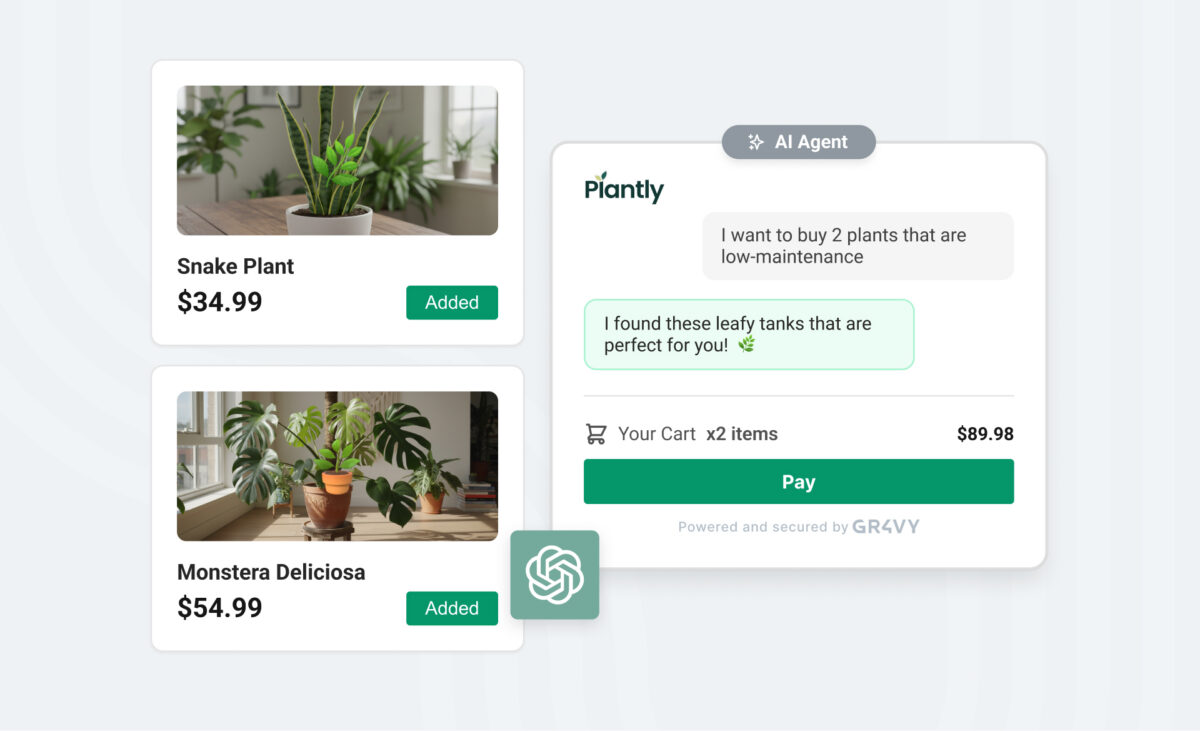
Gr4vy, the cloud-native payment orchestration platform, today announced it is fully ready to support agentic payment transactions through its orchestration layer, allowing merchants to manage and process transactions within AI-driven environments.  In addition, Gr4vy is launching its Agentic Development Kit (ADK), designed to equip and guide merchants in building and launching AI-native storefronts within platforms such as ChatGPT.

Consumers are relying on new ways to discover products, and it’s beginning to influence how they shop. While customers still initiate transactions, intelligent systems are already shaping decisions, surfacing products, and guiding checkout experiences. According to a recent Morgan Stanley research report, 23% of consumers in the U.S. have already made a purchase using AI in the past month. However, existing payment stacks were not built for this model, leaving merchants without the infrastructure or visibility needed to operate in AI-driven environments.

ADK gives merchants a practical way to make their products purchasable directly inside AI platforms without rebuilding their existing payment infrastructure. Merchants can launch AI-native storefronts, orchestrate AI transactions in real-time, and maintain full control over performance, security, and customer experience.

“AI is quickly becoming part of the checkout journey,” said John Lunn, Founder and CEO of Gr4vy. “We’re already enabling agentic payments inside ChatGPT today. The Agentic Development Kit is the next step, providing merchants with a structured way to adopt this model. You don’t need to rebuild your payments stack. You just need the right infrastructure layer to support it.”

Built on Gr4vy’s infrastructure-first approach, the Agentic Development Kit provides the framework and guidance for merchants to build storefronts within AI platforms like ChatGPT. Once live, these storefronts connect to Gr4vy through a single API, enabling merchants to process transactions using their existing payment stack or access 400+ payment methods and PSPs. 

Running on the Model Context Protocol (MCP), the ADK enables embedded shopping and checkout experiences directly within conversational interfaces. Through Gr4vy’s orchestration layer, merchants can implement real-time routing, retries, fraud rules, and dynamic workflows in a secure, PCI Level 1-compliant environment. The ADK also provides visibility into agentic transactions, enabling merchants to monitor performance, optimize conversion, and refine routing strategies.

“Merchants don’t need to rebuild their payment stack to participate in AI commerce,” said Lunn. “They need the right control layer, and that’s what Gr4vy provides.”

The Agentic Development Kit is available today.

How consumer behavior is redrawing the payments map

Consumer expectations are continually reshaping how merchants treat payment experience. To support higher completion rates and stronger long-term loyalty, merchants must ensure their checkouts are designed around visible trust signals, predictable costs, and frictionless flows.

Consumer preferences continue to shape the adoption of payment methods, creating a direct impact on conversion and revenue. The availability of preferred payment methods is now a significant distinction, as it influences 70% of online shoppers when they make their purchases. Consumers expect convenience, and when checkout appears complicated or slow, it decreases the purchase intent, resulting inabandonment and loss of sales.

Furthermore, if a payment method comes across as transparent and trustworthy right at the beginning of checkout, consumers are more likely to complete the transaction. On the other hand, uncertainty toward the end of the checkout process may lead to abandonment.

These experiences, together, demonstrate that modern-day payment performance is not only an operational capability; it’s experiential and has a large effect on driving confidence in completion of transactions and creating long-term loyalty.

Trust: The Currency Behind Every Transaction

When transacting initially, consumers often assess the level of risk associated with the available payment method through security, reliability and the available dispute resolution mechanisms. If they are able to find familiar payment options, authorize seamlessly, and get clear confirmation messaging, they are more assured about the success of the transaction. Clear refund policies, dispute resolution mechanisms, and easy-to-understand support mechanisms further increase consumer confidence, increasing their likelihood to complete the purchase willingly. Once the consumers feel that the overall payment experience is safe and predictable, they are more comfortable making repeat purchases.

To convert this trust into long-term loyalty, merchants should design a checkout strategy that includes visible protections, transparent policies, and trustworthy performance.

Speed: Reduces Friction to Capture Intent

Any lag in accepting payment, redundant steps, and lack of acknowledgement about the status of their payment can disrupt the buying process, leading to lost sales. Because there are direct costs associated with checkout friction, merchants must optimize payment strategy to maximize overall consumer experience rather than just opting for a technical upgrade.

By speeding up the authorization process, reducing the number of unnecessary steps, and providing consumers with immediate confirmation of their transactions, merchants can improve overall satisfaction, preserve conversion rates, and ensure that the consumer’s intent to purchase is captured before it weakens.

Transparency: Builds Confidence Through Clarity

Lack of clarity about applicable fees, hidden charges, or vague processing timelines can create uncertainties that can lead to abandonment. On the other hand, predictable payment flows allow consumers to complete the purchase process with assurance. As such, customers expect clear, upfront information on fees, timing, and status of transactions, as it helps reduce mental friction that can otherwise adversely affect the purchase decision.

Clear cost details also help consumers track the progress of the transaction easily, making the overall experience feel controlled and trustworthy. Predictable pricing reduces hesitation and allows consumers to make an informed choice and complete the purchase. Therefore, communication about pricing and payment status not only improves consumer confidence but also leads to better conversion rates and enhances brand reputation.

Alternative Rails: Help Meet Consumers Where They Prefer to Pay

More and more consumers are now using A2A (Account-to-Account) and real-time payments for the speed, simplicity, convenience, and greater control they offer. These payment rails are more direct with fewer steps, enabling faster conversion of intent into completion. As consumers become comfortable moving beyond traditional card flows, instead of habit the choice of payment relies more on the context, such as the simplest, fastest, and the safest, payment option for the situation.

By including acceptance of alternative rails, merchants can gain practical advantages while also improving customer experience. Real-time and bank-based options offer faster settlement times, reduce processing friction, and increase the flexibility in how payments are initiated and confirmed. When consumers are able to find their preferred payment methods, they are less likely to hesitate in completing a purchase and the checkout process appears more flexible than restrictive. Offering a wider range of payment options enables merchants to demonstrate mindfulness for consumers’ evolving expectations and capture intent while also providing a sense of convenience and control.

Wallets: Design Around Consumer Habits

From an optional-add on, digital wallets are now becoming the default payment method. This is largely due to the familiarity, ease of authentication, and minimal effort flow that they offer. Consumers often choose digital wallets out of habit, which reduces friction.

Superior digital wallet experiences make the checkout processes easier by allowing customers to authenticate faster and confirm their purchases with one tap. This enhances customer loyalty through stored preferences and offering a familiar purchase ecosystem. When customers are able to use the payment option they are used to, it makes the entire purchase process more seamless and intentional, allowing merchants to improve conversions.

The Post-Card Consumer: Experience Over Instrument

The post-card consumers often prefer a seamless payment experience over the instrument itself. They expect the transactions to feel embedded, one-click, and almost invisible. Younger buyers, especially, demand for payment flows that require less effort and minimize interruption.

This has given rise to a new standard for payment processing that goes beyond simple card acceptance to frictionless completion. By designing a checkout that ensures continuity and ease of use, merchants can support payment processes that facilitate capturing the consumers’ intent to buy.

Operational Implications: Align Payments with Behavior

Payment performance should be evaluated on how secure, fast, and clear the entire transaction has felt for the customer at checkout. Weaknesses in any one of these areas can disrupt completion. To maintain the buying momentum, it is, therefore, essential to design systems where speed, transparency, and trust work together.

As consumer preferences shift, businesses must be able to adapt. This is where flexible orchestration can help businesses optimize multiple payment paths without continual rebuilds. Once the operations are built around customer behaviors, payment processes evolve from a backend function to a strategic driver of conversions.

Looking Ahead: Design Payments Around Consumer Expectations

The payment preferences of consumers will continuously diversify. This only means businesses must not only support payment methods that align with the context but also maintain a standardized checkout experience. As a result, they need an adaptive infrastructure that can evolve quickly with shifting consumer expectations to preserve trust, deliver speed, and maintain transparency.

Businesses that design their payment processes around how customers think, decide, and transact will be better positioned to develop resilience and gain a competitive advantage in a market where experience drives customer loyalty. The future of payments will belong to businesses that can define adaptability as a core component of their strategy. Explore how Gr4vy helps businesses modernize payment infrastructure to align with changing consumer behavior. Turn payment experience into a growth engine with Gr4vy. Contact us now.


Q4 2025 and Q1 2026 Product Updates

This is our dedicated space to keep you informed about Gr4vy’s latest feature enhancements and product releases. Over Q4 2025 and Q1 2026, we introduced new capabilities to give merchants greater visibility, flexibility, and control across the payment lifecycle, from authentication and orchestration to local payment methods and reporting. These updates focus on strengthening payment orchestration, authentication, local payment methods, and operational visibility across the payment lifecycle.

Payment Links now support tokenization for existing buyers, enabling merchants to securely store payment methods during checkout.

By associating payment links with a buyer profile, merchants can capture and store credentials in a single flow, supporting:

  • Faster repeat transactions
  • Subscription onboarding
  • One-click payment experiences

This simplifies payment collection and improves customer lifetime value and conversion.

Native 3DS for mobile checkout optimization

Gr4vy now supports native 3D Secure (3DS) for iOS and Android SDKs, removing the need for web-view redirects during authentication.

This enables:

  • Fully in-app authentication flows
  • Improved mobile checkout UX
  • 3DS authentication at vaulting and checkout

By reducing friction and maintaining UI consistency, merchants can improve mobile conversion rates and authentication success.

Expanding global and local payment methods

Gr4vy continues to expand local payment method coverage to help merchants improve conversion across regions.

Brazil
  • Pix via Adyen for one-off real-time payments
  • Pix Automático via dLocal for recurring payments
Europe
  • Wero via Nuvei, a bank-backed European digital wallet
  • Klarna via Nuvei, expanding Buy Now, Pay Later (BNPL) options
  • Online Banking Czech Republic via Adyen, supporting local bank transfers
Emerging markets
  • Bre-B and Capitec via dLocal, expanding regional payment options
Global card processing
  • Ecommpay (card), supporting full transaction lifecycle and advanced payment data

These additions help merchants localize checkout experiences, increase authorization rates, and reduce reliance on international card schemes.

More flexibility with payment orchestration

Plaid integration and bank payment orchestration

Gr4vy now integrates with Plaid Link, enabling merchants to securely capture bank account details while maintaining flexibility over processing.

Merchants can:

  • Capture bank details via Plaid
  • Route payments across processors (Plaid Transfer, Adyen, others)
  • Combine best-in-class UX with orchestration flexibility

This enables ACH and bank transfer optimization within a unified orchestration layer.

Adyen Direct Mode for native payment experiences

With Adyen Direct Mode, merchants can use native SDKs across web and mobile instead of redirect-based flows.

This results in:

  • Reduced checkout friction
  • Improved stability and performance
  • Better mobile payment experiences

Improved payment visibility and operations

Secure webhook delivery with OAuth

Outbound webhooks now support OAuth (Open Authentication), enabling secure delivery to enterprise systems that require bearer tokens.

This simplifies integration with platforms such as Salesforce and improves API security and reliability.

What this means for merchants

These updates are designed to help merchants:

  • Reduce checkout friction with improved authentication and mobile flows
  • Increase conversion rates through local payment methods and optimized UX
  • Expand globally with broader payment method coverage
  • Gain control over payment orchestration and routing strategies
  • Improve operational efficiency with better visibility and debugging tools

As payment ecosystems become more complex, merchants need flexible infrastructure to adapt quickly. These updates continue to position Gr4vy as a payment orchestration platform built for performance, scalability, and global growth.

To learn more about how these updates can help you streamline payments, expand globally, and future-proof your checkout, check out our documentation or visit gr4vy.com/pulse

Gr4vy and Plaid Partner to Enable Pay by Bank Payments for Global Merchants

Merchants can add account-to-account payments through a single integration within Gr4vy’s orchestration layer

San Mateo, March 31, 2026: Gr4vy, the cloud-based payment orchestration platform, today announced a strategic partnership with Plaid, the global data network powering open-banking connections for fintechs and financial institutions. The collaboration enables merchants using Gr4vy to offer Pay-by-Bank, also known as account-to-account (A2A) payments, as part of their core checkout experience, providing a lower-cost alternative to card transactions without additional integration complexity.

Account-to-account payments are becoming an increasingly important part of the global payments mix as merchants seek to reduce fees and improve payment reliability. Industry estimates project the global A2A payments opportunity to reach approximately $4 trillion (£3 trillion) by 2030, driven by the expansion of open banking and real-time payment infrastructure across major markets.

Through the integration, Gr4vy merchants gain direct access to Plaid’s bank connectivity, allowing customers to authenticate and pay directly from their bank accounts during checkout. Plaid’s network supports millions of financial interactions each day and connects users to more than 12,000 financial institutions across the U.S., Canada, the U.K., and Europe. Its technology is used by leading fintech platforms, Fortune 500 companies and global banks.

John Lunn, Founder and CEO of Gr4vy, said the partnership reflects a shift in how merchants approach payment strategy. “By integrating Plaid into our orchestration layer, we’re enabling merchants to introduce Pay by Bank globally through a single connection, helping them reduce costs, improve conversion, and offer a trusted alternative to card payments.”

The integration also enables merchants to apply real-time ACH risk insights via Plaid Signal, approving more good payments and reducing failed payments due to insufficient funds or fraud. This allows payment routing and risk decisions to be managed within the same orchestration layer, rather than through separate systems.

Our partnership with Gr4vy makes it easier for merchants to adopt Pay by Bank within a modern payment architecture,” said Adam Yoxtheimer, Head of Partnerships at Plaid. “As open banking continues to shape how payments are initiated and authorised, this integration gives businesses a straightforward way to offer bank-based payments alongside cards.”

The partnership combines Plaid’s open-banking connectivity with Gr4vy’s flexible orchestration layer, enabling merchants to add Pay by Bank with minimal development effort, benefit from lower processing costs through ACH, and improve conversion by routing bank transfers using real-time, risk-aware decisioning. The Gr4vy–Plaid integration is now available to enterprise merchants and platforms looking to modernise their payment infrastructure and support bank-based payments through a unified orchestration layer.

Scalable Infrastructure: why payments can’t be an afterthought

For many businesses, payments are a functional necessity. They sit quietly at the end of the user journey—a means to an end. But in today’s global, real-time economy, treating payments as an afterthought is like building a skyscraper on sand. You might get away with it for a while. Until you don’t.

At scale, payment infrastructure isn’t just about processing transactions. It’s about enabling growth, ensuring compliance, and adapting to complexity. It’s the foundation that supports agility, security, performance, and profitability. And it’s either helping your business move faster—or holding it back.

From Convenience to Core Infrastructure

Once upon a time, it was enough to plug in a payment gateway and forget about it. You outsourced complexity, got a quick integration, and moved on. But that model doesn’t hold up anymore. Not for businesses expanding across markets, serving multiple customer types, or trying to optimize margins.

As customer expectations have risen and payment ecosystems have exploded in complexity, the old “plug-and-play” mindset now creates fragility. A brittle, rigid payment stack isn’t just a liability in a crisis—it’s a ceiling on your growth.

The Challenge of Scale

Scaling a business means scaling payments. That includes:

  • Supporting new markets with local payment methods and currencies
  • Meeting evolving data privacy and regulatory requirements
  • Managing latency and performance as volume increases
  • Building resilience to downtime and provider outages

Every new market, partner, or payment method adds complexity. Without the right infrastructure, this complexity becomes unmanageable. Suddenly, adding a new PSP takes six months. Updating 3DS logic becomes a full engineering sprint. And reconciling transactions across systems is a weekly fire drill.

Infrastructure Isn’t Sexy—Until It Fails

No one wins awards for great infrastructure. It’s invisible when done right. But when it breaks—when transactions stall, customers churn, or compliance deadlines loom—it becomes painfully visible.

Think of infrastructure as a force multiplier. When built correctly, it lets your teams move faster, your systems scale smoothly, and your business stay compliant by design. When built poorly, it drags down everything it touches.

What “Scalable” Really Means

Scalability isn’t just about handling more volume. It’s about adaptability. A truly scalable payment infrastructure should let you:

  • Launch new payment methods without re-architecting
  • Add or switch providers without downtime
  • Route transactions based on cost, geography, or performance
  • Maintain compliance across changing jurisdictions
  • Empower non-technical teams to make configuration changes safely

It’s about future-proofing. Because you don’t know where your next customers will come from—or what their preferred payment method will be.

The Myth of “Build Once, Use Forever”

Many companies fall into the trap of building their payment infrastructure once and assuming it will scale indefinitely. But the reality is: business models evolve. Regulations shift. Consumer habits change. What worked at $10M in revenue may fail spectacularly at $100M.

Infrastructure needs to be dynamic. That means modular, composable, and orchestrated in a way that supports continuous iteration. It’s not a set-it-and-forget-it component. It’s a living, strategic layer of your business.

The Strategic Value of Modern Architecture

Modern payment infrastructure should be:

  • Cloud-native: for scalability, reliability, and performance
  • Decoupled: so you’re not locked into a single vendor or provider
  • API-first: enabling flexibility and integration across your stack
  • Configurable: empowering your teams to react in real-time
  • Secure and compliant: by default, not by patchwork

These aren’t just technical ideals. They’re business imperatives. Because infrastructure affects your speed to market, your cost of change, and your ability to compete.

Final Thoughts: Treat Payments Like a Product

The companies that treat payments like infrastructure—strategically, holistically, and with investment—will outperform. Not because payments are their core product, but because they understand that payments touch every part of the customer journey and the bottom line.

You wouldn’t launch an app without thinking about scalability. You wouldn’t open a new market without thinking about logistics. Why launch or grow without thinking about how your payment infrastructure will support—or sabotage—you?

In today’s world, payments aren’t an endpoint. They’re an enabler. And infrastructure is the difference between payments that work—and payments that win.

About Gr4vy 

As the leading cloud-native payment orchestration platform, Gr4vy empowers businesses to navigate global complexity with ease. Our infrastructure lets you manage multiple PSPs, offer region-specific payment methods, dynamically route transactions, and ensure compliance across borders—all from a single, no-code platform.Ready to futureproof your payments? Talk to Gr4vy today.

Radial selects Gr4vy to strengthen commerce and payment orchestration

The eCommerce solutions leader partners with Gr4vy to unify fulfillment and payments across channels

San Mateo, March 12, 2026: Radial, a leading 3PL set to become Paxon later this year, has chosen Gr4vy, the cloud-based payment orchestration platform, to enhance its commerce and payments capabilities for enterprise retailers operating at scale.

Supporting national and global retailers, Radial helps brands run complex, high-volume eCommerce operations from order management and fulfillment to the handling of payments, fraud, and returns at scale. As payments play a growing role in conversion, fraud performance, and the overall shopping experience, Radial identified the need for a payment orchestration layer that could work within its existing commerce and fulfillment architecture, without disrupting how retailers already operate at scale.

Radial works with retailers operating at a level of scale and complexity where payments can’t be treated in isolation,” said John Lunn, Founder and CEO of Gr4vy. “This partnership is about giving enterprises flexibility while keeping their payments stack under control as logistics, fulfillment, and risk requirements evolve.”

Through Gr4vy’s cloud-native payment orchestration platform, Radial can integrate and manage multiple payment service providers, fraud tools, and payment methods without disrupting existing checkout or fulfillment workflows. The collaboration enables Radial to extend more value to its retail clients behind the scenes, supporting optimization across authorization rates, fraud performance, and customer experience.

As part of this setup, Radial will leverage its current PSP  for core payment processing while integrating Gr4vy into its chosen fraud stack, enabling coordinated decision-making across payments and risk without creating operational silos.

Retail doesn’t stop at checkout,” Michael Habermann, Senior Director of Commerce Solutions at Radial. “Payments must operate seamlessly with the broader operational ecosystem. Gr4vy gives us the flexibility to orchestrate payments in a way that matches the complexity of our clients’ omnichannel environments, while delivering the scale, resilience, and reliability enterprise retailers require.”

The collaboration reflects how Radial continues to evolve its platform in response to changing retail demands, as payments take on a more central role in commerce. By working with Gr4vy as a strategic partner, Radial is strengthening the connection between payments and fulfillment, giving retailers greater flexibility while maintaining the performance, reliability, and regulatory standards required across global operations.

Building a payment strategy: Why it’s more than ticking boxes

The days of simply offering a few basic payment methods and calling it a day are over. In today’s fragmented digital world, choosing the right payment options is a strategic decision that directly impacts conversion rates, customer satisfaction, and business growth. Payments are no longer a back-office function—they’re a front-line differentiator. Businesses that overlook this shift risk losing revenue, experiencing higher cart abandonment rates, and increasing customer churn.

Payment preferences vary significantly across demographics, devices, and regions. Younger consumers may favor digital wallets and BNPL options, while older segments might prefer credit cards or bank transfers. In markets like Brazil, Pix has become a dominant force, while in Germany, bank debits still lead. A deep understanding of your audience’s behaviors, expectations, and pain points is crucial for optimizing your checkout experience. Merchants must gather and analyze payment data continuously to make informed, customer-centric decisions.

Adding payment methods isn’t about stacking options—it’s about enabling adaptability. Each business has its own operating model, and payment offerings should align with its products, average order values, and customer journeys. The ability to test, remove, or reroute payment methods based on performance or market demand gives businesses an edge. Flexibility also means being prepared to onboard new methods quickly—like a region-specific wallet or a trending installment option—without delay or disruption.

Implementing new payment options isn’t a “set it and forget it” task. Merchants must continuously measure performance through data points like authorization rates, transaction success, average checkout time, and abandonment rates. Insights from these metrics help identify friction points and fine-tune the payment experience. Monitoring feedback and customer behavior can also reveal emerging preferences or signal the need for new A/B testing experiments across PSPs or geographies.

Focus on Infrastructure:

A modern payment strategy is only as strong as the infrastructure supporting it. Merchants should invest in a payment orchestration platform that enables them to add, test, and optimize new payment methods at speed—without extensive technical lift. Legacy systems and hardcoded integrations slow down progress and add cost. A flexible, cloud-native orchestration layer gives merchants the agility to adapt while maintaining high performance, reliability, and compliance across all transactions.

Think Local, Act Global:

As businesses expand internationally, localizing the payment experience becomes essential. Global consumers expect to pay using their preferred local methods—whether that’s iDEAL in the Netherlands, OXXO in Mexico, or Alipay in China. Ignoring regional preferences not only creates friction but can shut out entire markets. A well-rounded payment strategy ensures localization is embedded from the start, driving both trust and conversions across borders.

Payments and Brand Perception:

Consumers judge brands not just by what they sell, but by how easy it is to buy. A confusing or limited payment experience can damage brand perception and trust. Offering the right mix of payment methods reinforces your brand’s reliability and responsiveness to customer needs. When customers feel that their preferences are valued, they’re more likely to complete purchases and return.

Beyond Checkout:

Payments are no longer confined to the checkout page. With embedded commerce, social shopping, subscriptions, and omnichannel experiences on the rise, payment strategies must extend across the full customer journey. Think post-purchase (refunds, chargebacks), recurring billing cycles, or one-click reorders. Merchants must consider how their payment choices support retention, loyalty, and operational efficiency—not just conversions.

Orchestration as a Strategic Enabler:

The complexity of managing multiple PSPs, APMs, and geographies can’t be solved with manual processes or rigid tech stacks. That’s where payment orchestration comes in. Orchestration platforms centralize control, reduce reliance on internal development teams, and empower merchants to respond faster to shifting trends. With built-in routing, failover, and performance optimization, orchestration turns payment complexity into a growth strategy—helping businesses scale with confidence.

Conclusion

Choosing payment methods should be a dynamic, data-driven process—not a static checklist. Merchants that treat payments as a growth lever—not just a checkbox—will gain a real competitive edge. In a market where the smallest friction can lead to abandoned carts, having the right strategy in place is essential.

Gr4vy helps merchants simplify this complexity. As the industry’s only cloud-native payment orchestration platform with dedicated infrastructure and edge computing, Gr4vy empowers businesses to deploy, manage, and optimize payment methods effortlessly. From localization to routing logic to compliance management, Gr4vy gives you full control of your payment strategy in just a few clicks.Ready to build smarter payment strategies that scale? Get in touch and see how Gr4vy can future-proof your payments.

Gr4vy partners with Sardine to embed Fraud and AML into their platform

Enterprises can now access AI-driven fraud prevention and compliance tools directly through Gr4vy’s payment orchestration layer

San Mateo, February 17, 2026: Gr4vy, the cloud-based payment orchestration platform, today announced a new integration with Sardine, the leading agentic platform to fight financial crime. The integration allows Gr4vy customers to embed fraud solutions, including real-time transaction monitoring, fraud interdiction, and BSA/AML compliance tools, directly into their payment orchestration stack without additional development. 

The announcement comes as fraud becomes an ongoing operational reality for merchants, with 98% of businesses experiencing at least one form of fraud each year. Sardine supports enterprises operating in more than 70 countries by detecting fraud in real-time using device intelligence, behavioral biometrics, and machine-learning models. To date, Sardine has protected over $1T in transaction volume for 565M consumers and 2.7M businesses. 

Integrated into Gr4vy’s orchestration layer, Sardine’s fraud fighting capabilities can now be activated through a single connection, simplifying how merchants manage risk across payment flows. Gr4vy merchants can automate fraud decisions, reduce manual reviews, and limit false positives while maintaining fast checkout experiences. Risk logic can be updated without disrupting payment routing or performance, helping teams respond more efficiently as fraud patterns evolve.

John Lunn, Founder and CEO of Gr4vy, said the integration reflects the growing need to treat fraud as part of the core payment infrastructure rather than a separate system. “Fraud prevention shouldn’t slow down payments; it should improve how decisions are made,” said Lunn. “By integrating Sardine, merchants can manage fraud detection and payment orchestration together, while preserving the flexibility and speed required to operate at scale.”

“When you have payments, you will inevitably have fraud. And as payment ecosystems become more complex, merchants need solutions that can address risk and compliance without impacting performance,” said Soups Ranjan, CEO and Co-Founder of Sardine. “Our partnership with Gr4vy allows merchants to run fraud and AML controls through a single integration, simplifying how risk is managed across payment methods and geographies.”

Together, Gr4vy and Sardine provide a more integrated approach to managing fraud and risk. Merchants can leverage device fingerprinting, behavioral biometrics, and real-time webhook updates to detect and respond to suspicious activity across payment flows. Gr4vy’s event streaming shares transaction outcomes with Sardine’s fraud models to continuously improve detection accuracy over time. As a result, merchants can strengthen fraud protection while improving acceptance rates and reducing friction and costs across their payments stack.

Gr4vy Launches “Silent Mode” for Risk Management Services

Merchants Can Now Run Fraud Engines in Parallel Without Impacting Checkout Performance

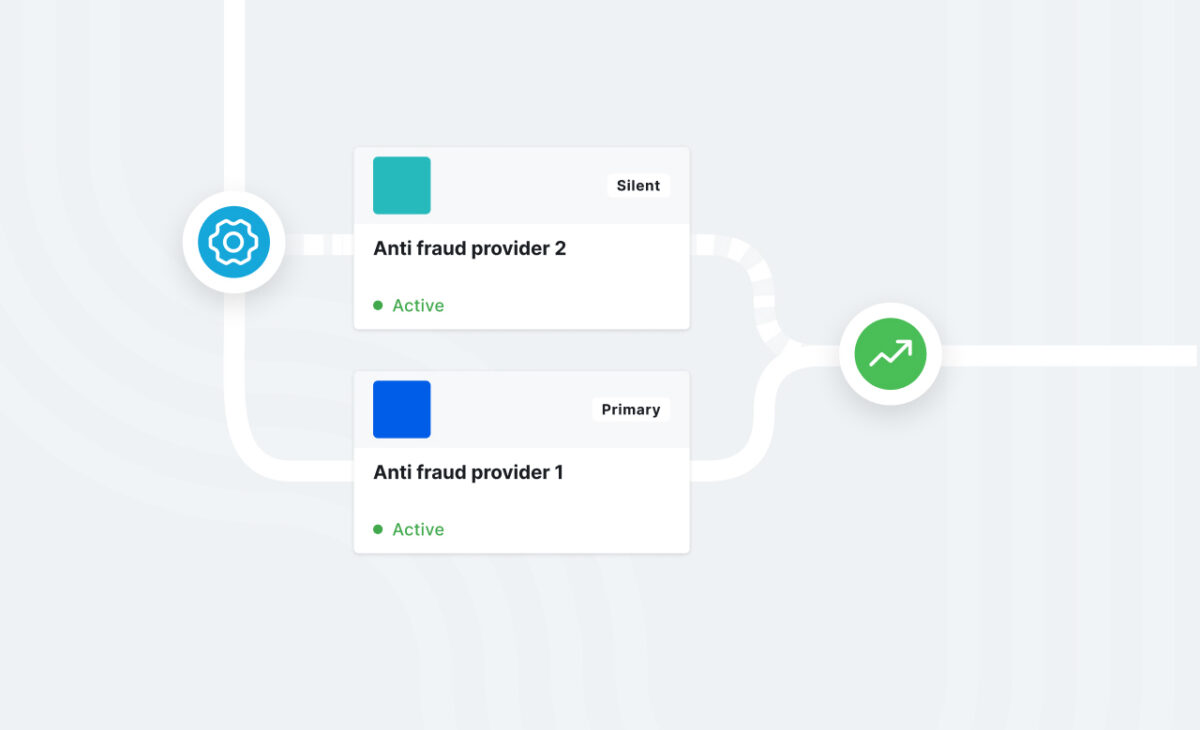
San Mateo, January 28, 2026: Gr4vy, the cloud-based payment orchestration platform, today announced the release of Silent Mode for its anti-fraud connectors, a new feature that lets merchants deploy multiple fraud detection services in parallel, enabling evaluation, warming up, or migration of new providers without disrupting live payment decisions or slowing checkout.

Fraud and financial crime remain significant challenges for global merchants. In fact, 79% of organizations experienced attempted or actual payment fraud in 2024. As the scale and sophistication of attacks grow, businesses are seeking ways to test and optimize fraud systems without putting live transactions at risk. With Silent Mode, merchants can now designate one anti-fraud service as their active engine, determining the live transaction outcome, while additional services operate in the background.

“Silent Mode represents a fundamental shift in how enterprises approach fraud management,” said Cristiano Betta, Chief Product Officer at Gr4vy. “For the first time, merchants can run multiple fraud providers in parallel, collect live data, and make confident decisions, all without sacrificing speed or customer experience.”

Through Gr4vy’s single integration, merchants can activate and configure a new silent service in minutes, eliminating the complex, high-risk development work traditionally required to test new fraud tools. This ability to run multiple services in parallel significantly de-risks vendor migration, allowing merchants to confidently switch anti-fraud providers with zero downtime and a complete performance record. The system operates asynchronously, meaning calls are processed independently of the active transaction flow and do not affect checkout speed. The global online payment fraud detection market is expected to reach US $41.25 billion by 2034, growing at a 14.6% CAGR from 2025. Within this landscape, Silent Mode offers merchants a practical way to test tools, benchmark providers, and strengthen fraud strategies while maintaining uninterrupted checkout performance.

Gr4vy continues to lead the orchestration space by helping merchants streamline complex payment and risk infrastructures through a single, cloud-native platform. Silent Mode extends Gr4vy’s focus on giving merchants clearer control over their payment and risk operations, along with more room to test and refine their fraud strategies.

The future of payments: What’s next in digital transactions?

The way we pay has always evolved, especially with technological advancements. From banknotes to plastic, and now to the digital and invisible, payments are more than just a means of exchange—they are a mirror of progress. In the last decade alone, we’ve seen seismic shifts in how consumers and businesses transact. But what’s coming next? To answer that, we must look beyond buzzwords and into the underlying forces shaping the next era of payments.

The Decline of Card Dominance

For decades, card networks were the default rails for digital payments. That dominance is still in place, however, more and more, Digital wallets, real-time bank-to-bank payments, and alternative methods like Buy Now, Pay Later (BNPL) are becoming first-choice options. As infrastructure matures and regulation catches up, bank-to-bank payments will challenge card economics, changing costly middle layers and returning control to both merchants and consumers.

In Asia, mobile-first economies already leapfrogged cards. In Europe, Open Banking has catalyzed the rise of account-to-account (A2A) payments. In the U.S., FedNow and RTP are opening the door to instant settlement. What these trends share is a desire to move away from expensive, slow, and opaque processes toward speed, cost-efficiency, and transparency.

The End of “One-Size-Fits-All” Payments

A decade ago, offering Visa, Mastercard, and PayPal was considered comprehensive. Today, that would be payment malpractice. Consumer expectations have shifted from availability to personalization. Shoppers want their preferred local method—whether it’s PIX in Brazil, Swish in Sweden, or Paytm in India.

This hyper-localization trend isn’t going away. In fact, as commerce becomes more global, the pressure to offer relevant local options will intensify. That means merchants will need not just more connections, but smarter routing, dynamic decisioning, and payment strategies tailored to each market and segment.

The Shift from Backend Utility to Strategic Lever

Payments used to be seen as plumbing. Invisible when working, panic-inducing when broken. That mindset is evolving. Forward-thinking businesses are treating payments as a strategic growth lever—a way to reduce costs, optimize performance, improve approval rates, and even influence customer loyalty.

This shift requires a cultural reframe: payments aren’t just IT’s responsibility anymore. Product, finance, operations, and even marketing need to understand how payment outcomes influence core business metrics. That cross-functional fluency will be key to winning in the next era.

Regulation Will Become a Competitive Differentiator

The regulatory tide is rising. From PSD3 in Europe to CPRA in California, governments are asserting more control over how payments are processed, secured, and governed. While regulation can seem like a hurdle, those who adapt fastest will win the trust of consumers and the support of regulators.

Merchants can no longer afford to think of compliance as a checkbox. It needs to be embedded into architecture and decision-making. Expect to see regulation-as-a-service tools become more prominent, and for payment orchestration to play a key role in helping businesses stay compliant without compromising experience.

Embedded Payments Everywhere

Uber showed the world what frictionless payments could look like: invisible, instant, and seamless. That model is now being replicated across industries. From embedded finance in SaaS platforms to wallet-less commerce in physical retail, we’re moving toward an era where payments disappear into the background.

This “invisibility” isn’t about reducing control—it’s about removing friction. It requires tight integration, smarter authentication, and robust orchestration behind the scenes. Merchants that master this invisible UX will gain a competitive edge.

A More Programmable Future

The final frontier? Programmable payments. Just as software defined modern business operations, programmable money will define future payment innovation. We’re already seeing early examples: smart contracts in crypto, API-first banks, and composable financial services.

Imagine triggering a payment when a sensor detects delivery, or splitting revenue automatically among stakeholders based on real-time logic. These aren’t futuristic fantasies. They’re becoming table stakes for digital-native businesses.

Final Thoughts: Complexity as the New Normal

The future of payments won’t be defined by a single method or platform. It will be fragmented, dynamic, and multi-dimensional. Businesses that succeed won’t be the ones with the most connections—but those with the agility to adapt, orchestrate, and innovate on top of them.

The next generation of payment leaders won’t just ask “What can we accept?” They’ll ask, “What should we accept, when, where, and how?”

Because in this new world, payments are no longer just transactions. They’re strategy.

About Gr4vy 

As the leading cloud-native payment orchestration platform, Gr4vy empowers businesses to navigate global complexity with ease. Our infrastructure lets you manage multiple PSPs, offer region-specific payment methods, dynamically route transactions, and ensure compliance across borders—all from a single, no-code platform.Ready to futureproof your payments? Talk to Gr4vy today.