Payments shouldn’t hold you back. Discover why Gr4vy is the go-to platform for enterprises that want to unlock new revenue and get empowered by their payment strategy.
From global merchants to fast-growing platforms, Gr4vy has the tools to run payments your way. See how we simplify payments for enterprises, power branded experiences for their sub-merchants, and help them start with Agentic Commerce.
Explore the network behind Gr4vy. With over 400 payment methods and anti-fraud providers, plus strategic partnerships, our ecosystem helps you expand globally with local options and innovate faster.
Q3 2026 at Gr4vy was about giving merchants more control over how they take payments and where they send them. This quarter’s releases extend PayPal from wallet to card acquiring, add buy now, pay later (BNPL), bank and real-time payment options for buyers in North America and Malaysia, open new acquiring connections for marketplaces and recurring billing, make authorizations more flexible after checkout, bring gift card issuance and acceptance into Gr4vy, and add more providers to the consolidated settlement report.
Running wallet, card and Venmo volume through PayPal from a single integration
PayPal (card) connector lets merchants process card payments with PayPal as their acquirer, alongside the existing PayPal wallet and Pay Later connections and on the same PayPal credentials. It accepts card details, network tokens, and Apple Pay and Google Pay tokens across 26 currencies, with cards stored in PayPal’s vault for recurring, installment and card-on-file payments.
The Venmo via PayPal connector builds on the same credentials to bring Venmo to US buyers without onboarding a second payment service, and Embed presents it alongside other payment methods with no extra integration work. Merchants consolidating on PayPal can now run wallet, card and Venmo volume through one provider relationship.
BNPL, bank payments, Apple Pay and DuitNow give buyers more ways to pay
The Sezzle connector adds a BNPL option for buyers in the United States and Canada, who set up an installment plan on Sezzle’s hosted page with their cart details in view. Merchants can store a Sezzle payment method at purchase and charge it again later as a merchant-initiated transaction, with no second redirect.
The Chase Orbital (ACH) connector lets merchants already on Chase Orbital accept ACH bank payments in USD and CAD using their existing Orbital credentials, with refunds returned as ACH credits and stored accounts available for recurring debits.
The Finix (card) connector for Apple Pay brings Apple Pay to merchants processing with Finix through Embed and Gr4vy’s mobile SDKs, using the same decrypted-wallet flow Gr4vy applies across its other card connections.
Beyond North America, Adyen APM: DuitNow lets merchants processing with Adyen accept DuitNow, the real-time payment method running on Malaysia’s PayNet rails. Buyers scan a QR code on a Gr4vy-hosted page and return to checkout once the payment resolves.
New acquiring connections widen where merchants can route card volume
The Ryft (card) connector is built for marketplaces and platforms. Merchants can route each payment to a linked Ryft sub-account, such as a seller, host or charity, and take a platform fee on the same transaction, with a connection setting that decides whether refunds return the fee.
The Repay/BillingTree (card) connector gives US merchants card acquiring through Repay’s Payrazr gateway, a processor focused on recurring billing and collections, with cards stored for card-on-file and recurring billing, zero-amount verification and Apple Pay.
Authorizations that keep up with how orders are fulfilled
Multi-capture lets merchants capture a single authorization in several steps, drawing down the authorized balance as items ship from different warehouses, as a hotel stay is billed per night or as usage accrues. Each capture is tracked with its own webhook events, and a final flag releases whatever remains. It is in limited availability on Chase Orbital (card), Adyen (card), PayPal and Klarna connections.
Incremental authorization covers the opposite case, when the final total rises above the original estimate. Merchants can ask the bank to increase an existing hold before capture, and a declined increase leaves the original authorization intact. It is live on Cybersource, Checkout.com, Shift4 and Chase Orbital connections.
For recurring models, Stripe Onelink: recurring / tokenization support lets merchants save a card or Stripe Link payment method at checkout and charge it again off-session, bringing subscriptions to Onelink for US merchants processing in USD.
Selling and accepting gift cards through one integration
Gift Cards: Issuance & Activation lets merchants issue virtual gift cards and activate physical ones through Gr4vy. A single request creates a virtual card from a theme and amount and returns a link the recipient uses to access it, without ever exposing a card number.
On the acceptance side, the ValueLink gift card connector lets buyers pay with Value Link gift cards, either entirely or split with a card, with balances checked before checkout and cards stored against a buyer for future payments. Together they put selling and redeeming gift cards on the same integration.
More providers reporting into one settlement view
Settlement reporting: BlueSnap, Braintree Venmo and Chase Orbital chargebacks extends Gr4vy’s consolidated settlement report to three more sources of money movement.
BlueSnap payouts are pulled automatically through BlueSnap’s Reporting API, with settlement status kept in sync. Settled and refunded Venmo transactions processed through Braintree are ingested daily alongside card activity, and Chase Orbital reporting now includes chargebacks and chargeback reversals.
Finance teams can reconcile transactions, refunds and disputes across these connections from one report, instead of working from each provider’s own reporting.
Why every new connection strengthens the orchestration layer
Each release this quarter follows the same principle: merchants should be able to add and change providers, payment methods and payment flows without rebuilding their integration.
A payment orchestration platform earns its place when adding PayPal card acquiring, a new BNPL option, a marketplace acquirer or a gift card program means configuring a new connection instead of building a new integration, and when data from every provider lands in one place. That is how merchants expand into new markets and models while avoiding vendor lock-in.
See every Q3 release in detail on the Gr4vy Pulse page, or talk to our team about what these updates could mean for your payment stack.
A payment orchestration platform connects you to multiple payment providers through one integration and routes each transaction to the one most likely to approve it at the best cost. Whether you need one, and which kind, depends almost entirely on facts about your business instead of facts about the technology.
That is why generic buying advice fails here. A subscription business losing customers to failed renewals and a cross-border retailer trying to add local methods are solving different problems with the same category of product. This guide is organized around the questions that actually determine the answer, with examples from businesses that have been through it.
Key takeaways
Below roughly $100,000 in monthly processing, a single payment service provider is usually sufficient, unless you already sell into several countries.
Running two or more gateways already is the clearest signal that orchestration will pay for itself.
Orchestration sits above your existing providers and coordinates them, so contracts, merchant accounts, and acquiring relationships stay in place.
Subscription businesses typically see the fastest return, because recovering failed renewals protects the customer relationship rather than a single sale.
Published merchant results include a 2.8% authorization-rate uplift in four months (Baby Bunting), a 27-day full integration (FuturHealth), and new payment methods live in 3 days instead of three to six weeks (Ding).
The decisive question is rarely which platform is best, but which of your constraints, volume, markets, business model, or team structure, matters most.
Last reviewed: October 2026.
Payment orchestration results: published merchant outcomes
The figures below come from published Gr4vy case studies and are the specific outcomes each company reported. They are gathered here because they are the hardest numbers to find elsewhere in this category, where most published claims are projections rather than results.
Outcome
Business
Context
2.8% uplift in authorization rates within four months
Baby Bunting, retail, Australia
Dual-acquirer setup with failover routing
27 days to complete full integration
FuturHealth, telehealth, United States
Dynamic routing across multiple PSPs with retry logic
3 days to add a new payment method, down from three to six weeks
Results vary by business, market, and existing payment setup. Each is linked to its full case study in the relevant section below.
What is a payment orchestration platform?
A payment orchestration platform sits between your checkout and your payment providers. It connects to your payment service providers, acquirers, payment methods, and fraud tools, then decides which provider handles each transaction according to rules you set.
It does not replace your existing providers. It coordinates them, which is why adopting orchestration does not mean abandoning the payment relationships you already have. For the full mechanics, see Gr4vy’s guide to payment orchestration.
The market has grown accordingly. Grand View Research valued the global payment orchestration platform market at USD 1,386.9 million in 2023, projecting USD 6,520.4 million by 2030 at a 24.7% compound annual growth rate.
What is your monthly transaction volume?
Volume is the first question any advisor will ask, because it changes the answer more than anything else. The thresholds below reflect patterns across Gr4vy implementations rather than an industry standard, and they are rules of thumb instead of hard cutoffs.
Under roughly $100,000 per month. Orchestration is usually premature. A single well-chosen payment service provider covers the need, and the platform cost plus the configuration work will not pay for itself. The exception is a business already selling into several countries, where method coverage matters more than volume.
Mid-market, roughly $100,000 to several million per month. This is where the case starts to hold, and it usually arrives through a specific problem instead of a general ambition: a second market, a provider outage, approval rates that stopped improving, or a second PSP added for redundancy that now needs managing. At this stage the gains come from routing and recovery more than from scale economics.
Multi-million per month enterprise. Here small percentages are large numbers and the arithmetic does most of the work. A single point of authorization-rate improvement on $100 million of annual volume is roughly $1 million recovered. Enterprises also tend to have the specific problems orchestration solves best: multiple acquirers, several markets, and no unified view across them.
A useful calibration: the Australian retailer Baby Bunting secured a 2.8% uplift in authorization rates within the first four months of moving to a dual-acquirer setup with failover routing, as reported in its case study. On retail volume at that scale, a lift of that size is a material revenue line, which is why volume changes the calculation so sharply.
Are you trying to fix declined payments or add international methods?
These are the two most common reasons businesses adopt orchestration, and they lead to different implementations.
If the problem is declined payments, the relevant capabilities are intelligent routing, retry logic, failover, and network tokenization. The mechanism is giving each transaction more than one chance to succeed and sending it to the provider most likely to approve it.
FuturHealth, a US telehealth business, is a clear example. Subscription healthcare makes a failed payment a potentially lost patient relationship. It implemented dynamic routing across multiple PSPs with built-in retry logic to recover transactions that would previously have failed, and completed the entire integration in 27 days, as documented in its case study. The 27-day figure matters as much as the outcome, because a decline problem is usually urgent.
If the problem is international method coverage, the relevant capabilities are breadth of connections, local acquiring, and the speed of adding a method once you decide you need it.
Ding, the international mobile top-up service operating across more than 140 countries, cut the time to integrate a new gateway or local payment method from three to six weeks down to three days. It used no-code rules to show different methods by market, prioritizing Pix in Brazil and PayPal in Germany, matching each market’s actual preference. The detail is in the Ding case study. For a business entering markets continuously, that difference determines whether local methods get launched at all.
Many businesses have both problems. The sequencing question is which one is costing more today.
Are your payments primarily B2C or B2B?
B2C businesses gain most from authorization rates and method coverage; B2B businesses gain most from payment terms, bank rails, and reconciliation. The distinction changes which capabilities matter.
B2C businesses deal in high transaction counts at lower values, where authorization rates, checkout conversion, and local method coverage drive the return. Fractions of a percentage point compound across millions of transactions.
B2B businesses deal in fewer, larger transactions where the priorities shift to payment terms, invoicing, bank transfer and ACH support, reconciliation, and handling the longer settlement cycles that business customers expect. Card acceptance matters less, and the cost difference between cards and bank rails matters more.
Platform businesses serving other businesses are a third case, and the most complex. Mattilda, which provides collections management and payment processing for private schools across Latin America, needed to offer payments to the schools it serves under its own brand without becoming a payment facilitator and absorbing that compliance and risk burden. It used white-label orchestration to deploy dedicated payment environments per school, with a bring-your-own-acquirer model letting each institution keep its own acquiring relationships. Mattilda now supports more than 180,000 students, and the capability became a significant growth driver. The full account is in the Mattilda case study.
Woolworths Group followed a comparable path at larger scale, selecting Gr4vy to power the payments platform of Wpay, its payments business serving both its own brands and external businesses, as set out in the Wpay case study.
If you are a platform that wants to offer payments to your merchants, that is a different product requirement from a merchant optimizing its own checkout, and it should be an explicit part of your evaluation.
Is it one-time purchases or a recurring subscription service?
Subscription businesses usually have the strongest case for orchestration, because a failed renewal can end the customer relationship instead of losing a single sale. The problem is structurally different from one-time retail.
In one-time retail, a failed payment loses one sale. In subscriptions, a failed renewal can end the customer relationship entirely, which is why involuntary churn is the metric that matters. The relevant capabilities are retry and dunning logic, network tokens and account updater so stored credentials stay valid when cards are reissued, and routing that gives a renewal several chances to succeed.
Provider-agnostic vaulting matters here more than anywhere else. If your stored credentials are locked to one PSP, you cannot route a renewal elsewhere when that PSP declines it, and you cannot change providers without asking every customer to re-enter their card.
Setplex, an OTT streaming platform provider, operates exactly this model, where recurring billing across an international subscriber base determines revenue. It chose orchestration to support payment acceptance across its platform, as described in the Setplex case study.
Subscription detail matters too. Free trials create a first-charge conversion point where decline recovery is disproportionately valuable. Usage-based billing produces variable amounts that behave differently from fixed charges under issuer risk rules. Flat-rate monthly billing is the simplest case.
Are your products physical goods or digital?
Physical goods bring shipping, fulfillment timing, and the gap between authorization and capture, plus returns and refunds, and the chargeback exposure that comes with delivery disputes. Merchants selling both online and in store face an additional problem: two disconnected payment setups, fragmented reporting, and inconsistent customer experience.
Trek, the bicycle manufacturer and retailer, addressed exactly that by unifying payments across its digital and physical retail operations instead of maintaining separate stacks, as described in the Trek case study. Any merchant with both channels faces the same split.
Digital goods such as SaaS, courses, and memberships have no fulfillment but higher fraud and chargeback risk, instant delivery that removes the authorization-to-capture window, and often a global customer base from day one, which pulls local payment methods forward in the priority list.
If you already run two or more gateways, orchestration is almost certainly worth evaluating. If you run one and it works, it probably is not yet. This question reveals more about readiness than almost any other.
One gateway, working fine. Orchestration adds a layer you may not need yet. Revisit when a second market, a second provider, or an outage forces the question.
One gateway, not working well. Consider whether the problem is the provider or the architecture. Sometimes switching providers is the right answer and orchestration is premature, though orchestration does make future switching far less painful.
Two or more gateways already. This is the clearest signal. Businesses usually reach multi-PSP setups organically, adding a provider for redundancy or a new market, and each decision was reasonable in isolation. Together they produce fragmentation: different APIs, different reporting formats, different reconciliation timelines, and no single view of performance. That is the condition orchestration was built for.
Importantly, orchestration sits above your existing providers. Your contracts, merchant accounts, and acquiring relationships stay in place.
Which regions are you selling into?
A card-first checkout works reasonably in the United States, where cards carry roughly two-thirds of payments. It works poorly in Germany, where PayPal and invoice payment lead and cards are fourth. It fails in Brazil, where Pix dominates, and across Southeast Asia, where cards reach under 15% of potential customers in most markets. Geography drives method requirements more than any other factor, and the differences are larger than most merchants expect.
Each new market typically means local payment methods, local acquiring for better approval rates, and local compliance. Gr4vy’s market guides cover the USA, Germany, Brazil, and Southeast Asia in detail.
If you sell into one country, method coverage is a minor consideration. If you sell into five, it is probably your primary one.
Do you want a no-code platform or an API-first framework?
This is a question about who owns payments in your organization, and it is frequently decided by default rather than deliberately.
No-code, owned by a product or payments team. Routing rules, method configuration, and provider changes happen through a dashboard without engineering tickets. The advantage is speed: the people who understand the commercial problem can act on it directly. Ding’s ability to prioritize different methods per market came from exactly this, using no-code rules rather than a development cycle for each change.
API-first, owned by engineering. Deeper customization, logic that lives in your own codebase, and tighter integration with existing systems. The cost is that every payment change competes with other work in the engineering backlog.
Most serious platforms offer both, and the honest question is less which the platform supports and more which your organization will actually use. A no-code platform nobody is assigned to steer delivers very little, and an API-first setup in a company without payments engineering capacity becomes a bottleneck.
How much does a payment orchestration platform cost?
Pricing models vary: per transaction, tiered by volume, subscription, infrastructure-based, or a blend. The platform fee sits on top of your existing provider costs, so orchestration is an added cost justified by what it recovers.
The honest way to evaluate it is to model your own numbers instead of trusting a headline figure. Estimate the authorization-rate improvement you expect, the routing cost savings, the value of avoided downtime, and the engineering time returned, then compare that against the specific quoted cost at your volume. Watch for fees that scale punitively as you grow.
For the full set of evaluation criteria including neutrality, data portability, and reliability, see Gr4vy’s enterprise buyer’s guide.
Which payment orchestration platforms should you compare?
The orchestration market includes Gr4vy, IXOPAY, Payrails, Primer and Spreedly, among others, listed alphabetically. We are not going to rank them here, because a vendor ranking its own category is of limited use to you, and because features and pricing change faster than any published comparison stays accurate.
What is more useful is knowing what to ask every provider you shortlist:
Does the platform earn money based on where transactions route? A provider that also operates its own acquiring has a structural incentive that a neutral platform does not.
Do you own and can you export your payment data and stored credentials, and what would migrating away actually involve?
What is the depth of coverage in your specific priority markets, rather than the total connector count?
What happens when a provider goes down, and how is failover handled?
What is the platform’s own uptime record and redundancy architecture, given it becomes the center of your payment stack?
Can your team change routing rules without engineering involvement?
Ask the same questions of every provider, including us, and compare the answers instead of the marketing.
What should you plan for in 2027?
Three developments will shape payment decisions through 2027, and each is worth building toward instead of reacting to.
Agentic commerce. AI agents initiating purchases on consumers’ behalf require a payment stack that can identify, route, and control agent-initiated transactions separately from ordinary traffic. Consumer trust is lagging the technology, so this is a readiness question more than an urgent one, but the merchants positioned early will not be rebuilding under pressure.
Real-time payment rails. Canada’s Real-Time Rail launched in the fourth quarter of 2026 and will see its first full year of merchant-facing products in 2027, the EU’s instant payments mandate has taken effect, and Pix and UPI continue expanding. Account-to-account payments are becoming viable alternatives to cards in more markets each year, usually at materially lower cost.
Regulatory change. PSD3 and the Payment Services Regulation in Europe, BNPL regulation in multiple markets, and continuing data localization requirements all affect how payments must be handled. A payment stack that can absorb a rule change through configuration is worth more than one requiring an engineering project each time.
The common thread is that the method and rule set keeps moving, which argues for an architecture where adding or changing something is cheap.
Frequently asked questions
What is a payment orchestration platform?
A payment orchestration platform connects a business to multiple payment service providers, acquirers, and payment methods through a single integration, then routes each transaction according to configurable rules. It sits above existing providers and coordinates them instead of replacing them, so a business can adopt orchestration while keeping its current payment relationships.
What transaction volume do you need for payment orchestration?
There is no fixed threshold, but under roughly $100,000 per month a single payment service provider usually suffices, unless the business already sells into several countries. The case strengthens through the mid-market and becomes compelling at multi-million monthly volumes, where a single percentage point of authorization improvement represents substantial revenue.
Does payment orchestration replace my payment gateway?
No. Orchestration is a coordinating layer that sits above gateways, PSPs, and acquirers, deciding which handles each transaction. Existing contracts, merchant accounts, and acquiring relationships remain in place, which is why orchestration can be adopted without renegotiating provider agreements.
How long does it take to implement payment orchestration?
It varies with the complexity of the existing setup and the number of providers and markets involved. As a documented reference point, FuturHealth completed its full integration in 27 days, as reported in its case study. The more useful question during evaluation is how much work falls on your own engineering team.
Is payment orchestration better for B2C or B2B?
Both, for different reasons. B2C businesses gain most from authorization rates, checkout conversion, and local method coverage across high transaction counts. B2B businesses gain more from payment terms, bank transfer and ACH support, reconciliation, and handling longer settlement cycles. Platform businesses serving other businesses have a third set of requirements centered on white-label and sub-merchant capability.
Can payment orchestration help with failed subscription payments?
Yes, and this is one of its strongest use cases. Retry logic, dunning, network tokens, and account updater keep stored credentials valid and give renewals several chances to succeed. Provider-agnostic vaulting matters particularly here, since credentials locked to one PSP cannot be routed elsewhere when that PSP declines.
Do I need engineers to run a payment orchestration platform?
For the initial integration, generally yes. For ongoing operation it depends on the platform and how you intend to work. No-code platforms let product or payments teams change routing rules and add methods through a dashboard, while API-first approaches keep that logic in your codebase. The real question is which model your organization will actually staff.
How much does payment orchestration cost?
Pricing varies by provider and model, including per-transaction, tiered, subscription, and infrastructure-based approaches, and it sits on top of existing provider costs. The case rests on offsetting that through authorization-rate gains, routing savings, reduced downtime, and lower engineering overhead, so the honest evaluation is to model your specific expected improvement against the specific quoted cost.
Matching the platform to the problem
The question “which payment orchestration platform is best” has no useful answer, because the platforms converge on similar claims and the right choice depends on facts about your business instead of facts about them.
The questions that actually resolve it are the ones above: what you process, what is broken, who your customers are, what you sell, what you already run, where you sell, and who will own payments internally. A business losing subscription renewals needs different things from one entering three new markets, even though both are shopping for the same category of product.
The examples throughout this guide show how differently that plays out in practice. A retailer recovering 2.8% of authorizations, a telehealth business integrating in 27 days, a top-up service cutting method launches from weeks to days, and an education platform building a white-label payments business for 180,000 students were all solving genuinely different problems with the same category of infrastructure.
Gr4vy is a cloud-native payment orchestration platform connecting merchants to more than 400 payment providers and methods through a single integration, with each merchant running on a dedicated instance. To talk through which of the questions above apply to your business, get in touch with our team.
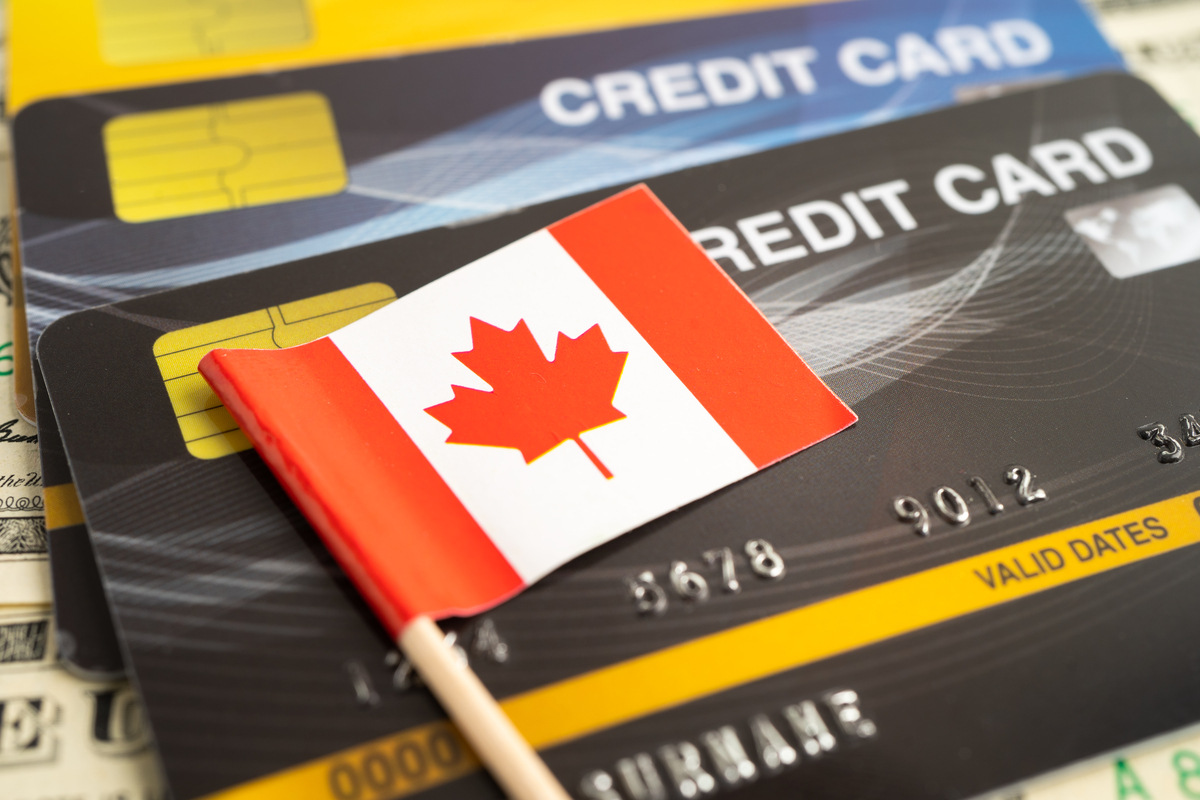
Credit cards lead Canadian payments at 43%, with Interac debit at 25% and e-Transfer rising. Canada looks deceptively similar to the United States from the outside, and merchants who treat it as an extension of their US setup usually discover the gap at the point where Interac should have been.
The country runs a domestic debit network that most international merchants have never integrated, a dominant account-to-account transfer service with no US equivalent, and as of the fourth quarter of 2026, a brand new real-time payment rail. The figures below come from Payments Canada and the Bank of Canada.
Canadian payment methods by the numbers: what Payments Canada data shows
Payments Canada publishes the annual Canadian Payment Methods and Trends report, the authoritative national source. Its 2026 edition, released on 6 October 2026, analyzed 26.7 billion retail payment transactions worth $12.9 trillion in 2025, a 5.7% increase in value year on year.
By transaction volume:
Credit cards: 43%, with total credit card transactions growing 7% to 11.6 billion, worth $1.02 trillion
Debit cards: 25%
Electronic funds transfer: 12%
Cash: 9%
Online transfer: 6%
Cheques, prepaid cards and ABM withdrawals at roughly 1% each
Cards therefore account for 68% of all payment volume, up from 63% five years ago.
By value the ranking inverts entirely. Electronic funds transfer leads at 63%, followed by cheques at 20%, credit cards at 8%, online transfer at 5%, debit at 2%, and cash and ABM at 1% each. Cheques holding a fifth of national payment value is a genuinely Canadian quirk, concentrated in business and government flows instead of retail.
Contactless volume grew 9% in 2025, driven largely by a 12% rise in contactless credit card payments. Canadians use contactless most at grocery stores (62% of contactless transactions), followed by gas stations (44%) and restaurants and bars (39%).
The Bank of Canada’s 2025 Methods-of-Payment Survey, published in August 2026, adds the mobile dimension: 50% of credit card owners had linked a card to a mobile wallet, up from 31% in 2021, and 30% of debit card owners had done the same, up from 17%.
Credit card payment methods in Canada
Canada is a credit-led market, which distinguishes it from the UK and aligns it loosely with the US. Credit cards lead at 43% of payment volume, and they dominate online: Payments Canada found 61% of online shoppers paid with a credit card in 2025, an 11% increase on 2024.
E-commerce itself accounts for 6.1% of total Canadian retail sales, with just under three in five Canadians (58%) making an online purchase in a given month.
Visa is the most used brand, followed by Mastercard, with American Express holding a smaller but meaningful position. Canadian consumers are notably rewards-motivated, and premium rewards cards carry higher interchange, which raises blended acceptance costs for merchants relative to markets with interchange caps.
Interac Debit and debit card payment methods in Canada
Interac is Canada’s domestic debit network, and it is the single most common point of failure for international merchants entering the market. Interac Debit handles billions of transactions annually and represents roughly a quarter of national payment volume, with meaningfully lower merchant acceptance costs than credit cards.
A merchant processing Canadian cards through an international acquirer without Interac capability is not reaching those transactions on domestic rails, and is paying credit-card economics for volume that could have run cheaper.
Interac Direct extends the network into online account-to-account payments, giving Canadian shoppers a way to pay directly from a bank account at checkout instead of entering card details.
Gr4vy supports Interac, which matters because Interac acceptance generally requires a Canadian-capable provider instead of arriving automatically with a global processor.
Why co-badged cards matter for Canadian merchants
This is a Canadian detail with direct cost consequences that most guides omit entirely.
Payments Canada reporting has put the share of Canadian debit cards that are co-badged at around 61%, carrying both the Interac logo and either Visa or Mastercard. The card can therefore be processed either as an Interac domestic debit transaction or as a Visa or Mastercard debit transaction, and those two paths carry different costs.
For merchants, this is effectively a routing decision. Processing co-badged debit over Interac where possible is generally cheaper than routing it through the international schemes. Merchants without the ability to influence that routing are leaving money on the table on a large share of Canadian debit volume.
This is the same category of problem as US debit routing, and it is one of the clearest cases where routing control translates directly into margin. Gr4vy’s guide to intelligent payment routing covers the mechanics.
Interac e-Transfer and account-to-account payments in Canada
Interac e-Transfer is Canada’s dominant account-to-account service and has no close US equivalent. The Bank of Canada’s 2025 survey found it the most widely adopted alternative payment method in the country, and Payments Canada data shows online transfer as one of the fastest-growing payment categories.
Its origins are peer-to-peer, sending money to another person using an email address or phone number, and it has extended into business payments, with around half of Canadian businesses now accepting it. For most consumer e-commerce it remains secondary to cards, but for invoicing, B2B, high-value purchases, and categories where card acceptance is awkward, it carries real weight.
Merchants should understand the distinction from a card payment: e-Transfer is a push payment initiated by the customer, so it settles with finality and carries no chargeback mechanism, but it also cannot be pulled automatically for recurring billing.
Canada’s Real-Time Rail: what launches in Q4 2026
The most significant structural change in Canadian payments in decades is happening now. Payments Canada’s Real-Time Rail (RTR) is launching in the fourth quarter of 2026, giving Canada the kind of instant payment rail the UK has had through Faster Payments and Brazil through Pix.
Payments Canada reports that 52% of Canadians find real-time payments appealing, and the rail is explicitly positioned as the foundation for open banking and new payment products instead of a single consumer service.
The projected impact is substantial. Payments Canada estimates the RTR will generate between $5.3 billion and $14.5 billion in cost savings over ten years, alongside $16 billion in total economic gains, rising toward $27 billion as new capabilities such as earned wage access and insurance disbursements come online. The use cases it identifies as most likely to drive adoption are gig worker payouts, instant settlement for SMEs (37% of which cite payment delays as a significant problem), immediate loan funding, and instant supplier payments.
For merchants the honest position today is that RTR remains plumbing and is not yet a checkout option. Consumer-facing products built on it will take time to appear, and no merchant should delay a Canadian launch waiting for it. It is worth tracking, because it will reshape what account-to-account payment looks like in Canada over the next few years, much as Faster Payments underpinned the UK’s open banking growth.
Gr4vy’s comparison of real-time payment schemes covers how comparable rails developed in other markets, which is a reasonable guide to what Canada should expect.
Digital wallet and PayPal payment methods in Canada
Mobile wallet adoption has grown sharply, with half of Canadian credit card holders now having linked a card to a wallet. Apple Pay and Google Pay are the main options, and as elsewhere most wallet transactions resolve to the underlying card. Gr4vy’s comparison of Apple Pay and Google Pay for merchants covers acceptance.
PayPal holds a well-established position in Canadian e-commerce and is widely offered at checkout, making it a method most Canadian merchants support alongside cards.
BNPL, crypto, and agentic commerce in Canada
Payments Canada’s 2026 report also measured three emerging areas, and the results are worth knowing before building for any of them.
Buy now, pay later has real traction. 26% of Canadians report using BNPL, rising to 39% among 18 to 34 year olds, while 17% of businesses now offer it. That gap between consumer uptake and merchant availability suggests room for merchants in the right categories. Gr4vy’s comparison of BNPL providers covers the options.
Cryptocurrency remains marginal as a payment method but is growing from a low base. The share of Canadians who have used crypto for payments rose to 5% from 3%, driven by younger Canadians, where usage more than doubled from 4% to 10%. Privacy, speed, and lower fees were the stated reasons.
Agentic commerce is the one that should temper expectations. Only 24% of Canadians find agentic commerce appealing, while 43% do not. The objections are specific: data security (58%), unpredictable purchasing decisions (52%), loss of personal connection with retailers (51%), fraud liability (48%), and difficulty reversing unauthorized purchases (47%).
That is a useful corrective for merchants reading bullish projections about AI-driven buying. The infrastructure is arriving faster than consumer trust, at least in Canada, and the barriers consumers name are about control and recourse rather than convenience. Gr4vy’s guide to agentic commerce for merchants covers what readiness involves for merchants who want to be positioned when that trust develops.
The best payment methods for selling in Canada
For most merchants selling into Canada, the working set is credit cards (Visa, Mastercard, and Amex where margins allow), Interac Debit, Apple Pay and Google Pay, and PayPal. Add Interac e-Transfer for B2B, invoicing, or high-value transactions.
The method list is not the hard part. The two things that separate a competent Canadian setup from a careless one are Interac acceptance and co-badged debit routing, and both are invisible until someone looks at the processing costs. A merchant running Canadian volume entirely through international schemes is overpaying on a large share of debit transactions and missing the domestic rail that a quarter of Canadian payment volume runs on.
Both are routing and provider questions instead of method questions, which is the function payment orchestration performs. For the neighboring market that Canada is most often confused with, see Gr4vy’s guide to payment methods in the USA.
Frequently asked questions
What are the most popular payment methods in Canada?
Credit cards lead at 43% of payment volume, followed by debit cards at 25%, together accounting for 68% of all Canadian payment volume according to Payments Canada’s 2026 report. Electronic funds transfer follows at 12%, cash at 9%, and online transfer at 6%. Online, 61% of Canadian shoppers paid with a credit card in 2025. Interac e-Transfer is the most widely adopted alternative payment method.
What is Interac and do merchants need it?
Interac is Canada’s domestic debit network, covering Interac Debit at the point of sale and online, and Interac e-Transfer for account-to-account payments. Debit represents roughly a quarter of Canadian payment volume, and Interac carries lower merchant costs than credit cards. Accepting it usually requires a Canadian-capable provider instead of coming automatically with a global processor, so merchants selling into Canada should confirm it explicitly.
What are co-badged cards in Canada?
Around 61% of Canadian debit cards carry both the Interac logo and either Visa or Mastercard, meaning the same card can be processed on domestic Interac rails or through the international schemes. The two routes carry different costs, so the routing choice has a direct margin impact across a large share of Canadian debit volume.
What is Canada’s Real-Time Rail?
The Real-Time Rail (RTR) is Canada’s new instant payment rail, launching in the fourth quarter of 2026, comparable to Faster Payments in the UK or Pix in Brazil. Payments Canada reports 52% of Canadians find real-time payments appealing. It is currently underlying plumbing instead of a merchant checkout option, with consumer-facing products expected to follow over the next few years.
Is Canada a credit card or debit card market?
Credit-led. Credit cards account for 43% of payment volume against 25% for debit, and 61% of online shoppers paid with a credit card in 2025. This distinguishes Canada from markets like the UK, where debit dominates. Canadian consumers are strongly rewards-motivated, which sustains credit card use and raises blended acceptance costs for merchants.
Do Canadians still use cheques?
In business and government contexts, yes, to a surprising degree. Cheques accounted for roughly 20% of total Canadian payment value in 2025 according to Payments Canada, second only to electronic funds transfer. By transaction volume they are marginal, and in consumer retail they are effectively absent, so this matters mainly for B2B merchants.
Is BNPL used in Canada?
Increasingly. Payments Canada’s 2026 report found 26% of Canadians have used buy now, pay later, rising to 39% among 18 to 34 year olds, while 17% of businesses currently offer it. That gap between consumer demand and merchant availability suggests opportunity for merchants in categories where BNPL converts.
Can I use my US payment setup in Canada?
Partly, and it will cost you. Cards and wallets transfer across, but a US setup typically lacks Interac acceptance and any ability to route co-badged debit over domestic rails. That means missing the network a quarter of Canadian payment volume runs on and overpaying on debit transactions that could have been processed more cheaply.
Choosing the right payment methods for the Canadian market
Canada is the market most likely to be treated as an afterthought by merchants already selling into the United States, and the cost of that assumption is quiet rather than dramatic. Cards work, orders complete, and nothing visibly breaks. What happens instead is that a quarter of the country’s payment volume runs on a network the merchant never connected to, and a large share of debit transactions route through international schemes when a cheaper domestic path existed.
The timing is also worth noting. With the Real-Time Rail launching in Q4 2026, Canadian account-to-account payments are about to become considerably more interesting. Merchants setting up Canadian acceptance now should expect the method mix to shift over the next few years, which argues for an arrangement where adding a method is a configuration change.
Gr4vy connects merchants to more than 400 payment providers and methods through a single integration, including Interac alongside cards and wallets for the Canadian market. To talk through Canadian acceptance and debit routing, get in touch with our team.
Credit cards lead Japanese e-commerce at 55%, but konbini cash takes a fifth of online orders. Japan holds two records at once: the highest credit card share of e-commerce that Worldpay tracks anywhere in the world, and one of the lowest cashless rates in the developed world.
That apparent contradiction is the single most important thing to understand about selling into Japan. Cards work, and work well, for the customers who use them. A large population alongside them pays in cash, and Japanese commerce built infrastructure to serve those customers online rather than waiting for them to adopt cards.
Japan payment methods by the numbers: what METI and Worldpay data show
Japan’s Ministry of Economy, Trade and Industry (METI) tracks the national cashless ratio, which reached 42.8% in 2024 and is projected to approach 45% through 2026. Cash accordingly still accounts for roughly 57% of consumer payment value, well above comparable economies. Japan’s cash-to-GDP ratio sits near 20%, against roughly 8% in the United States.
Yet online, the picture inverts. Worldpay’s 2026 Global Payments Report found credit cards account for 55% of Japanese e-commerce transactions, the highest rate of any country it tracks. Cards represent around 82.7% of total Japanese cashless spending.
A survey by Japan’s Ministry of Internal Affairs and Communications on method availability found credit cards offered or used by 79.8% of online shoppers and konbini payments by 33.7%, with respondents able to select multiple methods.
The e-commerce market itself is substantial: METI put business-to-consumer e-commerce at ¥26.1 trillion in 2024, up 5.1% year on year. Japanese shoppers also rarely buy from abroad, with only around 10% purchasing from overseas websites, which makes local presentation and local payment methods decisive.
One structural fact follows from all this: the average Japanese e-commerce store offers nine or more payment methods. Japanese consumers expect choice, and a two-method checkout reads as incomplete.
Credit card payment methods in Japan (including JCB)
Cards are the backbone of Japanese online commerce. Household credit card penetration sits near 86.8%, and cards dominate higher-value purchases.
The scheme mix differs from Western markets in one important respect: JCB, Japan’s domestic network, sits alongside Visa and Mastercard as a major scheme. A merchant selling into Japan without JCB acceptance is excluding a meaningful share of cardholders, and JCB acceptance generally requires an acquirer with Japanese capability rather than being automatic through a global processor.
Merchant costs for credit cards in Japan typically run higher than in Europe, commonly in the 2.5 to 3.5% range, which is part of why alternatives have gained ground at the point of sale.
Gr4vy’s guide to the four credit card networks covers the international schemes, though JCB’s domestic weight is specific to Japan.
Konbini: Japan’s convenience store payment method
Konbini payment is the method international merchants most often omit and most regret omitting.
The mechanism is simple. At checkout, the customer selects konbini payment and receives a reference number. They then walk into any convenience store, 7-Eleven, FamilyMart, Lawson and others, and pay in cash at the counter or terminal. The merchant is notified, and the order ships. Japan’s convenience stores are open 24 hours a day, 365 days a year, and are dense enough in both cities and towns that almost every consumer lives near one.
Konbini accounts for roughly 20 to 25% of Japanese online purchases, making it the second most-used online payment method after cards. One independent study across more than 50 payment methods found that adding konbini alone produced a 27% lift in conversion for Japanese customers.
The customers it reaches make up a substantial population: consumers wary of entering card details online, younger shoppers without credit cards, and anyone who budgets in cash, which in Japan is a large group.
Two operational points matter. Konbini payments carry no chargeback exposure, since the customer pays cash against a reference. But they are not instant, and a proportion of references expire unpaid, so merchants need order-handling logic for the window between order placement and payment confirmation.
Gr4vy supports Konbini, which is less common among orchestration platforms than the method’s importance would suggest.
PayPay and QR code payment methods in Japan
QR code wallets have been the fastest-growing part of Japanese payments, and PayPay dominates the category. Backed by SoftBank, it reported 75 million registered users as of August 2026, more than half Japan’s population and roughly two-thirds of smartphone users, having processed 7.46 billion transactions in 2024, around 20% of all Japanese cashless transactions that year.
PayPay’s merchant economics explain much of its adoption: its merchant discount rate runs around 1.6 to 1.98%, meaningfully below Japanese credit card rates. For merchants with a physical presence in Japan it has become close to standard.
Rakuten Pay, au PAY, and d-barai make up the rest of the QR category, each tied to a major telecom or commerce group and carrying loyalty-point systems that drive genuine consumer preference. Japanese consumers are unusually loyalty-point motivated, and the points attached to a wallet often decide which one gets used.
E-money, bank transfer, and carrier billing in Japan
Electronic money on IC cards, principally Suica and PASMO, originated in transit and extends across convenience stores and small retail. It is primarily a point-of-sale instrument rather than an e-commerce one.
Pay-easy enables bank transfer payments through ATMs and internet banking, and is used mainly for higher-value online purchases and bill payments where a customer prefers not to use a card.
Carrier billing, charging a purchase to a mobile phone bill through NTT Docomo, au, or SoftBank, remains more significant in Japan than in most markets, particularly for digital goods and smaller transactions.
Paidy and BNPL payment methods in Japan
Japanese buy now, pay later works differently from the Western model, and Paidy is the clearest example. Rather than splitting a purchase into instalments charged to a card, Paidy consolidates a customer’s monthly purchases into a single invoice, which the customer then pays at a convenience store or by bank transfer.
That design is a direct reflection of Japanese preferences: it avoids credit card revolving interest, which Japanese consumers tend to dislike, and it settles through konbini, which they already use. Gr4vy’s comparison of BNPL providers covers how the Western providers differ, none of which map neatly onto the Paidy model.
Why Japan’s payment mix looks contradictory
The combination of world-leading card share online and low overall cashless adoption confuses merchants, but it resolves cleanly once separated.
Japanese consumers who hold and use credit cards use them heavily, especially online and for larger purchases, which produces the 55% e-commerce figure. A different and overlapping population prefers cash for everyday spending, which keeps the national cashless ratio low. Rather than forcing the second group onto cards, Japanese commerce built konbini payment, Pay-easy, carrier billing, and Paidy to let cash-preferring consumers transact online.
The lesson for merchants is that Japan solved the cash problem a different way, and those solutions are durable, so waiting for a card-only future means waiting indefinitely.
The best payment methods for selling in Japan
A workable Japanese checkout starts with credit cards including JCB, konbini payment, and a QR wallet, usually PayPay. Add Pay-easy bank transfer for higher-value purchases, carrier billing for digital goods, and Paidy where deferred payment suits the category.
That is more methods than most markets require, and deliberately so. With the average Japanese store offering nine or more options and only a small minority of Japanese consumers shopping on overseas sites at all, a thin checkout signals a foreign merchant that has not localized, which in Japan is a conversion problem in itself.
The operational challenge is that these methods behave nothing alike. Konbini is an asynchronous cash flow with expiry handling, carrier billing settles through telecoms, Paidy consolidates monthly, and cards behave like cards. Running them together, and controlling which appear for Japanese customers, is the coordination problem payment orchestration exists to solve.
What are the most popular payment methods in Japan?
Credit cards lead, accounting for 55% of Japanese e-commerce transactions according to Worldpay’s 2026 Global Payments Report, the highest share of any country it tracks. Konbini convenience store payments come second at roughly 20 to 25% of online purchases, followed by QR wallets such as PayPay, bank transfer via Pay-easy, carrier billing, and BNPL through Paidy.
What is konbini payment?
Konbini payment lets a customer order online and pay in cash at a convenience store. The customer receives a reference number at checkout, then pays at any 7-Eleven, FamilyMart, Lawson or similar store, which are open 24 hours a day across Japan. It accounts for 20 to 25% of Japanese online purchases, carries no chargeback risk, and one study found adding it produced a 27% conversion lift for Japanese customers.
Do I need to accept JCB to sell in Japan?
For most merchants, yes. JCB is Japan’s domestic card network and sits alongside Visa and Mastercard as a major scheme. Accepting it usually requires an acquirer with Japanese capability rather than coming automatically through a global processor, so it is worth confirming explicitly with your provider.
Is Japan a cash-based country?
Partly, and less than it was. Japan’s cashless ratio reached 42.8% in 2024 according to METI and is projected near 45% through 2026, meaning cash still accounts for roughly 57% of consumer payment value. Japan’s cash-to-GDP ratio is around 20%, against roughly 8% in the United States. Online, however, cards dominate, which is why konbini exists to bridge cash consumers into e-commerce.
What is PayPay?
PayPay is Japan’s dominant QR code payment app, backed by SoftBank, with 75 million registered users as of August 2026, more than half the Japanese population. It processed 7.46 billion transactions in 2024, around 20% of all Japanese cashless transactions. Its merchant rate of roughly 1.6 to 1.98% sits below Japanese credit card rates, which has driven rapid merchant adoption.
How many payment methods should a Japanese checkout offer?
More than most markets. The average Japanese e-commerce store offers nine or more payment methods, and Japanese consumers expect that breadth. Given only around 10% of Japanese consumers shop on overseas websites at all, a sparse checkout marks a merchant as unlocalized and costs conversion directly.
What is Paidy and how does it differ from Klarna?
Paidy is Japan’s leading deferred payment service, but it works differently from Western BNPL. Instead of splitting a purchase into card-charged instalments, it consolidates a customer’s monthly purchases into one invoice, paid at a convenience store or by bank transfer. The design avoids credit card revolving interest and settles through konbini, matching established Japanese preferences.
Why do Japanese consumers prefer cash and konbini over cards online?
Several reasons overlap: caution about entering card details online, a cultural preference for budgeting in cash, dislike of revolving credit interest, and the sheer convenience of a 24-hour convenience store network that is never far away. Rather than those consumers adopting cards, Japanese commerce built payment methods that let them buy online while paying in cash.
Choosing the right payment methods for the Japanese market
Japan rewards merchants who localize properly and quietly penalizes those who do not. The penalty rarely looks like an outright failure. It looks like a conversion rate that sits below what the traffic should produce, because a meaningful share of visitors reached the checkout and found no way to pay that suited them.
The method set is wider than most markets need, and that breadth is the point. Cards and JCB cover the card-holding population, konbini reaches everyone who pays in cash, PayPay captures the QR shift, and Pay-easy, carrier billing and Paidy fill the remaining gaps. Few of these behave like a card transaction, which is exactly why merchants skip them and exactly why accepting them is an advantage.
Gr4vy connects merchants to more than 400 payment providers and methods through a single integration, including Konbini alongside cards and wallets for the Japanese market. To talk through a Japanese payment mix, get in touch with our team.
Checkout used to be a destination. A final step where users reviewed their cart, entered payment details, and confirmed a purchase. That model is starting to break down.
Payments are no longer confined to a page. They are becoming embedded directly into user journeys, happening at the moment a decision is made rather than after it. As commerce evolves across platforms, apps, and increasingly AI-driven interfaces, the separation between choosing and paying is disappearing.
For merchants, this is not just a UX shift. It is a structural change in how transactions are triggered, optimized, and controlled.
From checkout flows to decision flows
The traditional checkout flow was linear. A user browsed, selected, reviewed, and then paid. Each step was clearly defined, and payments sat at the end of that journey. Today, that sequence is collapsing.
Payments are being integrated earlier and more seamlessly into the experience, often triggered at the point of intent rather than as a separate step. The result is a shift from “checkout flows” to “decision flows,” in which the act of paying is embedded in the action itself.
This shift is driven by APIs, tokenization, stored credentials, and faster authentication methods, all of which remove the need for users to repeatedly input payment details. It is also accelerated by platforms that prioritize speed and convenience, where every additional step introduces friction and reduces conversion.
What this looks like in practice
This change is already visible across multiple industries, often in ways that feel subtle but have a significant impact on conversion and user experience. In ride-hailing platforms, users do not go through a checkout at all. Services like Uber embed payments directly into the experience, charging the user automatically at the end of the ride based on pre-stored credentials. The decision to ride is the decision to pay.
In e-commerce, one-click purchasing has redefined expectations. Amazon set the standard with its one-click checkout, where stored payment details and shipping information remove the need for a traditional checkout flow. The purchase happens instantly, embedded in the action of clicking a button.
Subscription platforms take this even further. Services like Spotify and Netflix eliminate checkout entirely after the initial sign-up. Payments are automated, recurring, and invisible to the user, allowing the experience to focus entirely on content consumption rather than transaction management.
More recently, embedded payments are expanding into financial services and marketplaces. Platforms can now integrate lending, insurance, or payment options directly into their product flows, offering users the ability to act immediately without being redirected or interrupted. In all of these cases, the pattern is consistent. The payment is no longer a separate step. It is part of the experience itself.
Why this matters for conversion and performance
Removing checkout does not just improve convenience. It fundamentally changes performance metrics. Every additional step in a traditional checkout introduces friction. Form fields, redirects, authentication challenges, and payment selection all create opportunities for drop-off. By embedding payments into the decision, merchants reduce that friction and shorten the path to conversion.
At the same time, embedded payments enable better use of data. Merchants can tailor payment options based on user behavior, location, and transaction context, presenting the most relevant methods at the right moment rather than relying on static checkout pages.
This leads to higher conversion rates, faster transactions, and more consistent user experiences across channels.
The new complexity behind simplicity
While the front-end experience becomes simpler, the underlying infrastructure becomes more complex. Supporting embedded payments requires flexible APIs, secure credential storage, tokenization, and the ability to handle transactions across multiple providers and methods. It also requires real-time decisioning, where routing, authentication, and fraud checks happen instantly without disrupting the user experience.
As payments move out of a single checkout page and into multiple touchpoints, maintaining consistency and control becomes more challenging. Different flows, channels, and regions introduce variability that needs to be managed centrally.
Without the right infrastructure, embedded payments can quickly lead to fragmentation.
Orchestration provides the foundation needed to support this shift.
It allows merchants to manage multiple payment methods, providers, and flows through a single integration, ensuring consistency even as payments become more distributed across the user journey. It enables dynamic decision-making, where transactions can be routed, optimized, and secured in real time based on context.
Most importantly, it allows merchants to maintain control. As payments become embedded and less visible, the ability to define logic, manage performance, and adapt quickly becomes critical. Orchestration ensures that even when the checkout disappears, control does not.
Conclusion
The checkout is not disappearing entirely, but its role is changing. It is no longer a single step at the end of a journey. It is becoming an invisible layer embedded within decisions, triggered at the moment of intent.
For merchants, this creates an opportunity to reduce friction, improve conversion, and deliver more seamless experiences. It also introduces new complexity that must be managed carefully.
Those who adapt will meet customers where decisions are made, not where payments used to happen. Those who don’t will continue to optimize a step that is slowly becoming irrelevant.
With Gr4vy, you can embed payments seamlessly across your user journeys while maintaining full control over routing, performance, and payment logic, ensuring that as checkout disappears, your ability to optimize and scale does not. Book a meeting today.
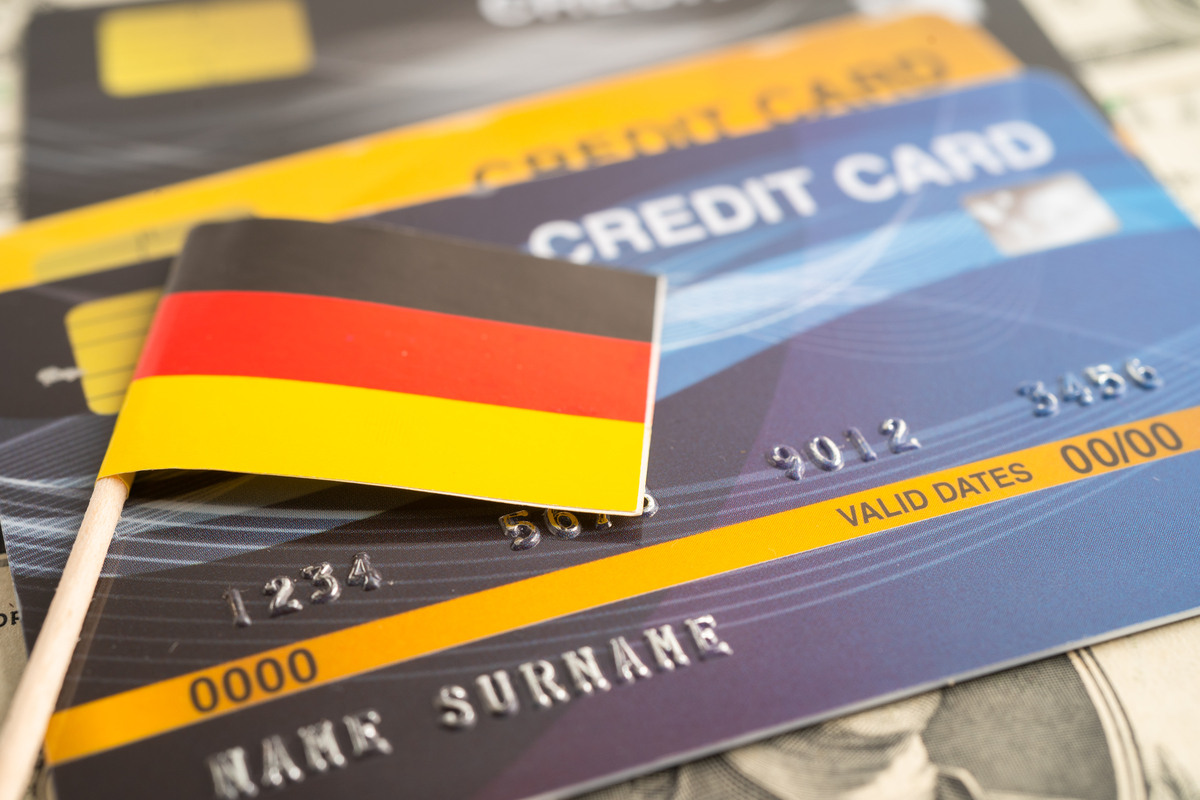
PayPal leads German e-commerce at 28.7%, invoice payment second, and cards a distant fourth. Germany is one of the few major markets in the world where cards are not the leading way to pay online, and merchants who arrive with a card-first checkout routinely underperform without understanding why.
The German payment mix reflects specific consumer preferences around trust, privacy, and paying only once goods have arrived. Getting it wrong is expensive. Getting it right requires accepting two methods that barely exist elsewhere.
German payment methods by the numbers: what the EHI and Bundesbank data show
The authoritative sources on German payment behavior are the EHI Retail Institute’s annual retail payment systems study and the Bundesbank’s payment behavior survey. The EHI 2026 study, presented at the EHI Payment Congress in Bonn in May 2026 and covering 2025 data, breaks the market down as follows.
In German e-commerce:
PayPal: 28.7% of online revenue, available at 95% of the top 1,000 online shops
Invoice, or Kauf auf Rechnung: 26.1%, offered by around 80% of the top 1,000 shops
SEPA Direct Debit, or Lastschrift: 14.4%, continuing a gradual decline
Credit and international debit cards: 13.7%
In physical retail:
girocard: 40.5% of retail turnover, down about one percentage point year on year
Visa Debit and Debit Mastercard: 9.4%, up 2.5 points and gaining fast
Credit cards: 8.2%
SEPA Direct Debit: 6.4%
The Bundesbank’s 2025 payment behavior study, published in June 2026, found cashless methods used for 55% of everyday payments, with mobile payments rising to 10% of all payments. For online purchases specifically, it put internet payment methods such as PayPal at 50%, direct debits and bank transfers at 30%, and credit cards at 15%.
Two things stand out. Cards are a minority method online. And the German online mix bears almost no resemblance to the in-store mix, which is unusual.
PayPal: the leading online payment method in Germany
PayPal occupies a position in Germany it holds in few other countries. Beyond its 28.7% revenue share, Statista data indicates roughly 87% of German online shoppers used PayPal at least once during 2025, and the Bundesbank ranks it third for everyday purchases behind only cash and the girocard.
The reason is trust rather than convenience. German consumers are notably privacy-conscious and reluctant to hand card details to unfamiliar merchants. PayPal functions as an intermediary that removes that requirement, and its buyer protection carries real weight with German shoppers.
For merchants, the practical implication is blunt: PayPal is not an optional alternative method in Germany. A German checkout without it is missing the single largest payment method in the market.
PayPal has also extended into the deferred-payment space locally with pay-in-30-days and installment products, which overlap with the invoice behavior described below.
Invoice payment (Kauf auf Rechnung): Germany’s distinctive method
This is the method that catches out international merchants, because it barely exists in most markets and is the second largest in Germany at 26.1% of e-commerce revenue.
Kauf auf Rechnung, literally buying on account, means the customer receives the goods first and pays afterward, typically within 14 or 30 days. No card details, no bank details, no money up front. The customer inspects what arrived, keeps what they want, returns the rest, and settles the balance.
That maps onto two German realities. The first is the same privacy preference that drives PayPal adoption. The second is Germany’s unusually strong returns culture, particularly in fashion, where ordering several sizes and returning most of them is normal behavior. Invoice payment makes that frictionless in a way card payment does not.
For merchants, invoice brings genuine complexity: credit risk, dunning, and reconciliation across open balances. Most merchants therefore offer it through a provider that underwrites the risk, with Klarna and Riverty the common routes. The cost is higher than card acceptance, typically in the 3 to 4% range, and for many German merchants it is still worth paying.
Skipping invoice is a legitimate decision for some categories. Skipping it in fashion or home goods usually is not.
SEPA Direct Debit (Lastschrift) payment methods in Germany
SEPA Direct Debit lets a merchant pull funds from a customer’s bank account under a signed mandate, and it remains deeply embedded in German billing habits at 14.4% of e-commerce revenue and 6.4% of retail turnover.
Its strengths are cost and stickiness. Per-transaction costs are low, often a fixed amount measured in cents rather than a percentage, which makes it one of the cheapest ways to collect recurring payments anywhere in Europe. Once a mandate exists, it continues without customer action.
The tradeoffs are the return window, during which a customer can reverse a debit, and mandate management overhead. For subscription businesses selling into Germany, Lastschrift is usually worth the operational work.
girocard and card payment methods in Germany
girocard is Germany’s domestic debit scheme and still dominates physical retail at 40.5% of turnover, used roughly 8.3 billion times in 2025, up from 7.9 billion in 2024. Around 88.5% of girocard payments were contactless as of December 2025. Its merchant economics are attractive, with acquirer fees commonly in the 0.2 to 0.3% range and no interchange model of the kind that applies to international schemes.
girocard matters much less online, where it has limited e-commerce reach, so for most international merchants it is a point-of-sale consideration rather than a checkout one.
International cards are growing. Visa Debit and Debit Mastercard gained 2.5 percentage points to reach 9.4% of retail turnover, the fastest-moving category in German physical retail, as issuers increasingly supply international debit alongside or instead of girocard. Credit cards remain comparatively minor at 8.2% in-store and are used more deliberately than in the US or UK.
Gr4vy’s guide to the four credit card networks covers the scheme differences, though German card share is low enough that the method mix matters more.
Mobile wallet and BNPL payment methods in Germany
Mobile payments reached 10% of all German payments according to the Bundesbank, growing steadily but from a lower base than in the UK or US. Apple Pay and Google Pay are the main wallets, and because many Germans load a girocard or international debit card into them, wallet economics follow the underlying card. Gr4vy’s comparison of Apple Pay and Google Pay for merchants covers acceptance.
BNPL overlaps heavily with invoice payment in Germany, which makes the category boundary blurry. Klarna is the dominant provider and also underwrites invoice payment for many merchants. Gr4vy’s comparison of BNPL providers covers the wider provider set.
Wero, the European Payments Initiative wallet, is worth monitoring. It is a bank-backed account-to-account wallet intended to give European banks a position against the international schemes and PayPal, and Germany is one of its launch markets. Adoption is early and no merchant should prioritize it yet, but it is the most plausible structural challenger to PayPal’s German position over the next few years.
Why German payment preferences differ
It is tempting to treat the German mix as arbitrary, which leads merchants to assume it will converge toward cards eventually. It has not, and the reasons are durable.
German consumers have strong privacy norms, reinforced by regulation and cultural attitudes toward data, which make handing card details to an unfamiliar online merchant less acceptable than it is elsewhere. Credit itself carries different connotations: the German word for debt, Schuld, also means guilt, and consumer credit has historically been viewed with more caution than in Anglophone markets. Paying only after goods arrive fits both patterns, which is why invoice payment persists rather than fading.
The practical upshot is that waiting for Germany to behave like the US or UK is not a strategy.
How merchants handle German payment methods in practice
The German mix is one of the clearest cases of a market where the right methods differ from a merchant’s home setup, and where the ability to vary methods by country matters more than the methods themselves.
Ding, the international mobile top-up service operating across more than 140 countries, handled this by using no-code rules to show different payment methods in different markets. In Germany specifically it prioritized PayPal, reflecting exactly the local preference the EHI data describes, while promoting Pix in Brazil for the same reason. The same case study reports the time to integrate a new gateway or local payment method falling from three to six weeks down to three days, which is what makes per-market method tuning practical rather than theoretical. The detail is in the Ding case study.
The underlying point generalizes. A merchant selling into Germany, the UK, and the US needs three materially different checkouts, and the cost of maintaining that is what usually determines whether local methods get added at all.
The best payment methods for selling in Germany
For most merchants selling into Germany, the baseline is PayPal, invoice payment, and SEPA Direct Debit, with cards and wallets alongside rather than in front. Those three cover roughly 70% of German e-commerce revenue between them, and a checkout missing any of them is visibly incomplete to a German shopper.
Add cards and Apple Pay or Google Pay for completeness and for international customers. Add Klarna where the category suits BNPL. Monitor Wero without building for it yet. Consider girocard only if you have a physical presence.
The operational difficulty is that invoice and Lastschrift behave nothing like cards, needing different risk handling, mandate management, and reconciliation, which is why card-centric payment stacks tend to handle them badly. Running them alongside cards through one coordinating layer, and adjusting which methods appear for German customers specifically, is the problem payment orchestration addresses.
What are the most popular payment methods in Germany?
In e-commerce, PayPal leads with 28.7% of revenue, followed by invoice payment (Kauf auf Rechnung) at 26.1%, SEPA Direct Debit at 14.4%, and credit and international debit cards at 13.7%, according to EHI’s 2026 study of 2025 data. In physical retail the picture differs, with girocard dominant at 40.5% of turnover.
Why are credit cards not popular in Germany?
German consumers have historically been cautious about consumer credit and are notably privacy-conscious about sharing card details online. Methods that avoid both, such as PayPal and invoice payment, took hold instead. Cards account for only 13.7% of German e-commerce revenue, making Germany one of the few major markets where cards are not the leading online payment method.
What is Kauf auf Rechnung?
Kauf auf Rechnung, or invoice payment, lets a customer receive goods before paying, typically settling within 14 or 30 days. No card or bank details are required up front. It accounts for 26.1% of German e-commerce revenue and suits Germany’s strong returns culture, particularly in fashion. Merchants usually offer it through a provider such as Klarna or Riverty that underwrites the credit risk.
Do I need to offer PayPal to sell in Germany?
For most consumer e-commerce, effectively yes. PayPal is the single largest online payment method in Germany at 28.7% of revenue, is offered by 95% of the top 1,000 German online shops, and around 87% of German online shoppers used it at least once in 2025. Omitting it means missing the largest method in the market.
What is girocard?
girocard is Germany’s domestic debit card scheme, dominant in physical retail with 40.5% of turnover and roughly 8.3 billion transactions in 2025. Around 88.5% of girocard payments are contactless. Its merchant fees are low, commonly 0.2 to 0.3%, but it has limited e-commerce reach, so it matters mainly to merchants with a physical presence in Germany.
Is SEPA Direct Debit worth accepting in Germany?
For recurring billing, usually yes. Lastschrift accounts for 14.4% of German e-commerce revenue, costs far less per transaction than cards, and continues automatically once a mandate exists. The tradeoffs are the window in which customers can reverse a debit and the overhead of mandate management, which is why it suits subscriptions better than one-off purchases.
What is Wero and should merchants support it?
Wero is the European Payments Initiative’s bank-backed wallet, built to give European banks an account-to-account alternative to the international card schemes and PayPal, with Germany among its launch markets. Adoption is still early, so it is not yet a priority for merchants, but it is the most credible long-term challenger to PayPal’s position in Germany.
How much does invoice payment cost merchants in Germany?
Typically in the range of 3 to 4% when offered through a provider that underwrites the credit risk, which is higher than card acceptance. Many German merchants consider it worthwhile because invoice payment converts customers who would otherwise abandon, particularly in fashion and home goods where the returns culture is strongest.
Choosing the right payment methods for the German market
Germany punishes assumptions harder than most markets. A merchant can run a card-first checkout in the US, the UK, or Australia and do reasonably well. Doing the same in Germany means competing for the 13.7% of e-commerce revenue that runs on cards while ignoring the 55% that runs on PayPal and invoice.
The methods that matter are also the ones that are operationally awkward. Invoice payment needs credit risk handling, Lastschrift needs mandate management, and neither behaves like a card authorization. That difficulty is precisely why many international merchants skip them, and precisely why doing the work is a competitive advantage in the German market.
Gr4vy connects merchants to more than 400 payment providers and methods through a single integration, including PayPal, SEPA Direct Debit, Klarna, cards, and wallets for the German market. To talk through a German payment mix, get in touch with our team.
The partnership gives Gr4vy access to Unlimit’s acquiring and payment-method capabilities, supporting local acceptance and settlement across international markets
San Mateo, 8 October 2026 — Gr4vy, the cloud-based payment orchestration platform, and Unlimit, a global financial infrastructure company, today announced a new integration now available to Gr4vy merchants globally. The partnership enables merchants to add Unlimit’s global payment methods, including local options across different countries, and access its financial infrastructure as they expand internationally.
Through Gr4vy’s orchestration platform, companies can connect to Unlimit’s network and processing services, gaining access to cards, real-time payments, digital wallets and cash-based methods across key markets worldwide. These options can be offered directly through the enterprise checkout via a single integration.
For Unlimit, the alliance creates an additional route to businesses and payment platforms using Gr4vy to manage providers across multiple markets, while giving merchants greater agility as they grow.
“Merchants expanding into new regions need the flexibility to add the right acquiring partners and payment options without rebuilding their financial stack,” said John Lunn, Founder and CEO of Gr4vy. “Partnering with Unlimit gives our customers greater flexibility to adapt their business strategy to local needs while accessing a broad portfolio of ways to pay across different countries.” Payment preferences and requirements vary widely between markets, from cards and digital wallets to real-time and local payment methods, as well as different currencies and acquiring requirements. For merchants expanding internationally, this means building a payment strategy that can meet each market’s requirements without adding unnecessary complexity as the business grows.
“Providing broad global coverage and payment capabilities that reflect consumer preferences is essential for merchants expanding into new regions, alongside an efficient checkout experience,” said Irene Skrynova, CEO of Global Payments at Unlimit. “Making Unlimit available through Gr4vy gives businesses another route to our acquiring solutions and processing infrastructure, helping them adapt to local marke demands as they enter and grow internationally.”
Debit cards dominate UK payments, with contactless at 39% and Faster Payments second overall. The UK is unusual among large markets in being debit-led rather than credit-led, overwhelmingly contactless, and home to the most mature open banking framework in the world.
For merchants, that combination produces a specific set of expectations. British consumers expect contactless everywhere, expect their debit card to work as the default, and increasingly expect a pay-by-bank option at checkout. The figures below come from UK Finance and Open Banking Limited rather than vendor estimates.
UK payment methods by the numbers: what UK Finance data shows
UK Finance, the trade body that publishes the authoritative UK Payment Markets report, recorded 49.7 billion payments in 2025, up 2% year on year. The breakdown matters more than the total.
Card payments accounted for 64% of all payments, covering debit, credit and charge cards, both physical and mobile
Debit cards alone made up more than half of all payments, remaining the UK’s most-used method
Contactless payments reached 19.2 billion, or 39% of all payments, rising 2% on the year
Faster Payments and other remote banking reached 6.2 billion, making it the second most-used payment method in the UK
Cash fell below 10% of all payments for the first time
There are now more than 100 million contactless debit cards in circulation in the UK, and 90% of mobile wallet users have a debit card set as their default. That last figure explains a lot about UK payment behaviour: the mobile wallet growth story in Britain is largely a debit card story wearing a different interface.
Debit and credit card payment methods in the UK
The debit-led character of the UK market is the first thing international merchants should internalise. In markets like the United States, credit and debit run close to even. In Britain, debit dominates, and credit is a secondary instrument used more deliberately.
Visa and Mastercard are effectively universal. American Express has meaningful presence but noticeably lower acceptance than in the US, particularly among smaller merchants, because of its cost. Gr4vy’s guide to the four credit card networks covers the differences, though Discover has minimal UK relevance.
For merchants, the practical consequence of debit dominance is interchange. UK and EU interchange caps mean card acceptance costs considerably less in Britain than in the United States, and the heavy debit skew pushes the blended rate lower still. Merchants arriving from the US market often find UK card economics comparatively favourable.
Contactless and mobile wallet payment methods in the UK
Contactless is not a feature of UK payments so much as the default behaviour. At 39% of all payments and roughly 60% of card transactions, tapping is what most British consumers do most of the time.
The contactless limit has been a live regulatory question. The single-transaction cap has sat at £100, and the Financial Conduct Authority published a policy statement in March 2026 revisiting the framework, giving firms more flexibility over limits. Merchants operating physical locations should keep an eye on how their acquirer implements any change.
Mobile wallets, principally Apple Pay and Google Pay, have grown to the point where over half of UK adults use them. As noted above, the overwhelming majority have a debit card loaded as default, so wallet transactions mostly resolve to debit economics. Gr4vy’s comparison of Apple Pay and Google Pay for merchants covers acceptance for both.
PayPal remains a significant online checkout option in the UK, particularly for consumers reluctant to enter card details on unfamiliar sites.
Open banking and Pay by Bank payment methods in the UK
This is where the UK genuinely differs from almost every other market, and where international merchants most often fail to plan.
Britain has the most mature open banking framework in the world, built on regulatory mandate rather than voluntary adoption. Open Banking Limited reported more than 19 million active user connections and over 40 million open banking payments per month by June 2026, up from roughly 16.5 million connections at the start of the year.
For merchants this surfaces as Pay by Bank: the customer authorises a payment directly from their bank account, authenticated in their banking app, settling over Faster Payments. The appeal is cost and finality. Pay by Bank avoids card interchange entirely, settles quickly, and carries no chargeback mechanism.
The newest development is commercial variable recurring payments, which began rolling out in 2026. VRPs allow a customer to authorise recurring bank payments within defined limits, which is effectively a direct debit with better control and instant settlement. For subscription businesses this is the first genuine UK alternative to card-on-file billing, and it is worth watching closely.
Gr4vy supports Pay by Bank through providers including Plaid and Trustly, alongside direct debit via GoCardless and Bacs.
Faster Payments and bank transfer methods in the UK
Faster Payments is the infrastructure underneath most UK real-time bank transfers, and at 6.2 billion payments it is the country’s second most-used payment method. In the fourth quarter of 2025 alone it processed roughly 1.5 billion payments worth close to £1.3 trillion, growing almost 9% year on year.
Merchants rarely integrate Faster Payments directly. It sits beneath open banking and Pay by Bank products, which is the practical route to accepting it.
Bacs Direct Debit remains the backbone of UK recurring billing, particularly for utilities, subscriptions, memberships and insurance. It is slow by modern standards, with a multi-day cycle, but it is deeply embedded in British consumer habit and significantly cheaper than card-on-file for regular billing. CHAPS handles high-value same-day transfers and is largely irrelevant to retail commerce.
BNPL payment methods in the UK
Buy now, pay later is well established in British e-commerce. Klarna is the most prominent, with Clearpay, the UK brand of Afterpay, also widely used. PayPal offers its own instalment product.
The regulatory position has changed materially. The Financial Conduct Authority brought BNPL under formal regulation from July 2026, introducing affordability checks and consumer protections that previously did not apply. Merchants selling into the UK should confirm how their BNPL provider has adapted, as the commercial terms and the checkout experience may both shift.
Gr4vy’s comparison of BNPL providers covers how the major providers differ on cost and coverage.
Is cash still used in the UK?
Less than almost anywhere comparable. Cash fell below 10% of all UK payments for the first time, continuing a decline that accelerated sharply after 2020. For online merchants this is irrelevant. For those with physical premises, cash acceptance is increasingly a service decision rather than a commercial necessity, though refusing it entirely remains contentious with some customer groups and has attracted parliamentary attention.
Cheques continue their long decline and are now marginal outside specific business and charitable contexts.
How UK merchants handle payment methods in practice
The method list matters less than how a business applies it, and two UK examples show different shapes of the same problem.
Donations. JustGiving, one of the largest online fundraising platforms in Britain, handles donation payments where every point of processing cost is money that does not reach the cause, and where donors give across many countries and methods. It worked with Gr4vy to optimise global donations, as set out in its case study. For UK charities and fundraising platforms, cost per donation and acceptance breadth do more work than they do in most retail categories.
Marketplaces and travel. Much Better Adventures, the UK adventure travel marketplace, selected Gr4vy to orchestrate payments and support global marketplace growth. Marketplace models add complexity that a single-provider setup handles poorly, particularly when customers are British but suppliers and currencies are not.
The pattern in both cases is that the UK method set is relatively settled, and the value sits in how payments are routed, what they cost, and how quickly a new method can be added when something like commercial VRPs arrives.
The best payment methods for UK merchants to accept
For most merchants selling into Britain, the working set is clear: Visa and Mastercard debit and credit, Apple Pay and Google Pay, PayPal, and a Pay by Bank option. Add Bacs Direct Debit for recurring billing, BNPL where basket sizes justify the cost, and American Express if your margins and customer base support it.
The more interesting question is what to do beyond acceptance. UK card economics are already favourable by international standards, which means the marginal gains sit in open banking adoption, routing across acquirers, and recovering failed payments. The open banking opportunity in particular is larger in Britain than anywhere else, and merchants who treat Pay by Bank as optional are leaving a genuine cost advantage unclaimed.
What are the most popular payment methods in the UK?
Debit cards are the most used, accounting for more than half of all UK payments. Card payments overall made up 64% of the 49.7 billion payments recorded by UK Finance in 2025. Faster Payments and other remote banking came second at 6.2 billion payments, contactless accounted for 39% of all payments, and cash fell below 10% for the first time.
Why do debit cards dominate in the UK?
British consumers have historically favoured debit over credit for everyday spending, and the pattern is reinforced by mobile wallets: 90% of UK mobile wallet users have a debit card set as their default. Credit cards are used more deliberately for larger or deferred purchases rather than as a default payment instrument.
What is Pay by Bank and should UK merchants accept it?
Pay by Bank lets a customer authorise a payment directly from their bank account, authenticated in their banking app and settled over Faster Payments. It avoids card interchange, settles quickly and has no chargeback mechanism. Given the UK has the world’s most mature open banking framework, with over 40 million open banking payments monthly by June 2026, it is worth accepting for most merchants, particularly on higher-value baskets.
How common is contactless in the UK?
It is the default. Contactless accounted for 19.2 billion payments in 2025, around 39% of all UK payments and roughly 60% of card transactions, and there are more than 100 million contactless debit cards in circulation. Any UK merchant with a physical presence needs contactless acceptance.
Is BNPL regulated in the UK?
Yes, since July 2026. The Financial Conduct Authority brought buy now, pay later under formal regulation, introducing affordability checks and consumer protections that did not previously apply. Merchants should confirm how their BNPL provider has adapted, as both commercial terms and the checkout experience may change.
What are variable recurring payments?
Commercial variable recurring payments, which began rolling out in 2026, let a customer authorise recurring bank payments within agreed limits. They function as a more controllable direct debit with instant settlement, and represent the first serious UK alternative to card-on-file for subscription billing. Adoption is early but worth monitoring.
Do UK merchants still need to accept cash?
Commercially, less and less. Cash dropped below 10% of all UK payments for the first time, and for online merchants it is irrelevant. Physical retailers increasingly treat cash as a service decision rather than a necessity, though declining it entirely remains contentious with some customer groups.
Is card acceptance cheaper in the UK than the US?
Generally yes. UK and EU interchange caps limit what card schemes can charge, and the UK’s heavy skew towards debit pushes blended rates lower still. Merchants expanding from the United States typically find UK card economics more favourable, which changes where optimisation effort is best spent.
Choosing the right payment methods for the UK market
Britain is a straightforward market to enter and an easy one to underoptimise. Cards work, contactless is universal, and a merchant can launch with a conventional setup and function perfectly well. The gap between adequate and good lies elsewhere.
That gap is mostly open banking. The UK built the deepest open banking framework in the world, Pay by Bank costs materially less than card acceptance, and commercial VRPs are about to make bank-based recurring billing viable. Merchants who treat these as experimental are passing up an advantage that exists in few other markets. The ones who adopt early will also be positioned when VRPs mature into a genuine alternative to card-on-file.
Gr4vy connects merchants to more than 400 payment providers and methods through a single integration, including cards, wallets, Pay by Bank, Bacs and UK BNPL providers. To talk through UK acceptance and where the cost savings sit, get in touch with our team.
Cards dominate US payments, with wallets, ACH, and BNPL filling the rest and cash at 1 in 7. For merchants used to markets where local methods decide whether a checkout converts, the United States is the unusual case: the card networks genuinely do carry the majority of volume, and a card-first checkout is a reasonable starting point rather than a mistake.
The places merchants get caught out are narrower and more specific. Which card networks are actually accepted, how debit behaves differently from credit, where ACH matters, which wallets are worth enabling, and the persistent one-in-seven payments still made in cash. The figures below come from the Federal Reserve’s own annual study rather than vendor estimates.
US payment methods by the numbers: what the Federal Reserve data shows
The authoritative source on US consumer payment behavior is the Federal Reserve’s Diary of Consumer Payment Choice, which has tracked payment habits every October since 2016. Its 2026 edition, published in May 2026 and covering 2025, found that US consumers made an average of 47 payments per month, split as follows:
16 payments by credit card
15 payments by debit card
6 payments by cash
6 payments by ACH
The remainder across checks, prepaid cards, and other instruments
Expressed as shares, that puts credit cards at roughly 34% of consumer payments and debit at 31%, together accounting for about two-thirds of all payments. That is the single most important fact for a merchant planning US acceptance.
Preference data shows a shift worth noting. Debit remains the most preferred in-person method at 40%, but credit has climbed to 38%, up from 24% in 2016. Cash sits third at 16%.
Cash has also proved more durable than the digital-payments narrative suggests. It accounted for 14% of payments, about one in seven, and was the third-most-used instrument for the sixth consecutive year. Four out of five consumers used cash in the previous 30 days, a higher share than used credit cards (71%) or debit cards (67%), and 90% said they plan to keep using it.
Credit card payment methods in the USA (and how debit differs)
Cards are the foundation of US acceptance, and four networks matter: Visa, Mastercard, American Express, and Discover. Visa and Mastercard are effectively universal. Amex carries higher interchange and historically lower acceptance, though that gap has narrowed. Discover has smaller share but meaningful reach, and is widely confused by consumers with the other networks.
A merchant selling in the US should accept all four unless there is a specific commercial reason not to. Declining Amex or Discover is a visible checkout loss for the customers who carry them. Gr4vy’s guide to the four credit card networks covers the differences in cost and acceptance.
The debit-credit distinction matters more in the US than in most markets. US debit transactions are subject to routing regulation that gives merchants choice over which network processes a debit transaction, which has direct cost consequences. Debit also carries different interchange treatment from credit, so a merchant’s effective processing cost depends heavily on its credit-to-debit mix.
Digital wallet payment methods in the USA
Wallet adoption in the US is substantial and still growing, though it sits on top of cards rather than replacing them. Most US wallet payments are a card presented through a wallet, which means the underlying economics follow the card.
Apple Pay and Google Pay are the main device wallets, reaching iPhone and Android users respectively. Both carry no merchant fee of their own and improve authorization rates through tokenization. Gr4vy’s comparison of Apple Pay and Google Pay for merchants covers why accepting both is the default.
PayPal remains one of the most widely used online checkout options in the US, with particular strength among consumers who prefer not to enter card details directly. Venmo, owned by PayPal, has moved from pure peer-to-peer into merchant checkout and skews younger. Cash App Pay has followed a similar path from P2P into merchant acceptance.
Click to Pay and Paze are the network and bank-led entries. Click to Pay is the card networks’ standardized online checkout, and Paze is a wallet backed by major US banks, launched to give issuers a position in online checkout. Both are newer and worth evaluating against a merchant’s specific customer base rather than enabling reflexively.
ACH and bank transfer payment methods in the USA
ACH is the backbone of US bank-to-bank payments, and its scale is easy to underestimate. Nacha, which governs the network, reported that the ACH Network processed 35.2 billion payments worth $93 trillion in 2025, up 4.9% in volume and 7.9% in value on the previous year. Within that, 8.1 billion were business-to-business payments, growing almost 10%, and Same Day ACH reached 1.4 billion payments worth $3.9 trillion, up 16.7%.
On the consumer side, Federal Reserve data puts ACH at an average of six payments per person per month, the same as cash.
For merchants, ACH matters most in recurring billing, high-value transactions, and B2B, where the cost advantage over cards is material and where the B2B growth figures show an ongoing migration away from checks. The tradeoffs are speed and failure handling: ACH settles more slowly than a card authorization, and returns behave differently from card declines. It is a poor fit for impulse e-commerce and a strong fit for subscriptions, invoices, and large baskets.
FedNow, the Federal Reserve’s instant payment rail launched in 2023, is often mentioned alongside ACH. For consumer-to-merchant payments it remains early, with volume concentrated in high-value business use. The scale gap is stark: the ACH Network’s record December 2025 month alone handled 3.22 billion payments, against real-time rails still measured in the hundreds of millions per quarter. Gr4vy’s comparison of real-time payment schemes covers where FedNow actually sits today.
Is Zelle a US payment method merchants can accept?
Zelle appears on almost every list of US payment methods, including AI-generated summaries, and this is misleading for merchants.
Zelle is a peer-to-peer transfer service built into most US banking apps, designed for sending money between individuals. It is not a standard merchant acceptance method, it offers no purchase protection, and transfers are effectively irrevocable. Zelle itself advises against using it to pay people or businesses you do not know and trust.
A merchant evaluating US payment methods should treat Zelle as useful consumer-side context rather than as a checkout option to enable. Listing it alongside card and wallet acceptance confuses two different things.
BNPL payment methods in the USA
BNPL has established itself in US e-commerce, particularly for mid and higher-ticket retail. Affirm is the most US-centric of the major providers and focuses on larger baskets with longer terms. Klarna and Afterpay are also widely used, with Afterpay strongest in fashion and beauty and Klarna broadest internationally.
BNPL costs merchants meaningfully more than card acceptance, typically running several percentage points higher, and the case for it rests on basket size uplift and reduced abandonment. Gr4vy’s comparison of BNPL providers covers the cost and coverage differences.
Cash and checks: how much do Americans still use them?
Neither is a digital acceptance decision, but both affect how merchants think about US commerce. Cash remains at roughly one in seven payments and is the backup instrument most consumers keep available, with 76% carrying cash and an average of $69 on hand. Checks persist mainly in B2B and certain bill payment contexts, well outside typical e-commerce.
For an online merchant neither is actionable. For anyone with a physical presence, the Fed data argues against assuming cash can be refused without cost.
How US merchants handle payment method coverage in practice
Industry averages only go so far. What the method mix looks like in a working US payment stack varies sharply by business model, and a few published examples make the differences concrete.
Donations and nonprofit. The Wikimedia Foundation, the San Francisco nonprofit behind Wikipedia, runs global donation payments where every point of cost is money that does not reach the cause, and where donors span many countries and methods. Its payments team described the problem as being stuck on a “payments treadmill,” with donor-focused initiatives taking years to ship. After moving to orchestration it reported $3 million in measurable ROI in its first year, as documented in its case study. For US nonprofits, the lesson is that donation payments reward cost and coverage work more than most categories.
Omnichannel retail. Trek, the Wisconsin bicycle manufacturer and retailer, sells both online and through physical stores, which in the US typically means two disconnected payment setups, fragmented reporting, and inconsistent customer experience. Trek unified payments across digital and physical retail instead of maintaining separate stacks. Any US merchant with both channels faces the same split.
Subscription and telehealth. FuturHealth, a US telehealth business, is in the category where failed recurring payments translate directly into lost patients. It implemented dynamic routing across multiple PSPs with retry logic to recover transactions that would otherwise have failed, completing the full integration in 27 days, as its case study reports. For US subscription businesses, decline recovery is usually worth more than adding another payment method.
The pattern across these is that the US method decision is rarely the hard part. Cards, wallets, and ACH cover most of it. The harder work is what happens after acceptance: routing for approval rates, recovering failed payments, and getting one view of performance across providers. Gr4vy reports recovering up to 14% of revenue from failed payments through routing and retries, which in a card-dominated market like the US is usually a larger lever than method coverage.
The best payment methods for US merchants to accept
For most merchants selling into the United States, the working set is narrower than the full list suggests: all four card networks, Apple Pay and Google Pay, PayPal, and ACH where recurring or high-value billing is involved. BNPL is worth adding in categories where basket size justifies the cost, and Venmo or Cash App Pay where the customer base skews younger.
The complication is less about which methods to accept and more about cost and performance across them. The US has a complex interchange environment, debit routing choices that affect cost directly, and meaningful approval-rate variation between acquirers. A merchant processing significant US volume will usually find more value in routing and cost optimization than in adding another method.
That optimization work, routing across acquirers and managing which methods appear where, is the function payment orchestration performs. For comparison with markets where the method mix matters far more than it does in the US, see Gr4vy’s guides to payment methods in Mexico and payment methods by country.
Frequently asked questions
What are the most popular payment methods in the USA?
Credit and debit cards dominate, together accounting for roughly two-thirds of all consumer payments according to the Federal Reserve’s 2026 Diary of Consumer Payment Choice. US consumers average 47 payments monthly: 16 by credit card, 15 by debit card, six by cash, and six by ACH. Digital wallets, BNPL, and checks make up the remainder.
What is the most used online payment method in the US?
Cards remain the most used method for online purchases, either entered directly or presented through a digital wallet. PayPal is the most widely used alternative online checkout option, with Apple Pay and Google Pay strong on mobile. Most wallet payments still resolve to an underlying card, so card acceptance remains the foundation.
Which payment methods should a US online store accept?
For most merchants: all four card networks (Visa, Mastercard, American Express, Discover), Apple Pay and Google Pay, and PayPal. Add ACH if you bill recurring or high-value transactions, BNPL in categories where basket sizes justify the higher cost, and Venmo or Cash App Pay if your customers skew younger.
Do Americans still use cash?
Yes, more than the digital-payments narrative suggests. Federal Reserve data puts cash at 14% of payments, about one in seven, and the third-most-used instrument for the sixth consecutive year. Four out of five consumers used cash in the previous 30 days, a higher share than used credit or debit cards, and 90% plan to continue using it.
Can merchants accept Zelle?
Not as a standard checkout method. Zelle is a peer-to-peer transfer service built into US banking apps for sending money between individuals. It offers no purchase protection, transfers are effectively irrevocable, and Zelle advises against using it with parties you do not know. It frequently appears on lists of US payment methods, but it is not a merchant acceptance option in the way cards, wallets, or ACH are.
What is the difference between debit and credit for US merchants?
Beyond consumer preference, the two carry different interchange treatment, so a merchant’s processing cost depends on its credit-to-debit mix. US debit is also subject to routing regulation giving merchants choice over which network processes a debit transaction, which has direct cost implications. Debit remains the most preferred in-person method at 40%, with credit close behind at 38%.
Is ACH worth accepting?
It depends on what you sell. ACH costs significantly less than cards and suits recurring billing, invoices, B2B, and high-value transactions. It settles more slowly than a card authorization and handles failures differently, which makes it a poor fit for impulse e-commerce. Federal Reserve data shows consumers averaging six ACH payments monthly, the same as cash.
How big is ACH in the US?
Very large. Nacha reported the ACH Network processing 35.2 billion payments worth $93 trillion in 2025, up 4.9% in volume year on year, including 8.1 billion business-to-business payments and 1.4 billion Same Day ACH payments worth $3.9 trillion. On the consumer side, Federal Reserve data shows an average of six ACH payments per person per month, matching cash.
Is BNPL popular in the US?
Yes, particularly for mid and higher-ticket retail, with Affirm, Klarna, and Afterpay the most prominent providers. Affirm is the most US-focused and handles larger baskets with longer terms. BNPL costs merchants several percentage points more than card acceptance, so the case for it depends on whether basket-size uplift offsets the fee in your category.
Choosing the right payment methods for the US market
The United States is the market where card-first instincts are mostly correct, which makes it the opposite problem from Brazil, Mexico, or Southeast Asia. The risk lies less in missing a dominant local method and more in accepting a reasonable set of methods, then leaving money on the table through interchange, debit routing, and acquirer performance that nobody is actively managing.
The Federal Reserve data also pushes back on a common assumption. US payment behavior has been remarkably stable for three years, cash has not disappeared, and credit has gained on debit rather than wallets displacing both. Merchants planning for a radically different US payment mix are planning for something the data does not yet show.
Gr4vy connects merchants to more than 400 payment providers and methods through a single integration, including the card networks, wallets, ACH, and BNPL providers that make up a US payment stack. To talk through US acceptance and cost optimization, get in touch with our team.
Gr4vy gives Pure Interactive the ability to add and route across multiple payment processors without engineering work, so its growth isn’t limited by a single provider.
San Mateo, September 22, 2026: Gr4vy, the cloud-based payment orchestration platform, has been chosen by Pure Interactive to power Apple Pay payments across its real money mobile games, including Poker and Mahjong Solitaire, available on iOS and Android in the United States.
Pure is a mobile-first business where a large share of deposits happen through Apple Pay. As its player base grows, so does the volume its payment infrastructure needs to support. Through Gr4vy, Pure Interactive can connect to and manage multiple payment processors through a single integration. The platform is already processing payments across more than one provider, with additional connections being added as the business scales. Rather than requiring a separate engineering project for every new processor, Pure Interactive can configure providers directly in the Gr4vy dashboard.
Gr4vy’s payment orchestration platform also allows Pure Interactive to determine how transactions are routed between providers. If one processor reaches a volume limit, transactions can be routed to another connected provider, reducing reliance on any single processor and helping Pure Interactive maintain payment continuity as volumes increase.
“Most payment platforms are built for companies that already know how big they are going to be. Fast-growing businesses have the opposite problem, which is that the thing constraining them changes every quarter,” said John Lunn, Founder and CEO of Gr4vy. “Pure should be able to add a processor because they need more capacity this month, not because they planned for it two quarters ago. That is what orchestration is for.”
Gr4vy’s single integration covers Apple Pay across every connected processor, which matters for a platform where wallet payments carry nearly all deposit volume. Pure Interactive’s team also gets transaction-level visibility across all providers in one place, rather than having to reconcile separate reports from each one.
“We’re growing quickly, and our payment infrastructure needs to keep pace with our user base,” said Harold Castiaux, CTO, Pure Interactive. “With Gr4vy, we can add processor capacity for Apple Pay without building a new integration each time, and keep routing around the limits we encounter as we grow. For our players, the experience stays simple: they make a deposit, and it works.”
By reducing the engineering work required to introduce additional processors, Gr4vy gives Pure Interactive greater flexibility to expand its payment infrastructure. New providers can be added as capacity requirements change, while routing across multiple processors helps reduce the operational risk of relying on a single provider.